This Market Impact Report is for pharma GBS leaders, C-suite executives, and global pharmaceutical decision-makers assessing how to evolve their GBS organizations from transactional cost centers to intelligent enterprise drivers of speed to market, market expansion, and risk management.
Pharma global business services (GBS) risks becoming irrelevant as its traditional focus on cost-cutting loses significance amid growing industry challenges. With patent expirations, supply chain disruptions, climate change, complex regulations, and the urgent need for AI and quantum computing to speed up drug launches, GBS must evolve. Sticking to manual processes, fragmented governance, and slow tech adoption, especially in AI, will leave it disconnected from the core business and its real priorities.
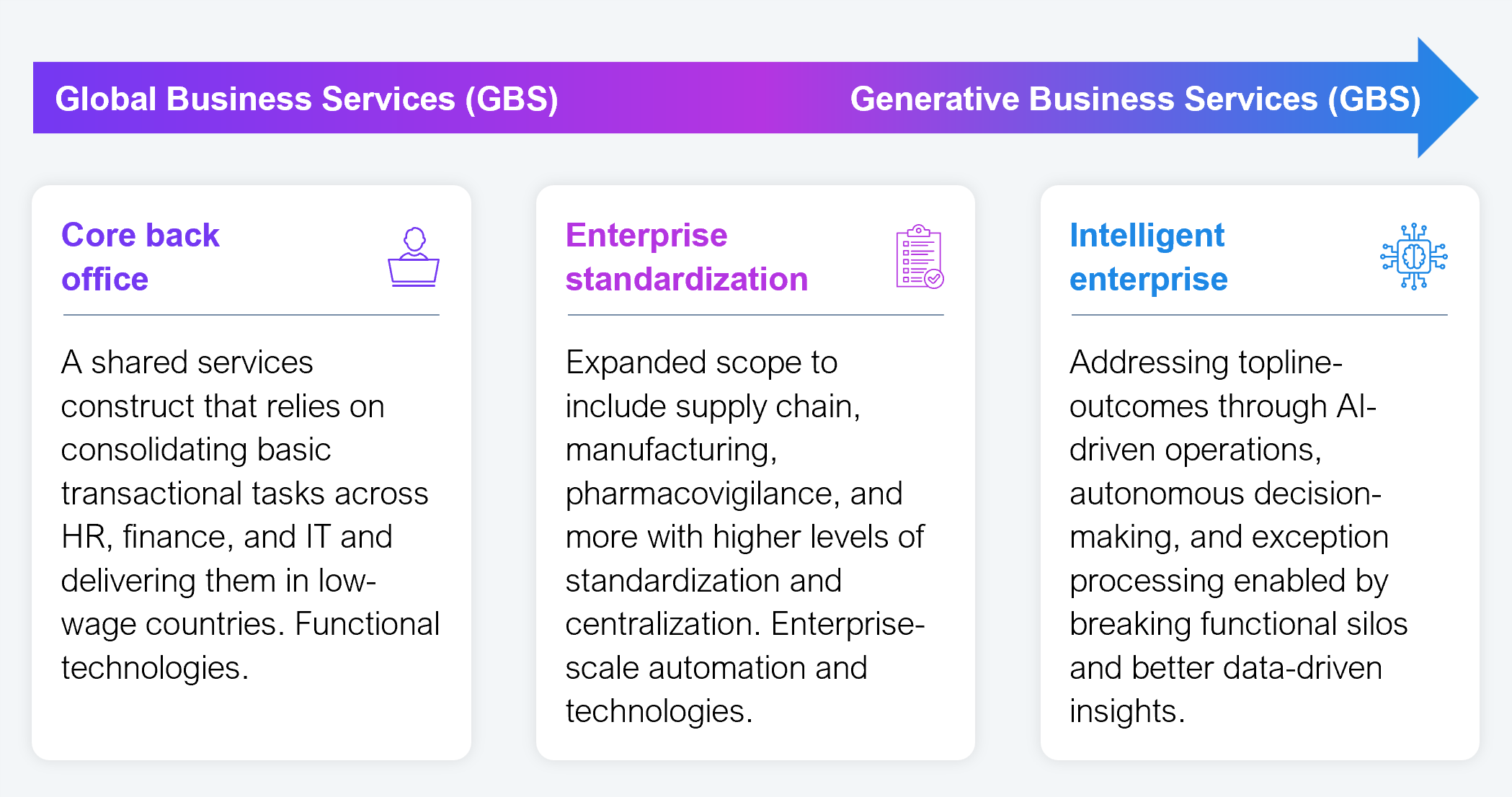
Pharma has a unique opportunity to pivot its GBS to a new intelligent enterprise archetype (see Exhibit 1) that aligns with enterprise strategies that are biased toward product speed to market, expansion of markets, and better risk management, all key components that will help pharma navigate and grow in the new reality while reframing GBS’s value proposition. However, 40% of pharma GBS is stuck in a legacy core back-office archetype, and the other 60% aligns with a slightly upgraded enterprise standardization archetype. These reflect low maturity compared to other industries, such as consumer goods, that have elevated their GBS game.
HFS Research, in partnership with EY, studied pharmaceuticals’ GBS vision, journey so far, and value proposition. The study was informed by approximately 100 interactions (surveys and interviews) with senior pharmaceutical decision-makers and GBS heads from some of the largest global pharmaceutical companies.
Source: HFS Research, 2025
GBS in most pharmaceuticals is perceived as not delivering its full cost-management potential, lacks the ability to be innovative or transformative, and its full broader value is misunderstood. As such, it is not considered a partner to address current and future needs. This research revealed five key insights into the current state of pharmaceutical GBS and its possibilities for evolving to the next level and remaining relevant.
I’m looking for insights from data that also drive not only the bottom line, not only cost expenses but also top-line revenue generation…I have all the pricing analytics teams, I have control of commercial policy in terms of the deals that we strike with hospitals, with retail chains, retail pharmacy and things of that nature. So, that’s a very rich environment, market access as well for that value driver of top-line growth.
— GBS leader and C-suite executive, global pharmaceutical company
The GBS vision is typically aligned with pharma operational objectives driven by centralization, standardization, and optimization. These operational goals are about doing more with less, which is critical to efficiency but does not necessarily support the enterprise strategy. Alarmingly, most GBS leaders’ visions did not consider the possibilities of an increasingly AI-enabled enterprise and its impact beyond just reducing costs. Pharma leaders must reframe their GBS organization as a transformation engine to address their enterprise strategy.
Cost remains the critical value component for pharma GBS organizations. Based on the GBS maturity level, the narrative has evolved from tactical cost (labor arbitrage) to strategic cost (efficiency and productivity). Given technology’s role in rapidly addressing costs, it is ironic that GBS remains a slow adopter of cloud, AI, and other technologies. Because of that, they are missing the opportunity to frame value in the context of enterprise top-line drivers such as speed to market, market expansion, and managing risk at a global level. GBS must also better communicate its value proposition across the organization to ensure internal customers, prospects, and others understand what they do and the value they can deliver. A few pharma companies are considering more value-driven activities, but they remain an exception.
Pharma GBS is biased toward a traditional construct of back-office shared services that include finance, HR, procurement, and IT services (desktop support and network monitoring). Some mature GBS organizations have expanded to include commercial, pharmacovigilance, medical affairs, clinical (R&D, clinical trials), technology (innovation), and supply chain management. Still, the scope is a function of optimizing workflows and processes and reducing costs. A key enabler of GBS is master data management, which is often not aligned to GBS or is fragmented across functions, making it hard to use as a tool for success. The opportunity lies in delivering outcomes that enable top-line objectives instead of doubling down on cost elements that are ultimately limited in value creation.
There is not an urge to drive GBS to be innovative, but we see a potential for great competencies for analytical and data skills to run back office more effectively, but the lines of business have to give up large known processes and allow GBS to manage processes end to end.
— GBS leader, global pharmaceutical company
Pharma GBS technology choices are aligned with process automation and ERP implementations, including SAP’s S/4HANA. Exploration and adoption of emerging technologies, including AI, have not been prioritized; however, some GBS are experimenting with generative and agentic AI to improve productivity. Investment has been made in point solutions and platforms such as ServiceNow. Still, as siloed initiatives without an end-to-end view to redesign processes and capabilities, they have shown limited returns. The inability of GBS to overcome siloed data further reduces its ability to leverage new technology. Their lack of partnership ecosystems exacerbates the missed opportunities. GBS must make attitudinal adjustments and talent upgrades to embrace technology and innovation in an integrated manner to support enterprise strategy effectively.
The maturity of pharma GBS ranges from nascent to relatively high functioning. Some big pharmaceutical companies are early in the journey (core back-office archetype). At the same time, some mid-sized companies are well along the path to meet some elements of the intelligent enterprise archetype. Yet, their end goals remain scattered, as do their missions beyond cost management. The pharma GBS strategy is not aligned with the enterprise strategy to grow by curing disease and providing timely remedies to patients; instead, it is on an island focusing on cost reduction that falls outside most pharma’s core services and mission.
Pharma’s demand profile is changing as the planet’s population continues to grow, the impacts of climate change weigh on human life, and the risks of pandemics combined with geopolitical challenges add to the pressure. On the positive side, a deep understanding of science, the proliferation of technologies, and access to capital give the industry a fighting chance to overcome these challenges. However, that will require a fundamental reimagination of how pharmaceuticals organize themselves to address the future. GBS must focus on speed…to insights, to products, and to markets, all high-quality value creators. To achieve speed to value, GBS must embrace technologies such as AI and quantum computing that will underpin GBS capabilities to help accelerate drug discovery, improve the efficacy of clinical trials through in-silico testing and simulations, develop dynamic supply chains, and support simultaneous commercialization across multiple regions.
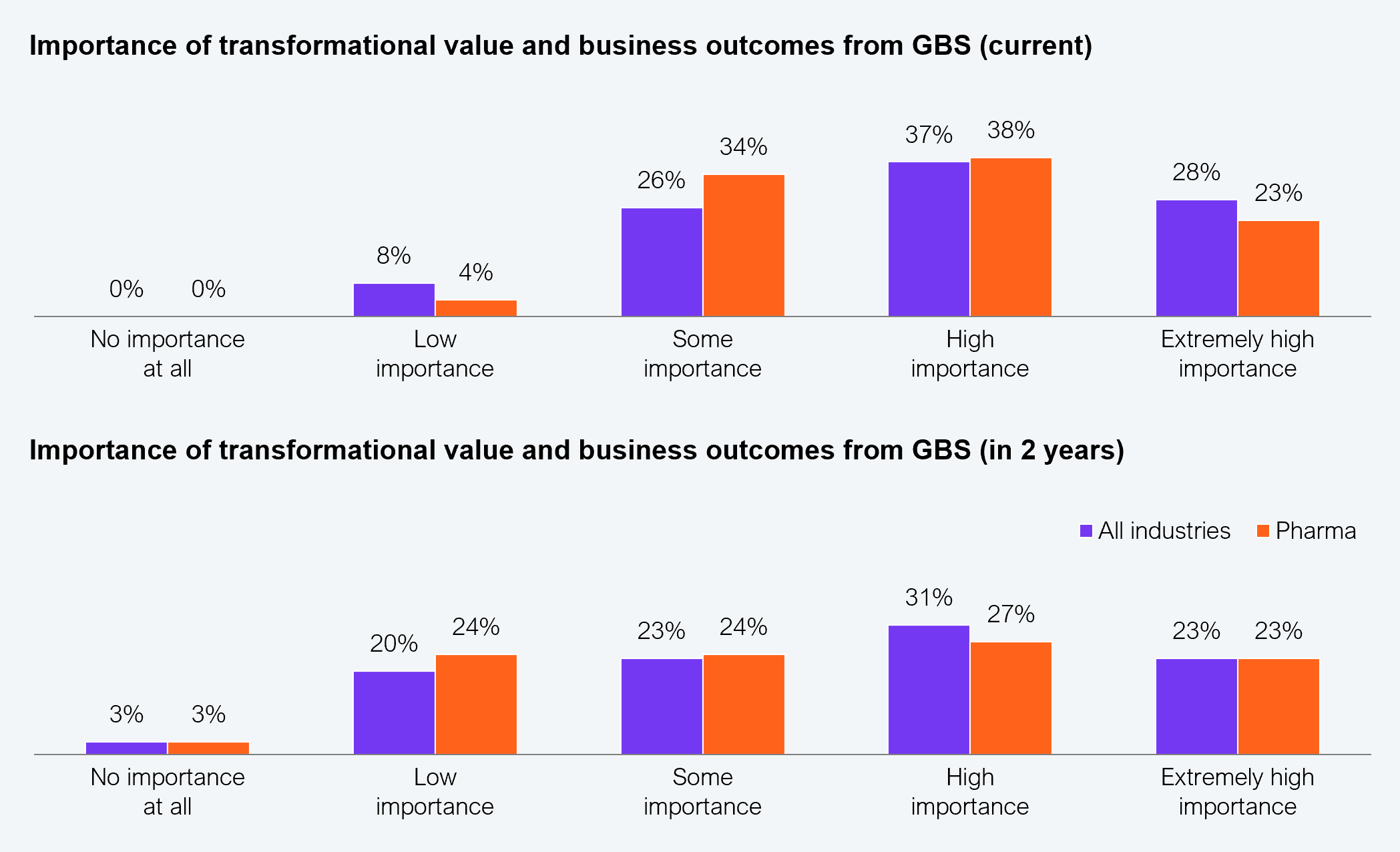
Cost management in any industry or enterprise is foundational to responsible financial management and efficient operations. So, GBS organizations that continue framing their value proposition in terms of some flavor of cost management are missing the opportunity to align with enterprise strategy, leverage technologies, and drive positive disruption. Exhibit 2 highlights the importance of transactional functions (cost drivers), which are extremely high and will remain high for the next two years. This indication of pharma GBS organizational stagnancy will ensure they will be disrupted despite efforts to change the narrative.
We’re doing this (shifting cost to value) by actually focusing the majority of our transformation on core functions and not so much on corporate functions because we believe that the key value drivers will come from a transformation of the operating model and the processes and in our core functions. So, we build these new towers.
— GBS leader and C-suite member, global pharmaceutical company
Sample: N=505 enterprises across industries, N=71 pharma enterprises
Source: HFS Research, 2025
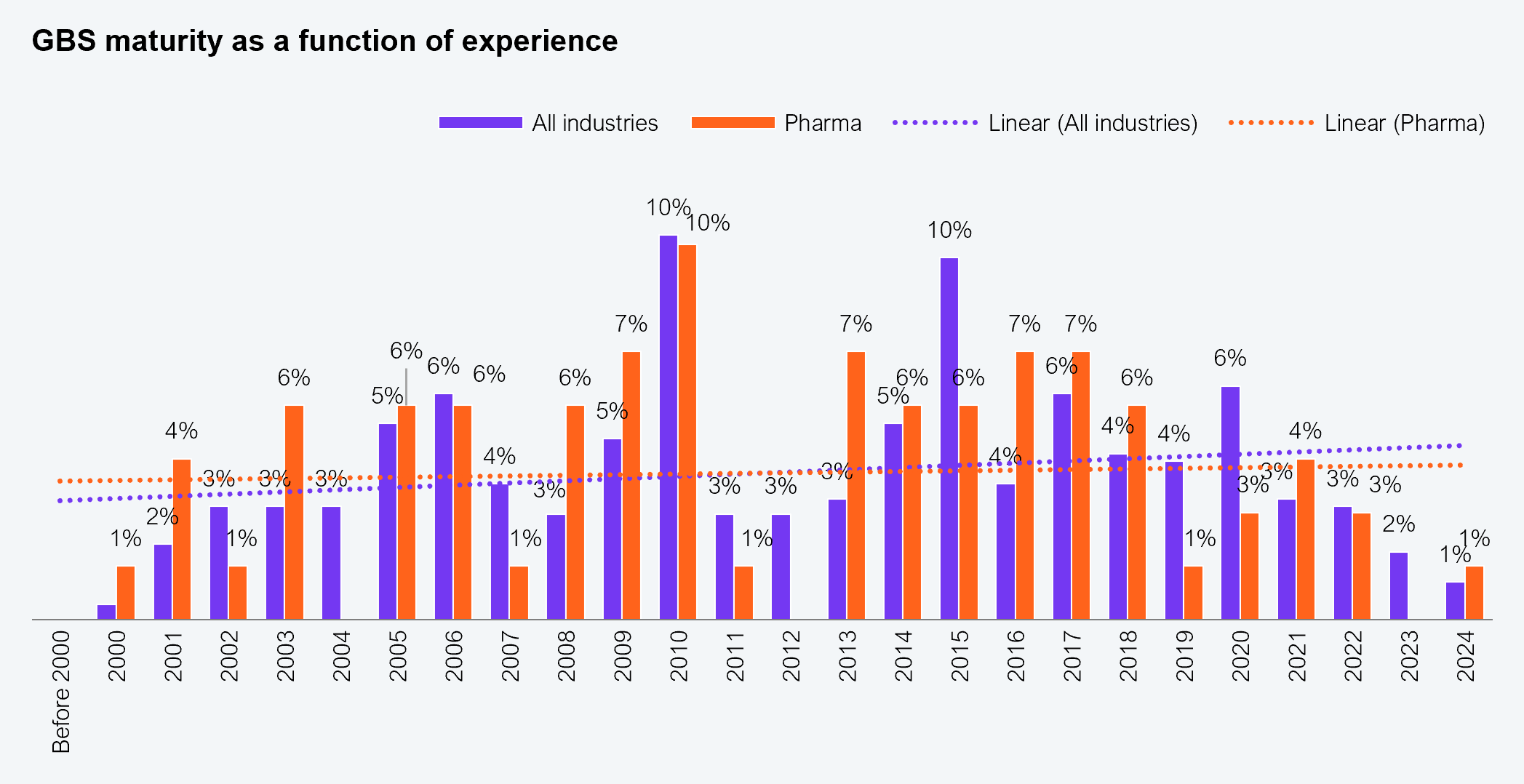
At the turn of the century, pharma GBS was ahead of its time (see Exhibit 3) in its ability to genuinely impact the enterprise. They led the effort to centralize and standardize functional transactional processes. They are still there two decades later, while other industries, such as consumer goods, have progressed faster and evolved to the next stage.
Sample: N = 505 enterprises across industries, N= 71 pharma enterprises
Source: HFS Research, 2025
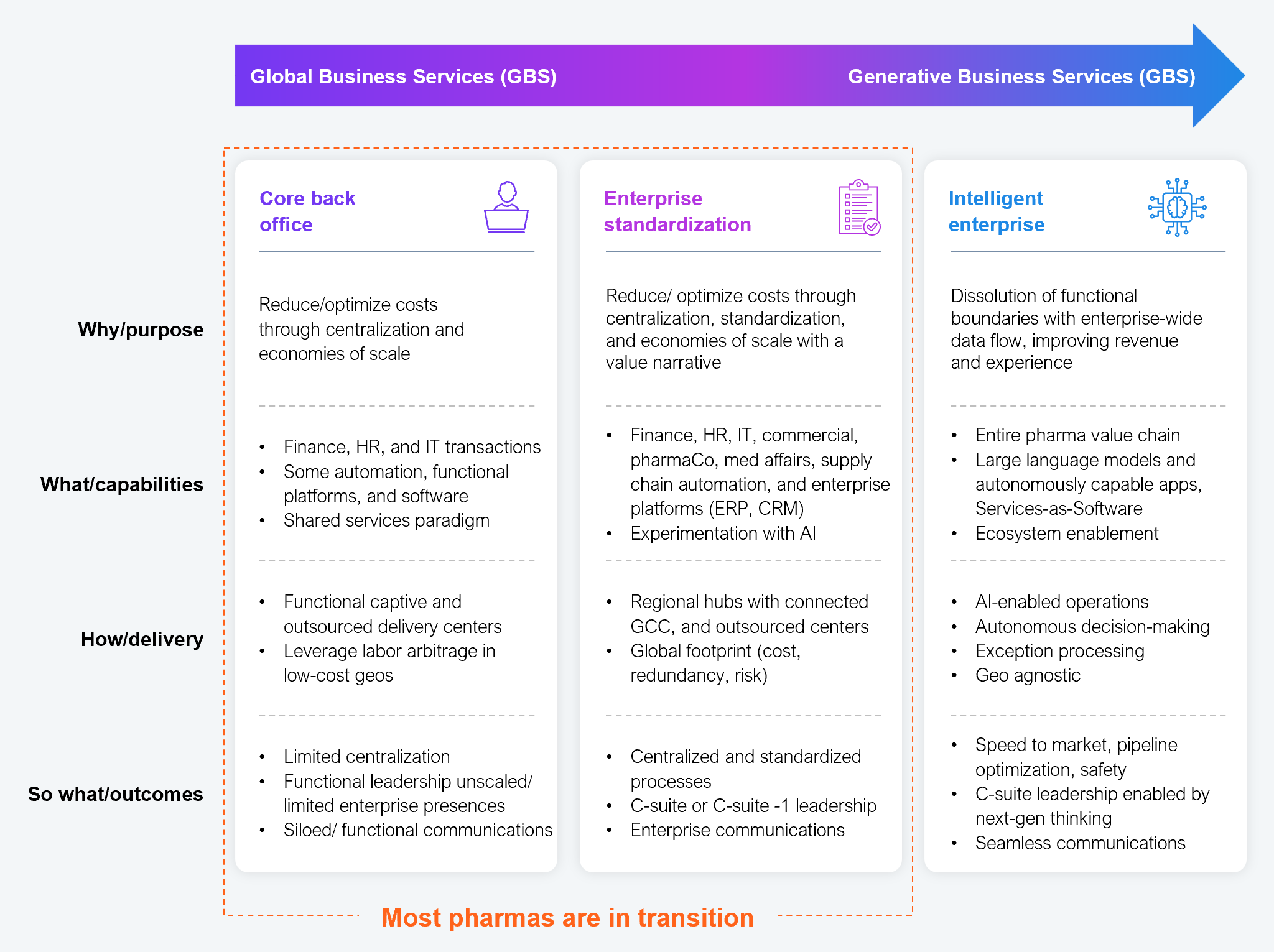
The GBS journey should be framed across three archetypes (see Exhibit 4).
1. The core back-office archetype reflects a shared services construct that consolidates basic transactional tasks across HR, finance, and IT and delivers them in low-wage countries. Approximately 40% of pharma GBS are in this boat, beginning their journey or remaining attached to back-office transactional processes.
…linking functional experts with data scientists is one of the futures of GBS…this collaboration between functions and delivery centers is critical since automation takes care of the transactional stuff and you don’t need to set up a global organization around this anymore.
— GBS leader, global pharmaceutical company
2. The enterprise standardization archetype is an evolution of the legacy that expands the scope to supply chain, manufacturing, pharmacovigilance, and more. Automation and enterprise-scale technologies, such as ERPs, aid a higher level of standardization and centralization. Some 60% of pharma GBS have progressed in scope and enhanced technology adoption.
3. The intelligent enterprise archetype is a paradigm shift that subscribes to the dissolution of functions. GBS “is the enterprise” focused on delivering strategic insights and enterprise strategy-aligned outcomes through AI-driven (generative, agentic) operations with autonomous decision-making, exception processing, and the capability to handle a more expanded scope of work. Fewer than 10% of pharma GBS organizations are experimenting with this archetype, and very few are even progressing in this direction. They are mostly held back by functional and C-suite leadership entrenched in the legacy archetypes.
The conversation around GBS helps organizations to mentally dissolve functional boundaries and think of outcomes first. Of course, there’s no need to do this at all places at the same time, but you could go step-wise and define really where you want to see a competitive edge.
— Country manager, global pharmaceutical company
Source: HFS Research, 2025
Processes are essential to ensuring consistency and predictability of outcomes; however, process efficiency must not be the value proposition. The market is signaling a demand to build on the success of process adherence to pivot to strategic enterprise outcomes. Those outcomes will define the value of GBS.
Our mission is not to bring more work into GBS but look at the services we do today and make it seamless and apply AI to improve processes and make it a better function.
— GBS leader, global pharmaceutical company
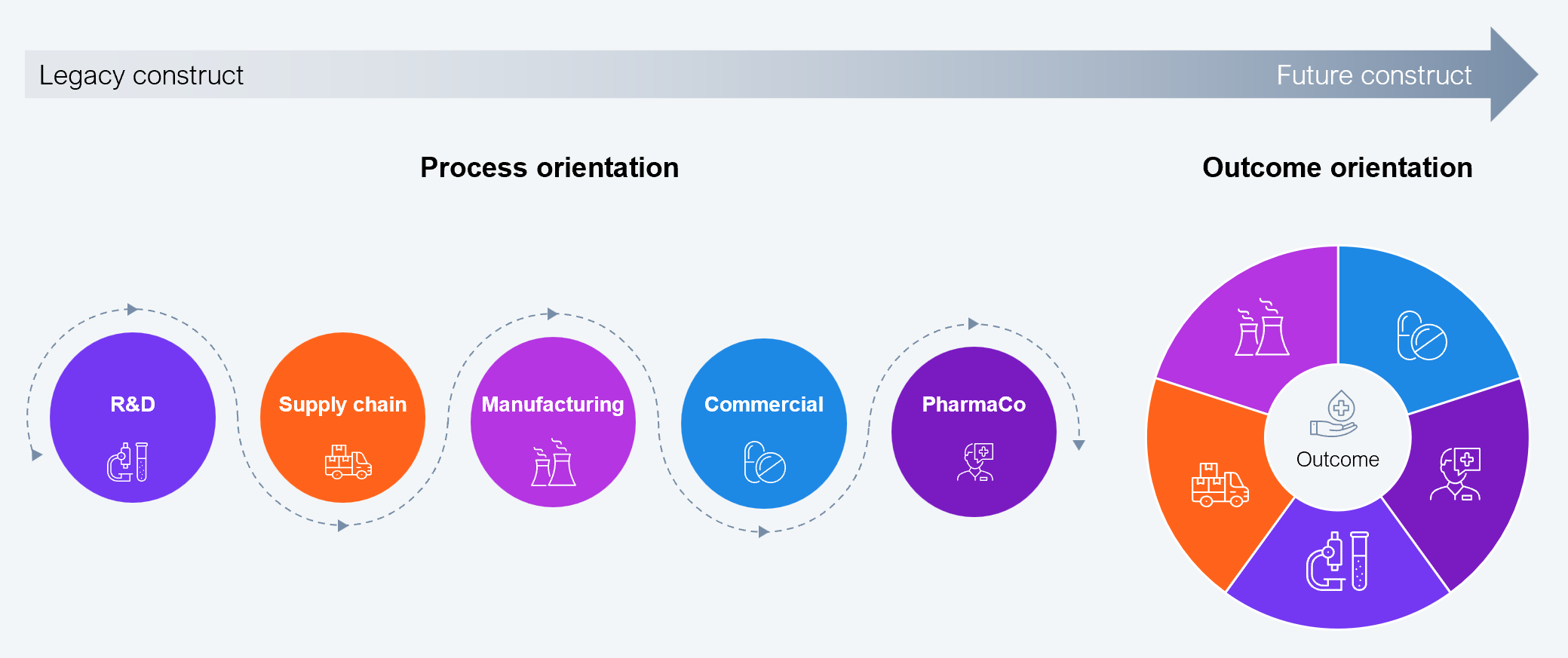
The typical pharmaceutical value chain is a process-oriented linear workflow (see Exhibit 5) that GBS aligns with. In an increasingly complex world, a linear value chain is losing its fit for purpose. Instead, work must be oriented to outcomes. The dissolution of functions can best accomplish that. In this outcomes-oriented paradigm, expertise across the organization comes together and enables seamless collaboration. Adopting AI can enable autonomous decision-making, orchestrate capabilities required for enterprise innovation, and be generative—by driving and promoting new ideas and ways of thinking and operating.
If I meet with our CEO, he doesn’t ask me what’s your cost per FTE or how are you doing on your cost targets? That’s not the conversation. He’s asking me how are you making sure that when you’re improving your HR services, an employee who’s researching a new molecule is spending minimal time on some of this administrative stuff? Because what’s more valuable to him is that we’re discovering new drugs.
— GBS leader, global pharmaceutical company
Source: HFS Research, 2025
Multiple studies indicate that 70% of enterprise transformations (e.g., digital, process reengineering, post-merger integration) fail. While there are several reasons that significant transformations fail, including the size of the effort, communications, metrics, and barriers to progress, a key lesson is the need to start small and scale by applying what has been learned to make relevant adjustments. Pharma GBS teams should learn from the most advanced organizations that have successfully enhanced their GBS to align with the intelligent enterprise archetype to drive transformation.
While the value of economies of scale remains true, technology has made that less valuable than when it made sense to bring large volumes of back-office transactions to a low-wage location in a faraway land.
Instead, a case can be made that GBS must start small to transform into the intelligent enterprise archetype—to ideate, design, test, fix, and scale. Ideally, this transformation should be done nationally, where the culture can be supportive, risk can be minimized, and time to outcome can be accelerated. Transformation beginning at the lowest logical level will intrinsically mitigate the challenges of large enterprise transformations.
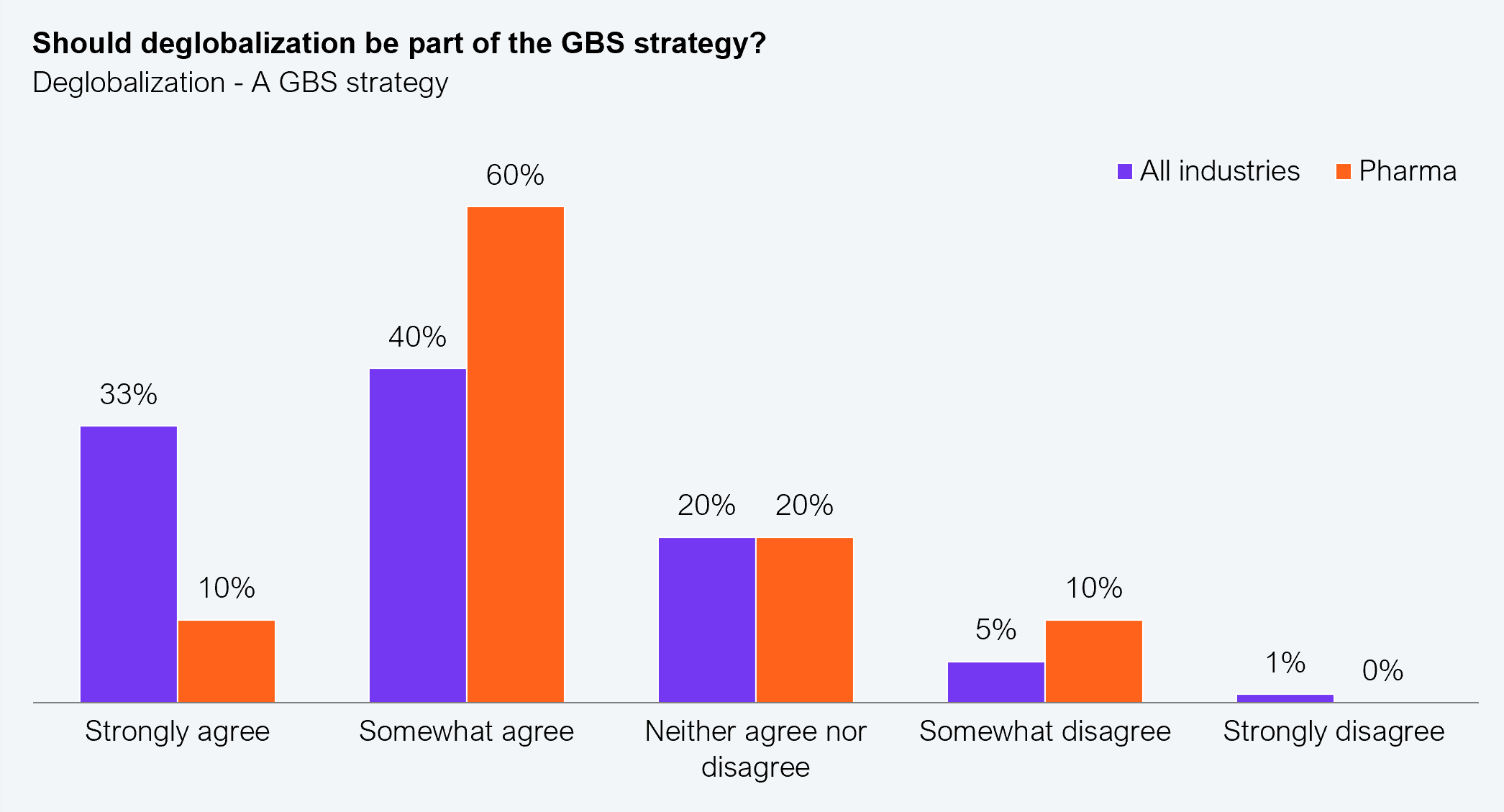
COVID-19 exposed the fragility of global supply chains. In real time, pharmaceutical leaders scrambled to source their active ingredients from different locations and strategized optimal distribution while ensuring medications safely reached those in need. This experience has driven pharmaceutical leaders to evaluate their supply chain and build expanded locational redundancy and distribution resiliency. These lessons resonated with GBS, with an overwhelming 70% of GBS leaders (see Exhibit 6) indicating they embrace a deglobalized GBS strategy for delivery. GBS organizations can help de-risk global supply chains further and encourage companies to adopt regional delivery models to mitigate political instability and economic uncertainties (tariffs, geopolitical risks, military conflicts).
I’m not sure how plausible it’s going to be that some centralized organization can do all things end to end. That last mile is always going to be local. And especially in the pharma industry, you’ve got market access issues, you’ve got local regulatory issues. It’s all local. You’ve got a lot of things that have that last mile.
— GBS leader, global pharmaceutical and biotechnology company
Sample: N = 505 enterprises across industries, N = 71 pharma enterprises
Source: HFS Research, 2025
No enterprise in any industry truly owns the end-to-end value it delivers to the market, whether in automotive, retail, or pharmaceuticals. Every enterprise leverages partners as raw material suppliers, product distributors, technology integrators, or service providers. Developing a purpose-built, diverse partner ecosystem that includes technology enablers, process optimizers, and innovators will accelerate GBS’s transition to the intelligent enterprise archetype at optimal investment and risk levels while maximizing desired outcomes. However, to be genuinely innovative, the partnership models must change from largely outsourced contracts to strategic outcomes that build in access to emerging technologies such as generative or agentic AI to create a competitive edge.
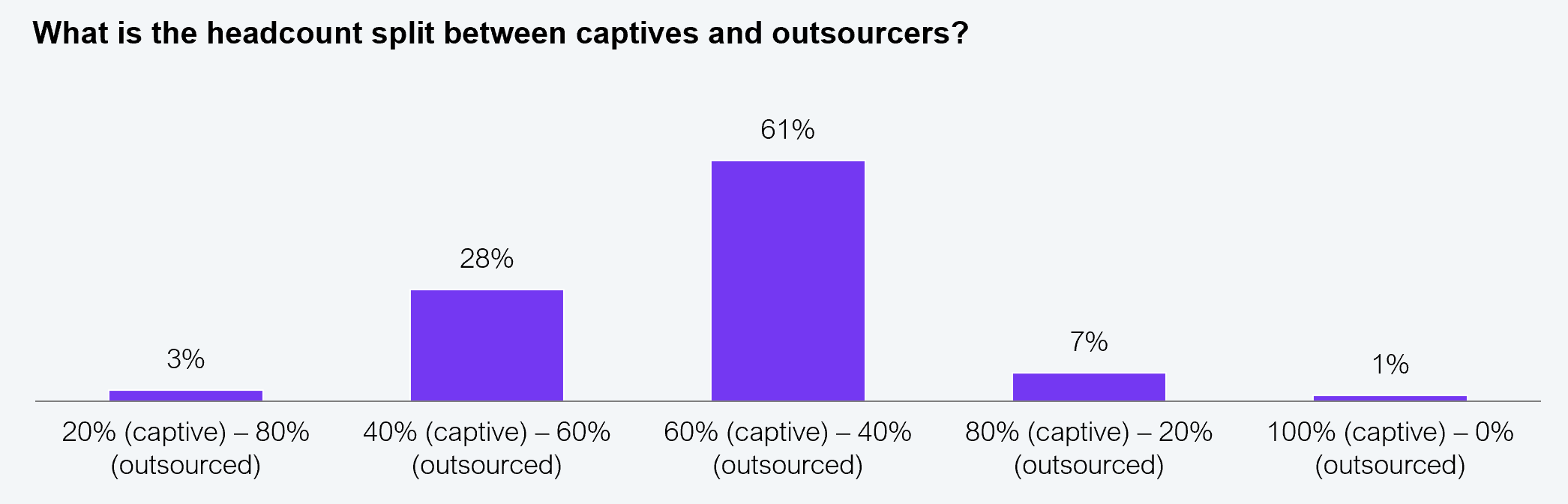
Pharma GBS has primarily delivered services through internal capability centers (captive) instead of leveraging providers that deliver GBS for a living. The current mix of service delivery models, a balance of captives and partners, is not optimized when the choice of expert partners is extensive (see Exhibit 7). Pharma GBS leaders indicate their bias for captives is rooted in specialized pharma capabilities that are unique to them or that their processes are too immature to outsource. Another aspect of a captive bias is that different capabilities (governance, reporting) and contract types (consumption, outcomes) will be needed when outsourcing, in which pharma has not invested. In any case, there is a strong case that outsourcing partners are best suited to overcome the various challenges rapidly, given their operational experience, channels from which to source expertise, ability to disrupt, governance models, and economies of scale. Further, partnerships will expose pharma GBS to a global footprint, support a diverse talent pool, build the right redundancy level to mitigate risk, and address their cost objectives.
Sample: N = 71 pharma
Source: HFS Research, 2025
The critical attributes for GBS’s future success include reframing value from cost to speed, shifting how work is done, and adopting emerging technologies. To enable that transition, a partner ecosystem will be foundational.
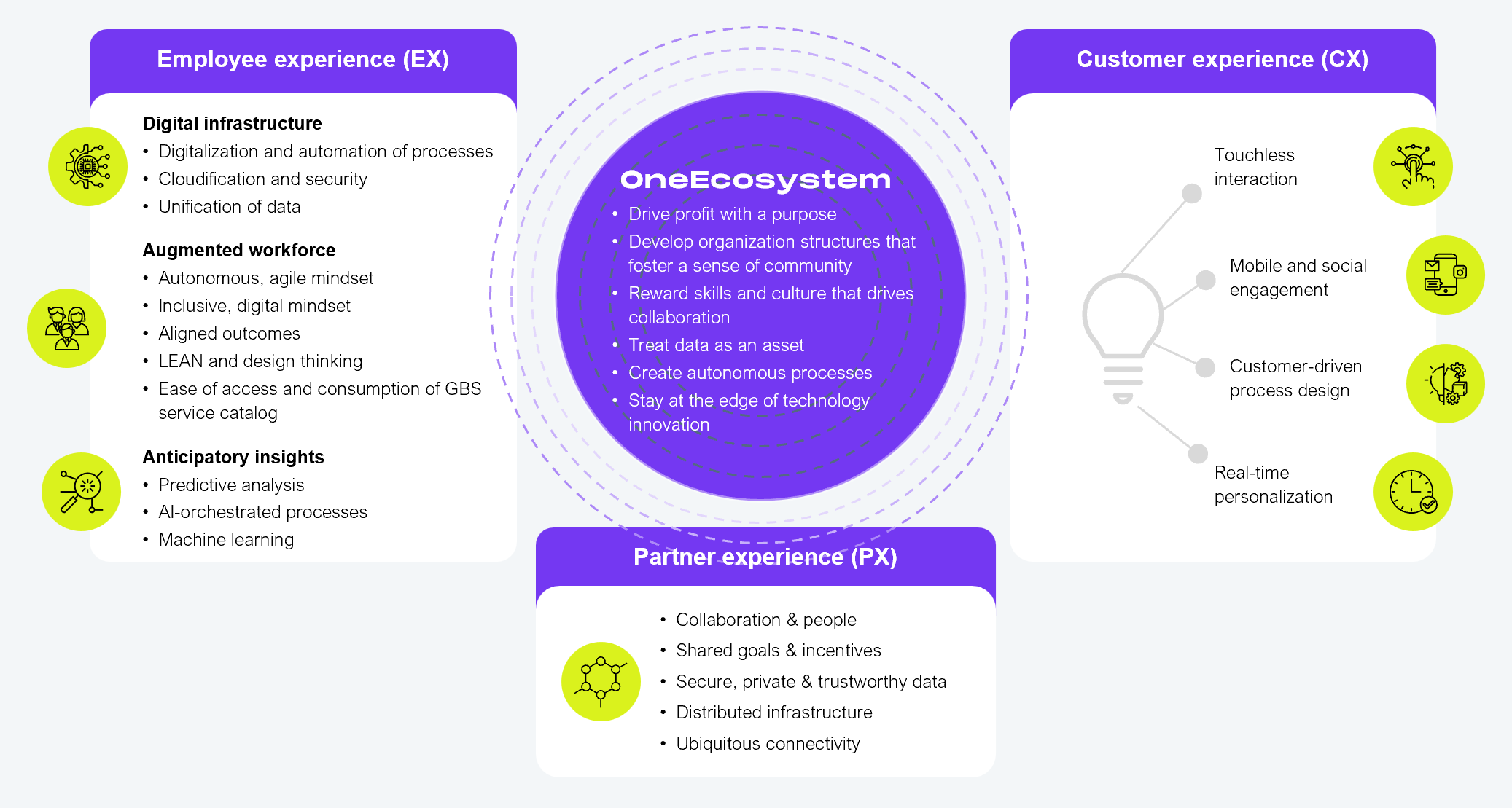
A partner ecosystem that allows access to disruptive technologies, expert partners steeped in pharmaceuticals, process specialists, and other innovators is best positioned to take GBS to the intelligent enterprise archetype. An ideal partner ecosystem will optimally connect the employee experience, customer experience, and partner experience (see Exhibit 8). In a recent HFS Research study, the top five reasons to invest in ecosystems were creating a positive brand perception, addressing an underserved market or unmet needs, developing new products or services collaboratively, creating autonomous supply chain-driven transparency and efficiency, and understanding emergent needs faster.
Source: HFS Research, 2025
GBS will be a strategic function in the future, charged with addressing important enterprise objectives, including speed to market, market expansion, and risk management. In that context, the GBS leader must report to the enterprise’s CEO, not the CFO, as has been typical. This will give GBS the proper mandate, and bring much greater visibility and accountability to address corporate objectives.
CEO saw glue was missing to drive transformation…too much fragmentation…GBS under CFO never getting anywhere.
— C-suite member, global pharmaceutical company
Pharma leaders should significantly increase their expectations of their GBS organization over the next two years (see Exhibit 9). While finance, technology, and HR functions are expected to grow in the same period, expanding the pharma-specific scope will likely have the most significant impact on enterprise strategy. That scope, influence on enterprise strategy, and budget are additional reasons for the future GBS to reside in the C-suite.
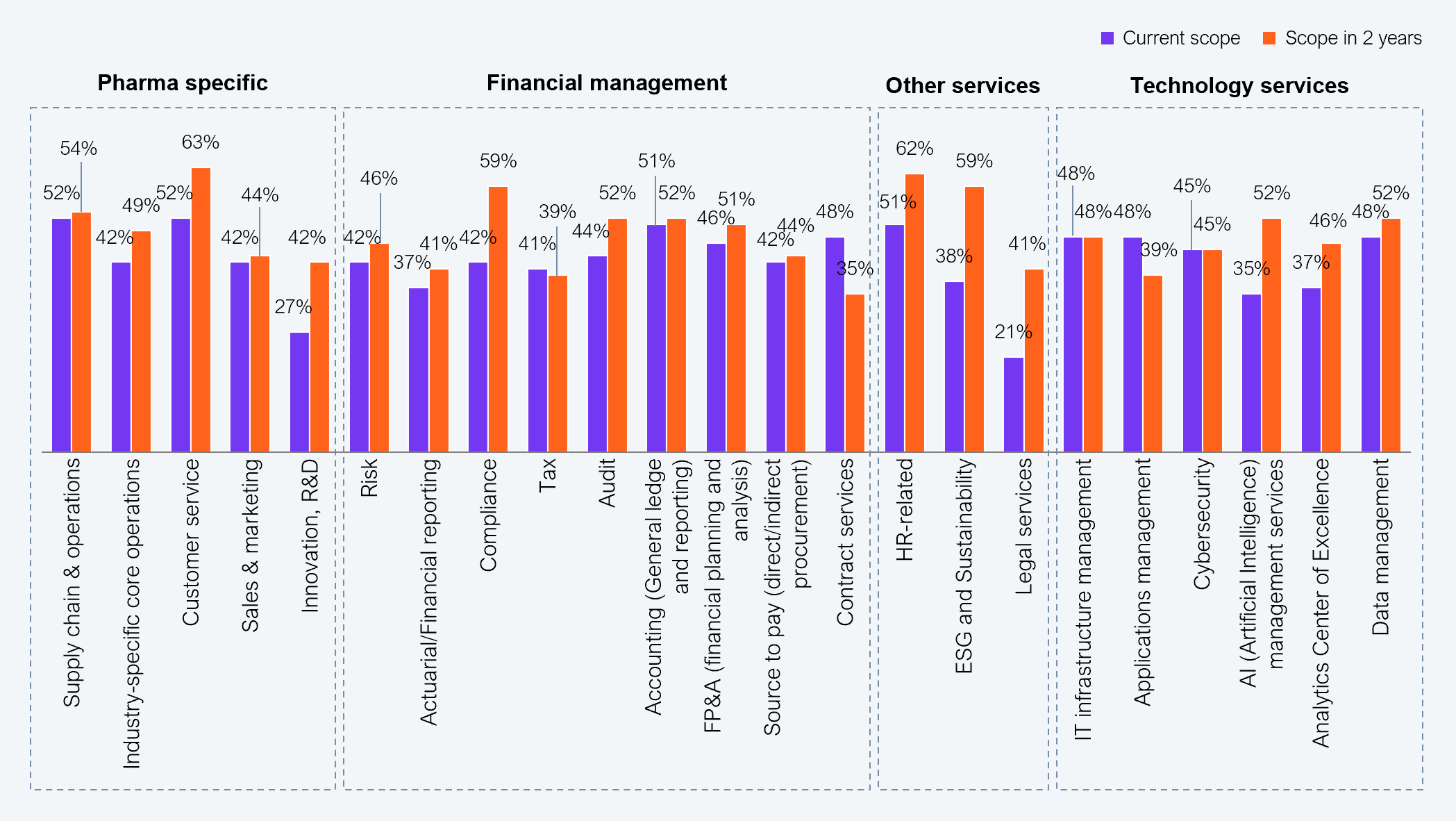
Sample: N = 71 pharma enterprises
Source: HFS Research, 2025
Approximately 10% of pharma GBS leaders are currently members of the C-Suite. Interestingly, this configuration is mostly in mid-sized companies, not big pharma. This suggests an intrinsic nimbleness and experimental approach that smaller organizations tend to take. GBS leaders in the C-suite have a very different view of the role of GBS today and in the future. They generally subscribe to a vision for GBS that aligns closer to the intelligent enterprise archetype. They boast attributes such as a clear mandate and support from the CEO to drive the organization forward, the right-sized budget, and influence over the enterprise strategy and their peers. This is a far cry from GBS leaders who are one or two levels removed from the C-suite and are, by design, more likely to take orders and execute them rather than devise and give orders.
A GBS leader or CEO who believes in GBS driving the next level of value creation must consider a business leader to lead GBS as we are seeing in some other industries like FMCG.
— C-suite member global pharmaceutical company
In organizations where GBS is typically in the CFO’s office or two levels away from the C-suite, the appreciation of what GBS does is inconsistent with reality. At multiple pharmas, the scope of GBS, as described by their leaders, was vastly different than that of country managers or other functional leaders within the same enterprise. This inconsistent understanding of GBS hampers and constrains its value proposition. GBS leaders in the C-suite can communicate consistently across the enterprise with a voice that is more likely to speak to everyone, mitigating misconceptions and diluting the value of GBS.
The GBS journey is at a crossroads. Staying on the same path hastens its extinction. Take the correct turn to a new future paradigm and see the path to value radically expand. Cost reductions have a value ceiling, and cost management is a foundational function of all leaders. However, enabling enterprise growth through speed to market, market expansion, and risk management can be limitless, and the GBS organization is primed for it with the proper mission, mindset, and leadership.





Register now for immediate access of HFS' research, data and forward looking trends.
Get StartedIf you don't have an account, Register here |
With the exception of our Horizons reports, most of our research is available for free on our website. Sign up for a free account and start realizing the power of insights now.
Our premium subscription gives enterprise clients access to our complete library of proprietary research, direct access to our industry analysts, and other benefits.
Contact us at [email protected] for more information on premium access.