Enterprise AI is stuck in its “demo decade.” Generative AI models are improving rapidly, and copilots are everywhere. Yet for leaders who own the operational core across procurement, finance, supply chain, and IT, there are pilots everywhere, but no compounding value. HFS estimates that around 75% of firms remain stuck in pilot purgatory. This POV is for enterprise leaders accountable for how work actually gets done across those functions, typically COOs, CFOs, CIOs, and heads of shared services.
Should you keep funding isolated AI pilots and point solutions, or build an execution layer that ties operational truth to governed action? We argue you should stop buying more AI pilots and start funding “Enterprise AI Execution” as the missing operating layer.
Source: HFS Research, 2026
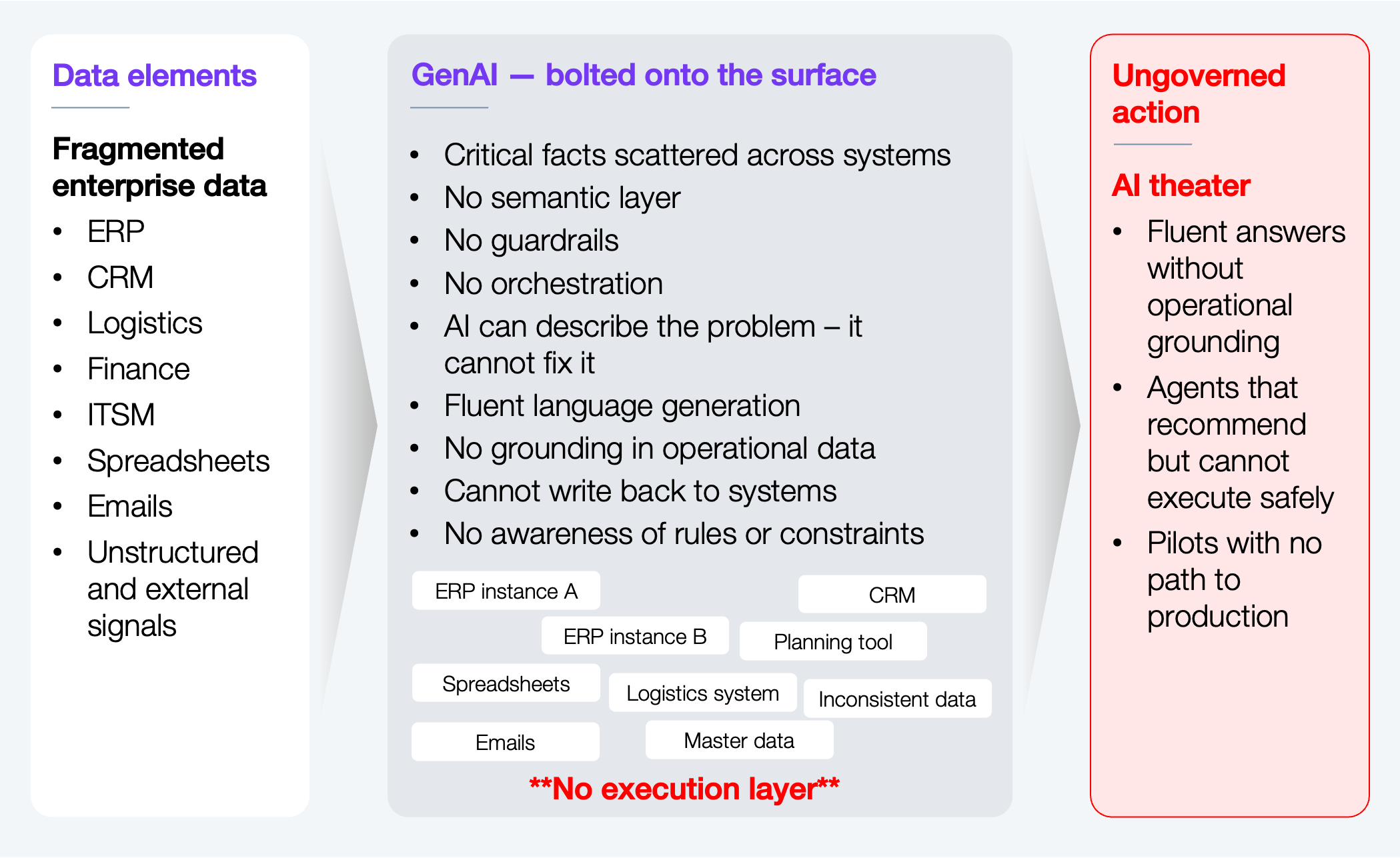
More capable GenAI models (LLMs) aren’t the only solution. For any real workflow—whether inventory, fulfillment, cash, or service—critical facts are scattered across ERP instances, planning tools, logistics systems, CRM, ITSM, spreadsheets, emails, and inconsistent master data. Bolt GenAI onto the surface, and you get AI theater: fluent answers without operational grounding and agents that can recommend but cannot execute safely.
The market doesn’t need another process mining vs. automation fight. It needs an overlay that makes operations legible to machines and actionable for humans while retaining the application stack.
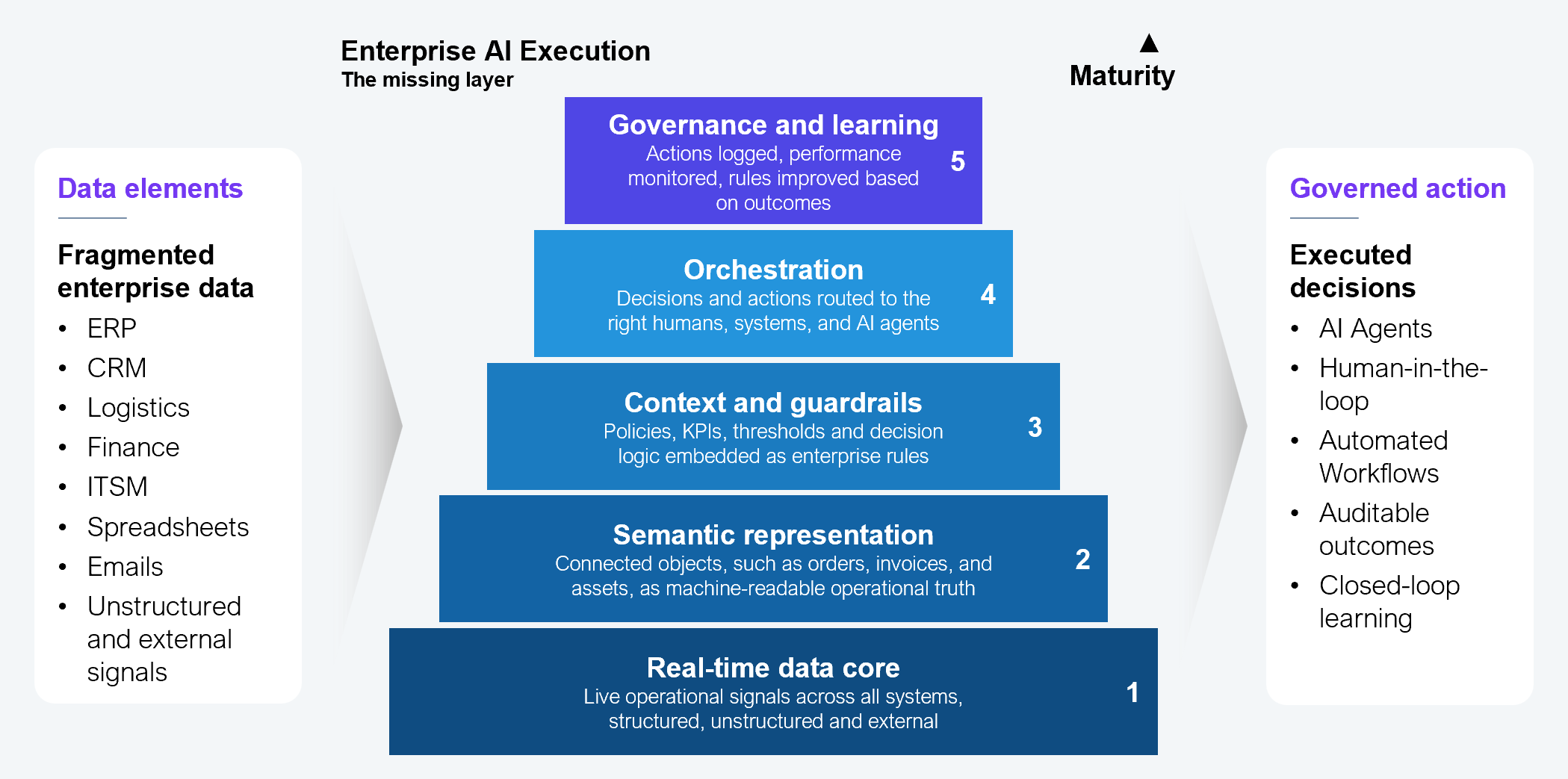
An emerging operating layer, Enterprise AI Execution (EAIE), is taking shape. EAIE is a control plane that turns multimodal enterprise data into governed, real-time decisioning and executed actions across systems and teams. Enterprise AI only becomes real when it is grounded in operational truth, informed by a semantic representation of the business, and delivered through composable solutions and orchestrations that drive collaborative execution.
Exhibit 2 shows EAIE as the operating control plane that sits between fragmented enterprise data and executed decisions. The five layers are also a maturity path. Organizations that attempt to implement the top layers without the foundational lower layers end up with AI theater instead of compounding value. Layer 1, a real-time data core, is the foundation; governance and learning comprise the most mature layer.





EAIE is not a data lake, an ERP replacement, or a single-domain control tower. It is the layer that makes existing systems, rules, and automations coherent and governable end to end.
Source: HFS Research, 2026
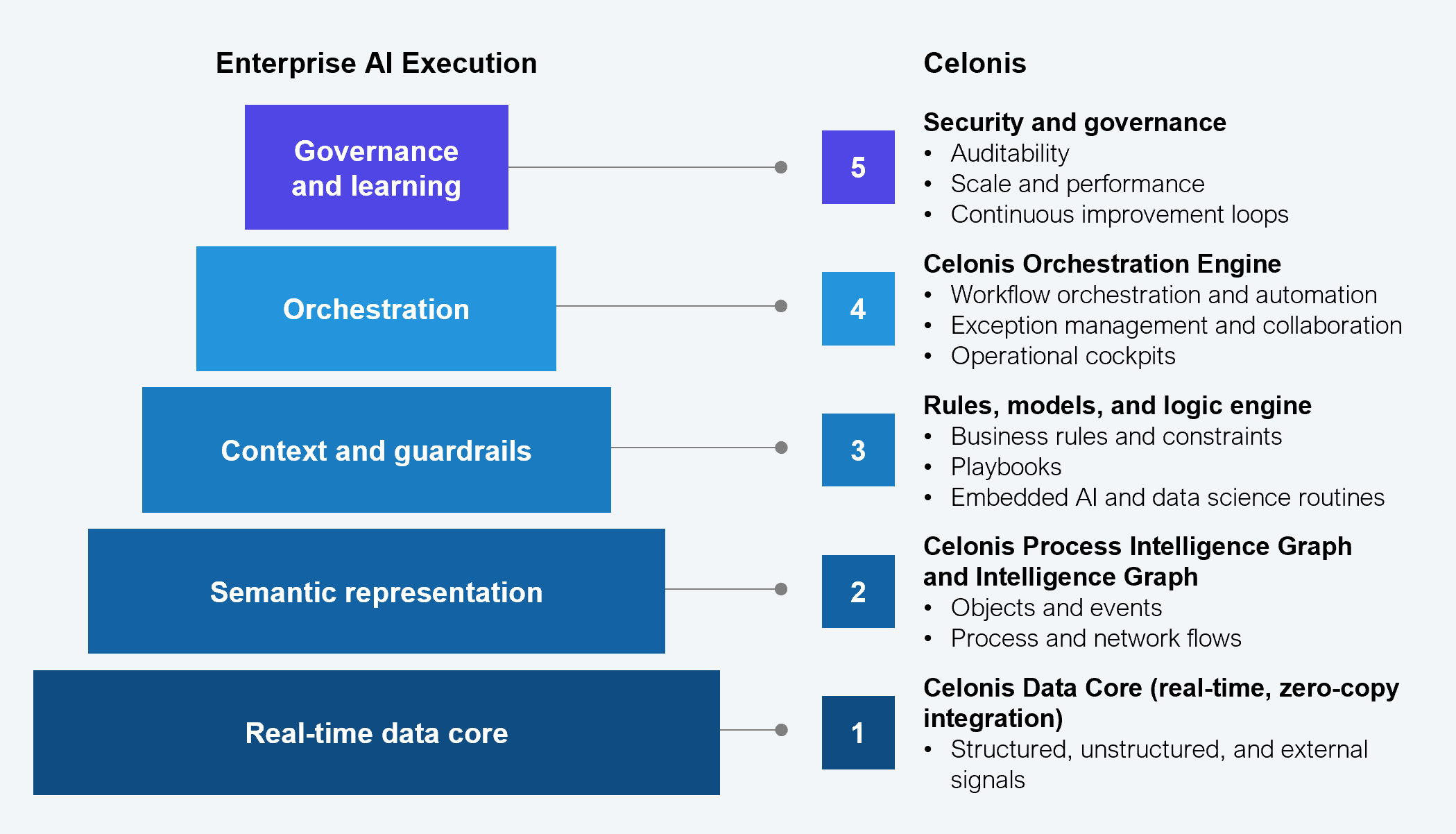
Celonis is best known for process mining. Its recent product direction broadens that foundation into a process intelligence and orchestration platform, illustrated in Exhibit 3, built around an object-centric Process Intelligence Graph (to connect data, objects, and events) and an Orchestration Engine (to route, coordinate, and automate actions for people, systems, and AI agents). In EAIE terms, Celonis is evolving from insight to governed execution in the flow of work.
Source: HFS Research, 2026
Competitors can claim parts of the stack (process modeling, mining, integration, workflow, RPA, and copilots). However, EAIE will be won at the seams by a provider who can connect objects across systems, inject context as guardrails, define what can be “hands-off,” and execute in a closed loop with governance.
Supply chain, especially in manufacturing, is one of the most fragmented and complex enterprise functions, making it a strong proving ground for EAIE. Complexity is unavoidable, decisions are exception-driven, trading policies fluctuate constantly, and hallucinations become physical costs, including downtime, stockouts, excess inventory, and expedited freight. The same EAIE pattern also appears in finance and shared services, where value streams such as order-to-cash span multiple systems and teams.
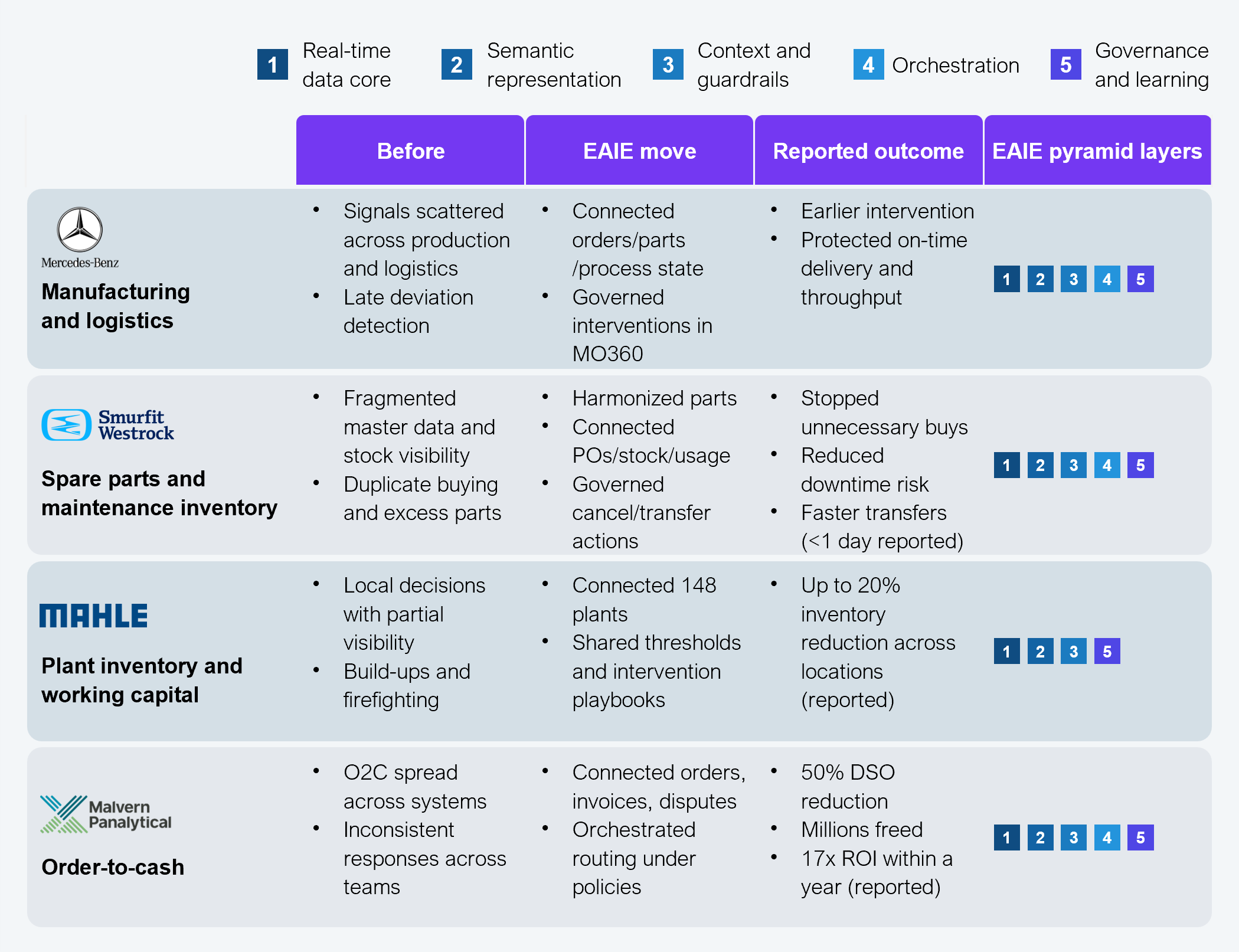
The proof points in Exhibit 4 show what changes when you stop bolting AI onto fragmented data (Exhibit 1) and instead put an execution layer in place that connects operational truth, context, orchestration, and governance (Exhibit 2). In each case, the differentiator is the ability to connect operational truth to governed action in the flow of work.
Source: HFS Research, 2026, based on publicly shared customer examples
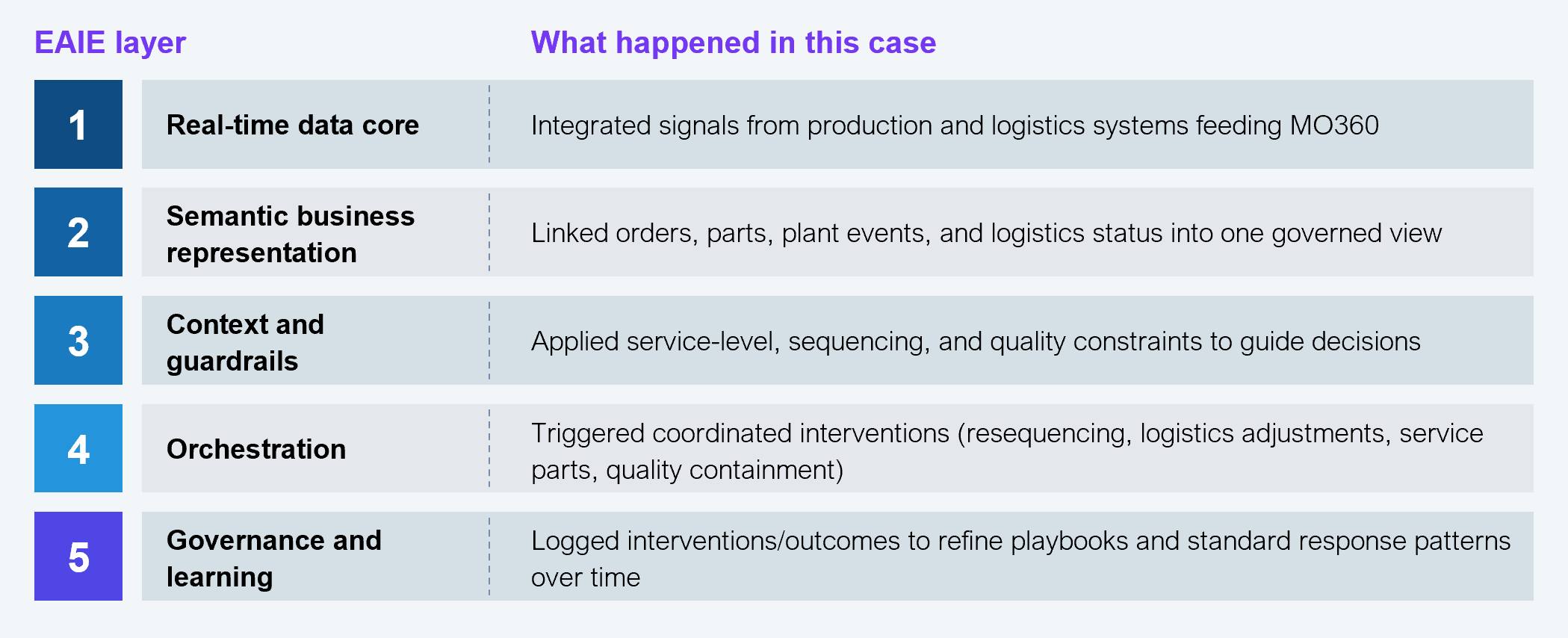
Mercedes-Benz protected service levels and throughput across a multi-plant manufacturing and logistics network
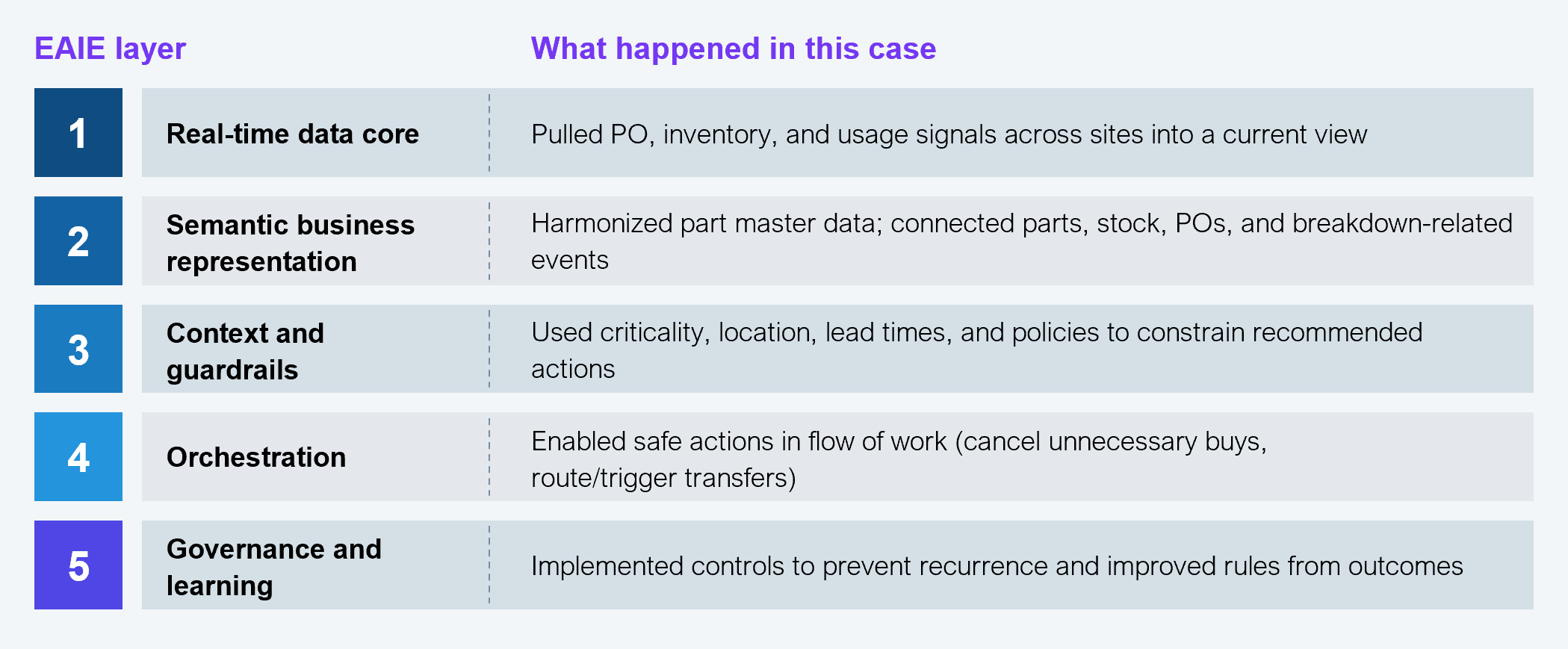
Smurfit Westrock turned spare-parts chaos into governed inventory action after acquisitions
MAHLE governed inventory decisions across 148 plants instead of improvising site by site
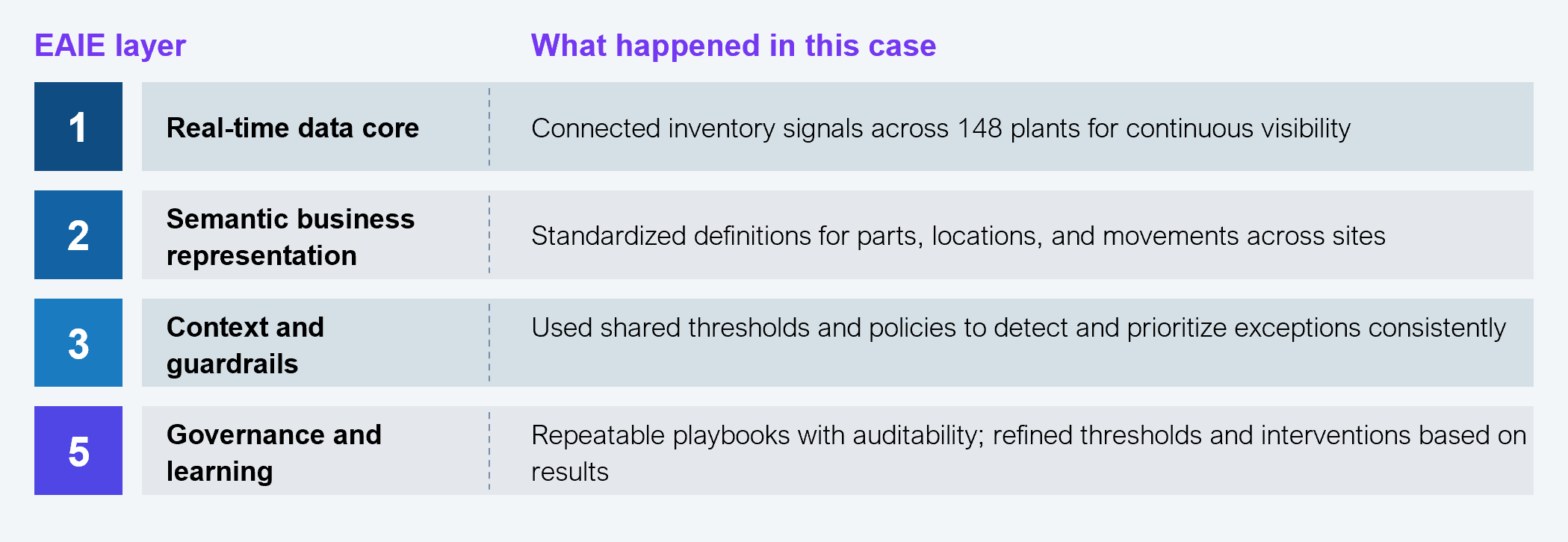
Across these manufacturing examples, the pattern is consistent: connect operational truth to context, orchestrate action in the flow of work to improve outcomes, then improve repeatedly.
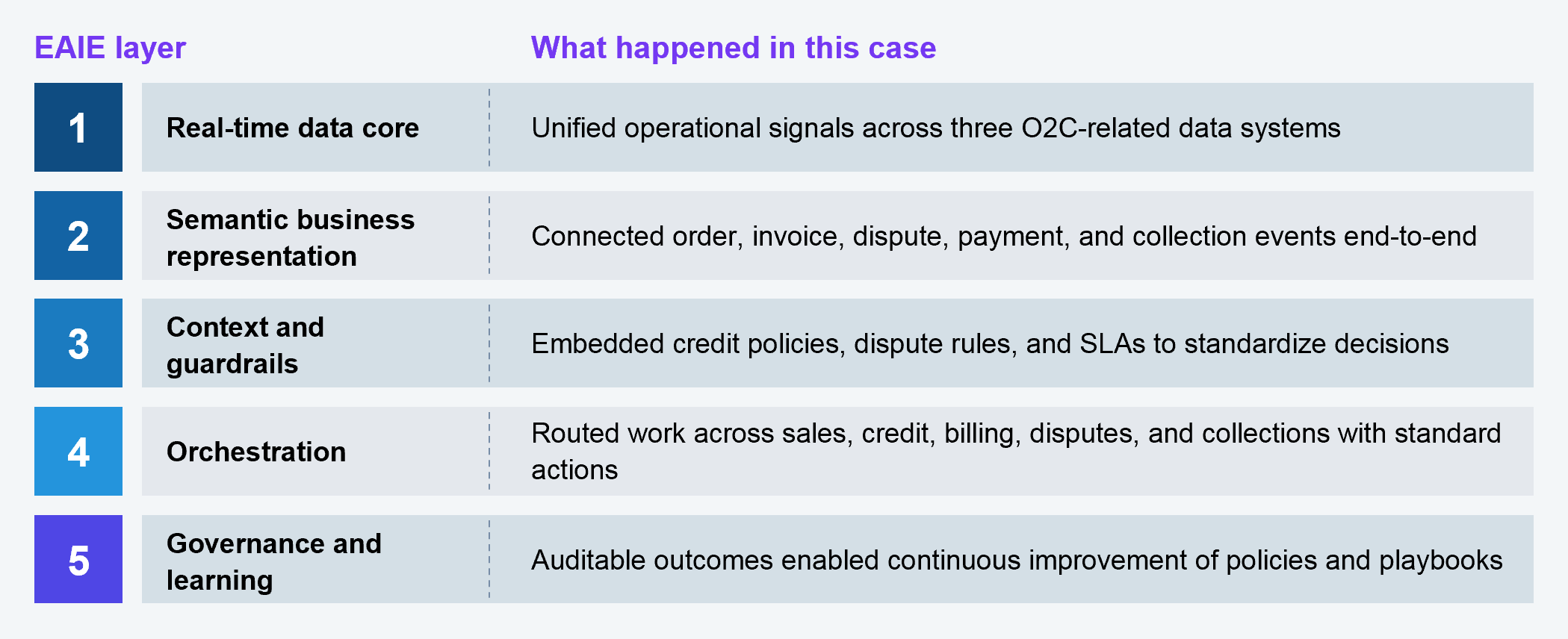
The same interoperability problem shows up in finance, just with a nuanced approach: order-to-cash is not a single workflow; it is a value stream spanning sales, credit, invoicing, disputes, and collections.
Malvern Panalytical built the bridges for end-to-end order-to-cash execution
Enterprise AI Execution platforms, such as Celonis, create the most value where work is repeatable, event-driven, and anchored in operational systems. They are not the primary answer for these situations:
Even in these environments, EAIE can still improve the operational value streams that support innovation; for example, procurement, supplier quality, change control, compliance, and service.
Enterprises that skip the execution layer will keep adding AI to broken processes, increasing risk and cost without moving the needle on margin, growth, or resilience. Direct investment and executive attention to the data, semantic, guardrail, and orchestration capabilities that make EAIE real across procurement, finance, supply chain, and IT. In RFPs and renewals, require vendors to show how they connect to that execution layer and govern AI-driven actions end-to-end.
Register now for immediate access of HFS' research, data and forward looking trends.
Get StartedIf you don't have an account, Register here |
With the exception of our Horizons reports, most of our research is available for free on our website. Sign up for a free account and start realizing the power of insights now.
Our premium subscription gives enterprise clients access to our complete library of proprietary research, direct access to our industry analysts, and other benefits.
Contact us at [email protected] for more information on premium access.