This HFS Challengers’ Code report is for CIOs, infrastructure leaders, and enterprise transformation executives evaluating platforms that connect IT performance to business outcomes.
Bridging the IT–business divide through enterprise-grade, business-aligned intelligence
The HFS Challengers’ Code reports spotlight an emerging or mid-sized firm reshaping traditional service or product models. We distill the firm’s unique playbook, showing how strategy, operating model, and AI-native execution combine to deliver differentiated outcomes for enterprise clients. We provide enterprise leaders with practical insights to apply while selecting vendors, strategizing sourcing, and pressure testing incumbents.
Enterprise leaders, from the C-suite to the business units responsible for driving performance, are operating with a fundamental blind spot. The tools and metrics they rely on, such as service-level agreement reports, AIOps dashboards, and managed services scorecards, are designed to measure whether IT is functioning, not whether it is delivering meaningful business outcomes. The result is the “watermelon effect,” where performance appears healthy on the surface while underlying issues continue to impact revenue, cost, and customer experience.
This is a visibility challenge. More critically, it’s a decision-making gap. Leaders are allocating capital, scaling operations, and prioritizing initiatives based on signals that don’t fully reflect enterprise-level impact.
The shift required is not more dashboards, but a different way of interpreting and governing technology performance. This means moving from activity-based metrics toward outcome-linked accountability, where operational signals are connected, contextualized, and tied directly to business outcomes. Black Box IntelliPact® reflects an early example of this shift in practice.
Over the past decade, enterprises aiming to capture signals and improve operational responsiveness have invested heavily in AIOPs tools, observability platforms, business intelligence (BI) systems, and third-party providers.
Yet the challenge today is about interpretation, not just visibility. Decision makers can see what is happening within individual systems, but they often lack a reliable way to understand what those signals mean in a broader business context. As a result, decision making is increasingly influenced by incomplete or misaligned information. And the problem runs deeper: when signals are interpreted in isolation, they don’t just create gaps in visibility; they create distortion.
Enterprises recognize this gap, with 74% prioritizing end-to-end process visibility, 72% seeking to link automation initiatives to measurable outcomes, and 81% wanting engagement models tied directly to business outcomes (see Exhibit 1).
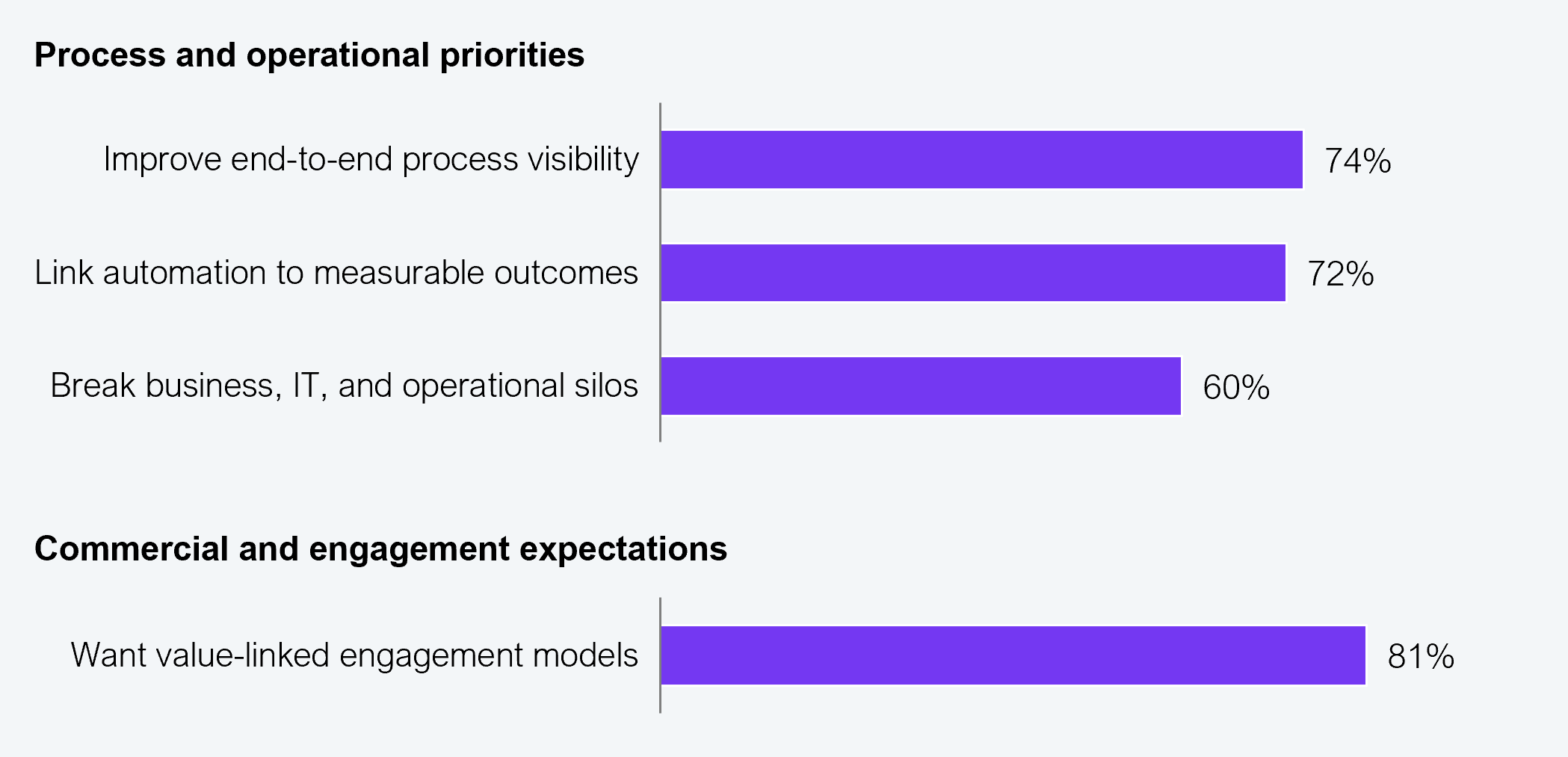
Sample size: 505 IT and business leaders across G2000 enterprises
Source: HFS Research, 2026
Equally important is what remains unseen. Disconnected or fragmented data streams often hide latent issues that only surface after they have already affected the business. This is the structural challenge that needs to be addressed.
IntelliPact is designed to operate as a business-aligned intelligence platform. It connects signals across IT, the workplace, and broader enterprise operations, including non-technical functions such as facilities, spend management, and people management, translating them into a unified view of performance.
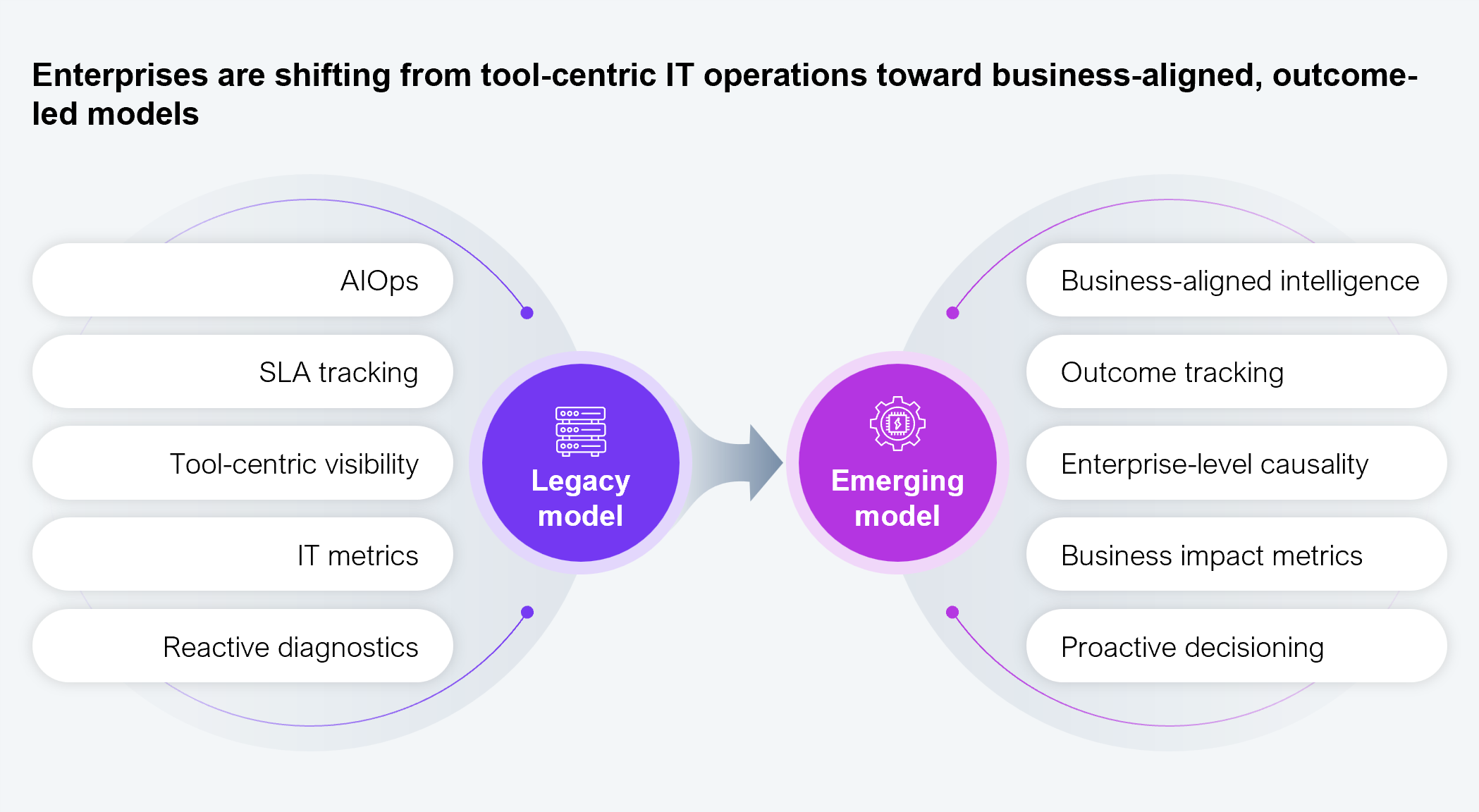
Enterprises do not need another tool. They need a way to make sense of the tools they already have. Rather than replacing existing platforms, IntelliPact connects to them, aggregates their signals, and transforms them into actionable intelligence. This reflects a broader shift in how operational signals are monitored, interpreted, and governed, moving away from IT-centric visibility toward business-aligned intelligence (see Exhibit 2).
Source: HFS Research, 2026
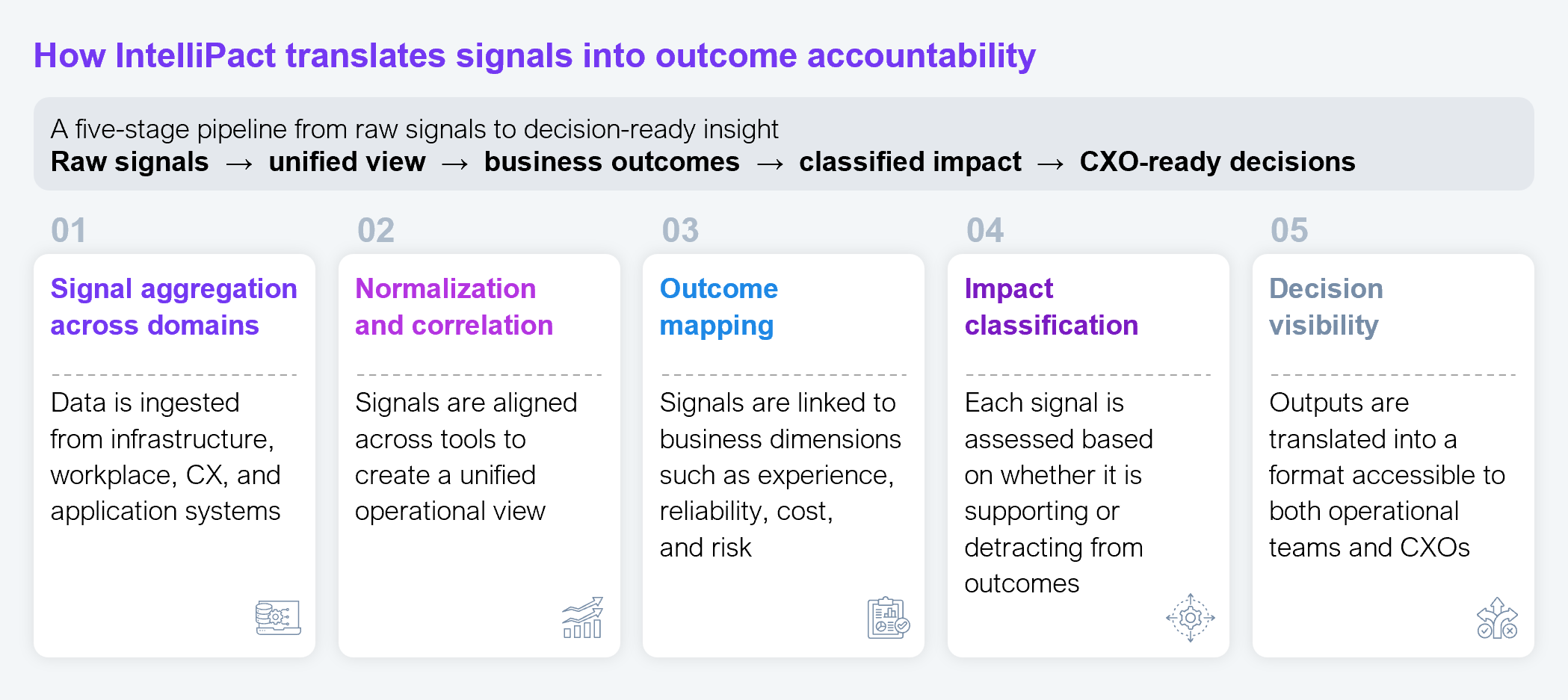
IntelliPact’s architecture is designed around a structured flow to get the relevant insights:
Through this pipeline, IntelliPact translates fragmented operational data into a connected, business-relevant view that enables proactive decision making rather than reactive diagnostics (Exhibit 3).
Source: HFS Research, 2026
The value of IntelliPact is most evident in cases where traditional tools provide signals but not clarity:
Case 1: Misinterpreted demand vs. underlying system behavior
Stakeholder: Head of Customer Experience/Contact Center Operations
High call abandonment rates suggested a capacity shortfall, prompting plans to increase contact center staffing. IntelliPact revealed that calls were being repeatedly transferred across systems and double-counted, inflating abandonment metrics. The issue was rooted in call-routing configuration rather than actual demand, preventing misdirected investment and surfacing an estimated $420,000 to $880,000 in missed revenue or patient care access opportunity. This figure does not account for the additional value generated through ongoing innovation pod deployments. Black Box also introduced complementary capabilities, including agentic AI and contact center automation, with IntelliPact auditing their combined business impact.
Case 2: Hidden cost inefficiencies within legacy environments
Stakeholder perspective: CIO/Head of Infrastructure
Infrastructure and network costs were assumed to be optimized, with no major inefficiencies flagged through existing reporting. IntelliPact identified a significant number of unused legacy POTS lines that had remained active but invisible within a siloed structure. Their removal resulted in immediate cost savings of approximately $250,000. This also provided visibility across a multi-vendor environment spanning multiple ecosystem platforms, enabled the benchmarking of providers performing similar functions, and helped identify opportunities for cost savings and automation.
Case 3: Latent enterprise issues that evade siloed tools
Stakeholder perspective: CIO/Head of Enterprise Applications
No major systemic issues were flagged across existing monitoring tools despite the ongoing performance degradation. By correlating signals across applications, infrastructure, and user experience layers, IntelliPact identified an underlying issue that remained undetected for eight months. The enterprise-level view surfaced what individual tools couldn’t identify in isolation.
Selecting the right platform requires more than evaluating features. The question enterprises should be asking is whether it can connect operational performance to the decisions that matter at the board level.
As enterprise and business leaders evaluate platforms such as IntelliPact, the focus should shift from capabilities to accountability:
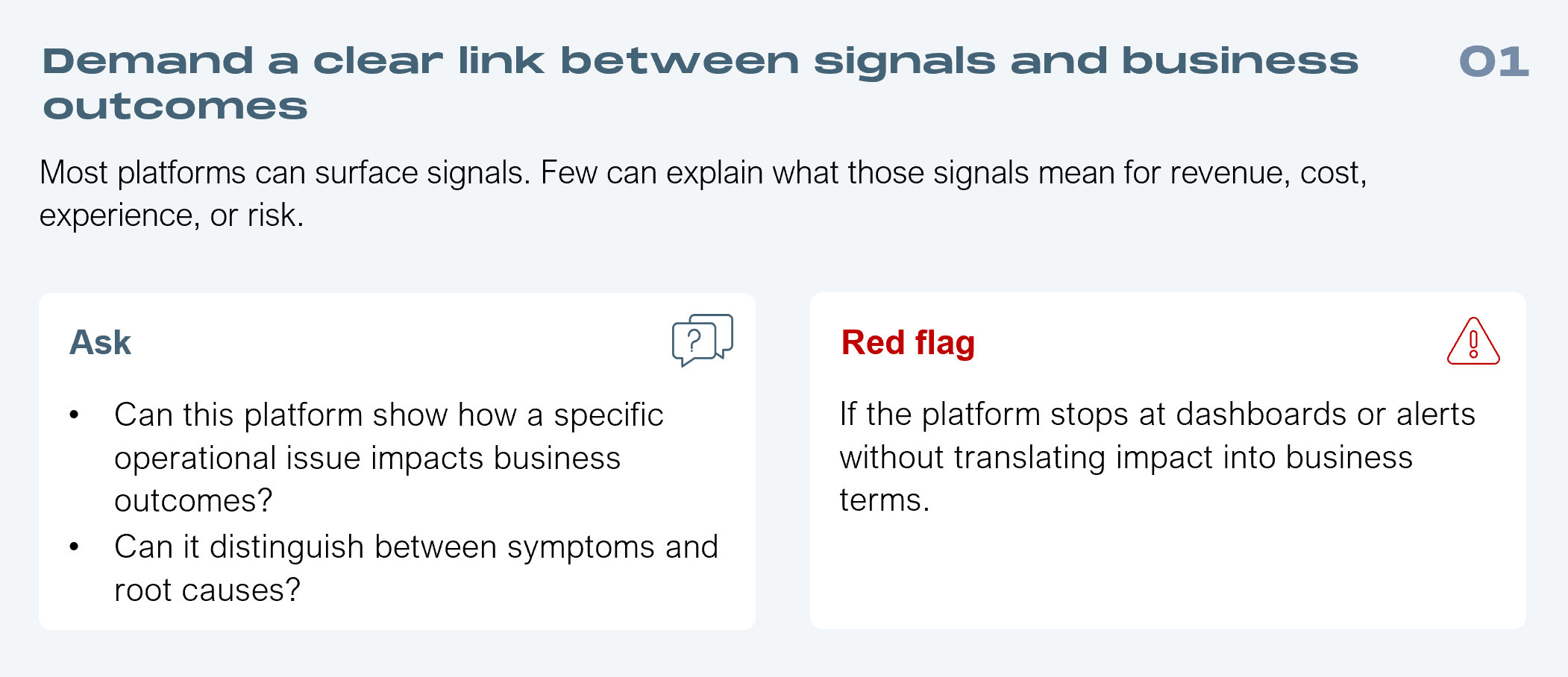
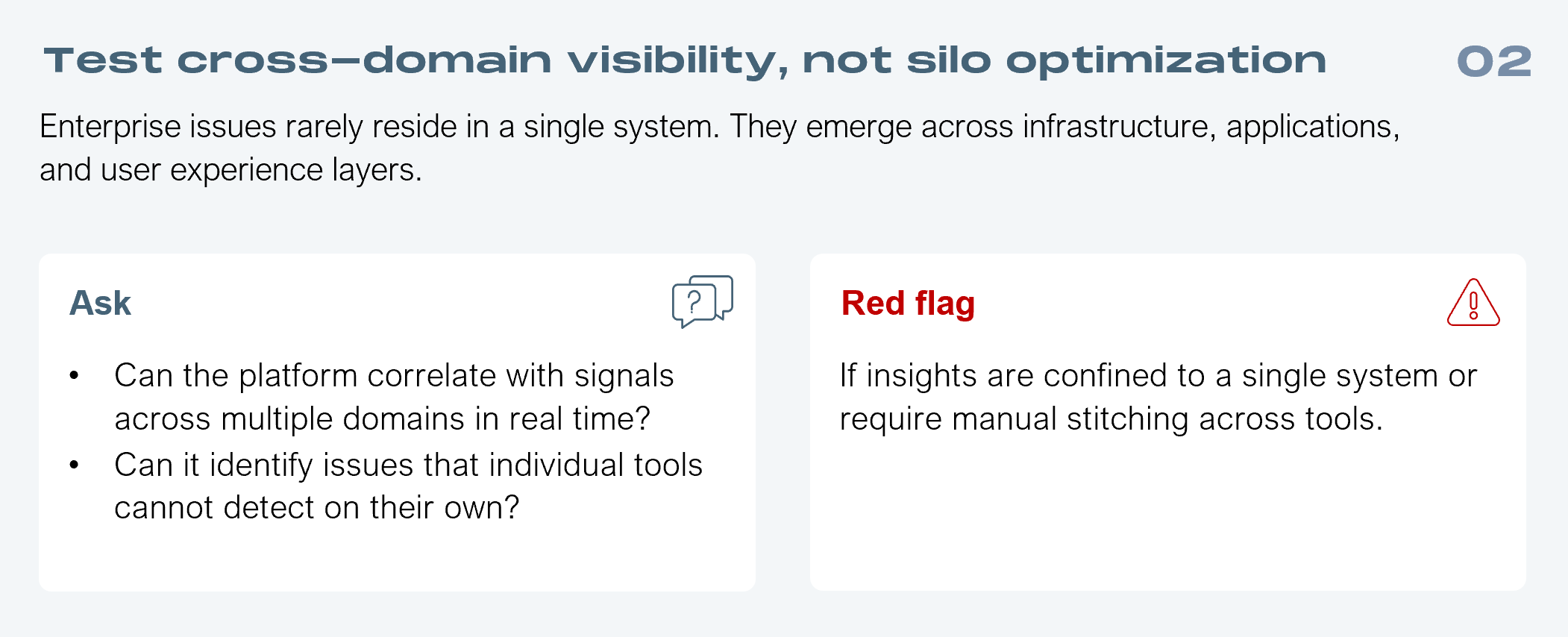
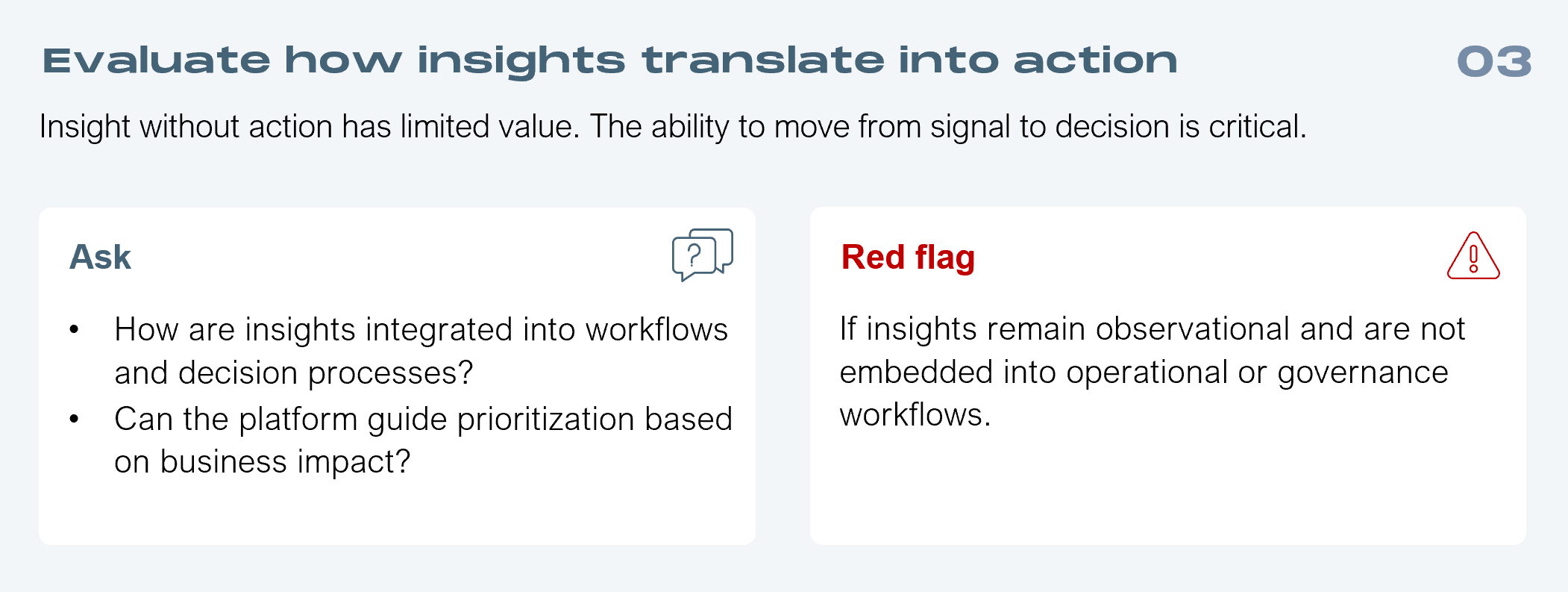
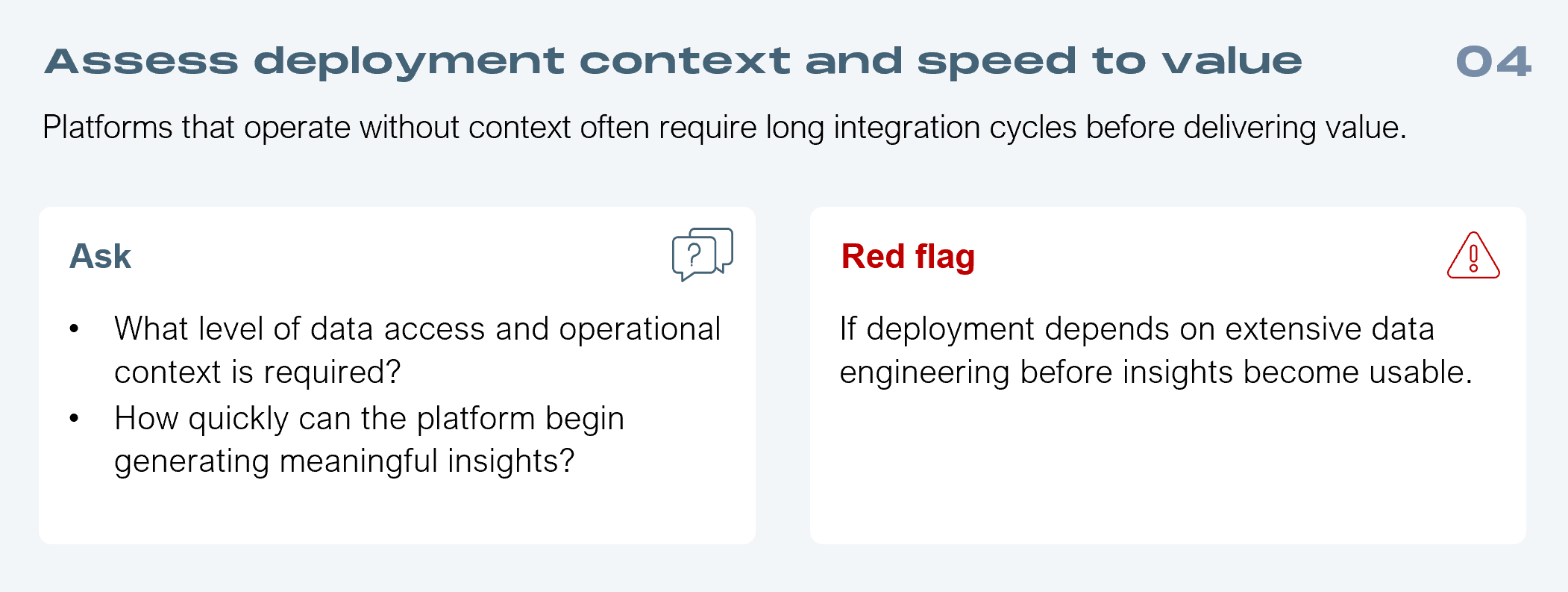
Enterprises that apply these criteria will be better positioned to distinguish platforms that generate visibility and those that enable accountability.
Enterprises can no longer rely on fragmented tools and SLA-driven models to guide critical business decisions because the inability to connect IT performance to business impact is now a structural risk, not just an operational inefficiency.
Leaders should prioritize capabilities that connect signals across domains, surface hidden risks, and establish a clear link between operations and outcomes. This means moving beyond dashboards and diagnostics toward platforms that enable real-time, outcome-driven decision making. Organizations that act now will be better positioned to allocate capital effectively, reduce hidden inefficiencies, and respond proactively to emerging risks.
Register now for immediate access of HFS' research, data and forward looking trends.
Get StartedIf you don't have an account, Register here |
With the exception of our Horizons reports, most of our research is available for free on our website. Sign up for a free account and start realizing the power of insights now.
Our premium subscription gives enterprise clients access to our complete library of proprietary research, direct access to our industry analysts, and other benefits.
Contact us at [email protected] for more information on premium access.