
Generative AI (GenAI) has made content creation easier and cheaper than ever. It’s been a solution for marketing leaders under pressure to deliver faster and more cost-effective campaigns. However, such “good-enough” content has stopped working. GenAI-led campaigns are faster but becoming more forgettable, and the AI marketing slop now dominates our social media feeds. To maintain creativity, CMOs must rewrite their playbooks, keeping originality as a key differentiator while using GenAI to accelerate production.
Our recent Pulse data showed that marketing CMOs are bullish on leveraging AI to improve personalization (see Exhibit 1). A plethora of powerful GenAI tools have now become standard components in the marketing toolkit. Platforms such as ChatGPT, Jasper, Copy.ai, Writesonic, AdCreative.ai, and Anyword are widely used for content creation, ad copy, and SEO optimization. Midjourney, DALL·E, and Adobe Firefly generate compelling visual assets, while Runway, Invideo AI, Synthesia, and Pictory create AI-powered videos. In analytics and campaign optimization, tools such as HubSpot AI, Adobe Sensei, Salesforce Einstein, and Google Performance Max are redefining targeting and segmentation. Such platforms help marketers accelerate creative production and maintain brand consistency and relevance.
However, expanding stacks like these expose enterprises to practical risks: tool fragmentation that sprawls across workflows, output commoditization that settles for good-enough content, message sameness, and continued wasted spend due to duplicate work and limited creativity. These challenges form the backdrop for GenAI adoption and underscore why CMOs must rethink their approach, not just add more tools.
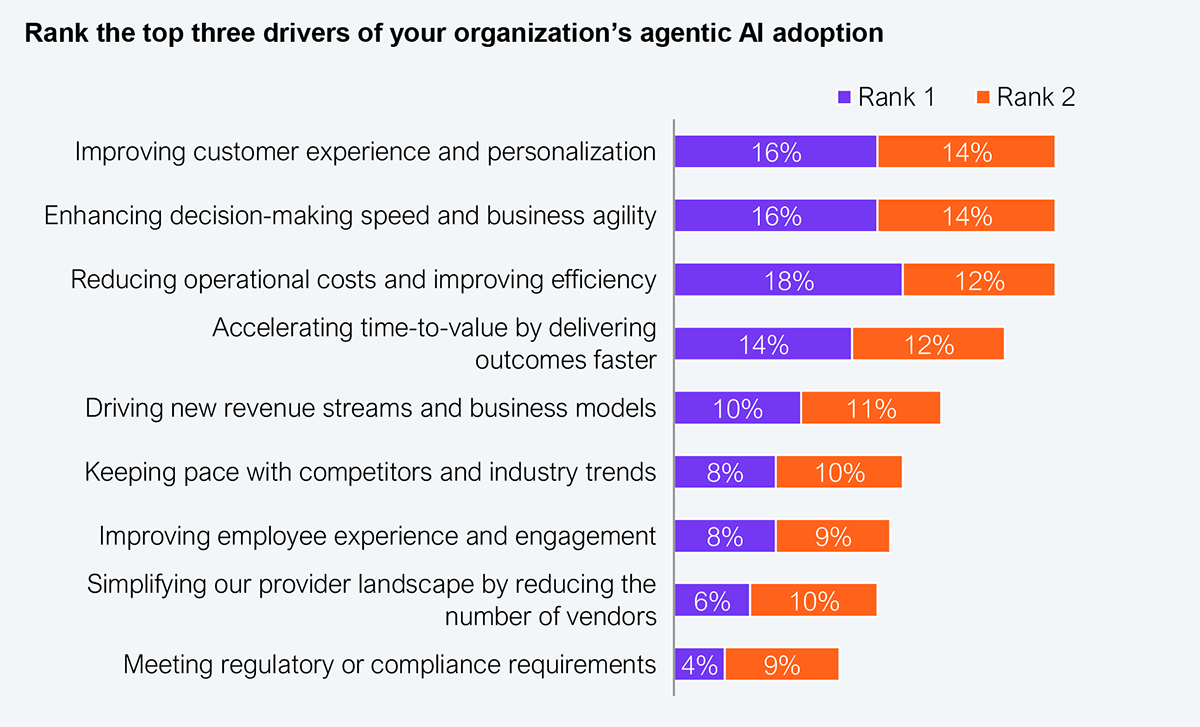
Sample: Number of respondents = 1,002 enterprise leaders across industries
Source: HFS Research, 2026
Using GenAI for marketing is a double-edged sword for both enterprises and service providers. Good-enough content will be everywhere, but only emotionally resonant and truly connective content will stand out. While GenAI enables faster and cheaper content production, it also raises the strategic bar, demanding risk-taking, deeper insights, and above all, human creativity.
Additionally, human oversight through creative governance, ethical content review, and AI safety protocols should be part of the process. Enterprises and service providers now have a critical opportunity to address this by building content governance and responsible AI frameworks for their clients. It’s not just about speed, but about trust and accountability at scale.
GenAI has democratized access to high-quality content. A solo entrepreneur can create a polished brand campaign, and a small business can create a multitude of variations for an email headline. But do GenAI platforms really “know” the brand customer? Can it create a bold idea or just expand on one?
With more content flooding the market, standing out has never been harder. As we heard from enterprise marketers in our recent digital marketing and sales services assessment, differentiation depends more than ever on brand voice, bold storytelling, and emotional resonance, areas where human strategy is still the main ingredient of customer success. While GenAI can scale visual assets or localize content, a campaign’s cultural impact will only come from a deep understanding of human needs, nostalgia, and identity.
Few brands are learning this the hard way. A global beverage company faced backlash when its holiday campaign came off as soulless and sloppy, feeding the growing perception of AI slop. When output isn’t guided by human creativity, the tool becomes the story. In contrast, several beauty brands are taking a stand by rejecting the use of AI-generated faces, bodies, or hair in marketing, especially when it risks distorting product-benefit claims. These brands are choosing authenticity over automation, and customers are noticing.
The tech stack is only one part of the equation. Marketers that treat GenAI implementations as software deployments will miss the bigger opportunity and risk reinforcing mediocrity at scale. The marketing team’s role should evolve from execution to ideation, or rather from content creation to brand storytelling. It’s now on CMOs to build cultures that nurture creativity, encourage experimentation, and reward strategic risk taking. They should reskill existing teams on directing AI rather than just using it and restructure roles to make them focus less on content volume and more on creative campaign orchestration.
GenAI must be used as a creative co-pilot rather than a content machine. Brands that embrace it as an accelerator while investing more in talent and culture will stand out in an increasingly noisy marketplace. The winners will be those that combine the speed and scale of AI with the nuance, originality, and emotional intelligence to fuel human creativity. Now is the time to reframe the marketing function as a discipline where ideas lead, AI assists, and humans at the helm deliver value and a differentiated customer experience.
Register now for immediate access of HFS' research, data and forward looking trends.
Get Started


If you don't have an account, Register here |
Register now for immediate access of HFS' research, data and forward looking trends.
Get Started
