This Market Impact Report is for commercial insurance executives, chief product officers, and technology leaders evaluating how to modernize product strategy, accelerate innovation, and build the data and ecosystem capabilities needed to compete in the next era of risk management.
Commercial insurance is at a pivotal crossroads. Traditional, incremental approaches can no longer keep pace with emerging risks—from pandemic aftereffects and geopolitical tensions to climate change and cyber threats. Today’s market demands proactive, data-driven innovation that goes beyond reactive and rigid product strategies.
Our study of 350 commercial insurance leaders across North America and Europe (including the UK) reveals a stark industry divide. Only 18% of carriers currently launch truly new products, though disruptive offerings are projected to rise to 31% within two years. Larger carriers lead this transformation: 87% prioritize new product development today—with expectations rising to 91%—compared to just 18% overall among smaller firms. Yet, only 21% of respondents are confident in their innovation efforts, and fewer than one-third are prepared to integrate real-time data. Notably, large insurers show a 72% readiness for real-time data compared to only 25% among smaller carriers.
Legacy constraints remain a significant barrier. More than 76% of carriers are not making meaningful structural changes, and 70% design products without anticipating risks five years ahead. With 83% of executives citing outdated systems as the primary obstacle, it is clear that many carriers are ill-equipped to meet the dynamic demands of tomorrow’s market.
Our clustering analysis further distinguishes market leaders, or Pioneers, from their more cautious Traditionalist peers. Pioneers invest heavily in flexible, cloud-based platforms (66%), form strategic technology partnerships (63%), and focus on data-driven underwriting (61%). They launch new products in an average of just 6.8 months, continuously adapting their offerings (84% vs. 20% for Traditionalists), and demonstrate a 79% higher readiness for real-time data integration.
These insights offer a clear blueprint for the future: To remain competitive, commercial insurers must transition from reactive policy providers to agile, proactive risk partners. Embracing digital distribution, leveraging smart data, and forging robust ecosystem partnerships are not optional—they are essential steps toward long-term growth and differentiation.
The message is unequivocal: The transformation of commercial insurance is already underway. Insurers that act decisively and innovate boldly will shape the future of risk management, while those clinging to outdated models risk being left behind. The time to act is now.

Evolving risk and market pressures

Crisis of confidence in innovation

Data integration and agility gaps

Legacy constraints and inflexible products

Transformation through agility

Digital distribution and ecosystem integration

Pioneers vs. Traditionalists

The road ahead
This study was conducted via an online questionnaire-based survey targeting 350 commercial insurance leaders across North America, the UK, and Europe. Respondents were carefully screened to ensure relevance, representing a diverse mix of executives, department heads, and senior decision-makers from insurers of varying revenue sizes and direct written premiums. For a comprehensive view across enterprise functions, the respondents comprised 60% business leaders and 40% representatives from the IT organization. The survey focused on how commercial insurers are evolving their product strategies, integrating technology, and responding to emerging risks. Key areas of analysis included product innovation, underwriting transformation, data utilization, and ecosystem integration. The findings were segmented to distinguish Pioneers, those leading industry change, from Traditionalists, those taking a more cautious, incremental approach.
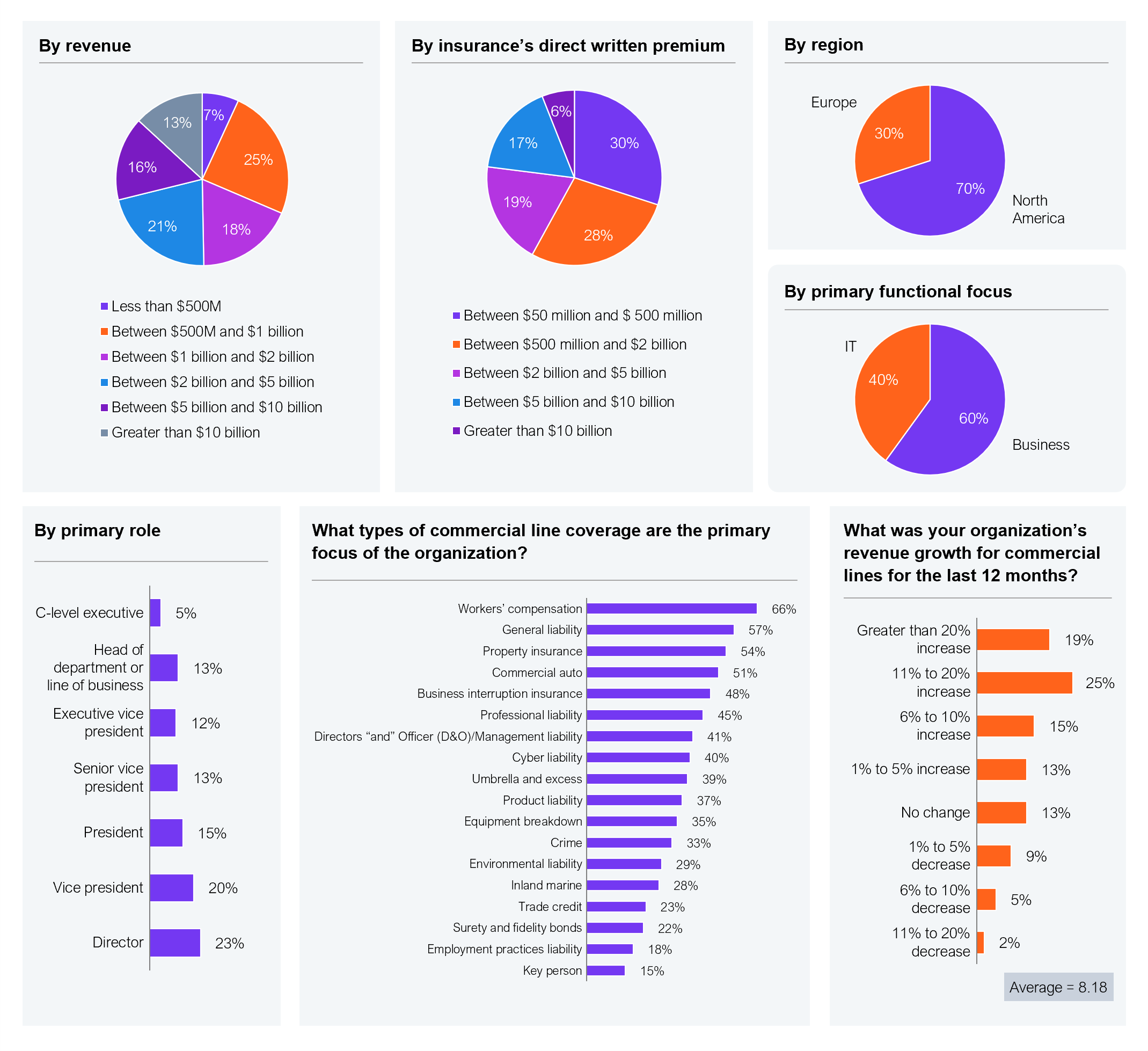
Sample: 350 commercial insurance leaders
Source: HFS Research, 2025
The commercial insurance industry is at a crossroads. Its slow evolution is at odds with the fast-moving realities of risk management.
Risk isn’t merely growing—it’s evolving. The lingering effects of the pandemic, supply chain disruptions, and geopolitical tensions have deepened economic instability, while climate change, catastrophic events, and rapid technological advances are driving new risks. Understanding risk is like playing zone defense in this dynamic landscape: constantly adjusting, yet never entirely in control. As risk outcomes become less binary, insurance consumers expect proactive solutions that anticipate and mitigate threats before disaster strikes, making innovative product development a critical industry mandate.
Despite a heightened focus on innovation, many commercial carriers remain ill-equipped to deliver on these ambitions. Traditional models, legacy debt, patched-together platforms, and a dwindling pool of underwriters skilled in complex commercial products hamper progress. Instead of serving as a competitive differentiator, new product initiatives are often bogged down by inherent risks and outdated practices.
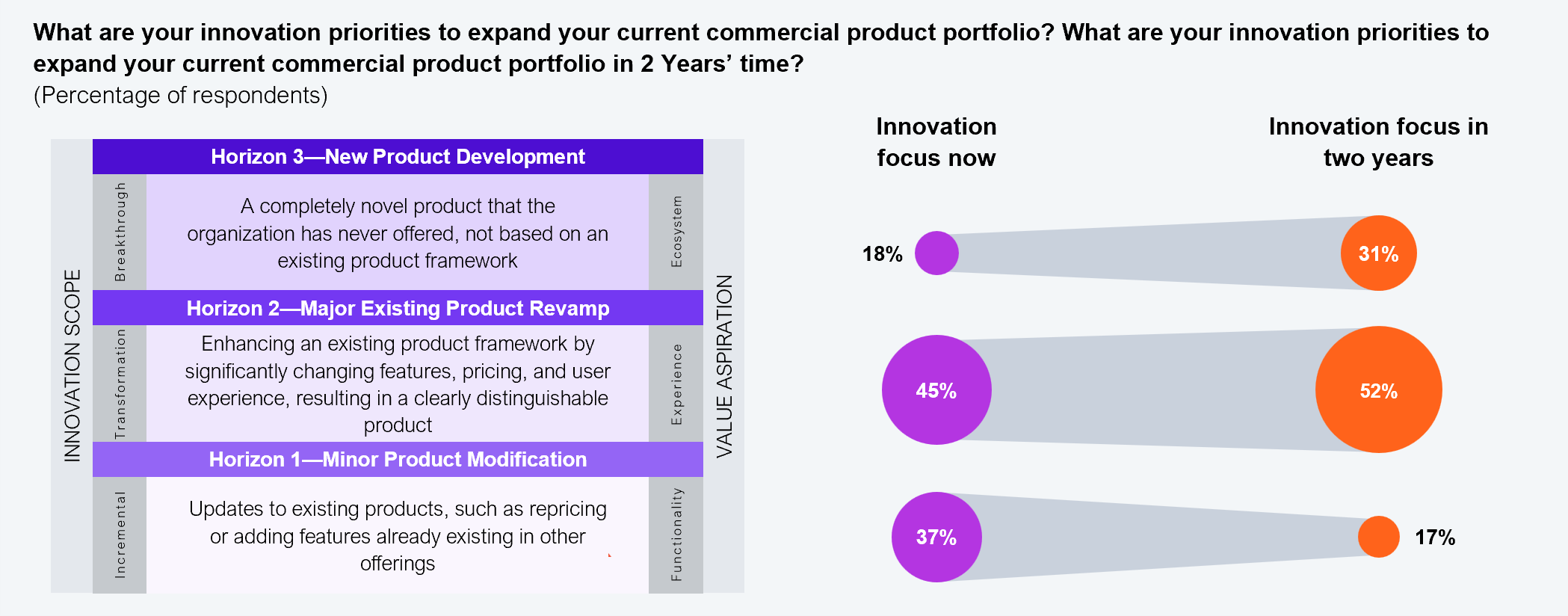
Our survey of 350 commercial carriers (see Exhibit 1) confirms this cautious approach: 37% focus on minor upgrades, 45% on major enhancements, and only 18% commit to launching genuinely new products. Projections for the next two years indicate a slight shift—17% will stick to minor tweaks, 57% will overhaul existing products to match market realities better, and 31% will finally introduce disruptive new offerings. A deeper analysis reveals a stark divide: 87% of larger carriers (with revenues above $10B) prioritize new product development—rising to 91% in two years—compared to 18% overall today and just 31% in the near future. Meanwhile, smaller carriers remain cautious, preferring incremental enhancements over bold, disruptive steps. This widening gap underscores a critical reality: Larger carriers not only commit to innovation but also have the capabilities to drive it.
Sample: 350 commercial insurance leaders
Source: HFS Research, 2025
Paralyzed by doubt, the lack of confidence in product innovation stalls execution
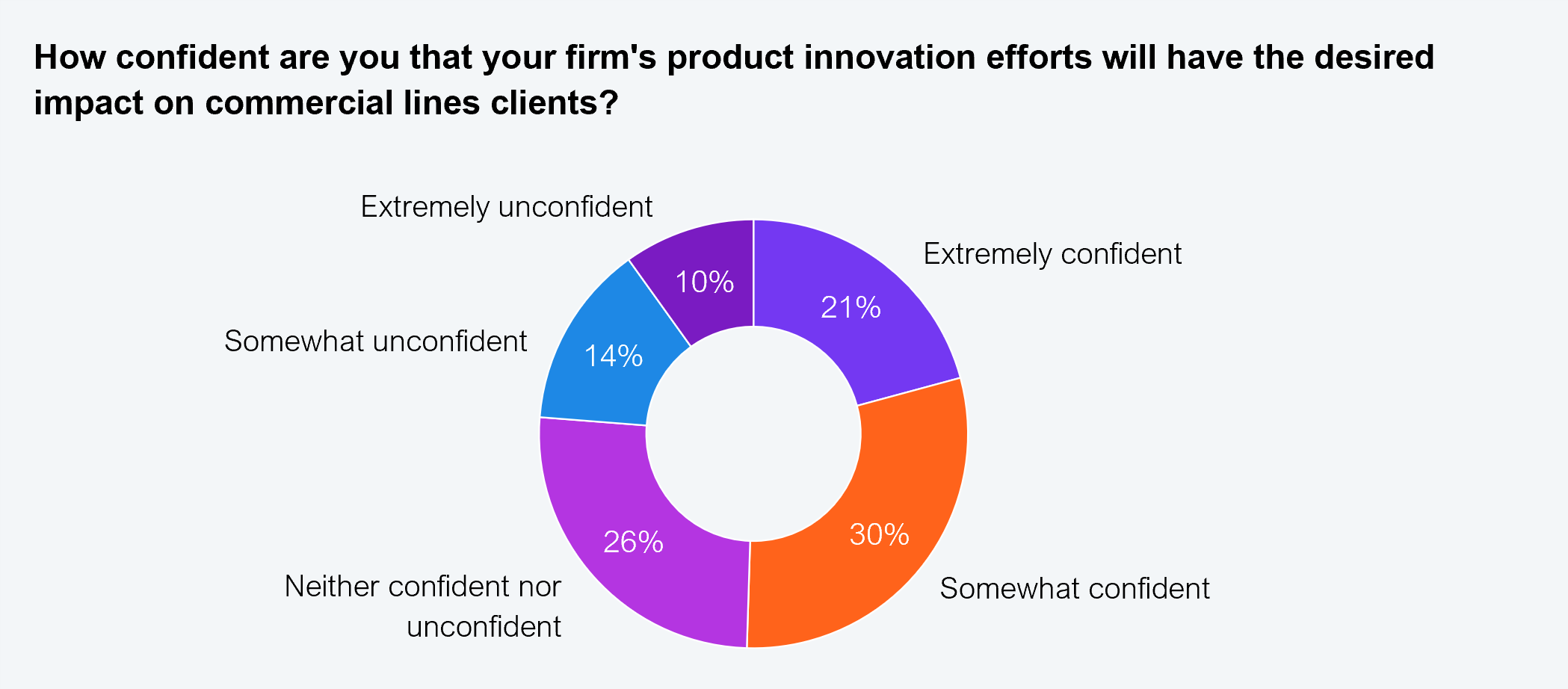
Only 21% are confident in their product innovation efforts, while nearly 50% expressed uncertainty or lack of faith in their ability to drive meaningful impact. Although innovation is frequently discussed, many leaders remain cautious about its ability to deliver tangible value. Even with significant investment in new product development, a prevailing hesitancy could influence future strategies. It also highlights a clear opportunity for the industry to reexamine its approach and build more substantial confidence in innovation outcomes.
Sample: 350 commercial insurance leaders
Source: HFS Research, 2025
I’m almost surprised that so many insurers feel confident in their product innovation efforts because, in reality, commercial lines remain incredibly fragmented. There are countless small regional carriers that lack sophistication, still relying on manual processes and even paper applications. Even the biggest players—companies like Hartford and Travelers—only control a small slice of the market compared to their dominance in personal lines.
When you consider where the industry needs to be versus where most carriers are today, the gap is significant. Some insurers may feel confident simply because they don’t know what they don’t know. The reality is that modernizing commercial insurance is a far bigger challenge than many realize, and those who aren’t proactively addressing it risk falling even further behind.
— A commercial product director at an American insurance carrier
Lackluster real-time data enablement is a stark example of the gap between innovation ambition and execution.
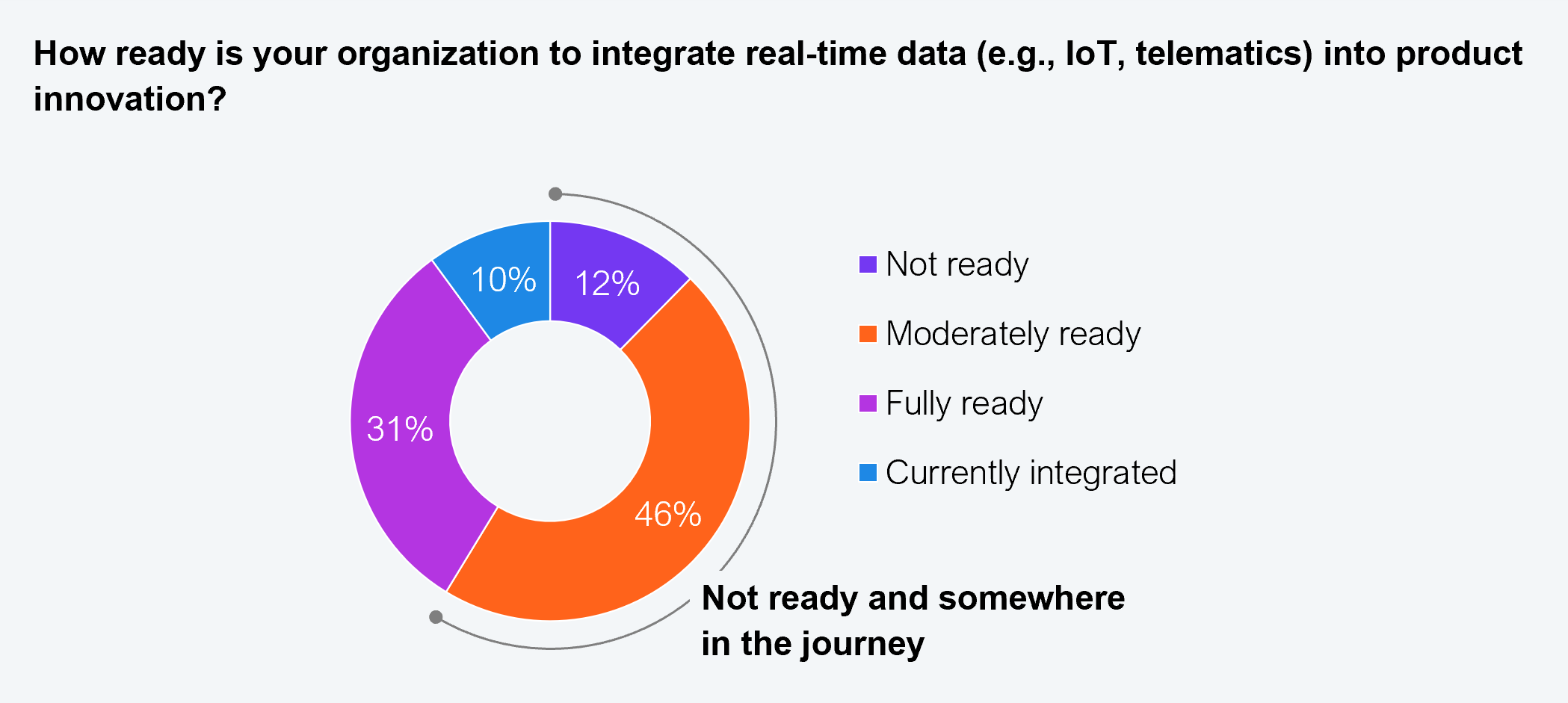
While commercial insurers recognize that emerging risks offer tremendous growth potential, many are unprepared to act. In our study, 87% of commercial carriers endorse data-driven underwriting and believe real-time risk assessment will replace traditional models within five years. Yet, fewer than one-third are ready to integrate real-time data into their product innovation efforts.
Sample: 350 commercial insurance leaders
Source: HFS Research, 2025
87% agree that data-driven underwriting and real-time risk assessment will replace traditional models within the next five years.
This disconnect reveals that innovation isn’t failing due to a lack of vision—it’s failing because the industry is slow to execute. Larger carriers are leading the way, with 72% already ready or fully integrated with real-time data, compared to 25% among carriers under $500M. As a result, while industry giants seize the advantage, smaller players hesitate.
Real-time data isn’t only about speed; it’s about precision and profitable risk decisioning. In underwriting, real-time data helps eliminate misaligned submissions, strengthen risk selection, and ensure that only strategically viable exposures make it through—ultimately improving loss ratios. Commercial carriers can no longer rely on static spreadsheets and tribal expertise to assess complex exposures when real-time, visual, and IoT data provide a far richer, dynamic picture. In product development, this continuous data stream enables the dynamic adjustment of premiums and coverage based on evolving market conditions—from tracking shifting business risk profiles and leveraging weather and soil analytics for smarter farm policies to integrating vehicle sensors that transform commercial auto insurance. Moreover, in commercial and specialty lines where deep broker relationships are critical, having data at their fingertips empowers brokers to bind risk more effectively and manage homogeneous exposures more accurately.
Ultimately, the statistics underscore a critical gap: While the potential for transformation is widely recognized, execution remains lagging—especially among smaller carriers. A technology director and digital experience leader of a leading US insurance provider offered some thoughts on the importance of insights and intelligence through data:
Insurers have no shortage of data—the challenge is making it work. Carriers are now investing in data science to unlock actionable insights, with generative AI emerging as a powerful tool to summarize and drive better decision-making. The goal isn’t just real-time data but liberated data that delivers intelligent decision support where it matters most.
— Technology director and digital experience leader at a leading US insurance provider
Future shock: Insurers’ reluctance to innovate leaves them unprepared
87% agree that new entrants are redefining the speed and customer experience standards, and traditional carriers are struggling to keep up.
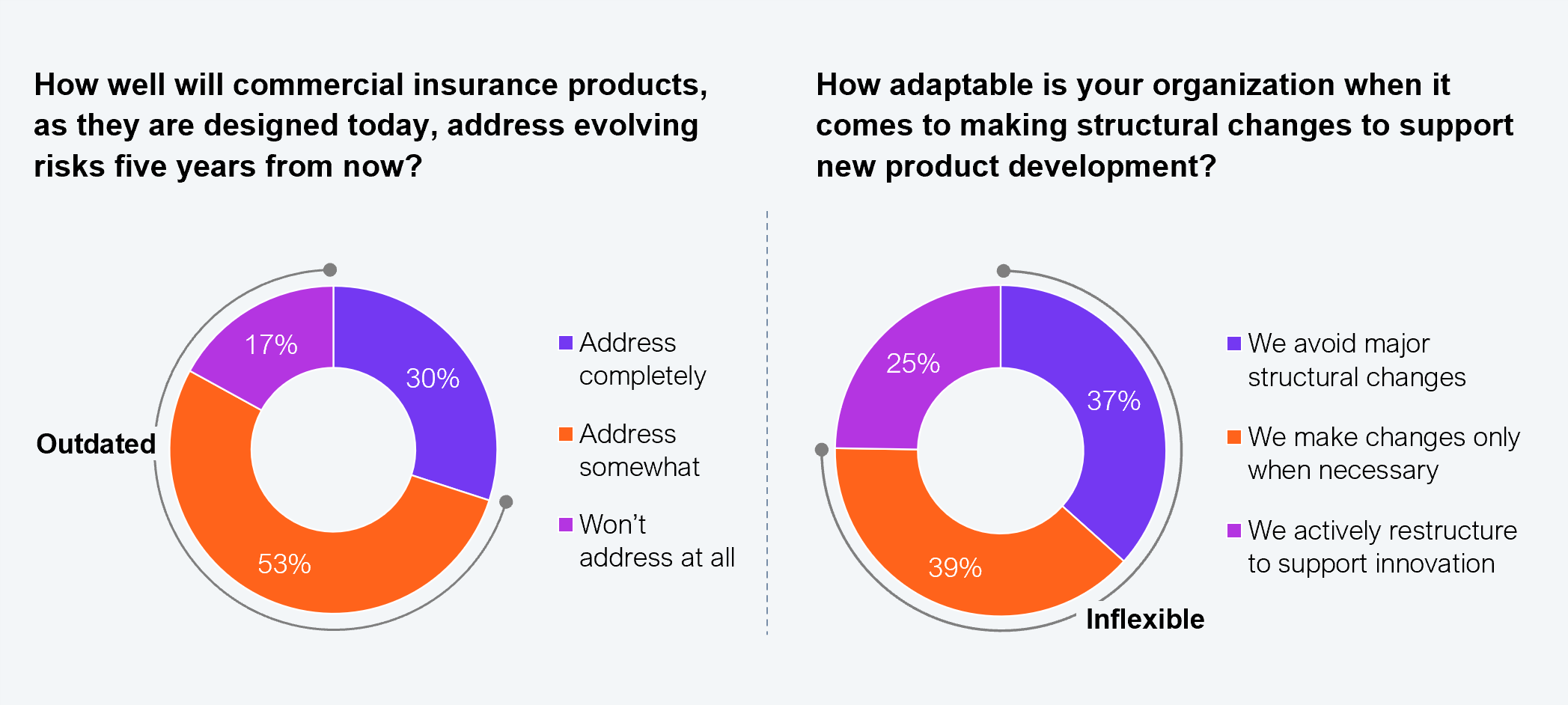
Another demonstration of action going against the grain of ambition is how traditional carriers fear being unseated by new entrants that establish new benchmarks for speed and customer experience yet make little to no effort to implement structural changes. 76% of commercial carriers are failing to make meaningful structural changes to support innovation (see Exhibit 4). Even more telling, 70% are designing products without anticipating risks just five years ahead.
Sample: 350 commercial insurance leaders
Source: HFS Research, 2025
Wary of Pioneers setting higher benchmarks for speed and customer experience, traditional carriers remain reluctant to embrace necessary change. This inertia signals that the industry is ill-prepared for the dynamic demands of tomorrow’s market. Instead of massive overhauls, a build-test-learn approach—leveraging data, AI, and digital technology—offers a clear blueprint for innovation and agility. One industry leader emphasized that modularity and customization, such as supplementing a standard business-owner policy with bundled coverage, can enhance flexibility and better address emerging risks without jeopardizing current operations. Without embracing these changes, carriers risk falling behind as customer expectations evolve and competitors capitalize by applying more adaptive, forward-thinking models.
Legacy systems, rigid products, and slow-moving processes have long constrained the commercial insurance industry. While personal lines have embraced modular, data-driven, and AI-powered product development, commercial insurers are still playing catch-up. This inertia is now colliding with evolving market demands, where businesses expect tailored, flexible insurance solutions that adapt to their changing risks.
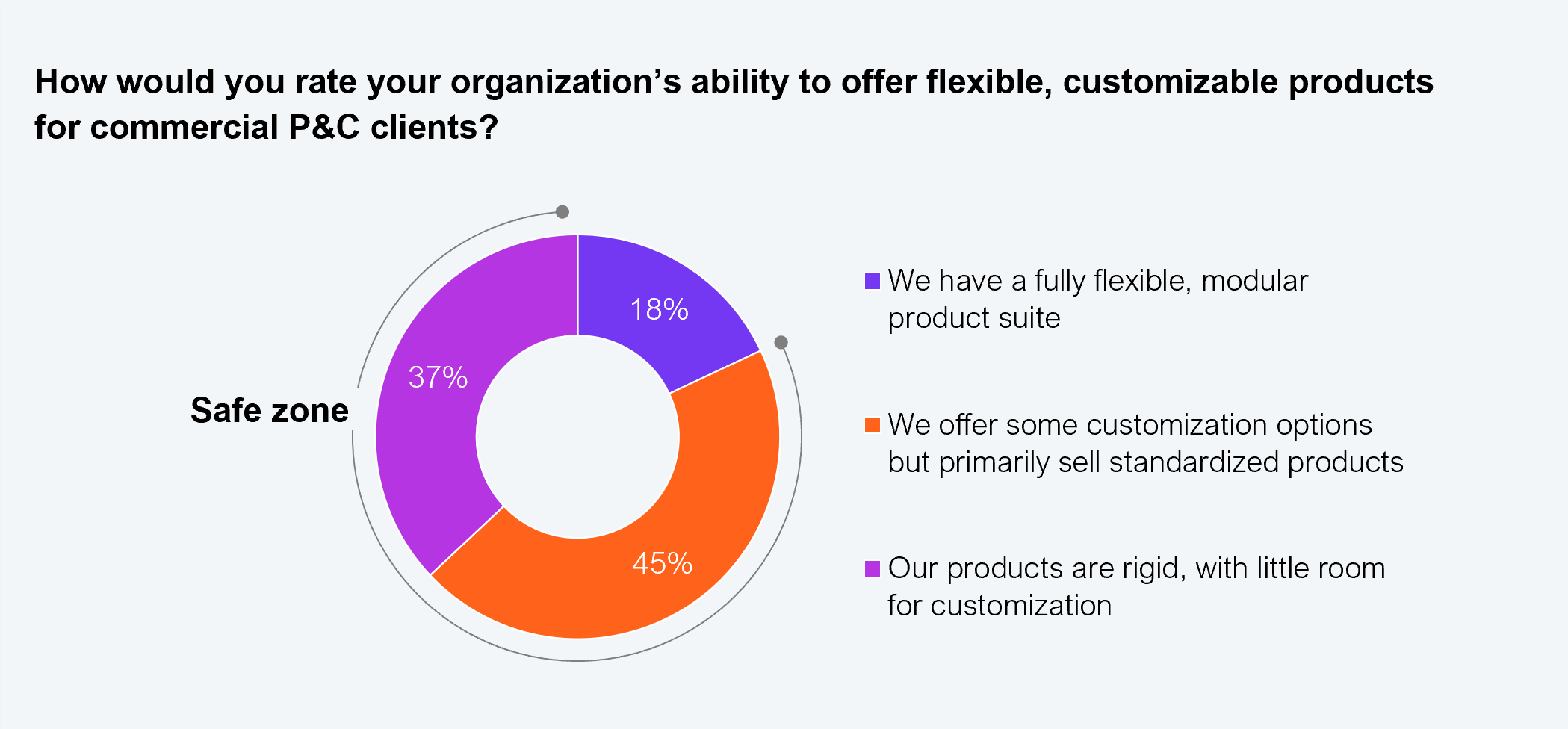
Despite recognizing these challenges, insurers struggle to break free from legacy constraints. According to our study, 45% of insurers continue to rely on standardized products with little flexibility, while only 37% provide meaningful customization to meet the needs of modern businesses. Worse, 86% of insurers admit they fail to deliver flexible, modular products, leaving many commercial customers underserved. Outdated systems and poor data integration remain the primary roadblocks, with 83% of executives acknowledging that legacy technology is their most significant barrier to innovation.
Dave Patel, chief information officer at FCCI, burst the myth that legacy is only about technology:
Legacy isn’t just about outdated technology—it’s about outdated thinking. Too many insurers have spent years talking about modernization without real action. You either start transforming now, or you start preparing to sell, because staying stagnant is no longer an option. The competition isn’t waiting, and neither should we.
— Dave Patel, Chief Information Officer, FCCI
Carriers’ “one-size-fits-all” product strategy is out of runway
Insurers have relied on one-size-fits-all product structures for decades, prioritizing stability over adaptability. The result is unsurprising—a lack of meaningful differentiation, where many carriers offer near-identical coverage, priced mainly on legacy risk models. Our analysis finds that 45% of carriers primarily sell standardized products, and 37% describe their offerings as rigid, as shown in
Exhibit 5. Thus, 82% of the industry is failing to serve customers’ growing needs.
86% agree that the commercial P&C industry is failing to keep pace with customer demands for flexible, modular products.
Most C-suite respondents in our study believe this (81% strongly agree) vs. 51% of the total sample, revealing that executives see the writing on the wall. Commercial auto is a prime example, where policies remain structured for traditional fleet models, even as the gig economy, electric, and self-driving vehicles reshape liability frameworks. Beyond auto, business-owner policies (BOP) remain essentially unchanged, despite businesses facing new cyber risks, evolving liability concerns, and complex supply chain exposures today. One executive in our research admitted they hadn’t touched their BOP product in more than 15 years. While insurers acknowledge that client expectations have shifted, most have failed to design products that match new business realities. For example, e-commerce, fintech, and digital services have grown exponentially, yet commercial insurance offerings have not evolved to support their unique risks. Instead, businesses are forced to bolt on generic coverage, leaving critical gaps in protection.
Sample: 350 commercial insurance leaders
Source: HFS Research, 2025
This failure to adapt is already creating competitive vulnerabilities. Insurtechs and alternative risk providers are introducing modular, usage-based coverage models, attracting small and mid-sized businesses that find traditional insurance products too rigid. If incumbent insurers don’t act soon, they risk ceding market share to more agile, technology-enabled competitors.
Portfolio reviews are rare—and that’s a problem
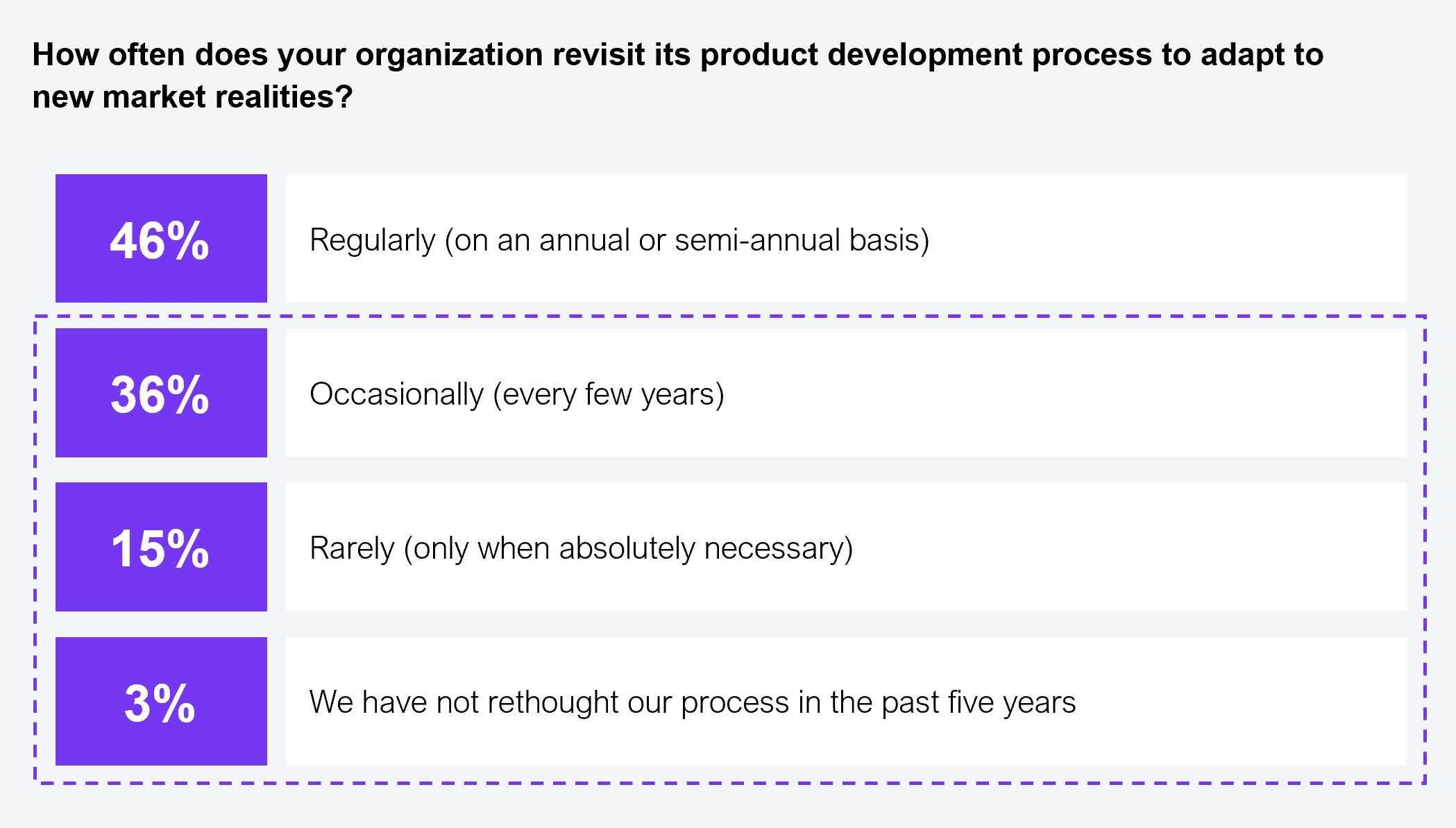
The pace of change in business risk is accelerating, yet commercial insurers struggle to keep up. From rising climate risks to shifting regulatory requirements and litigation trends, product portfolios need constant recalibration. Yet our study found that more than half of insurers (54%) rarely revisit how they develop products, instead relying on outdated practices (see Exhibit 6).
Sample: 350 commercial insurance leaders
Source: HFS Research, 2025
Take, for example, how catastrophic (CAT) risk models in commercial property insurance have changed dramatically in the past five years, yet many insurers still use underwriting methodologies designed decades ago. As a result, we see underpriced risk in high-exposure areas and overcorrections in markets that could be competitively priced. Or insurers pulling out of markets entirely due to the inability to predict and price risk more accurately. Beyond risk models, regulatory complexity remains a key bottleneck. Commercial insurers struggle with state-by-state product approvals, creating massive delays in new product rollouts. One executive in our study noted that launching a new commercial auto product took three years due to prolonged state regulatory approvals, making rapid iteration nearly impossible.
However, leading insurers are finding ways to break this cycle. Those investing in modular product architectures—where a base policy can be dynamically configured with add-ons—are reducing the need for full-scale product overhauls. Additionally, some forward-thinking insurers are partnering with regulatory technology (RegTech) firms to streamline compliance and accelerate market entry. Interestingly, the largest insurers seem to have the advantage of additional resources to work around these challenges. We find that larger carriers revisit their product portfolios far more frequently. 83% of carriers with more than $10 billion in revenue, and 67% with revenue between $5-10 billion ‘regularly’ revisit their product portfolios, compared to 46% of the total sample.
The risk is clear for insurers still reliant on monolithic product portfolios: Clients will go elsewhere if products do not evolve as fast as their needs.
The technology director and digital experience leader of a leading US insurance provider emphasizes the importance of frequent product portfolio reviews.
Carriers can’t afford to be passive about their product portfolios anymore. The market is shifting too fast. It’s not just about adding new products—it’s about constantly reassessing what’s working, what’s obsolete, and where to double down. The ones that fail to adapt will find themselves selling yesterday’s solutions to today’s risks.
— Technology director and digital experience leader at a leading US insurance provider
Commercial insurers need to pay their tech, data, and culture debts to get ahead
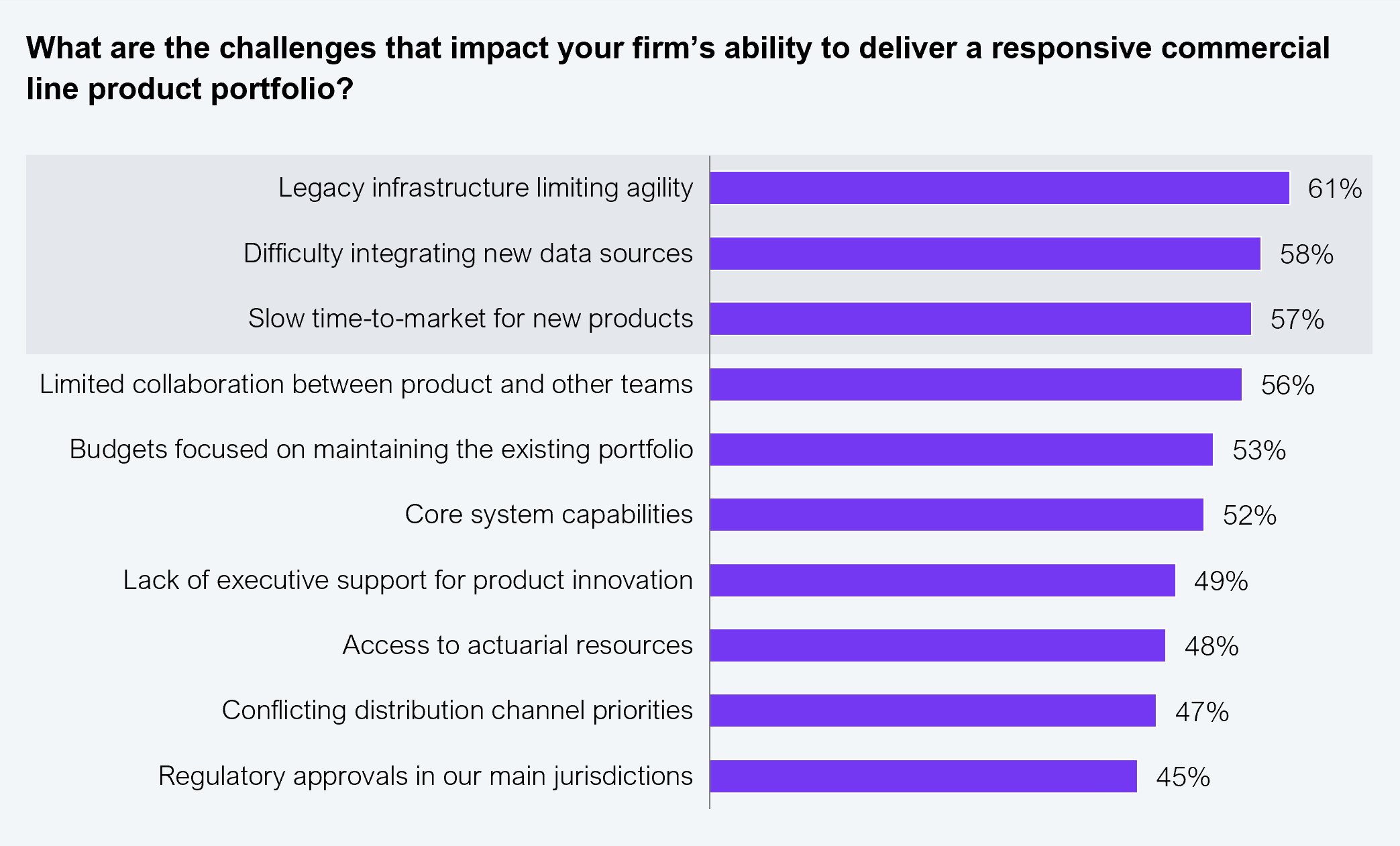
While data and AI can potentially transform commercial insurance, most carriers remain unprepared to harness these capabilities effectively. Instead of accelerating product innovation, poor data integration, outdated infrastructure, and internal resistance hinder progress (see Exhibit 7).
Sample: 350 commercial insurance leaders
Source: HFS Research, 2025
1. Difficulty integrating new data sources—technical, cultural, and regulatory resistance
2. Legacy infrastructure and core systems limiting agility
3. Budgets are focused on maintenance, not innovation
Net-net, commercial insurers are not struggling because of a lack of tools, data, or platforms—they are struggling because their internal systems, processes, and cultures are not ready for them. Until carriers fix foundational issues, including data integration, core system limitations, and budget constraints, new product innovation initiatives won’t have any shot at success in the long term.
The next chapter will explore how insurers can break free from this legacy trap, start effectively leveraging technology, and, more importantly, directly address their organizational agility to respond to changing market needs.
We’ve discussed the sweeping industry shifts impacting commercial insurers and the challenges they encounter while trying to overcome them. Let’s look at the most significant areas of impact that can define success in the future. The industry is under pressure to shorten product cycles, boost technology investments, and shift toward digital-first distribution. With product launch cycles expected to drop from 15.5 to 9.5 months in two years and tech budgets rising more than 20%, carriers must fundamentally transform how they leverage data, streamline processes, and integrate into broader ecosystems.
Turning the corner on data activation
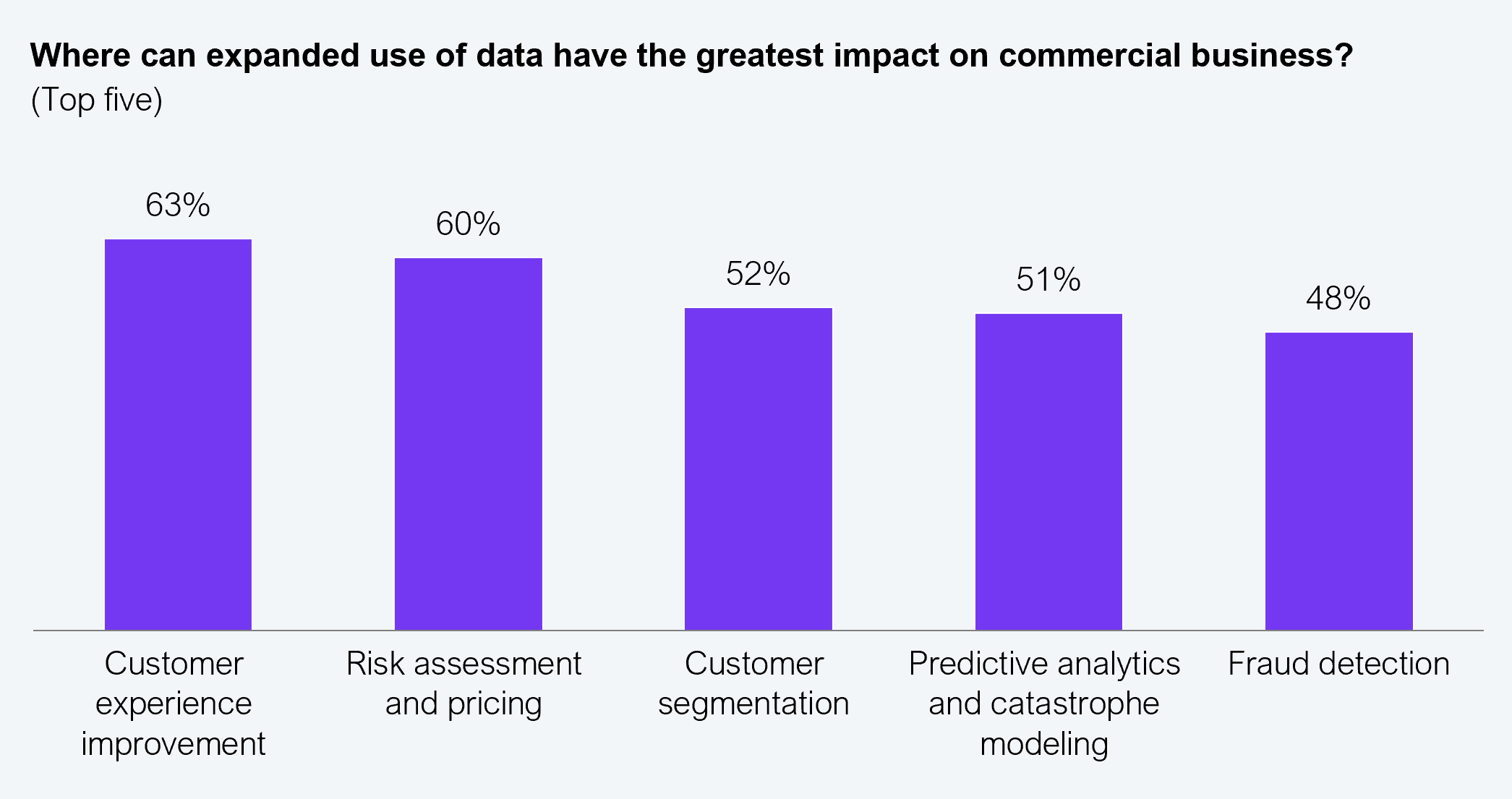
Although insurers sit on vast amounts of structured and unstructured data, many still rely on outdated models and manual processes. Our survey shows that 63% of insurers believe improved data utilization can significantly enhance customer experience, risk assessment, predictive modeling, and fraud detection (see Exhibit 8). However, data silos hinder real-time decision-making. One executive noted that, despite investing in AI-driven underwriting, traditional underwriters’ insistence on manual reviews slows progress, while another highlighted how internal bureaucracy stalled their data lake project.
Sample: 350 commercial insurance leaders
Source: HFS Research, 2025
To unlock data’s potential, insurers must eliminate silos and embrace real-time, AI-enabled decision-making—integrating third-party data, automating risk assessments, and bridging gaps across underwriting, claims, and actuarial teams. One pioneering carrier reported a 15% improvement in claims predictability within a year by implementing real-time data sharing between claims and underwriting.
Sherman Cooper, head of data at QBE North America, drives home a critical point: If you don’t get your data foundation right, scaling AI is impossible. Without rock-solid, reliable data, any attempt to scale AI is nothing more than a house of cards waiting to collapse.
Scaling AI across different product lines isn’t just a technical challenge—it’s a data governance challenge. Specialty lines introduce complexity, and if we’re not careful, we end up force-feeding noisy data into models designed for something else. AI-powered underwriting only works if we get the fundamentals right: strong data hygiene, graph capabilities to clean and connect information, and well-documented risk evaluation criteria. Without that, we’re building on stilts—unstable and unsustainable.
— Sherman Cooper, head of data, QBE North America
Building process and technological agility
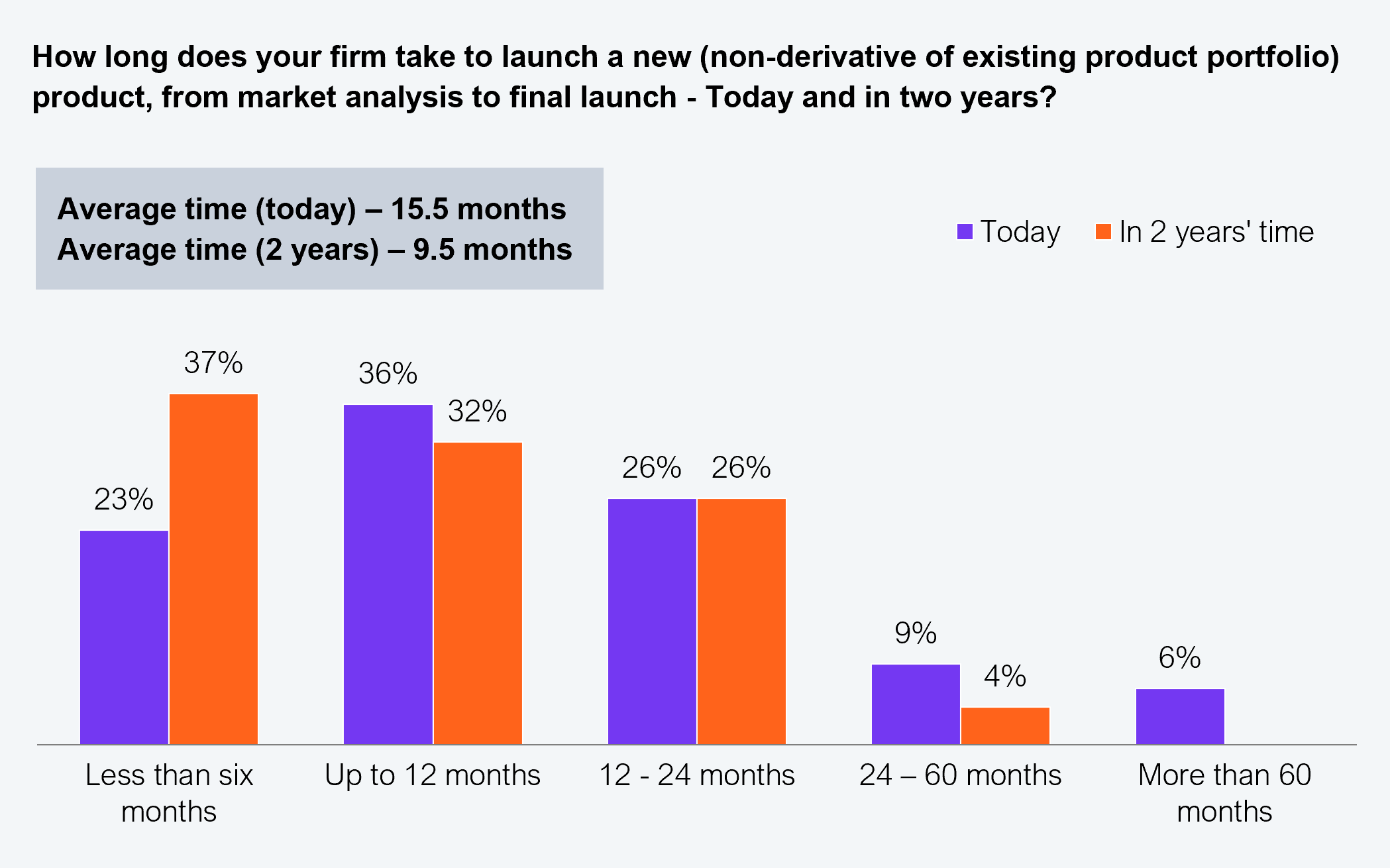
Agility is critical, and commercial insurers are exploring multiple avenues to become more responsive to their markets. The traditional 15.5-month product launch cycle is giving way to modular, agile architectures capable of reducing that time to 9.5 months (see Exhibit 9). Notably, the time to launch a commercial insurance product heavily depends on the type of coverage, level of complexity, and jurisdictional scope of product filing. Generally, we know commercial insurers are under pressure to develop and launch products faster, but depending on the scope, shaving six months off the average product cycle may not be enough to meet shifting market demands. One executive explained that their company abandoned full-scale overhauls in favor of layered endorsements and modular coverage add-ons, enabling adjustments in weeks rather than years. This rapid approach is vital for addressing emerging risks such as cyber threats and supply chain disruptions.
Sample: 350 commercial insurance leaders
Source: HFS Research, 2025
A commercial product director at an American insurance carrier said it well: Launching a product isn’t just about a great idea—ideas are plentiful. The real challenge is execution.
Launching a new product in commercial insurance isn’t just about having the right idea—it’s about navigating a slow-moving system. Even with the best-designed product, regulatory hurdles can stretch timelines to three years or more. Carriers need to balance speed with compliance, but by the time a product finally hits the market, the industry is already moving on to version two. The challenge isn’t just launching—it’s staying relevant.
— A commercial product director for an American insurance carrier
Regulatory complexity remains a challenge, but leading insurers proactively engage regulators earlier in the process and work with them rather than wait until products are fully built. Some also leverage digital sandboxes to test new products in controlled environments before filing for formal approval.
Furthermore, 56% of insurers cite poor coordination between product teams and underwriters as a significant barrier. In response, many carriers are creating cross-functional teams that combine underwriting, actuarial, and product development expertise to reduce rework and accelerate time-to-market.
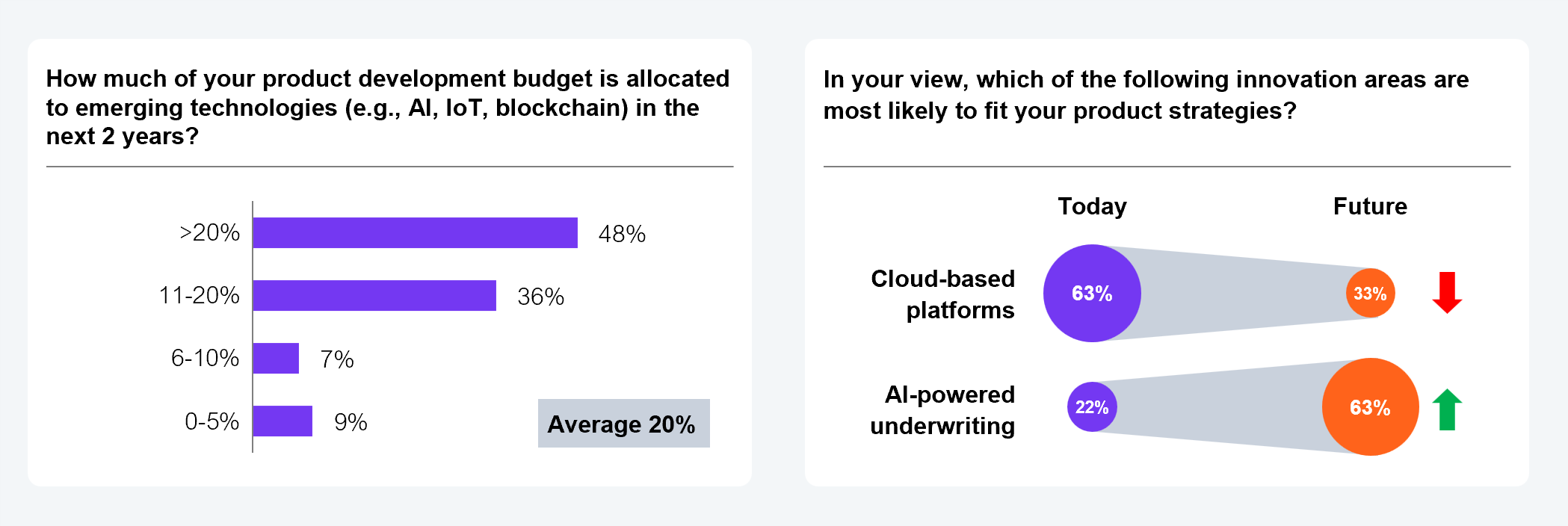
Modernizing technology is equally essential to enterprise agility. On average, carriers allocate 20% of their product development budgets to emerging technologies (see Exhibit 10). With 63% current adoption, cloud platforms are transforming customer experience, integration, and scalability—all key for enabling AI-driven underwriting. While North American carriers lead in cloud adoption (67% vs. 51% in Europe), future strategies are shifting increasingly toward AI, which automates tasks and embeds decision support throughout the underwriting process.
Sample: 350 commercial insurance leaders
Source: HFS Research, 2025
The formidable cloud-AI partnership is two sides of the same coin since it is all about data and accessing that data to feed AI-powered underwriting. In underwriting, AI and its cohort are driving entirely new scale automation of manual tasks, capturing critical data, and embedding AI assistants to support decision-making throughout the process. Once productivity and efficiency are mastered, the impact is expected to turbocharge top-line and stakeholder value.
Ecosystem thinking: The shift to embedded and digital distribution
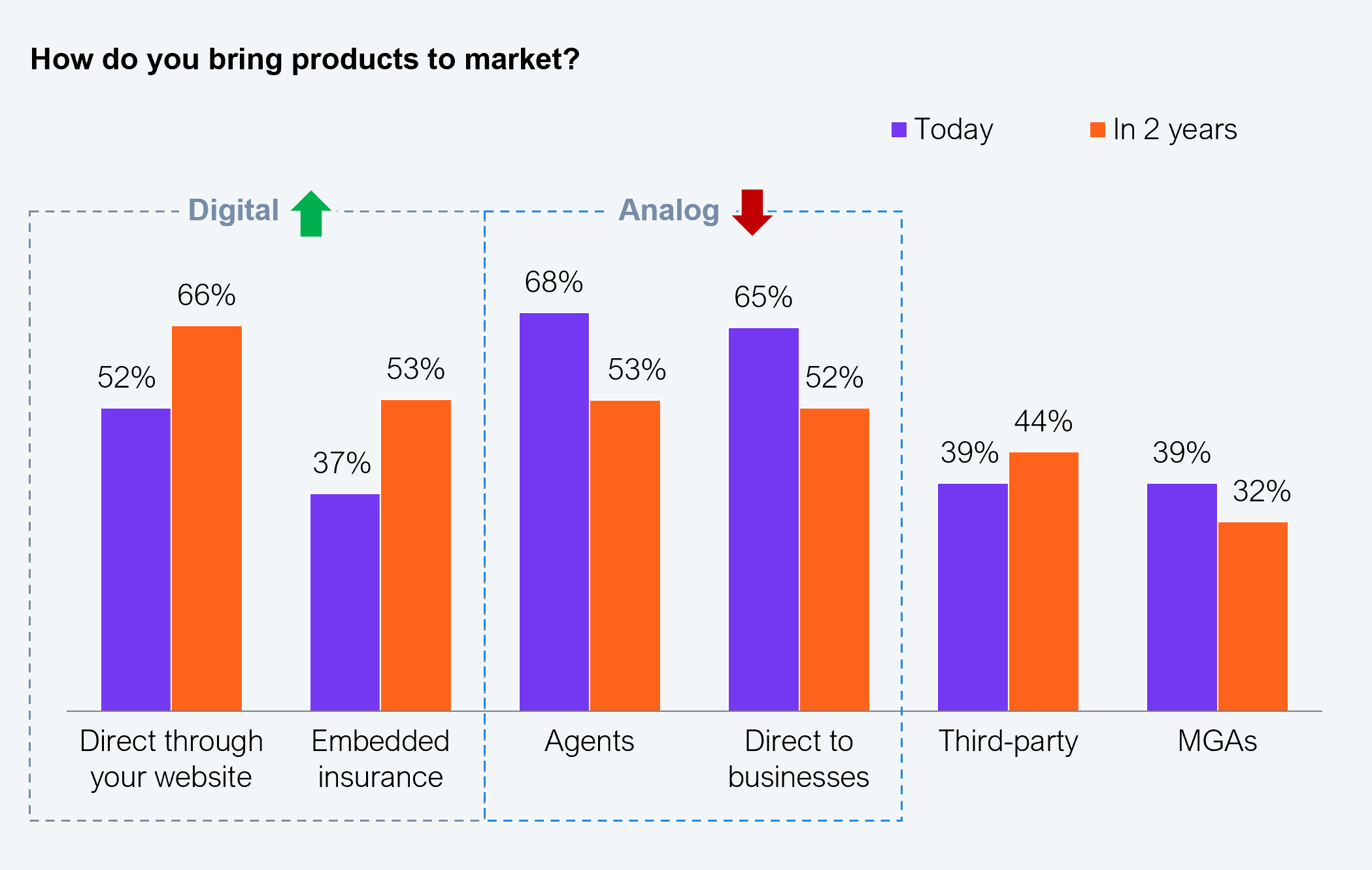
Insurance is no longer a standalone product—it’s becoming an integral part of broader business ecosystems. Digital distribution is expected to be a primary growth driver, with 89% of respondents seeing it as a significant opportunity. The C-suite has the strongest belief about this industry trend, with 94% ‘strongly agreeing’ with the power of digital distribution vs 60% of the total sample. Although agents currently handle 68% of commercial sales, digital channels are rapidly catching up (see Exhibit 11).
Sample: 350 commercial insurance leaders
Source: HFS Research, 2025
Embedded insurance integrates coverage directly into digital ecosystems and transforms customer engagement. For instance, telematics in commercial fleet insurance enables dynamic adjustments based on driver behavior, and IoT-enabled risk monitoring in smart buildings can trigger preventative actions before claims occur. These models are also reshaping small business and gig economy insurance; integrated solutions in payroll, invoicing, and banking apps provide instant, usage-based coverage that adapts to client needs. One executive noted that firms with embedded insurance partnerships saw significantly higher customer retention than those with traditional agent-led models.
Sherman Cooper, head of data at QBE North America, emphasized that seizing the low-hanging fruit with a robust data foundation is a key step toward unlocking embedded insurance.
Right now, the industry is still focused on maximizing value from existing products—we’re squeezing the lemon, but we’re not using all the juice. Once we get better at leveraging data to drive underwriting performance and claims efficiency, then we’ll be at the edge of our production possibilities. That’s when embedded insurance and new product innovation really take off.
— Sherman Cooper, head of data at QBE North America
Ecosystem thinking means forging strategic partnerships with telematics providers, logistics platforms, and even cloud security firms to create seamless, responsive risk management ecosystems. In the next era of commercial insurance, the winners will be those who deeply integrate into their clients’ operations, transforming from mere policy providers into strategic risk partners.
The technology director and digital experience leader of a leading US insurance provider keeps it real about embedded insurance adoption and agent disintermediation from the commercial insurance distribution model isn’t happening anytime soon.
Embedded insurance isn’t just a distribution play—it’s about meeting customers where they are, at the exact moment they need coverage. The real winners will be those who seamlessly integrate protection into the buying journey, making insurance invisible until it matters most.
Agents aren’t going away—they’re evolving. While digital channels and AI streamline transactions, complex risks and high-value policies still demand human expertise. The future isn’t about replacing agents but augmenting them with data-driven insights to deliver smarter, faster, and more personalized service.
— Technology director and digital experience leader for a leading US insurance provider
Of note, when we refer to ecosystems at HFS, we genuinely mean a broader ecosystem of opportunities and capabilities that insurers can tap into to help them realize their ambitious goals. The next chapter explores this idea further by examining industry Pioneers and what they do differently to enable product innovation.
The triad identified for change is precisely where commercial insurers are placing their top three big bets
Commercial carriers face intense pressure to broaden their product portfolios while efficiently delivering tailored solutions. Our survey of 350 commercial insurance leaders reveals a clear triad for transformation: 66% prioritize migrating to flexible, cloud-based technology platforms (see Exhibit 12), 63% focus on forming strategic partnerships with technology providers for enhanced customization, and 61% are investing in data-driven underwriting models.
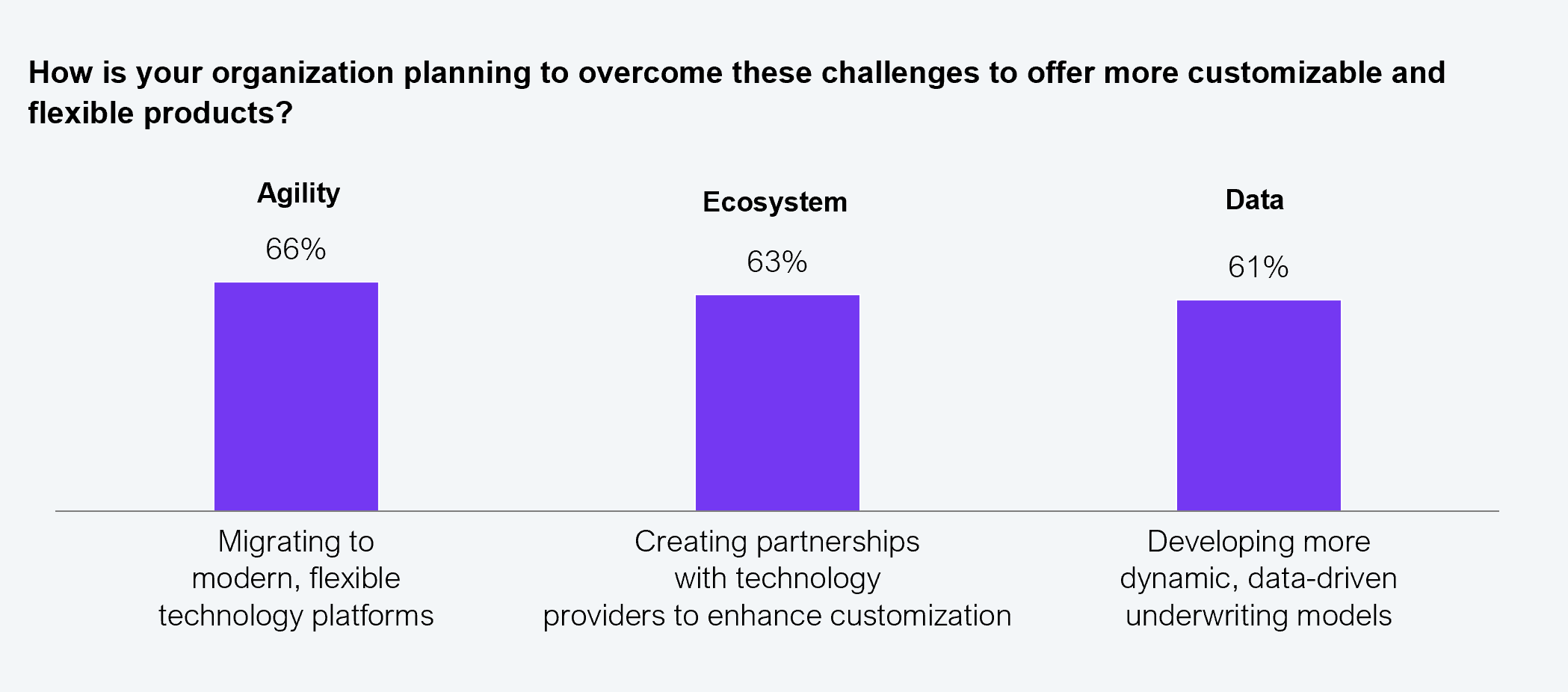
Sample: 350 commercial insurance leaders
Source: HFS Research, 2025
Today’s product development no longer follows the old project-based approach of repurposing existing offerings. Instead, modern carriers rely on modular, cloud-based platforms built on self-contained software components and configurable APIs—an architecture that underpins agility in both speed and scale. Strategic partnerships now play a crucial role, enabling carriers to access critical IT capabilities and accelerate innovation without the enormous cost and time required to build everything in-house. This ecosystem approach extends beyond traditional channel partnerships to include technology providers that support broader digital initiatives.
Data-driven underwriting models are central to this transformation. With AI and real-time data from sensors, wearables, satellites, and other sources becoming ubiquitous, carriers are leveraging new insights to streamline underwriting and refine risk categorization. Success depends on bridging traditional actuarial models with advanced data science, ensuring models are transparent, explainable, and compliant with regulatory standards.
Learning from the prioritization efforts of industry Pioneers
During our analysis, we categorized respondents into Pioneers and Traditionalists using key survey responses to segment them based on their approach to product innovation. Pioneers are those leading the market by prioritizing new product development, actively restructuring their organizations for innovation, and investing significantly in emerging technologies. Exhibit 13 illustrates the defining attributes of a pioneer versus a traditionalist. They explore disruptive, high-premium opportunities and allocate more than 20% of their budgets to emerging tech, such as AI and IoT. Conversely, traditionalists focus primarily on modifying or revamping existing products rather than launching new ones. They adapt to market changes but are slower to restructure or invest in cutting-edge technology, often constrained by legacy systems and slow time-to-market.
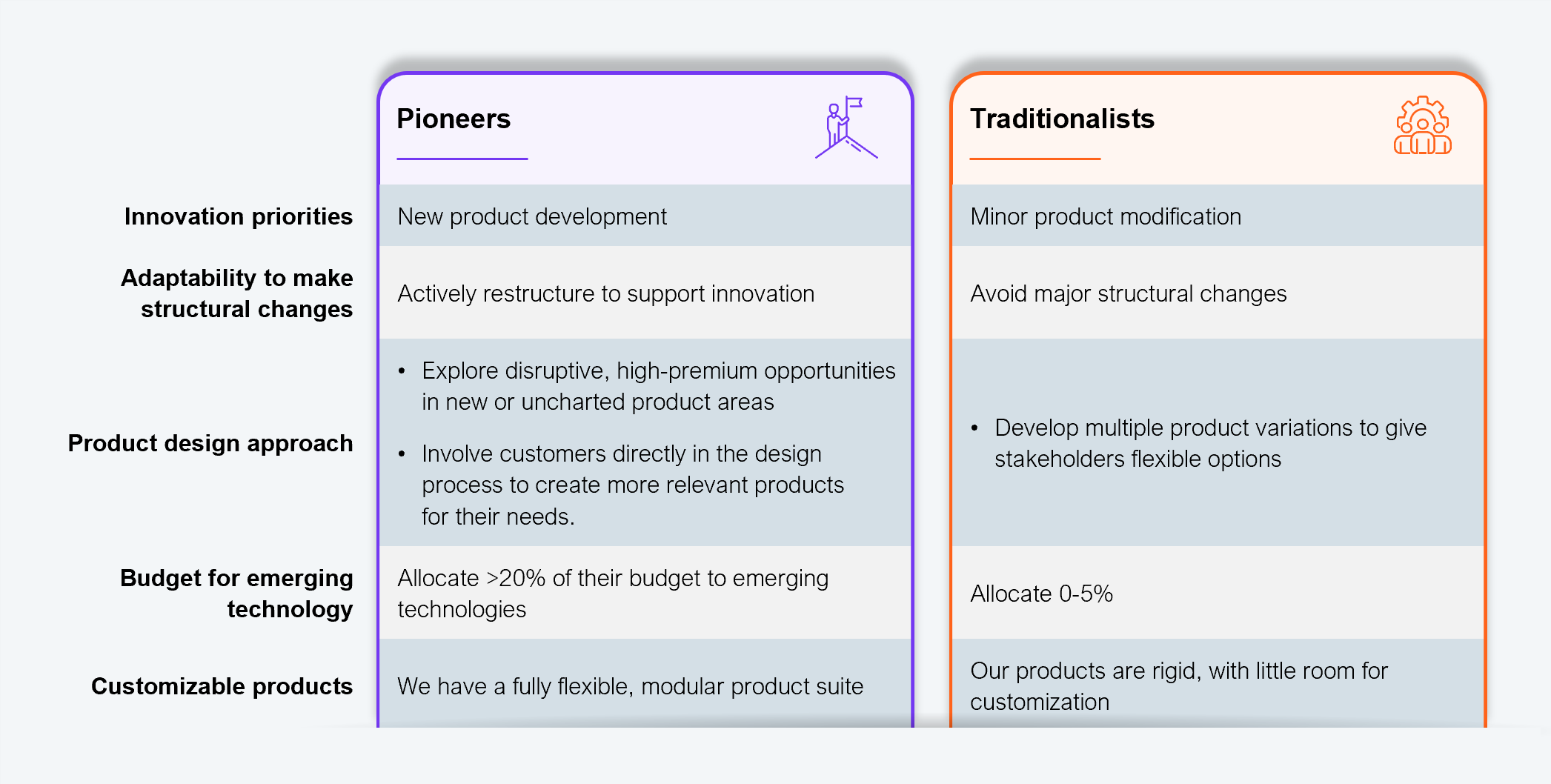
Sample: Out of 350 commercial insurance leaders, 51 are identified as pioneers and 98 as traditionalists based on these defining attributes
Source: HFS Research, 2025
This clustering lets us differentiate between carriers driving fundamental transformation and those taking a more cautious, incremental approach. By analyzing their strategic priorities, budget allocations, and operational flexibility, we can see a clearer picture of how prepared different insurers are to meet evolving market demands.
Comparing Pioneers to Traditionalists offers a roadmap for smarter product development. Pioneers launch new products in an average of 6.8 months versus nearly two years for traditionalists. 84% of Pioneers continuously adapting their offerings compared to only 20% of their more cautious peers. This agility is not just a methodological improvement—it’s about operating with a flexible, scalable architecture that allows rapid pivoting as market demands evolve.
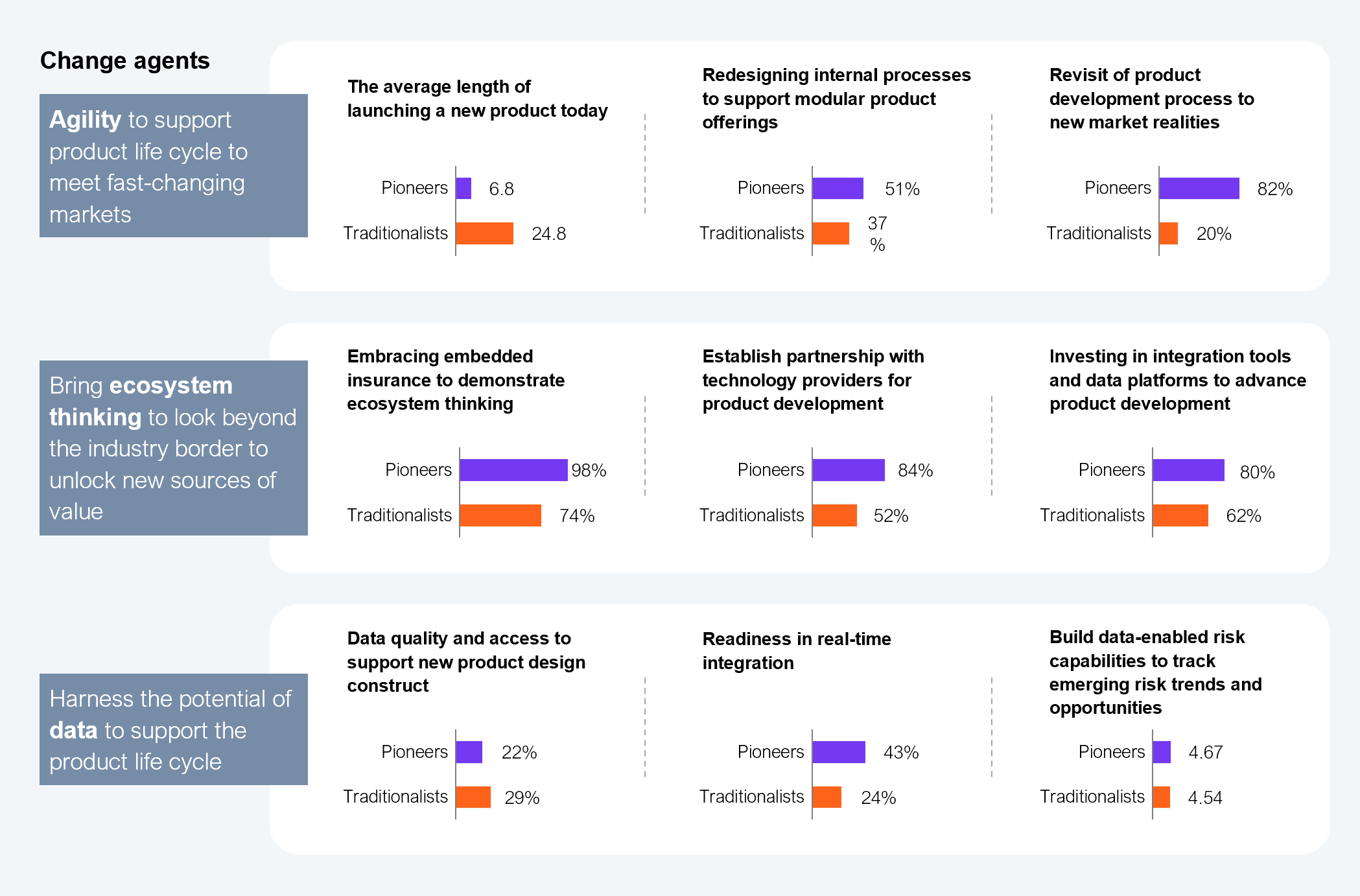
Sample: Out of 350 commercial insurance leaders, 51 are identified as pioneers and 98 as traditionalists
Source: HFS Research, 2025
Ecosystem thinking is another critical element. Only 52% of Traditionalists prioritize third-party technology partnerships compared to 82% of Pioneers. Similarly, while Traditionalists have 62% integration with tools and data platforms, Pioneers lead at 80%. This divide extends to embedded insurance—74% of Traditionalists are making moves, versus 98% of Pioneers—illustrating how deeply integrated ecosystems can deliver a differentiated, disruptive value proposition.
Harnessing data is non-negotiable for commercial insurers. While both Traditionalists and Pioneers recognize its value, there’s a 79% gap in readiness for real-time data integration, highlighting an urgent need for change in product development and underwriting processes. A robust data strategy incorporating pre-fill solutions, upfront submission filtering, and intelligent decision-making is essential for leveraging AI and driving precision in pricing.
In summary, industry Pioneers are setting a clear blueprint for transformation:
These strategic moves enable carriers to meet current market demands and position them to anticipate and address future risks, ensuring they remain competitive in an increasingly dynamic industry.
Dave Patel, Chief Information Officer at FCCI, articulates the importance of ecosystems for commercial insurers:
No insurer can go it alone anymore. The industry is shifting toward deeply integrated ecosystems, where success depends on leveraging the right data, partnerships, and platforms. It’s not about controlling everything—it’s about playing the right role in a connected network that accelerates innovation and competitive advantage.
— Dave Patel, chief information officer, FCCI
Commercial insurance is undergoing a fundamental change. The days of making only minor improvements while relying on outdated systems are over. Insurers must evolve to become more responsive and use data effectively to manage risk.
Instead of just selling policies, the future belongs to those who integrate risk protection directly into their clients’ everyday operations. This means adopting flexible underwriting practices and using data to offer tailored solutions. The industry must act now—those who adapt quickly will lead, while those stuck with old methods will fall behind.
The transformation of commercial insurance isn’t a future event—it’s happening now. Those who act decisively, rethink their role, and embed themselves into the fabric of business ecosystems will own the future of risk management. The rest will be left behind. Now is the time to place your bets.
Register now for immediate access of HFS' research, data and forward looking trends.
Get StartedIf you don't have an account, Register here |
With the exception of our Horizons reports, most of our research is available for free on our website. Sign up for a free account and start realizing the power of insights now.
Our premium subscription gives enterprise clients access to our complete library of proprietary research, direct access to our industry analysts, and other benefits.
Contact us at [email protected] for more information on premium access.