Market Impact Report

The Human+Machine era will reward orchestrators, not integrators

This Market Impact Report is for CIOs, CTOs, chief operating officers, and enterprise technology leaders evaluating how to redesign operating models for Human+Machine delivery in a Services-as-Software™ world.

Executive summary

Most enterprises are sleepwalking into the Human+Machine era. Their operating models can’t keep up, and modernization alone won’t save them. Advances in AI, robotics, internet of things (IoT), and edge computing technologies, along with human capabilities, are propelling enterprises into the Human+Machine era faster than expected, driving real-time convergence between technology and human capability and delivering intelligence, agility, and resilience at scale.

This convergence is transforming the “adaptive enterprise” from concept to reality in organizations where people, data, physical assets, and digital intelligence coordinate into a system that responds dynamically to business needs.

For most enterprises, this shift to the Services-as-Software paradigm remains more aspiration than reality. Progress requires moving beyond an integration mindset toward a model of value orchestration by modernizing and combining disparate systems. Enterprises only realize true business outcomes when processes and data are at the center of the operating model fabric, guiding the design of technology portfolios, talent strategies, and sourcing relationships around them.

This research, based on a survey conducted by HFS and Hitachi with 505 enterprise leaders across financial services, healthcare, industrial manufacturing, energy, and consumer goods, explores what it will take for organizations to evolve into adaptive enterprises and the scale of the current readiness gap.

Key findings:
  • AI is fusing digital and physical worlds
    Nearly 40% of enterprises report scaling industrial IoT, digital twins, and private 5G networks. AI is the missing jigsaw piece—the orchestration layer—connecting IT (digital systems) and OT (physical systems) to enable truly adaptive enterprises.
  • Tech portfolios are being rebuilt
    Data, AI, and cybersecurity have become engine rooms of technology services, with 71% of enterprises increasing their cybersecurity spending, 63% investing in AI model development and operations, and 61% expanding AI-driven IT operations.
  • Readiness lags far behind ambition
    Enterprises erroneously conflate tech-driven modernization with value creation. Despite bold claims around emerging technology adoption, only one in five enterprises considers itself prepared for a Human+Machine operating model.
  • Process and data are the linchpins
    Enterprise leaders cite redesigning processes (60%) and establishing robust data foundations, governance, and compliance (59%) as the biggest obstacles to Human+Machine delivery.
  • Providers are falling short
    Fewer than one-third of enterprises believe their current partners are equipped to support Human+Machine delivery, underscoring the need for a new era of consulting, orchestration, and value-linked partnerships. Enterprise leaders must reset their sourcing practices and procurement models to prioritize value over inputs.

Enterprise leaders cannot afford to postpone this shift. Technology modernization may keep operations afloat, but it will not set enterprises apart from their competitors. Those who remain fixated on incremental upgrades will be trapped in vicious cycles of pilots.

The winners will be those who take on the harder challenge: rewiring ways of working by prioritizing processes and data, building Human+Machine operating models with embedded governance, fostering outcome-linked partnerships, and reskilling their workforce for trust and speed. These orchestrators will unlock the true power of their connected digital-physical ecosystems.

The adaptive enterprise is no longer a vision; it’s an emerging operating model

The pace of technological change has accelerated beyond expectations, forcing enterprises to rethink operating models sooner than planned. What seemed like a distant goal of integrating AI, real-time data, and physical systems into a single operating model is unfolding in real-time. Industries are scaling generative AI, private 5G, IoT, and digital twins into production at a rapid pace (Exhibit 1); enterprises no longer have the luxury of waiting years to adapt their operating models.
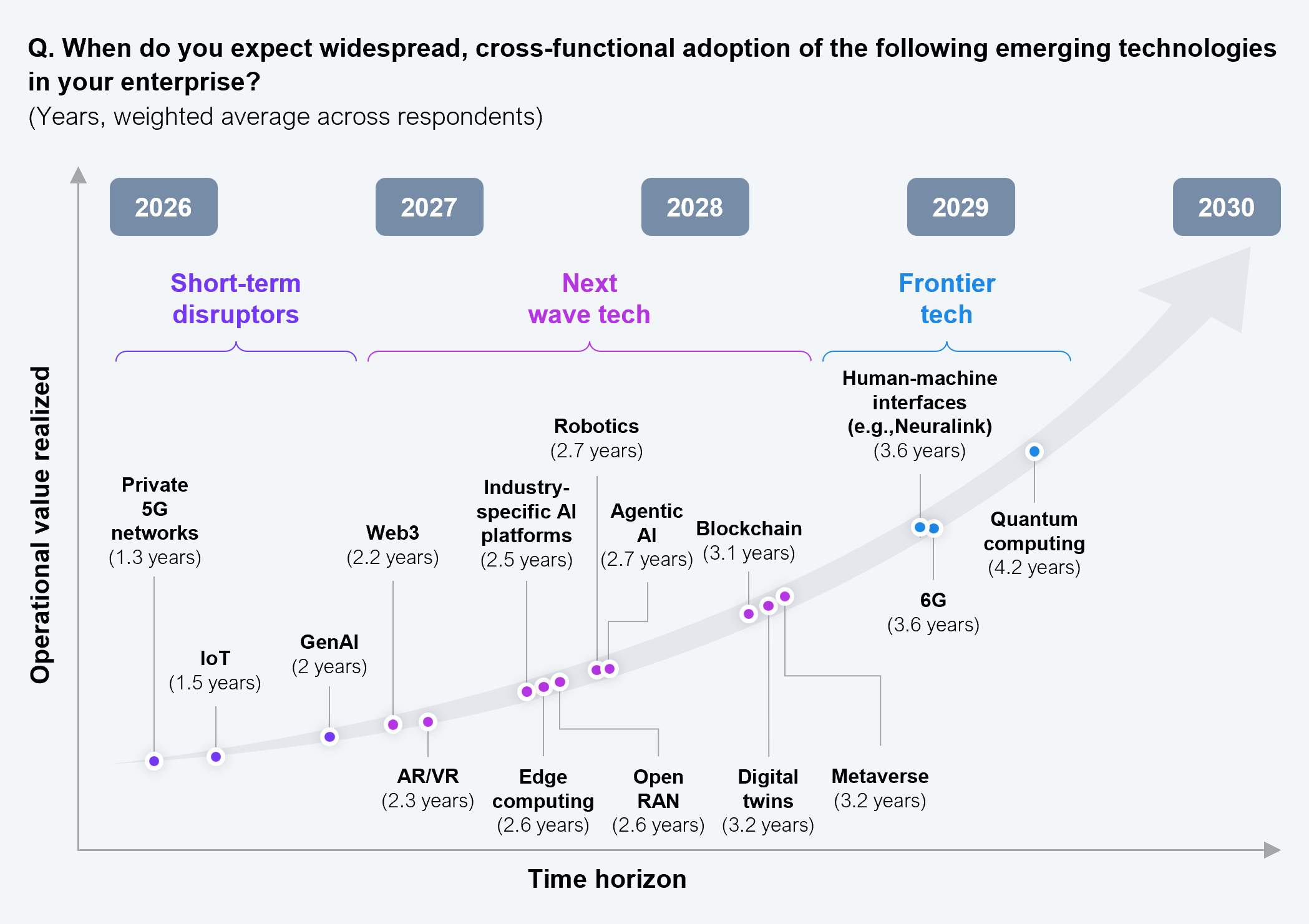
Exhibit 1: Enterprises need to brace for a tectonic shift in the technology landscape over the next two to three years

A scatter plot showing weighted average adoption timelines in years for 16 emerging technologies across three categories: short-term disruptors, next wave tech, and frontier tech. The horizontal axis represents the time horizon from 2026 to 2030; the vertical axis represents operational value realized. Short-term disruptors include private 5G networks (1.3 years), IoT (1.5 years), and GenAI (2 years). Next wave tech includes Web3 (2.2 years), AR/VR (2.3 years), industry-specific AI platforms (2.5 years), edge computing (2.6 years), Open RAN (2.6 years), robotics (2.7 years), and agentic AI (2.7 years). Frontier tech includes blockchain (3.1 years), digital twins (3.2 years), metaverse (3.2 years), 6G (3.6 years), human-machine interfaces such as Neuralink (3.6 years), and quantum computing (4.2 years). Based on inputs from 505 IT and business leaders with Global 2000 enterprises. Source: HFS Research, 2025.

Based on inputs from 505 IT and business leaders with Global 2000 enterprises
Source: HFS Research, 2025

As these tools scale, they are transforming not just IT architectures but how work gets done. Enterprises are rethinking decision-making, operations, and outcome delivery. This shift is giving rise to the adaptive enterprise: an organization that unites digital intelligence, human judgment, and physical assets into a coordinated system capable of responding dynamically and delivering results in real-time. The adaptive enterprise is not a theoretical model. It is becoming the operating blueprint for leaders navigating continuous disruption.

Enterprise ambitions reflect this momentum. Nearly half expect to run AI-assisted workflows at scale within the next 12 months, and more than 50% aim to achieve fully integrated digital-physical (“phygital”) operations by 2028 (Exhibit 2). These timelines reflect a growing consensus that AI, OT, and digital platforms must be closely integrated to deliver business outcomes at scale.
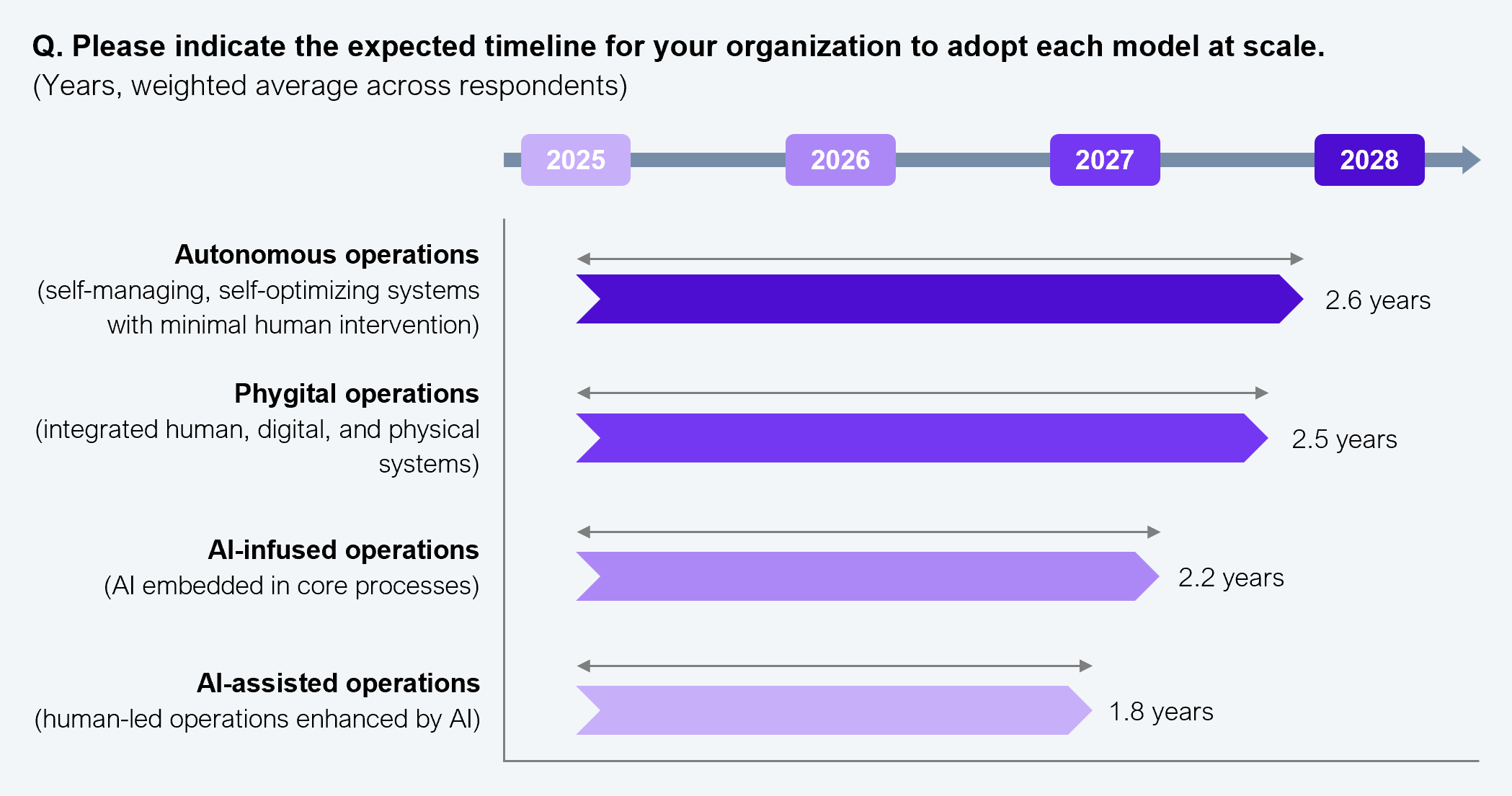
Exhibit 2: Self-managing systems are set to make adaptive enterprises a reality within three years

A horizontal bar chart showing the weighted average number of years until each AI operating model reaches scale adoption, based on inputs from 505 IT and business leaders with Global 2000 enterprises. The time horizon runs from 2025 to 2028. AI-assisted operations (human-led operations enhanced by AI) will reach scale in 1.8 years. AI-infused operations (AI embedded in core processes) will reach scale in 2.2 years. Phygital operations (integrated human, digital, and physical systems) will reach scale in 2.5 years. Autonomous operations (self-managing, self-optimizing systems with minimal human intervention) will reach scale in 2.6 years. Source: HFS Research, 2025.

Based on inputs from 505 IT and business leaders with Global 2000 enterprises
Source: HFS Research, 2025

Market leaders are already putting adaptive models into practice

To operationalize adaptive models, early movers in several industries are redesigning core functions to orchestrate intelligence, assets, and people in real-time.

  • In the insurance sector, claims teams pull live data from policy systems, vehicle sensors, weather feeds, and AI fraud detection to automate decisions. AI copilots guide adjusters on next best actions, improving speed and transparency.
  • Industrial infrastructure companies are transforming assets such as elevators and factory machines into subscription services. IoT sensors feed AI platforms that predict failures, optimize energy usage, and coordinate service, shifting the focus from repair-and-replace to uptime-as-a-service.
  • Hospitals integrate data from EHRs, connected devices, and AI models to optimize staffing, treatment, and bed allocation in real-time. Governance safeguards privacy, while AI copilots support clinicians with decision-making.
  • National grids in the utilities sector combine weather forecasts, live telemetry, and AI models to continuously balance cost, carbon, and reliability, driven by embedded policy rules.
  • In urban mobility, rail operators integrate predictive scheduling, asset monitoring, and passenger demand into closed-loop systems. AI copilots dynamically adjust routes and timing to enhance punctuality and environmental, social, and governance (ESG) performance.

In these examples, what distinguishes the leaders is not the technology stack, but their ability to orchestrate digital systems and physical assets into coordinated, intelligent workflows.

AI value is unlocked only when IT and OT systems talk to each other—digital twins and predictive maintenance need real-time orchestration across layers.

— CTO, global industrial manufacturer

Convergence is becoming a performance driver, and AI is the connective tissue

Convergence is not a systems upgrade; it is a decisive competitive factor, hardwiring processes, workflows, resilience, and business outcomes into transformation roadmaps, using IT, OT, and AI as enablers. To this end, enterprises are investing in unified monitoring, cyber-resilient edge infrastructure, and real-time AI-driven insights as core to operations (Exhibit 3).

In this scenario, AI acts as the connective tissue linking people, data, and machines across the stack. By embedding intelligence at the point of service delivery, AI enables faster decisions, smarter risk management, and greater visibility across functions. As AI transitions from pilot projects to embedded systems, it is redefining how enterprises measure performance and deliver value.
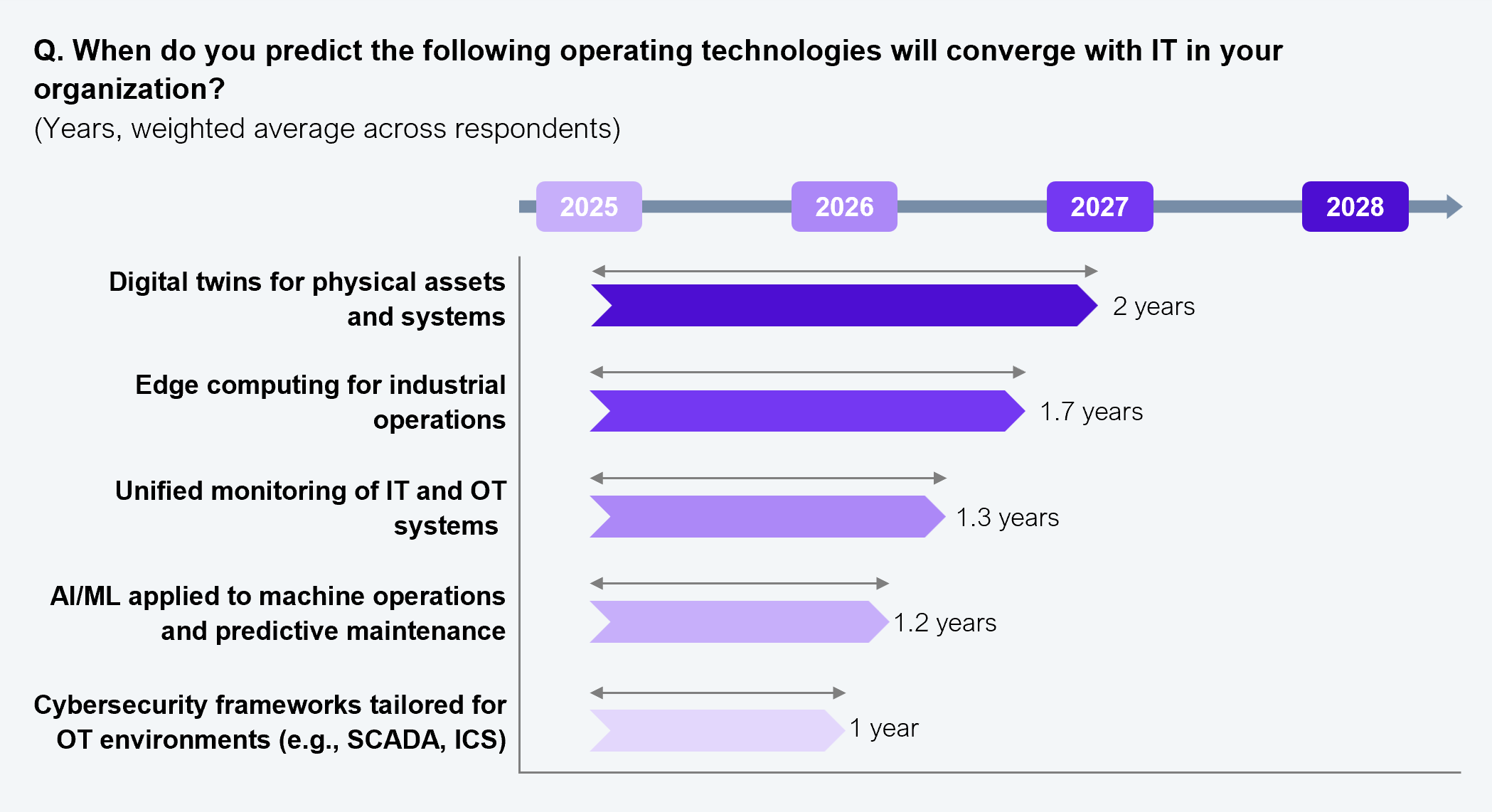
Exhibit 3: AI is operationalizing IT–OT convergence at scale

A horizontal bar chart showing weighted average years until five operational technologies converge with IT, based on inputs from 505 IT and business leaders with Global 2000 enterprises. The time horizon runs from 2025 to 2028. Cybersecurity frameworks tailored for OT environments such as SCADA and ICS will converge in 1 year. AI/ML applied to machine operations and predictive maintenance will converge in 1.2 years. Unified monitoring of IT and OT systems will converge in 1.3 years. Edge computing for industrial operations will converge in 1.7 years. Digital twins for physical assets and systems will converge in 2 years. Source: HFS Research, 2025.

Based on inputs from 505 IT and business leaders with Global 2000 enterprises
Source: HFS Research, 2025

Enterprises are redesigning tech services to power adaptive operations at scale

These operating shifts directly influence how enterprises structure and consume technology services. Modernization has become the baseline, not the goal. The focus is moving to service capabilities that deliver intelligence, speed, and resilience across the stack.

Over the next three years, the biggest increases in demand will be for cybersecurity and risk management (71%), AI model development and tuning (63%), and AI-enabled IT operations (61%). Data engineering and cloud modernization remain critical enablers of these priorities (Exhibit 4).

Enterprises are rebuilding their technology services as adaptive platforms that power Human+Machine operations, with security, AI, and data at their core. Simultaneously, sourcing strategies are shifting. More than half of enterprises expect to increase reliance on third-party partners for cybersecurity and risk, with AI development, tuning, governance, and operations close behind. Demand for external expertise in data engineering, hybrid cloud, and application modernization also remains strong. These services will be foundational to building adaptive enterprises.
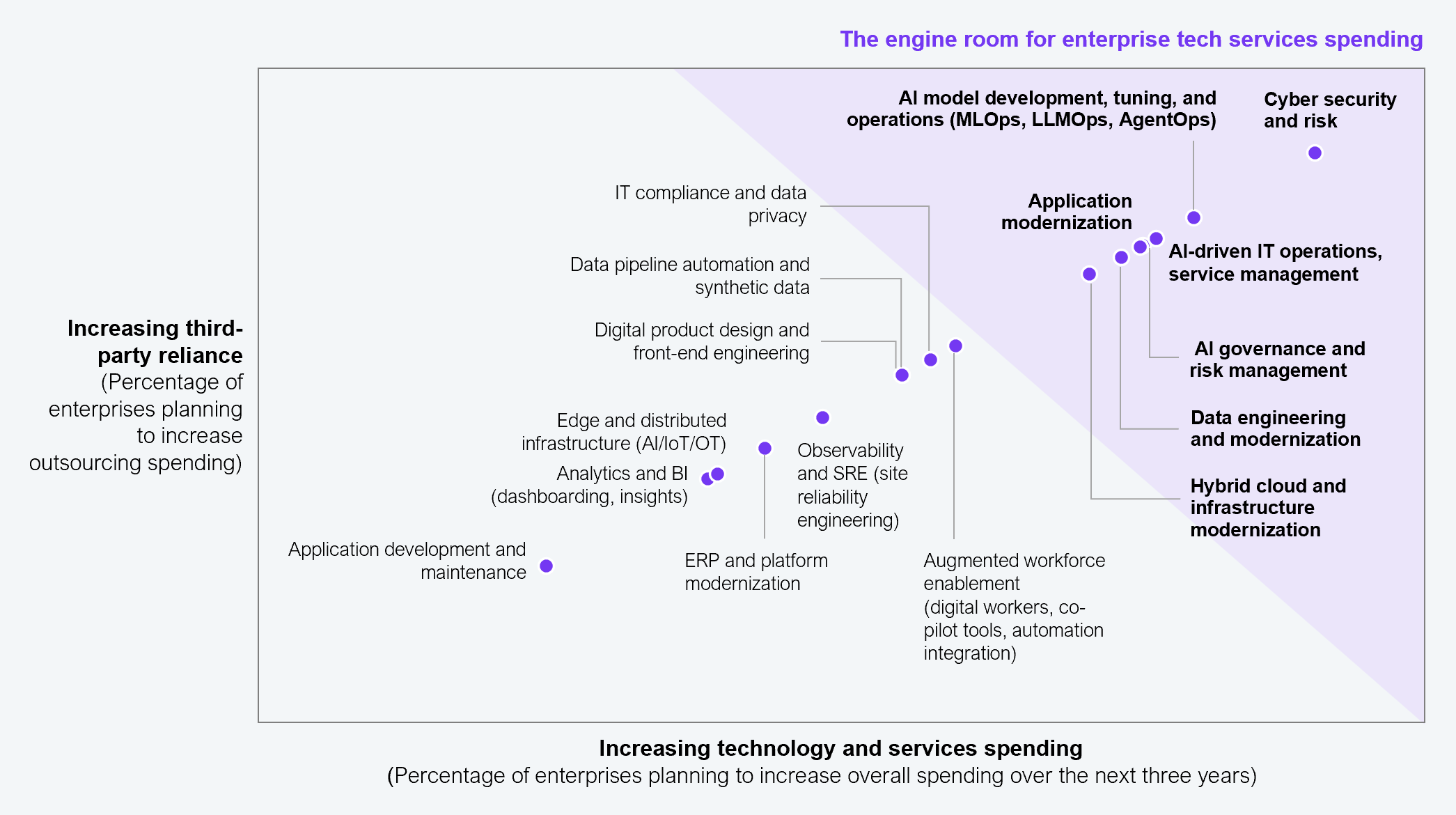
Exhibit 4: Data, AI, and cybersecurity will power the engine rooms of tech services spending

A bubble or scatter chart plotting technology and services categories across two axes: increasing third-party reliance (vertical axis, percentage of enterprises planning to increase outsourcing spending) and increasing technology and services spending (horizontal axis, percentage of enterprises planning to increase overall spending over the next three years). The top-right cluster labeled "the engine room for enterprise tech services spending" includes cybersecurity and risk, AI model development, tuning, and operations (MLOps, LLMOps, AgentOps), AI-driven IT operations and service management, AI governance and risk management, data engineering and modernization, hybrid cloud and infrastructure modernization, and application modernization. Other categories such as edge and distributed infrastructure, analytics and BI, ERP and platform modernization, augmented workforce enablement, digital product design, application development and maintenance, and IT compliance and data privacy appear at lower positions on both axes. Based on inputs from 505 IT and business leaders with Global 2000 enterprises. Source: HFS Research, 2025.

Based on inputs from 505 IT and business leaders with Global 2000 enterprises
Source: HFS Research, 2025

Adaptation demands action: Enterprises must rewire operating models for Human+Machine delivery

While the move to the Human+Machine is now an enterprise imperative, readiness lags far behind ambition. Only one in five enterprises feels fully prepared, and over half admit they are still exploring or only partially ready for this transition (Exhibit 5). Evidently, the gap between technology adoption and operating model maturity is stark.
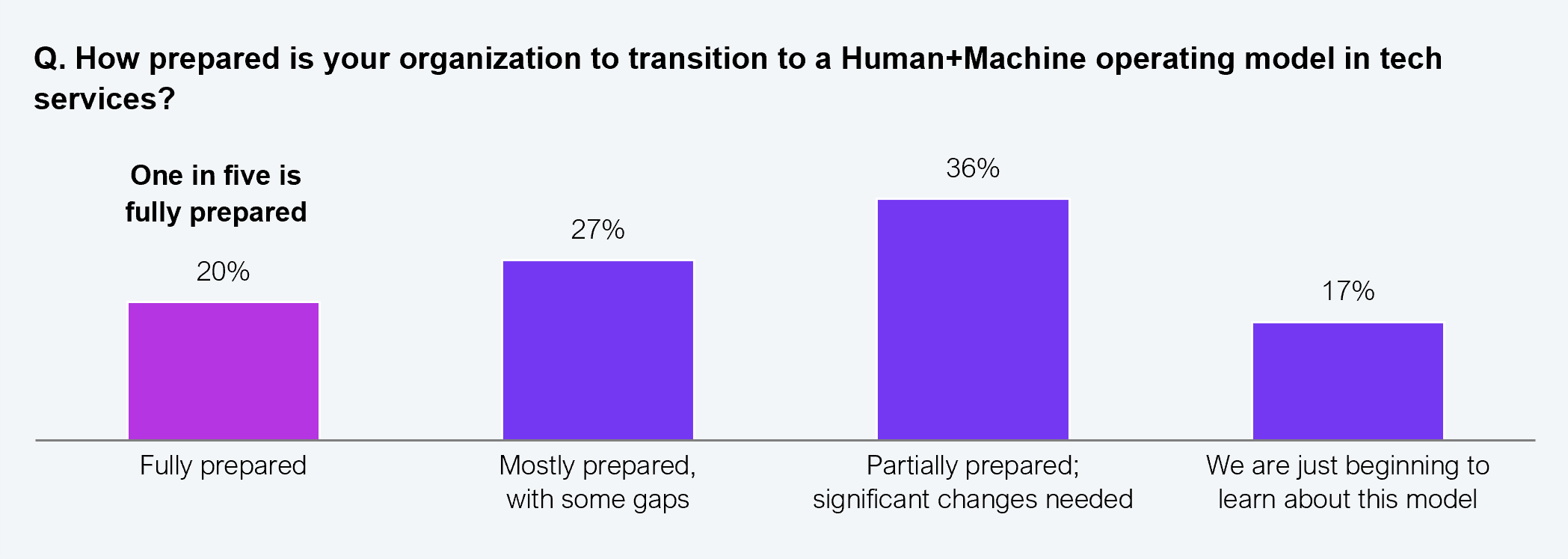
Exhibit 5: The readiness chasm: Only one in five enterprises is fully prepared for a Human+Machine model

A vertical bar chart showing how 505 IT and business leaders from Global 2000 enterprises rate their organization's preparedness to transition to a Human+Machine operating model in tech services. Results: 20% are fully prepared; 27% are mostly prepared with some gaps; 36% are partially prepared and say significant changes are needed; 17% are just beginning to learn about this model. Source: HFS Research, 2025.

Sample: 505 IT and business leaders with Global 2000 enterprises
Source: HFS Research, 2025

The possibility for unlocking AI in the business is very high, but it depends entirely on how well we treat data as a business asset and integrate it into intelligent workflows.

— CTO, investment banking firm

Enterprises cannot close this readiness gap solely through platform upgrades. Infrastructure modernization is necessary, but not sufficient. Real progress comes from reimagining workflows, redesigning data pipelines, and integrating governance into systems that operate in real-time.

In industrial, energy, and mobility environments, the vast untapped potential to be realized through IT–OT convergence makes the urgency to pivot sharper. Predictive maintenance, digital twins, and unified security create value only when embedded within a coordinated framework that fuses digital and physical layers. Without this, convergence remains a technology investment rather than a performance driver.

Achieving this requires action across every layer of the operating model:

  • People: IT and plant-floor teams must co-design workflows and jointly own security and maintenance.
  • Technology: Unified data models, interoperable APIs, and edge-to-cloud orchestration must ensure systems “speak the same language.”
  • Governance: Real-time monitoring, cyber resilience, and embedded compliance must extend seamlessly across IT and OT.

We’re all-in on AI, but the real challenge is less about technology and more about integrating AI outputs into legacy processes and workflows.

— IT leader, healthcare enterprise

AI thrives in environments where data and expertise flow freely. It’s forcing us to flatten hierarchies, build cross-functional teams, and rethink decision-making.

— Business executive, insurance and financial services

The evidence suggests that the readiness gap is not about technology availability but about operating model design. Closing these gaps requires more than modernization projects. Enterprises must undertake the complex yet inevitable rewiring of the enterprise fabric, which requires coordinated progress across six interconnected fronts: processes, data, workforce, culture, governance, and infrastructure (Exhibit 6).
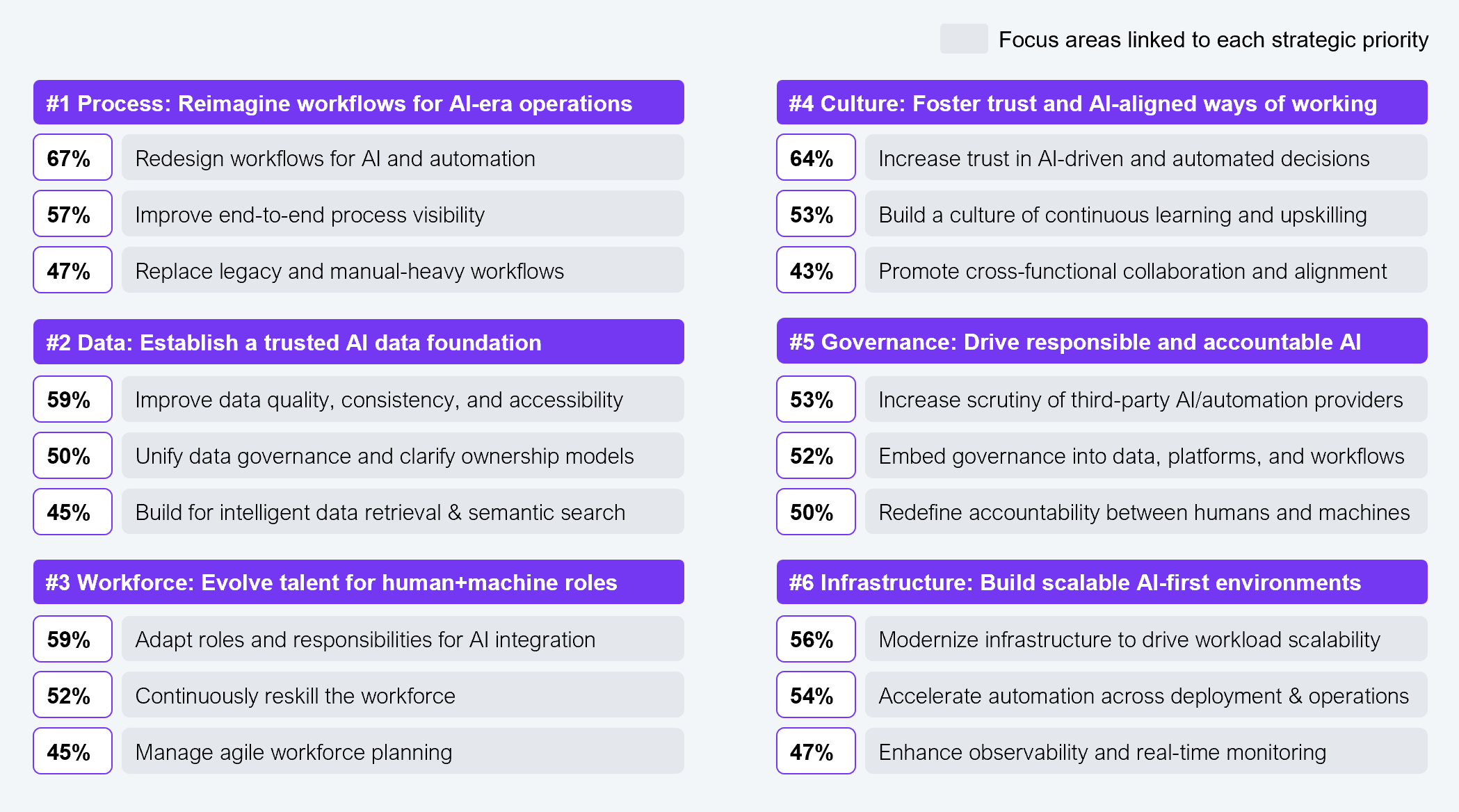
Exhibit 6: Rewiring for Human+Machine: Six enterprise priorities and the focus areas that bring them to life

A two-column table listing six strategic priorities for Human+Machine delivery alongside three focus areas and their corresponding survey percentages for each priority. Priority 1, Process: Reimagine workflows for AI-era operations includes: redesign workflows for AI and automation (67%), improve end-to-end process visibility (57%), and replace legacy and manual-heavy workflows (47%). Priority 2, Data: Establish a trusted AI data foundation includes: improve data quality, consistency, and accessibility (59%), unify data governance and clarify ownership models (50%), and build for intelligent data retrieval and semantic search (45%). Priority 3, Workforce: Evolve talent for human+machine roles includes: adapt roles and responsibilities for AI integration (59%), continuously reskill the workforce (52%), and manage agile workforce planning (45%). Priority 4, Culture: Foster trust and AI-aligned ways of working includes: increase trust in AI-driven and automated decisions (64%), build a culture of continuous learning and upskilling (53%), and promote cross-functional collaboration and alignment (43%). Priority 5, Governance: Drive responsible and accountable AI includes: increase scrutiny of third-party AI/automation providers (53%), embed governance into data, platforms, and workflows (52%), and redefine accountability between humans and machines (50%). Priority 6, Infrastructure: Build scalable AI-first environments includes: modernize infrastructure to drive workload scalability (56%), accelerate automation across deployment and operations (54%), and enhance observability and real-time monitoring (47%). Sample: 505 IT and business leaders with Global 2000 enterprises. Source: HFS Research, 2025.

Sample: 505 IT and business leaders with Global 2000 enterprises
Source: HFS Research, 2025

AI adoption in manufacturing is as much about retraining people and rethinking processes as it is about deploying advanced robotics or analytics.

— Plant innovation leader, automotive manufacturing

Rewiring for Human+Machine delivery starts with processes and data

The readiness gap is not a question of technology availability but of operating model design. Enterprises repeatedly cite processes and data as the primary obstacles to Human+Machine delivery (Exhibit 7). Siloed workflows, fragmented ownership, and manual handoffs prevent AI and emerging technologies from operating in context and stop enterprises from functioning as orchestrated systems.
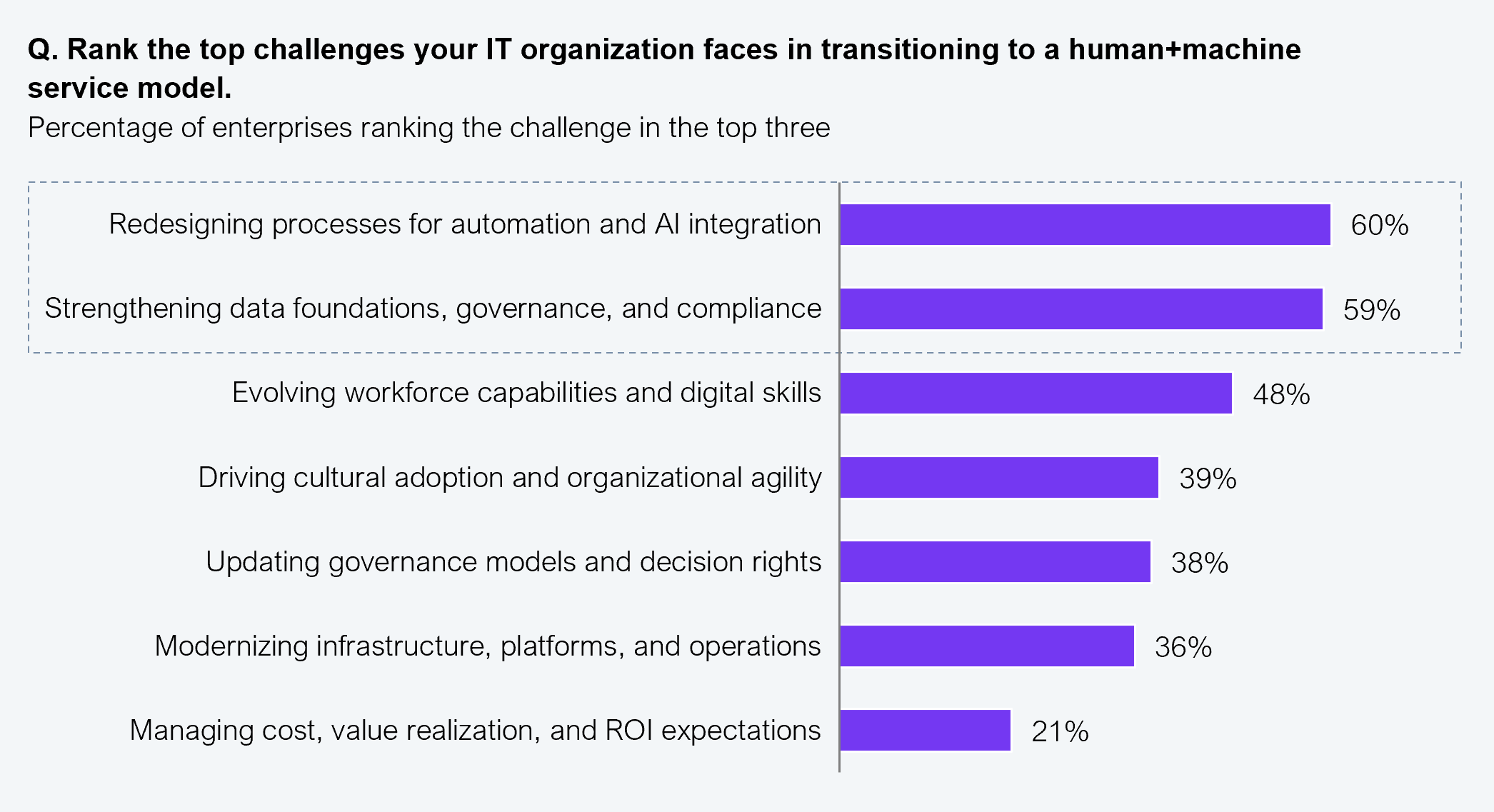
Exhibit 7: Misaligned process and data designs are the biggest barriers to Human+Machine delivery

A horizontal bar chart showing the percentage of 505 Global 2000 enterprise leaders ranking each challenge in the top three when transitioning to a human+machine service model. Results: redesigning processes for automation and AI integration (60%), strengthening data foundations, governance, and compliance (59%), evolving workforce capabilities and digital skills (48%), driving cultural adoption and organizational agility (39%), updating governance models and decision rights (38%), modernizing infrastructure, platforms, and operations (36%), and managing cost, value realization, and ROI expectations (21%). Source: HFS Research, 2025.

Sample: 505 IT and business leaders with Global 2000 enterprises
Source: HFS Research, 2025

  • Processes come first. Six in ten leaders highlight the need for end-to-end process redesign, focusing on visibility, automation, and orchestration across the value chain. AI thrives in dynamic workflows, not in static, manual-heavy sequences. Techniques like process mining and real-time monitoring are being deployed to identify inefficiencies and enable continuous optimization.
  • Data is the launchpad. Reliable, contextualized data is the backbone of AI-driven decision-making. Enterprises must break down silos and invest in unified data layers and semantic models. Without this foundation, even advanced models risk producing fragmented or low-value insights.
  • The workforce must evolve. By 2028, AI-assisted activities are expected to reach 43% of enterprise work, while fully autonomous tasks will more than double from 15% to 32%. This demands hybrid skills spanning AI, automation, IoT, cloud, and cybersecurity. Reskilling is critical as employees shift toward orchestration, judgment, and governance while AI copilots take on repetitive tasks.
  • Culture and trust are enablers. More than half of leaders admit culture is as much of a barrier as technology. Transparency, co-design, and adherence to ethical standards are essential to building confidence in AI-driven decisions. Trust builds within the enterprise when employees see automation improve their workflows, and outside when clients see it translate into better outcomes.
  • Governance must be embedded. Oversight cannot remain external or manual. Guardrails and compliance need to be coded into data pipelines, APIs, and orchestration engines. Clear accountability between humans and machines is essential as decision-making authority shifts.
  • Infrastructure underpins it all. Over half of enterprises are investing in AI-first, cloud-native architectures that can support IoT, edge workloads, and real-time orchestration. This includes containerized workloads, observability platforms, and edge computing to support IT–OT convergence. Infrastructure is no longer just about compute; it is the intelligent foundation for data, model training, and real-time decisions.
  • Costs and return on investment (ROI) must be re-evaluated. Leaders are recognizing that the economics of orchestration are more complex than expected. Hidden costs such as energy use, lifecycle management, compliance, and ethical oversight are reshaping budget priorities.

Enterprises that fail to factor in these hidden costs risk underestimating the true investment required to scale Human+Machine delivery. Enterprises must go beyond tech spend to plan for the long-term costs of explainability, governance, and workforce adaptation
(Exhibit 8).
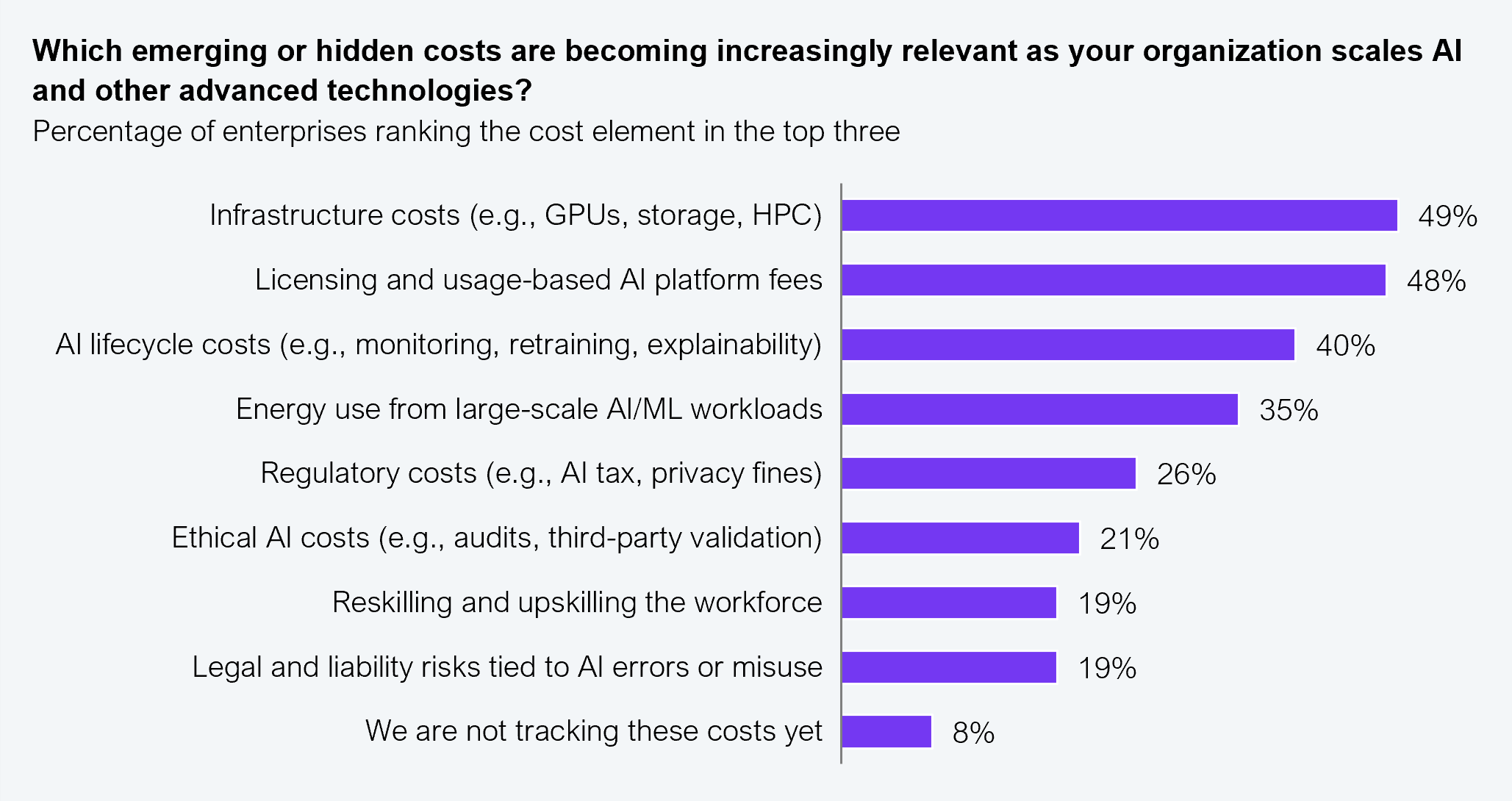
Exhibit 8: Hidden costs are rewriting the economics of AI and Human+Machine delivery

A horizontal bar chart showing the percentage of 505 Global 2000 enterprise leaders ranking each emerging or hidden cost in the top three as their organization scales AI and advanced technologies. Results: infrastructure costs such as GPUs, storage, and HPC (49%), licensing and usage-based AI platform fees (48%), AI lifecycle costs such as monitoring, retraining, and explainability (40%), energy use from large-scale AI/ML workloads (35%), regulatory costs such as AI tax and privacy fines (26%), ethical AI costs such as audits and third-party validation (21%), reskilling and upskilling the workforce (19%), legal and liability risks tied to AI errors or misuse (19%), and we are not tracking these costs yet (8%). Source: HFS Research, 2025.

Sample: 505 IT and business leaders with Global 2000 enterprises
Source: HFS Research, 2025

Sourcing for the Human+Machine Era: Enterprises need value orchestrators, not just system integrators

The Human+Machine era is forcing a reset in how enterprises evaluate and manage their partners. Basic integration, staff augmentation, and platform upgrades are no longer enough. Enterprises need partners who act as value orchestrators, helping to bridge IT, OT, data, and AI into coordinated systems that deliver measurable business outcomes.

Yet fewer than one-third of enterprises believe their current providers are ready to support this shift (Exhibit 9). This trust gap underscores the urgency for new sourcing models and new provider capabilities that transcend traditional system integration chops.
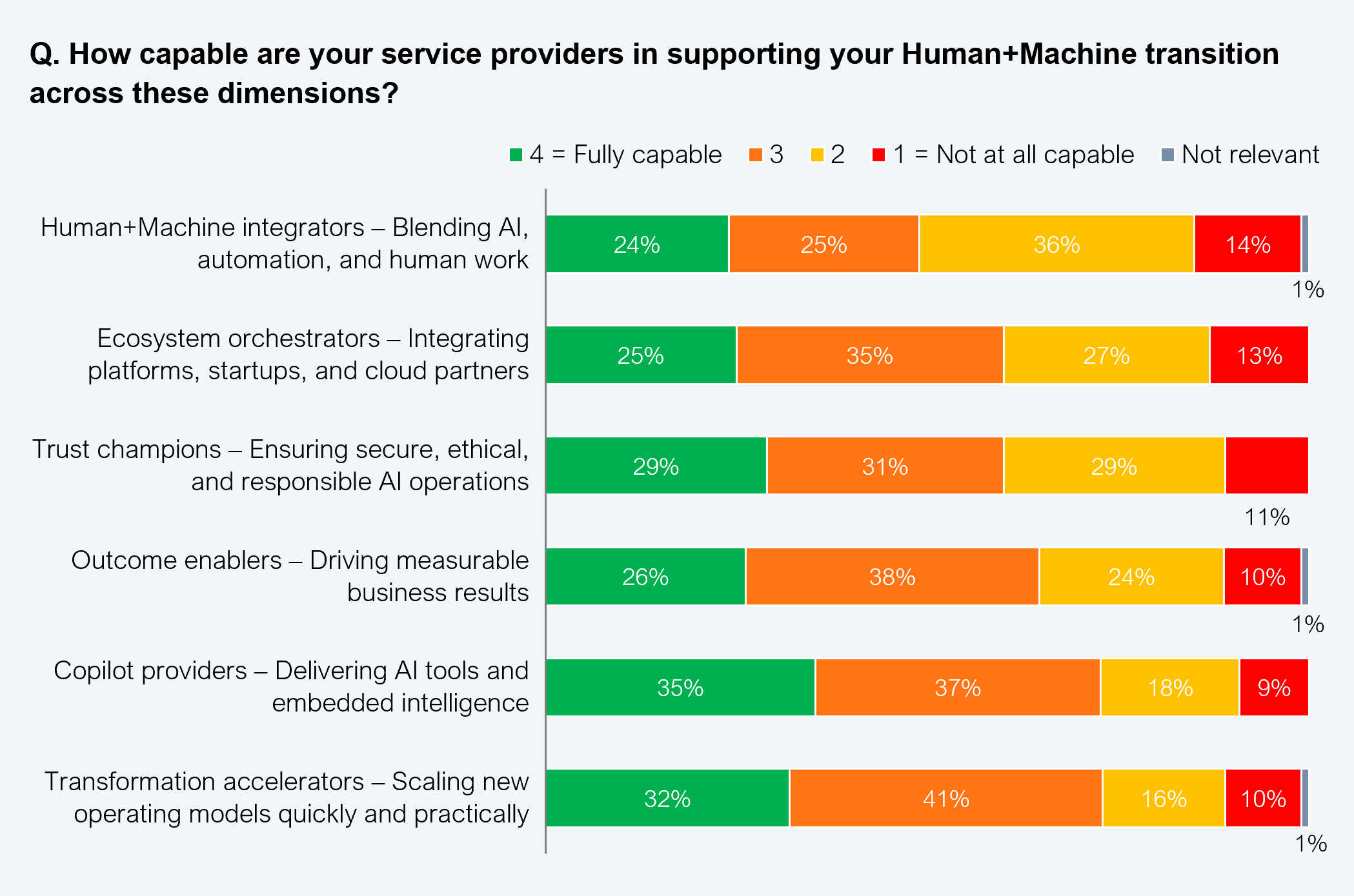
Exhibit 9: Only one in four enterprises trusts its partners to enable Human+Machine delivery

A stacked horizontal bar chart rating service provider capability across six dimensions on a four-point scale from 1 (not at all capable) to 4 (fully capable), plus "not relevant." Results for each dimension (share rating 4 = fully capable shown first): Human+Machine integrators (blending AI, automation, and human work): 24% fully capable, 25% rating 3, 36% rating 2, 14% not at all capable, 1% not relevant. Ecosystem orchestrators (integrating platforms, startups, and cloud partners): 25%, 35%, 27%, 13%, 1% not relevant not shown. Trust champions (ensuring secure, ethical, and responsible AI operations): 29%, 31%, 29%, 11%. Outcome enablers (driving measurable business results): 26%, 38%, 24%, 10%, 1% not relevant. Copilot providers (delivering AI tools and embedded intelligence): 35%, 37%, 18%, 9%, 1% not relevant. Transformation accelerators (scaling new operating models quickly and practically): 32%, 41%, 16%, 10%, 1% not relevant. Sample: 505 IT and business leaders with Global 2000 enterprises. Source: HFS Research, 2025.

Sample: 505 IT and business leaders with Global 2000 enterprises
Source: HFS Research, 2025

Enterprises can no longer reward modernization for its own sake. To deliver impact, providers must demonstrate true full-stack capability, spanning infrastructure and OT platforms, data pipelines, and AI models, all the way through to business workflows. For enterprise leaders, this means raising the bar on partner selection.

Advisory on AI-first operating models, platform-based delivery assets, and real-time orchestration must be mandatory. Simply offering tools or generic consulting will no longer be sufficient. Winning partners will combine domain expertise with AI-enabled orchestration to create integrated “performance fabrics” that deliver outcomes (Exhibit 10).
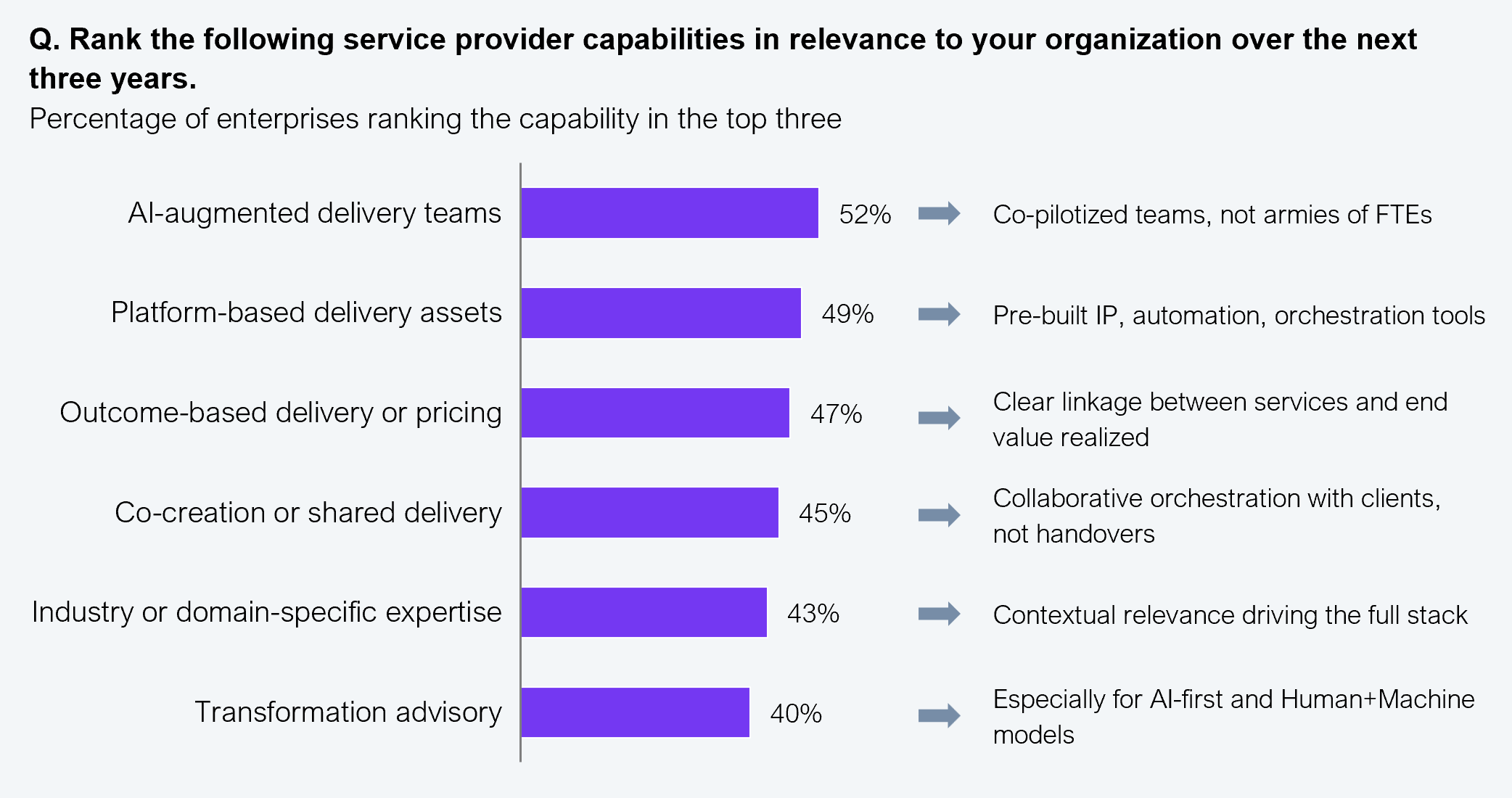
Exhibit 10: Value orchestration requires true full-stack capability

A horizontal bar chart showing the percentage of 505 Global 2000 enterprise leaders ranking each service provider capability in the top three for relevance over the next three years, with a label indicating what each capability means in practice. Results: AI-augmented delivery teams (52%, meaning co-pilotized teams, not armies of FTEs), platform-based delivery assets (49%, meaning pre-built IP, automation, and orchestration tools), outcome-based delivery or pricing (47%, meaning clear linkage between services and end value realized), co-creation or shared delivery (45%, meaning collaborative orchestration with clients, not handovers), industry or domain-specific expertise (43%, meaning contextual relevance driving the full stack), and transformation advisory (40%, meaning especially for AI-first and Human+Machine models). Source: HFS Research, 2025.

Sample: 505 IT and business leaders with Global 2000 enterprises
Source: HFS Research, 2025

Vendors talk about full-stack, but unless they can integrate domain workflows, physical systems, and AI-driven data orchestration, they’re not delivering outcomes.

— Head of Automation, financial services

The companies that win will be those that combine AI with ecosystem partnerships and hyper-personalization, not just automation.

— BU Head, retail and consumer products

Consulting must move from advice to embedded co-creation

One-off advisory engagements are no longer relevant in an era where transformation must be continuous. Enterprises now expect consulting partners to bridge strategy with execution by remaining embedded throughout the transformation and adoption journey. Over half (56%) prefer specialized providers with deep expertise in workflows, AI, and integration, while nearly half (46%) want platform players that can combine scalable tools with strategic guidance.

Enterprise leaders should judge providers on more than their technical fluency; providers should be able to

  • Integrate change management and operational redesign from the outset to drive transformation.
  • Rapidly turn strategies into pilots and scale them across functions.
  • Embed performance measurement into the operating fabric.

The most effective consulting partners will not only advise but co-create outcomes continuously, combining domain knowledge, full-stack coverage, and design-led approaches to deliver measurable value.

Rethinking sourcing and vendor management is an enterprise responsibility

The provider model is evolving, but enterprises must evolve with it. More than half now view value-based contracts that link fees to revenue gains, risk mitigation, or cost savings as highly relevant (Exhibit 11). Traditional time-and-materials models are steadily giving way to performance-linked pricing and consumption-based structures that reflect the adaptive, always-on nature of modern services.
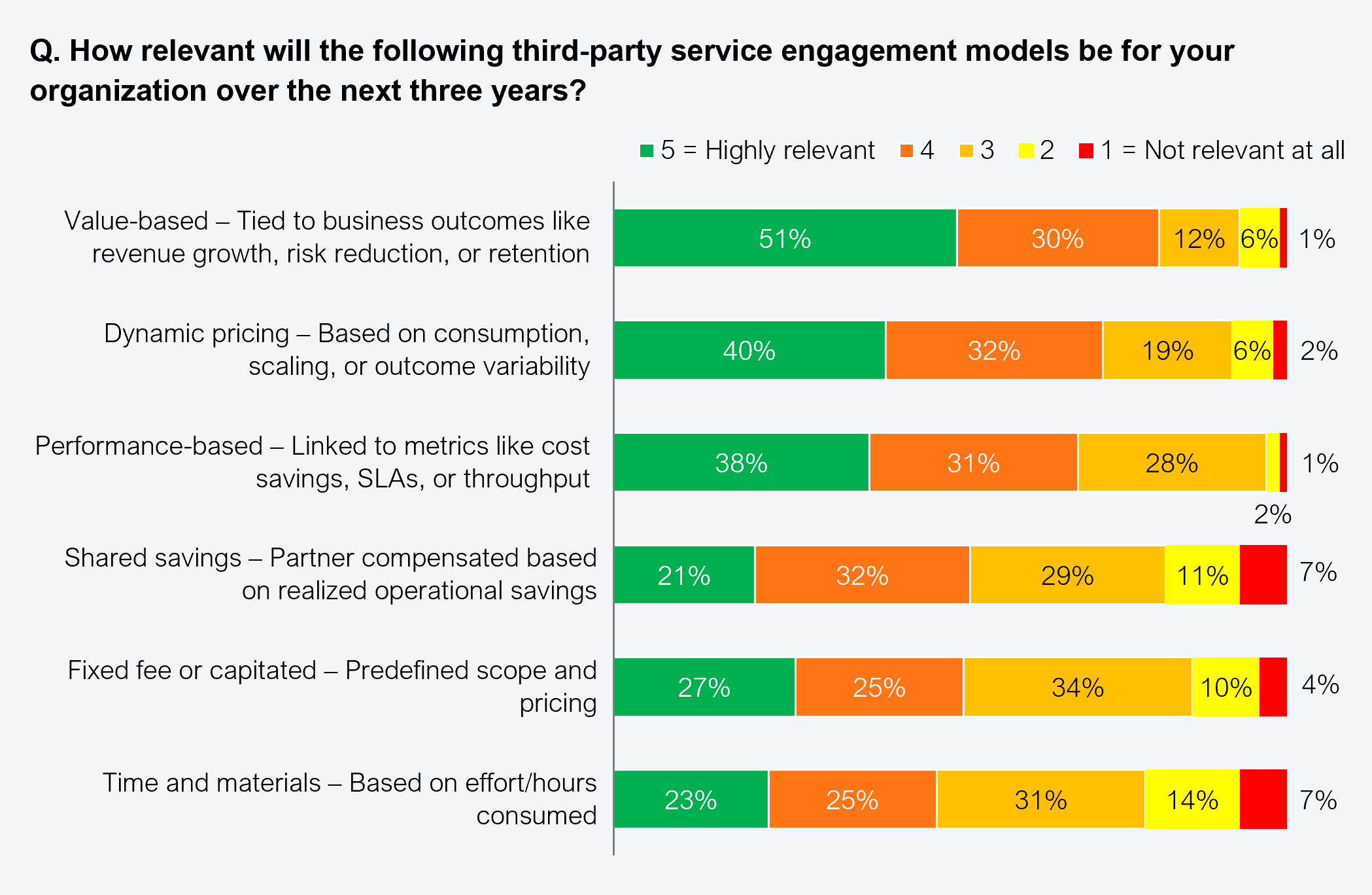
Exhibit 11: Providers that are unable to link services to specific business outcomes will lose relevance in the long run

A stacked horizontal bar chart rating how relevant six third-party service engagement models will be over the next three years, on a five-point scale from 1 (not relevant at all) to 5 (highly relevant), based on 505 Global 2000 enterprise leaders. Results (share rating 5 = highly relevant shown first): value-based contracts tied to business outcomes like revenue growth, risk reduction, or retention: 51%, 30%, 12%, 6%, 1%. Dynamic pricing based on consumption, scaling, or outcome variability: 40%, 32%, 19%, 6%, 2%. Performance-based pricing linked to metrics like cost savings, SLAs, or throughput: 38%, 31%, 28%, 1%, 2%. Shared savings where the partner is compensated based on realized operational savings: 21%, 32%, 29%, 11%, 7%. Fixed fee or capitated with predefined scope and pricing: 27%, 25%, 34%, 10%, 4%. Time and materials based on effort or hours consumed: 23%, 25%, 31%, 14%, 7%. Source: HFS Research, 2025.

Sample: 505 IT and business leaders with Global 2000 enterprises
Source: HFS Research, 2025

To make this shift viable, pricing must be tied to real-time performance metrics such as throughput, adoption, or resilience. AI and autonomous systems now make it possible to generate and track such precise metrics. This convergence makes outcome-linked contracting viable at scale in a way it wasn’t a decade ago.

Buying AI is no longer just about licensing. It’s about gain-sharing, proving outcomes, and making sure the savings justify the complexity.

— IT leader, industrial manufacturing

For value-linked partnerships to succeed, enterprises must rewire sourcing and vendor management practices:

  • Embed business key performance indicators (KPIs) directly into contracts.
  • Adopt hybrid or outcome-based pricing models.
  • Establish real-time performance dashboards to track shared success.
  • Move vendor management from static cycles to fluid, co-creative engagement models.

Procurement leaders who once prioritized cost and inputs must now prioritize outcomes and impact, acting as orchestrators rather than transaction managers.

These shifts will give enterprises the leverage to demand continuous innovation and ensure providers adapt to evolving priorities (Exhibit 12).
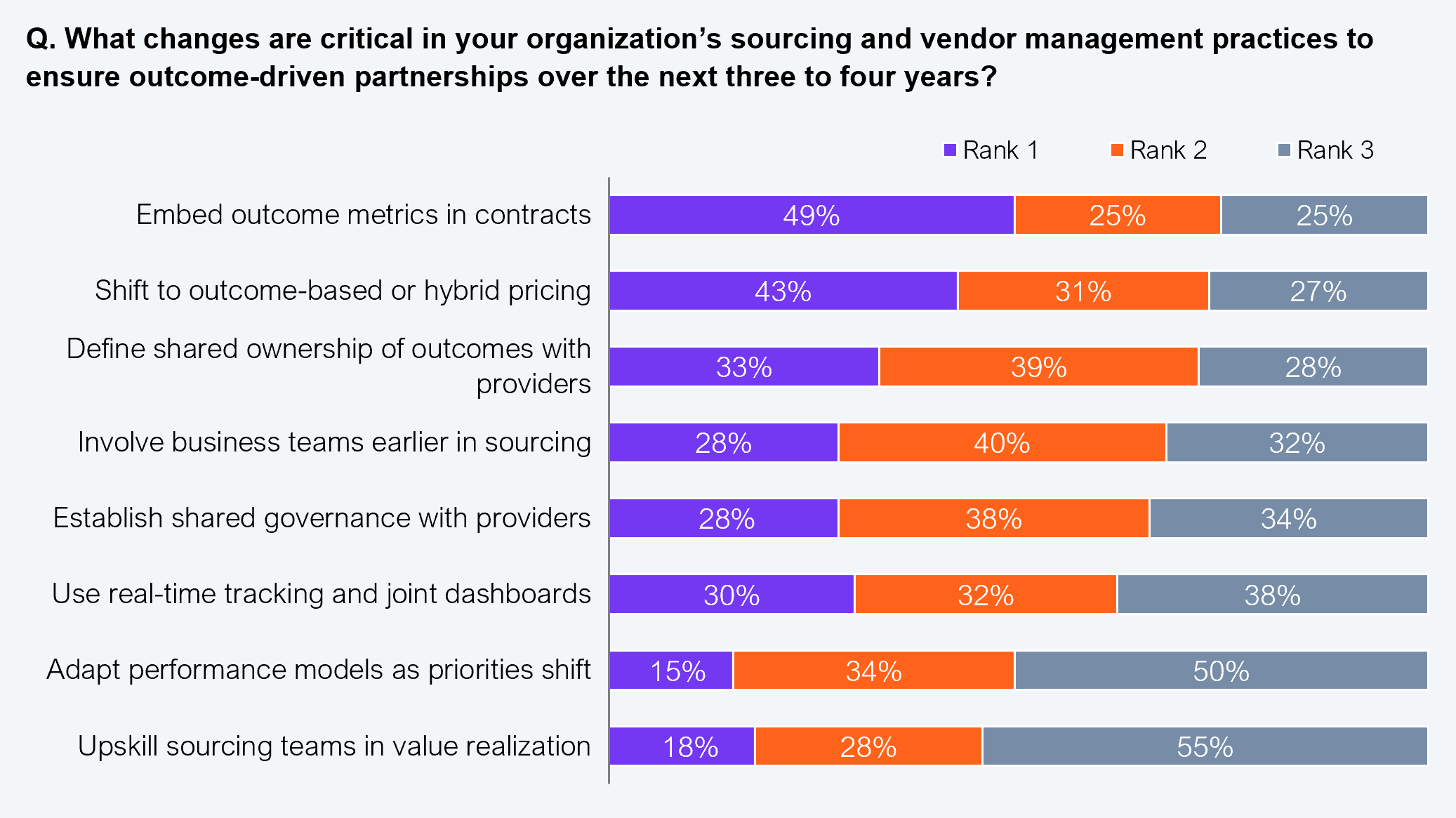
Exhibit 12: Enterprises must pivot sourcing to value-linked models

A stacked horizontal bar chart showing how 505 Global 2000 enterprise leaders rank the critical changes needed in sourcing and vendor management to ensure outcome-driven partnerships over the next three to four years, ranked 1, 2, or 3. Results by Rank 1 share (descending): embed outcome metrics in contracts (49% rank 1, 25% rank 2, 25% rank 3), shift to outcome-based or hybrid pricing (43%, 31%, 27%), define shared ownership of outcomes with providers (33%, 39%, 28%), involve business teams earlier in sourcing (28%, 40%, 32%), establish shared governance with providers (28%, 38%, 34%), use real-time tracking and joint dashboards (30%, 32%, 38%), adapt performance models as priorities shift (15%, 34%, 50%), upskill sourcing teams in value realization (18%, 28%, 55%). Source: HFS Research, 2025.

Sample: 505 IT and business leaders with Global 2000 enterprises
Source: HFS Research, 2025

The Bottom Line: Orchestrate or get left behind.

The real winners will be those who can combine AI, IoT, edge, and all other emerging tech with process redesign, data trust, and ecosystem partnerships to drive measurable business outcomes.

— Business leader, retail and consumer goods

The Human+Machine era has arrived, marking a new operating reality. Enterprises that treat AI, data, and emerging tech as bolt-ons will fall into cycles of failed pilots, rising costs, and eroding customer trust.

To lead in the Services-as-Software era, enterprises must

  • Put processes and data first.
  • Build a Human+Machine operating model that continuously aligns people, data, physical assets, and digital intelligence into a coordinated system.
  • Treat cybersecurity, AI, and data engineering as core services.
  • Demand full-stack, outcome-linked partnerships.
  • Reskill and reset culture for trust and speed, and elevate talent to work with AI and emerging technologies at scale.

Modernization may keep enterprises afloat, but orchestration will determine who leads. The future belongs to those who turn convergence into resilience, speed, and growth at scale.

Sign in to view or download this research.

Login

Register

Insight. Inspiration. Impact.

Register now for immediate access of HFS' research, data and forward looking trends.

Get Started


Download Research

    Sign In

    Sign up for a free
    research account

    With the exception of our Horizons reports, most of our research is available for free on our website. Sign up for a free account and start realizing the power of insights now.

    Digests/Newsletters: Overviews of the latest news, insight, and research by HFS.

    HFS Events: Exclusive invitations to HFS webinars, roundtables, and summits, bringing together key industry stakeholders focused on major innovations impacting business operations.

    By registering you agree to our privacy policy.

    I hereby consent that HFS Research can process my personal data.

    Premium Access

    Our premium subscription gives enterprise clients access to our complete library of proprietary research, direct access to our industry analysts, and other benefits.

    Contact us at [email protected] for more information on premium access.

    Help

    If you are looking for help getting in touch with someone from HFS, please click the chat button to the bottom right of your screen to start a conversation with a member of our team.

    [email protected]

      Contact Ask HFS AI Support