
This Market Impact Report is for BFSI executives, COOs, heads of operations and shared services, and digital transformation leaders looking to close the gap between back office ambition and execution.
Enough ambition—it’s time for action
In an era defined by AI disruption, tightened regulations, and relentless pressure to deliver more with less, the banking, financial services, and insurance (BFSI) back office is no longer a support function—it’s the engine of resilience, trust, and growth. Yet most firms are stuck in a holding pattern: talking transformation but running on paper, silos, and brittle legacy workflows.
To understand whether BFSI organizations are ready to face this risk or become irrelevant, HFS Research partnered with Iron Mountain to survey more than 500 senior executives across the US, UK, Canada, France, India, Brazil, and Australia.
The results are as startling as they are sobering:

Our interactions with BFSI enterprises uncovered seven hard truths every leader must confront:


To understand what it takes to move from ambition to impact, we classified survey respondents into three transformation archetypes:
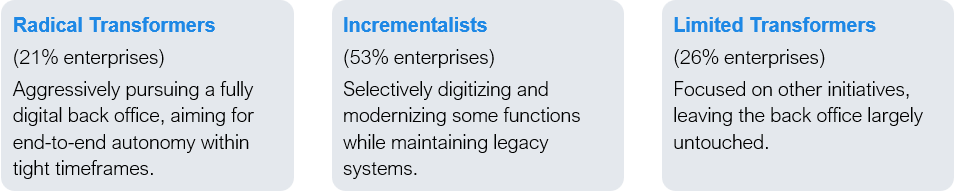
The Radical Transformers are proving that their initiatives are not only profitable but are transformative and industry-leading across all areas of the business and operations as detailed below:


The playbook is clear: Reposition the back office as a growth engine. Fund and execute transformation like it matters. Prepare your workforce for AI-powered, prompt-led roles. Measure success by innovation and impact, not just compliance. Stop dying by a thousand AI pilots or a lack of action.
The BFSI winners will be those that treat the back office as a strategic asset to be reinvented, not as a cost center to be optimized.
In today’s hyper-competitive, regulated, and customer-centric environment, transforming the back office is no longer a ‘nice to have’ but a strategic imperative. For banks, insurers, and capital markets enterprises, it has become the frontline of operational execution and resilience, risk management, and differentiated service delivery.
Among the 505 BFSI executives we surveyed, the urgency is clear:
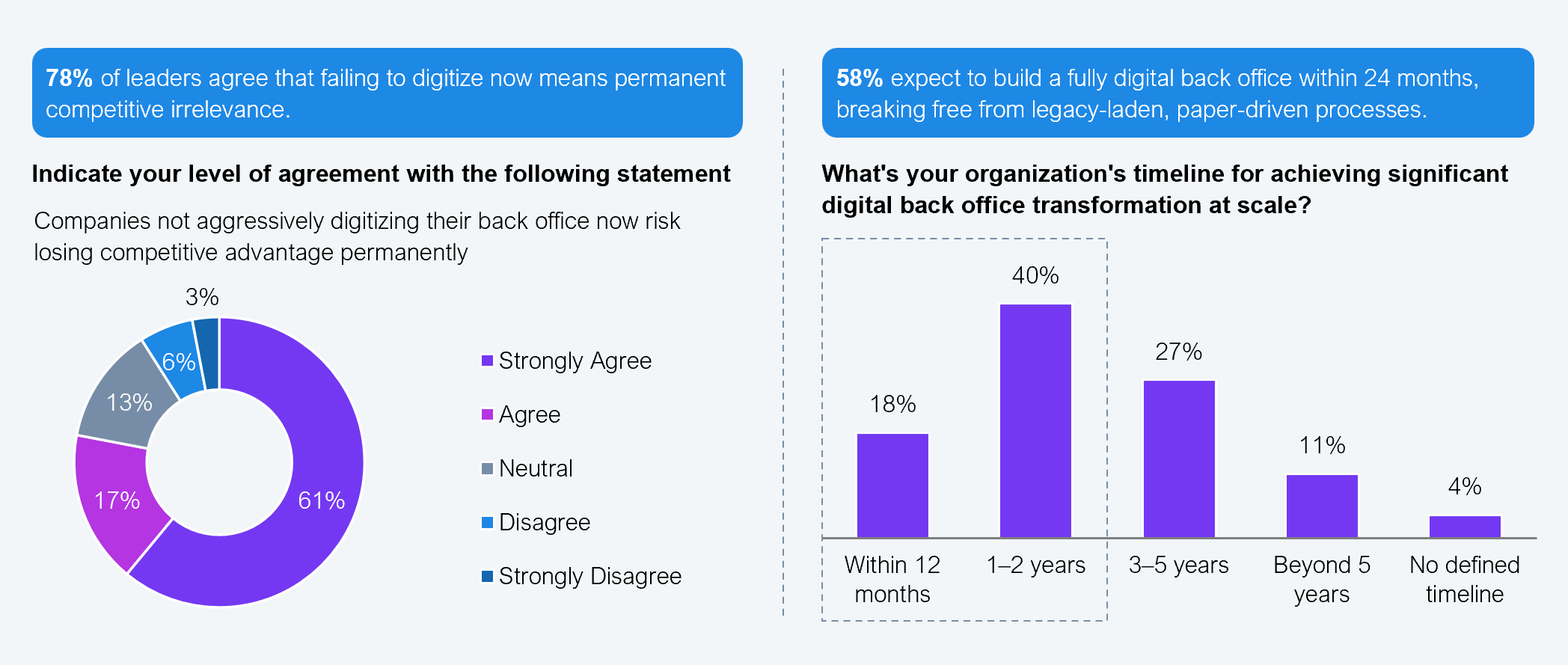
Sample: 505 BFSI executives
Source: HFS Research in partnership with Iron Mountain, 2025
But digitalization is not just about deploying automation tools or adopting low-code/no-code platforms. The real transformation lies in re-architecting an enterprise’s engine room and fundamentally reshaping how operations, compliance, and customer engagement are delivered. It requires shifting from siloed, brittle infrastructure to intelligent, adaptable systems designed for:
This isn’t just about catching up; it’s about building a future-ready operational core that allows BFSI organizations to scale, adapt, and lead. Enterprises that get this right will unlock not only cost savings but a strategic advantage.
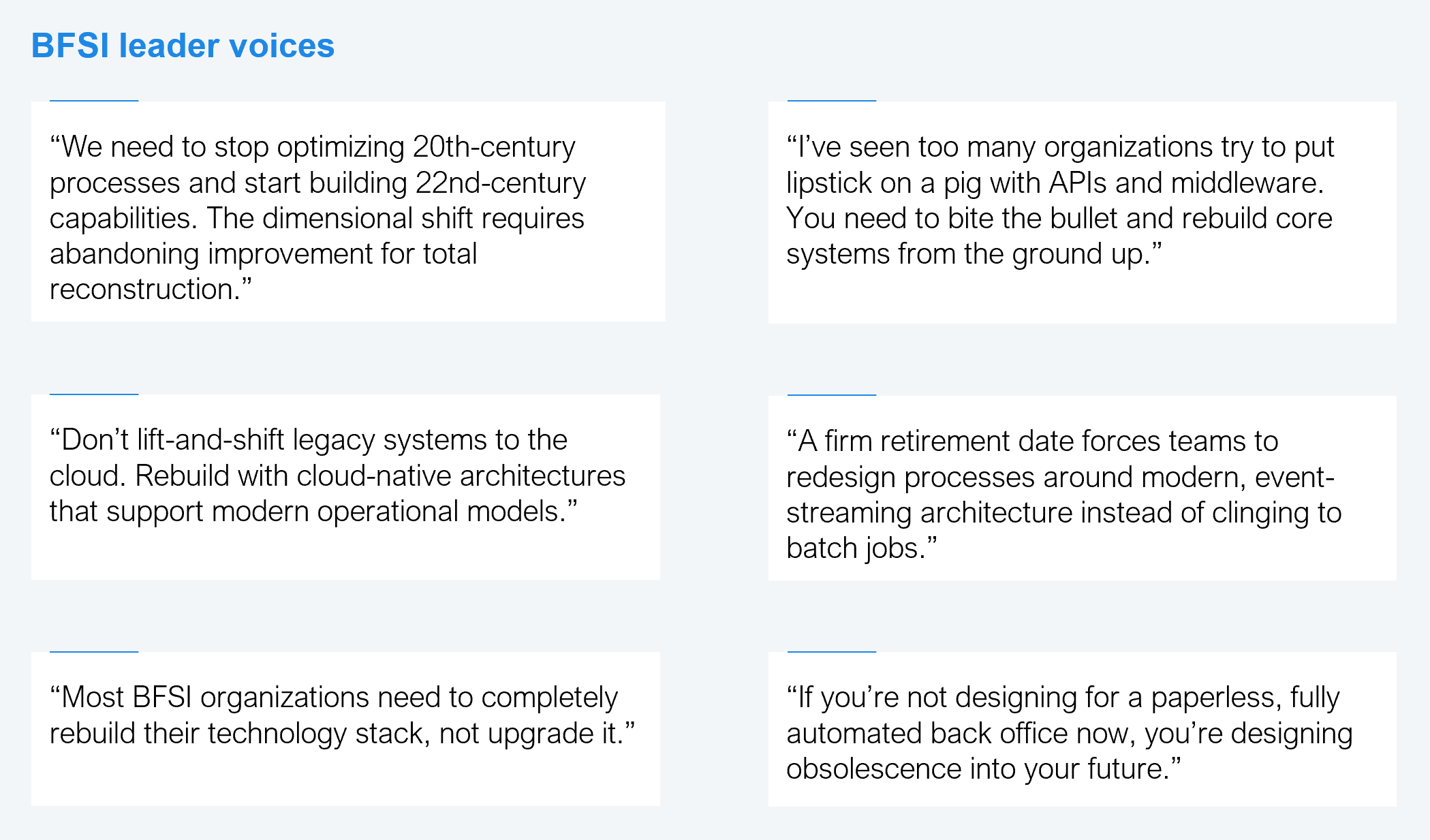
Back office transformation in the BFSI sector is no longer an aspirational ideal. It’s an existential imperative. Industry leaders are setting bold agendas to modernize their foundational processes. Yet the road to realization is littered with execution challenges. These seven hard truths lay bare the paradox of making tall digital promises while still grappling with analog results—the back office dilemma faced by BFSI enterprises. Each reflects a striking gap between what leaders say they will do and what they’re truly ready to implement.
The ‘zero office’ concept envisions back office functions delivered invisibly through modular APIs, SaaS workflows, and AI agents. In this model, routine tasks run autonomously, and human oversight shifts to exception management.
A resounding 77% of BFSI leaders believe that the traditional back office will disappear within the next three years, only to be replaced by modular APIs, SaaS workflows, and autonomous processes (see Exhibit 2). It underscores the firm conviction about the ‘zero office’ future, a belief in autonomous AI operations, and a sense of urgency to digitalize or be left behind.
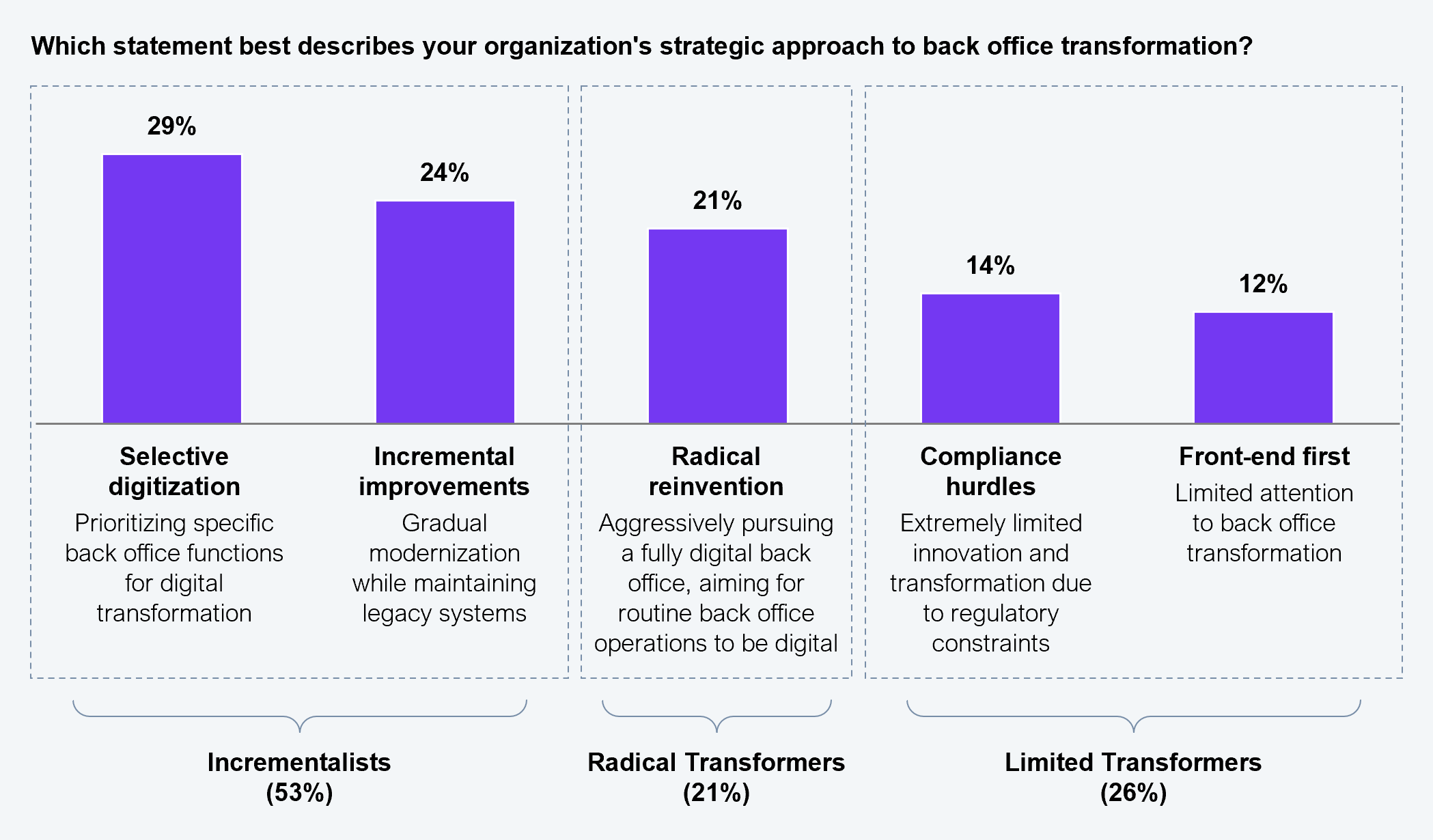
However, only 21% are actively pursuing a radical reinvention of their back office. The majority are treading cautiously, taking incremental steps far short of the radical transformation required to dismantle legacy architecture.
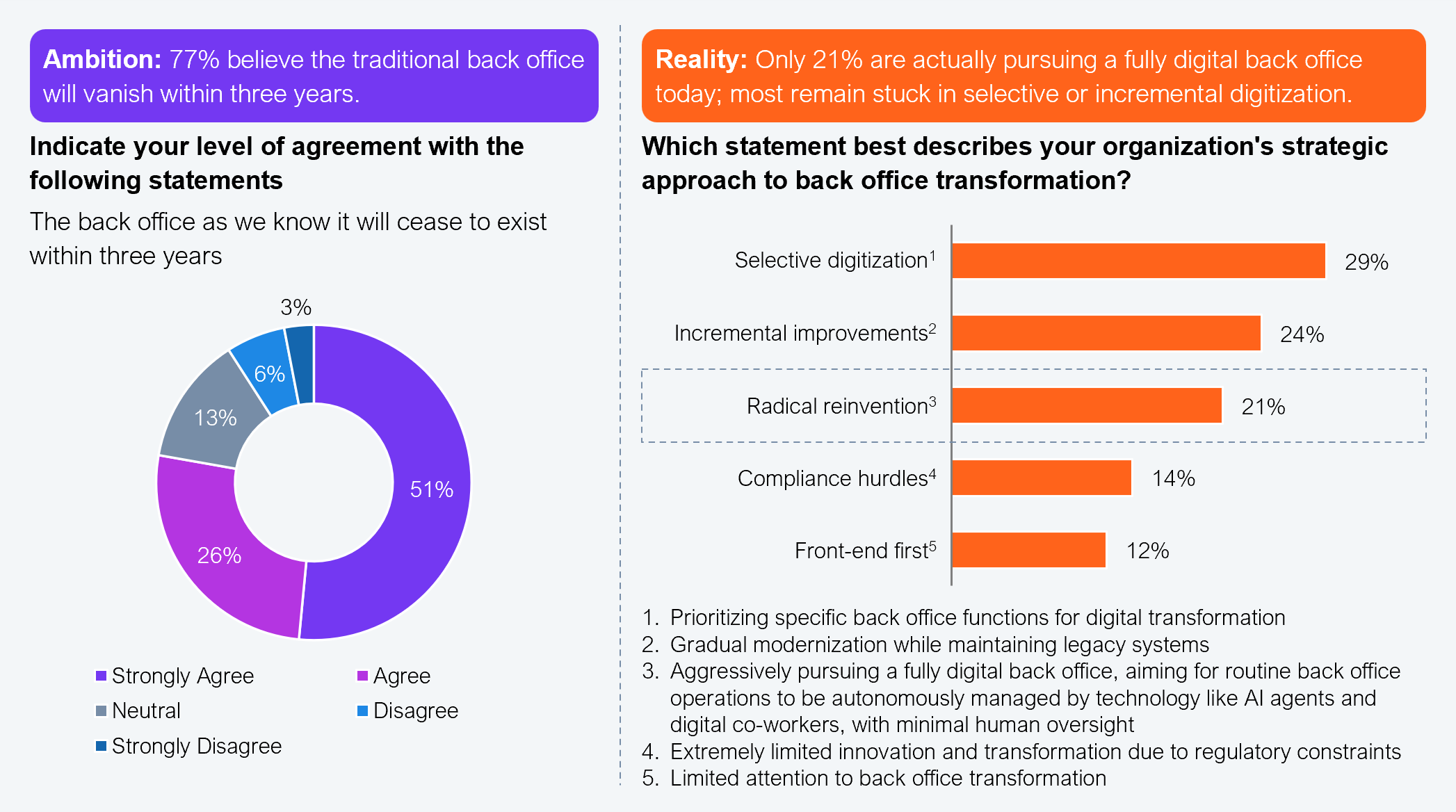
Sample: 505 BFSI executives
Source: HFS Research in partnership with Iron Mountain, 2025
Of the radical transformers aiming for a fully digital back office, 55% are from the US, followed by the UK at 37% and India at 36%.
AI agents offer immense promise by automating high-volume, repetitive activities such as data entry, reconciliation, and report generation, freeing human talent to focus on judgment-intensive and high-value work. For enterprises grappling with rising cost pressures and regulatory complexity, digital co-workers are no longer a futuristic vision; they’re necessary for driving efficiency, agility, and compliance at scale.
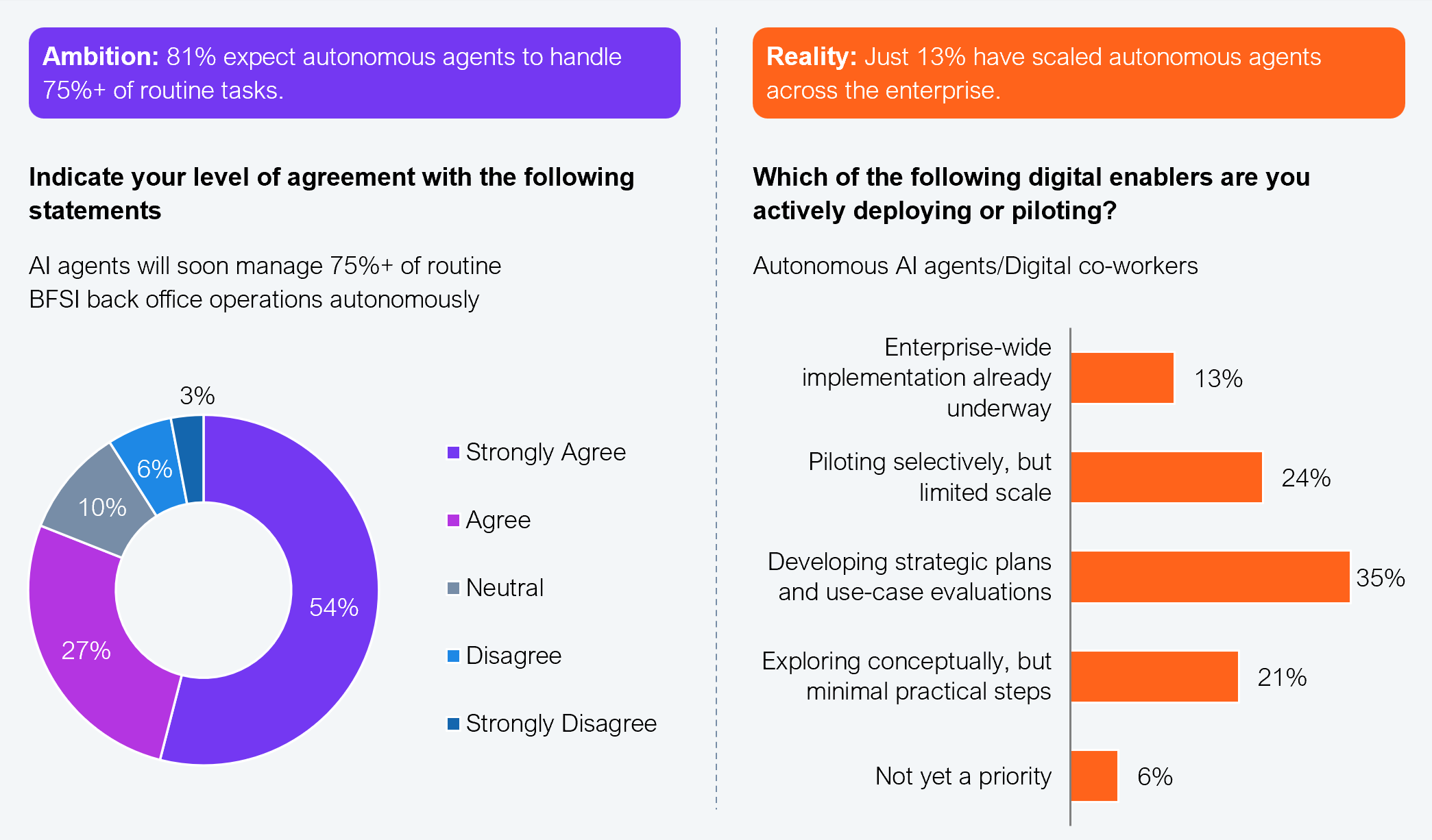
While 81% of BFSI executives believe that AI agents will soon handle 75% or more of routine back office tasks, only 13% have achieved enterprise-wide deployment (see Exhibit 3). This stark ambition-reality gap highlights critical hurdles in strategy formulation, skills readiness, and technology adoption.
While it’s early days for the adoption of agentic AI in BFSI, US-headquartered enterprises are ahead of the curve compared to all other countries.
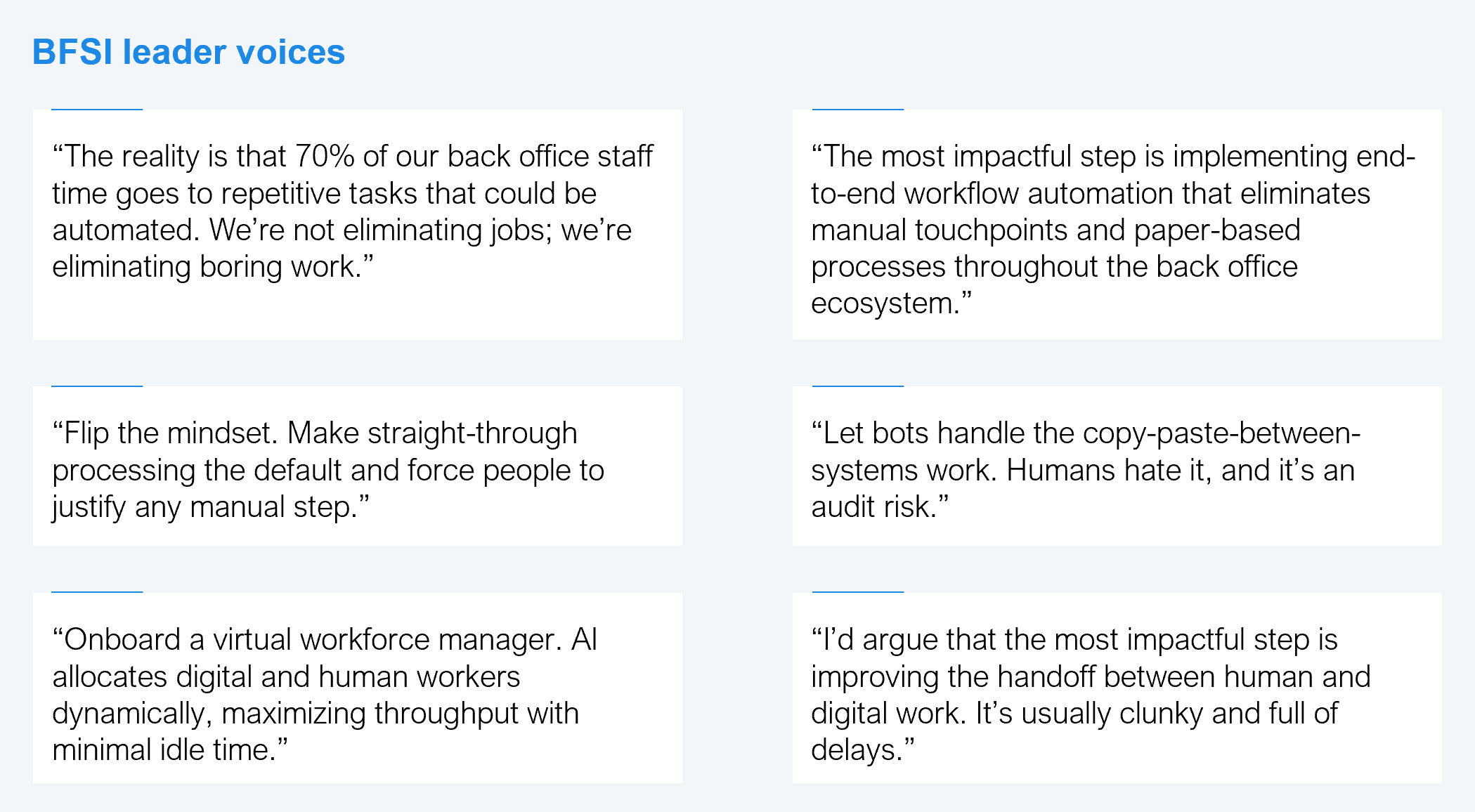
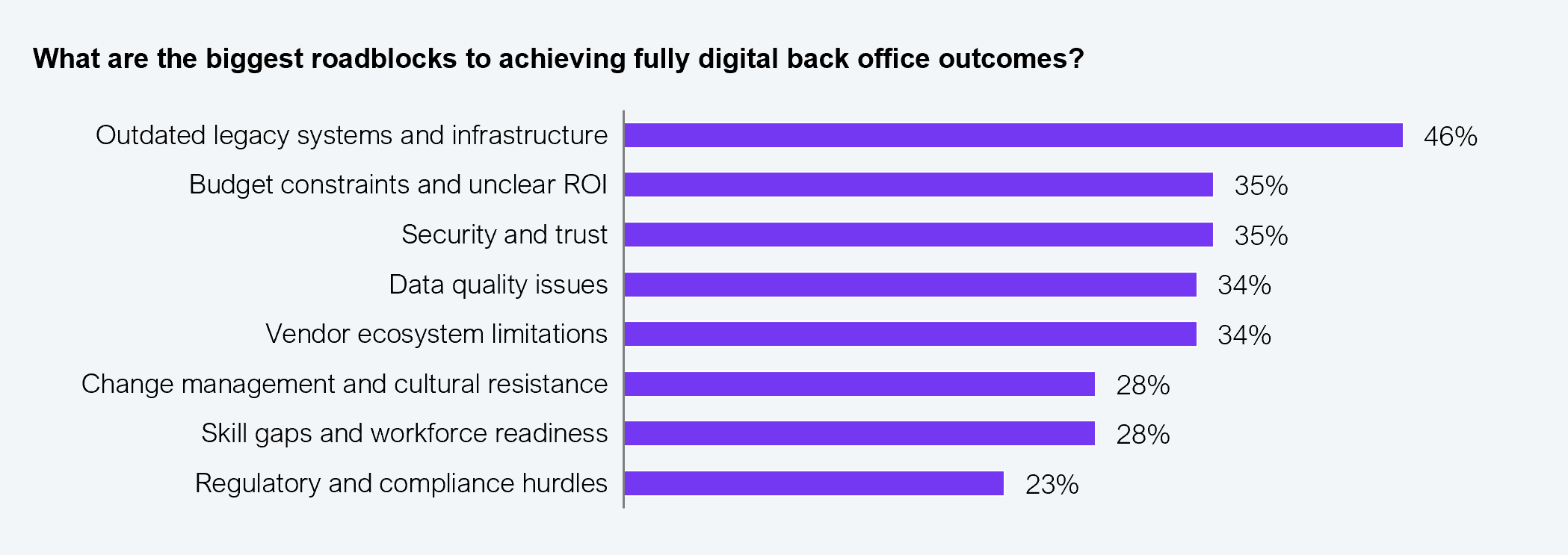
Despite the enthusiasm, most initiatives remain stuck in the early stages. Pilot programs often fail to scale, hindered by fragmented legacy systems (46% of total survey respondents), insufficient change management (28%), and a lack of clear governance frameworks. More than half of the organizations are still in planning or exploration phases, with only one in eight realizing production-grade implementations.
Sample: 505 BFSI executives
Source: HFS Research in partnership with Iron Mountain, 2025
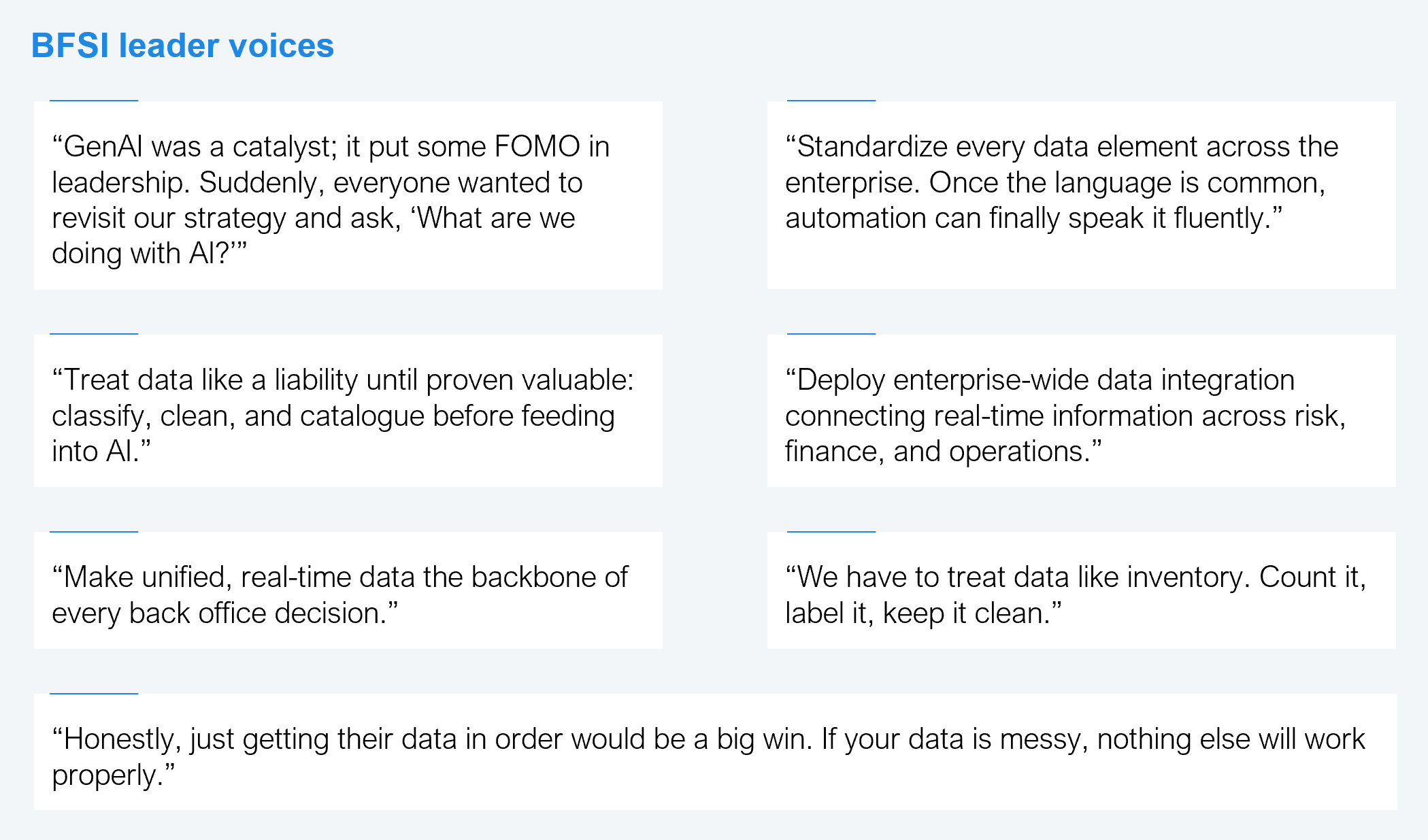
Decades of documents—customer interactions, contracts, transactions, and risk assessments—contain untapped potential for advanced analytics, predictive modelling, and LLM training. As regulatory scrutiny intensifies, the ability to extract value from legacy data has become a competitive necessity. GenAI has emerged as a transformative catalyst. Yet a significant gap remains between ambition and execution.
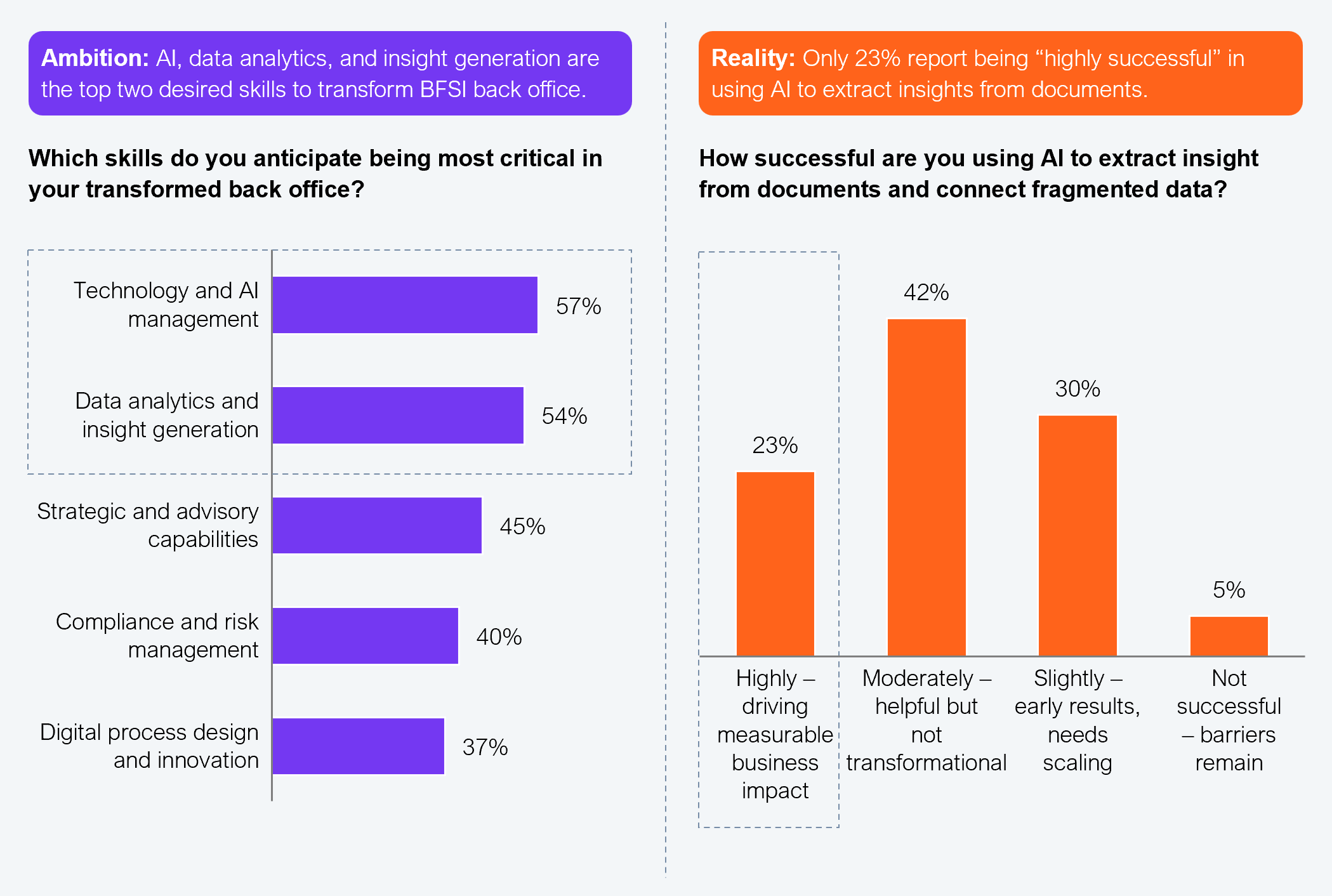
Our research revealed that while AI, data analytics, and insights generation top the back office skill wish list, only 23% of organizations reported high success in leveraging AI to generate insights from their legacy records (see Exhibit 4).
While 75% said that AI is delivering some benefit, most deployments lack the scale and robustness to drive transformational outcomes. Just 5% openly reported failure, suggesting optimism or a reluctance to acknowledge deeper organizational roadblocks.
Sample: 505 BFSI executives
Source: HFS Research in partnership with Iron Mountain, 2025
Paper-based processes burden operational agility, inflate storage costs, and increase compliance risk. Eliminating physical archives is a prerequisite for digitization at scale.
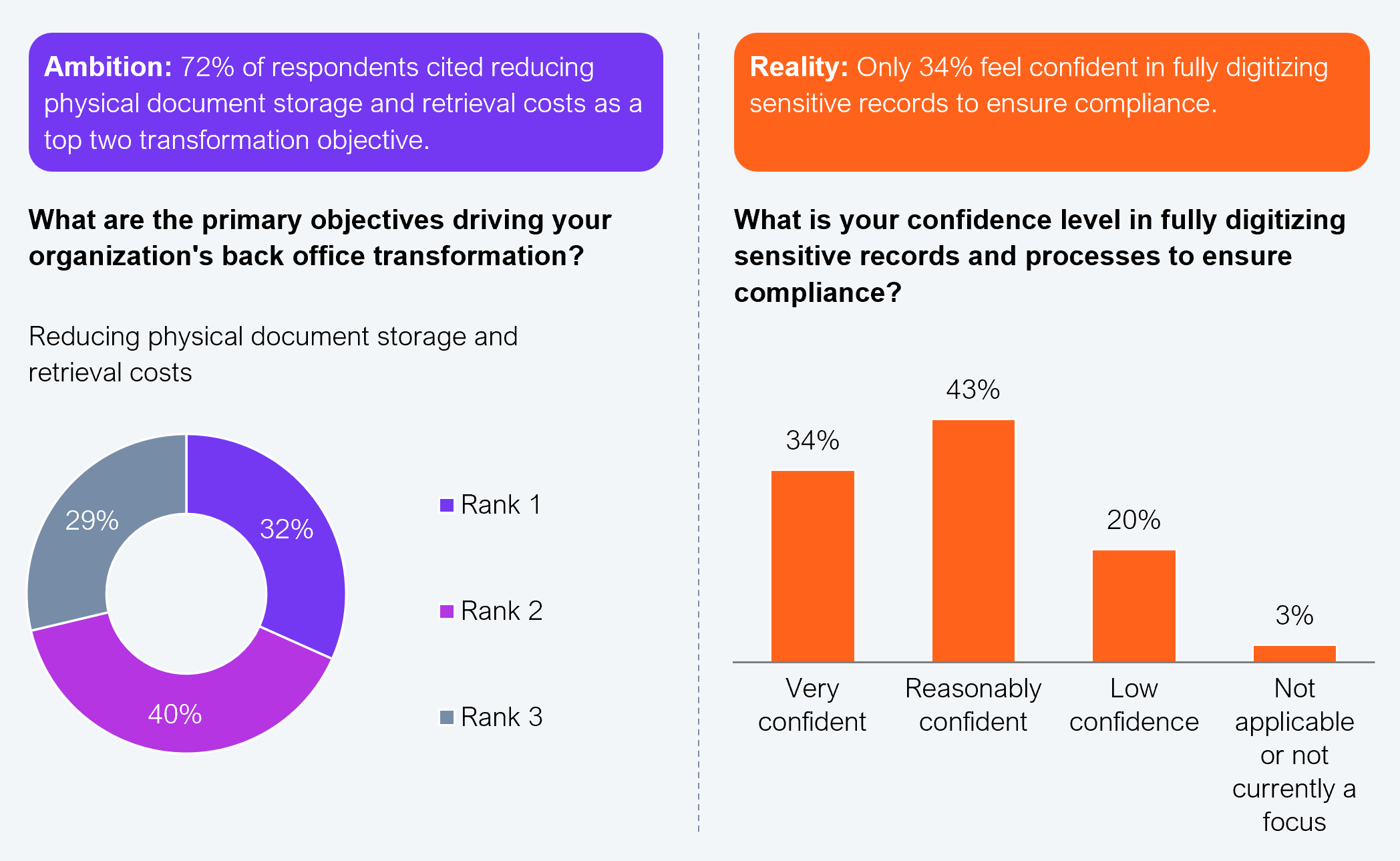
72% of respondents ranked reducing physical document storage and retrieval costs among their top two priorities. A digital archive is increasingly considered foundational for enabling advanced analytics, real-time access, and regulatory auditability.
Yet ambition is tempered by execution challenges – only 34% of leaders expressed strong confidence in their ability to fully digitize sensitive records while maintaining compliance (see Exhibit 5).
US enterprises are most concerned about the compliance risk of digitization, with 44% citing low confidence in secure archives compared to just 21% in India, where newer systems may sidestep some legacy paper challenges.
The reality is stark: legacy paper archives are weighing down operational agility, increasing overhead, and complicating regulatory oversight. While a digital-first back office promises semantic search, automated audit trails, and scalable workflows, the path to full digitization is blocked by system inflexibility, integration challenges, technology debt, fragmented processes, and inconsistent governance frameworks.
Sample: 505 BFSI executives
Source: HFS Research in partnership with Iron Mountain, 2025
The future of compliance lies in embedding policy controls directly into workflows, transforming compliance from a reactive burden into a proactive, self-governing capability.
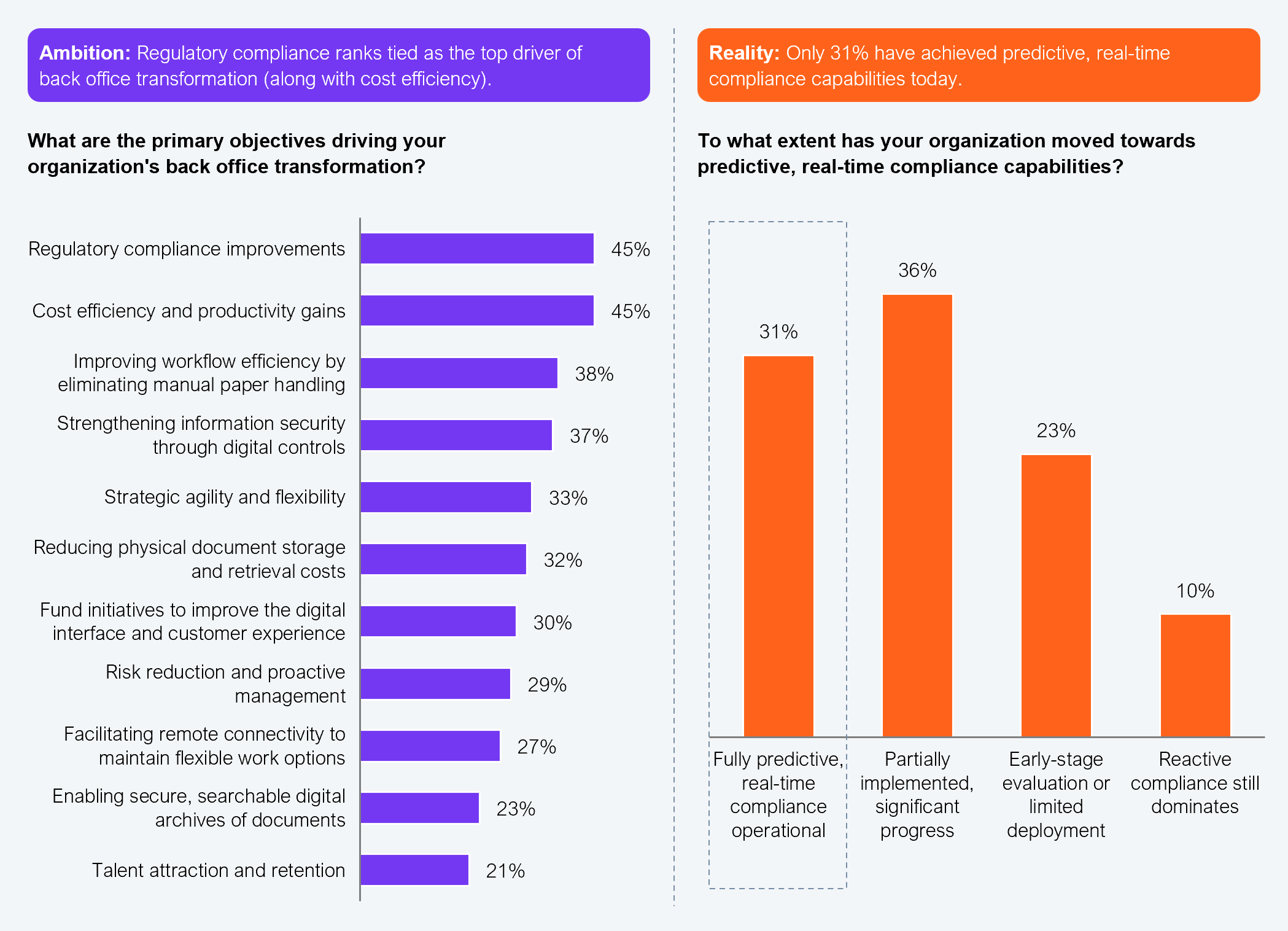
Organizations cited regulatory compliance and cost efficiency as the top drivers for back office transformation, but only 31% have achieved real-time, predictive compliance. The gap highlights a sector still in transition, hampered by fragmented data, manual controls, and outdated governance models (see Exhibit 6).
Leading organizations are investing in policy-as-code frameworks, compliance data hubs, and automated audit trails, but most are still in early stages.
Sample: 505 BFSI executives
Source: HFS Research in partnership with Iron Mountain, 2025

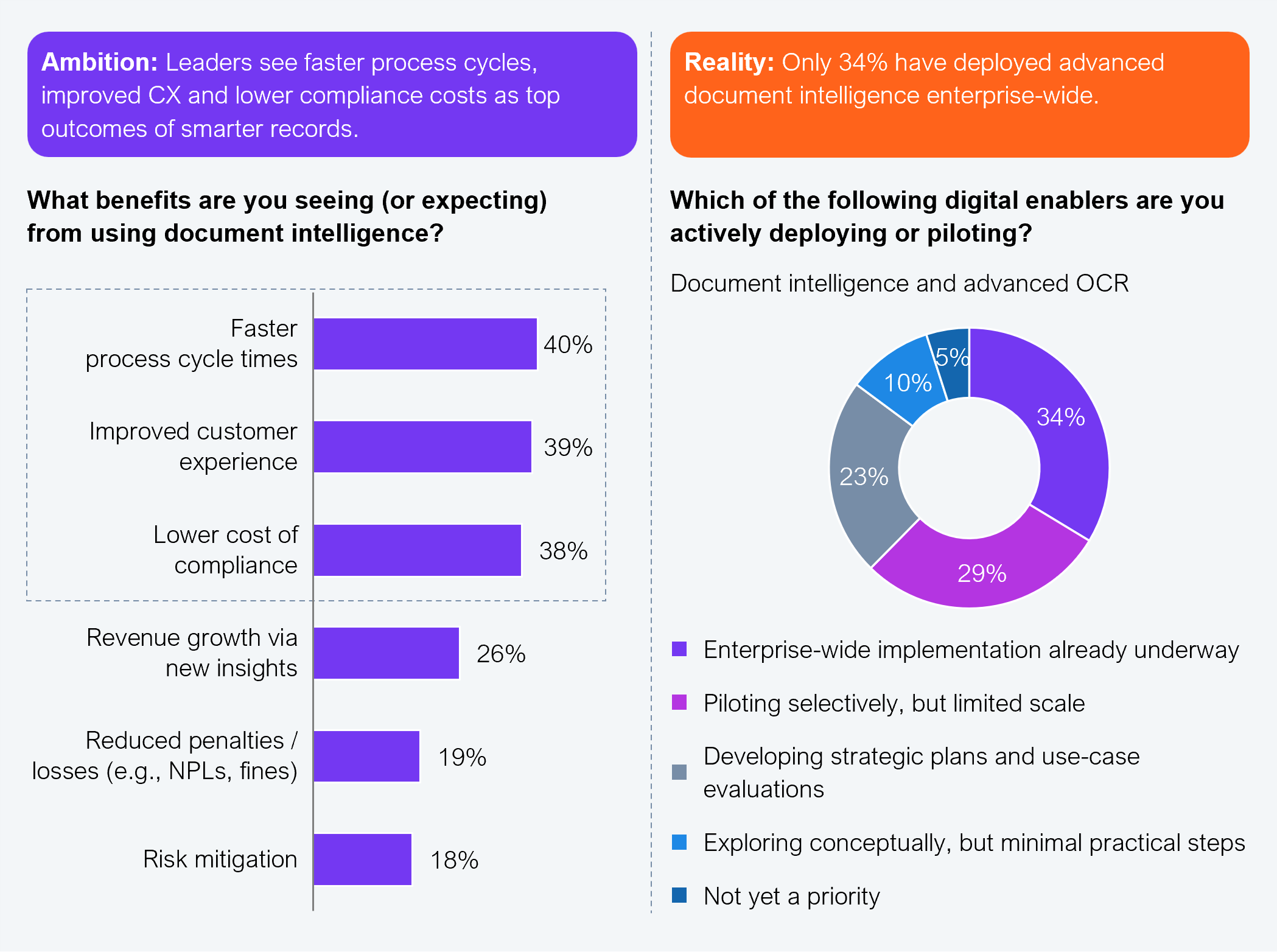
Advanced document intelligence or ‘self-aware files’ can collapse manual workflows into AI-driven prompts, accelerating processing, improving compliance, and improving CX.
While executive enthusiasm is high, with more than 40% expecting faster cycle times and 39% anticipating better CX, enterprise-wide deployment remains limited.
Only 34% of enterprises have operationalized advanced OCR and document intelligence at scale, revealing a clear ambition-reality gap. Embedding AI into document-intensive workflows will require more than tools. It demands governance, training, and a unified content strategy to unlock real value from digital documents so that data can be protected, connected, and used for meaningful business insights (see Exhibit 7).
Sample: 505 BFSI executives
Source: HFS Research in partnership with Iron Mountain, 2025
The future back office is one where business users design workflows using no-code tools and AI handles execution, elevating human talent to exception management and strategic oversight.
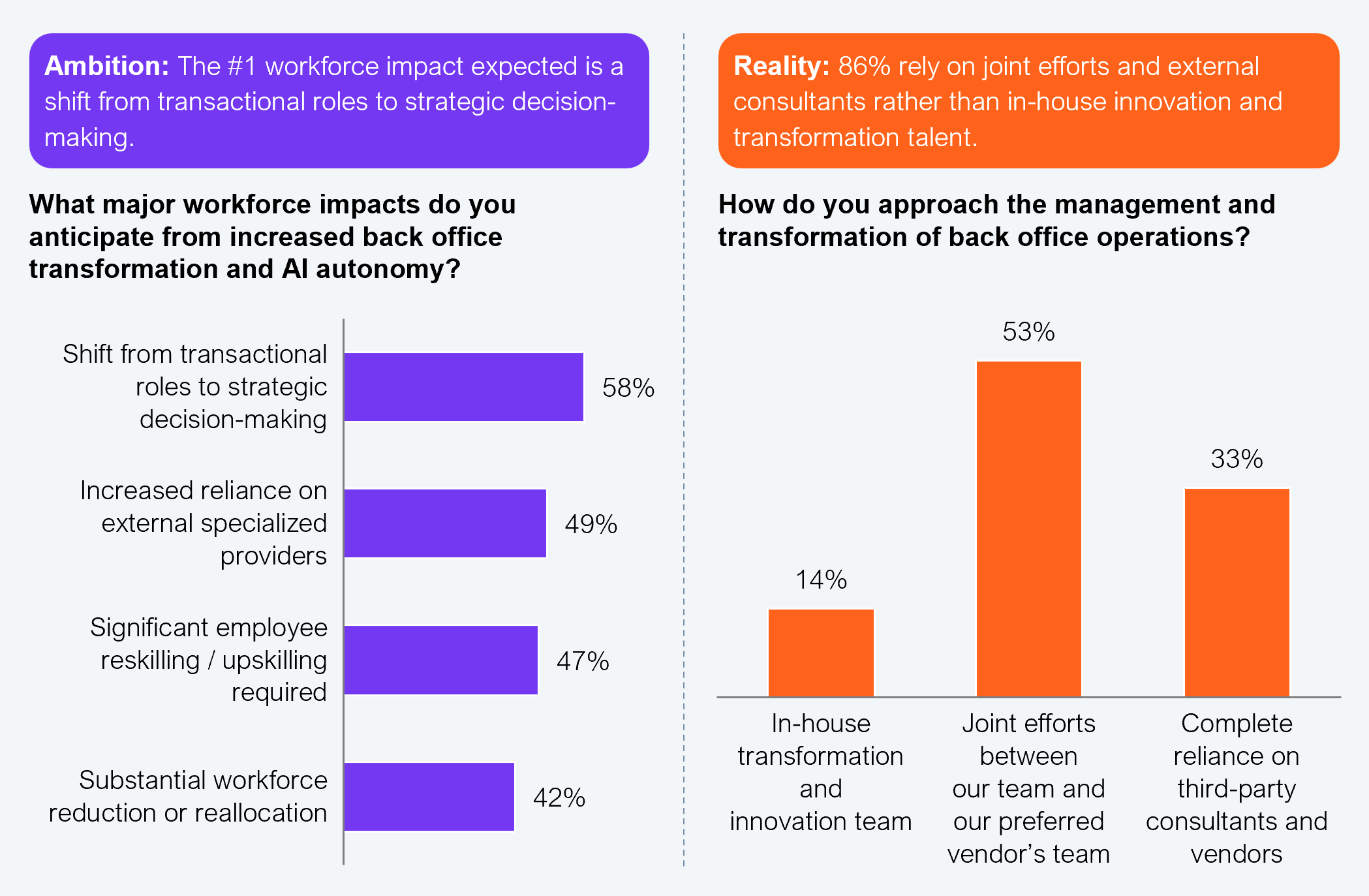
Executives expect a dramatic shift from transactional roles to decision-oriented work. The goal is to flatten hierarchy, reduce manual handoffs, and accelerate processing.
But execution tells a different story. Nearly half of the executives cited significant reskilling needs, and only 14% believe they can achieve this shift using internal talent alone. Most enterprises rely heavily on external vendors (see Exhibit 8).
UK BFSI enterprises are leading in reskilling for AI-augmented roles, with 35% making heavy investments.
Sample: 505 BFSI executives
Source: HFS Research in partnership with Iron Mountain, 2025
Despite bold ambitions and growing investment, most BFSI organizations remain far from achieving their vision of a modern, digitized back office. Our research revealed a common pattern: a few pilot successes, widespread intent, but deep-rooted barriers stalling scaled execution (see Exhibit 9).
Sample: 505 BFSI executives
Source: HFS Research in partnership with Iron Mountain, 2025
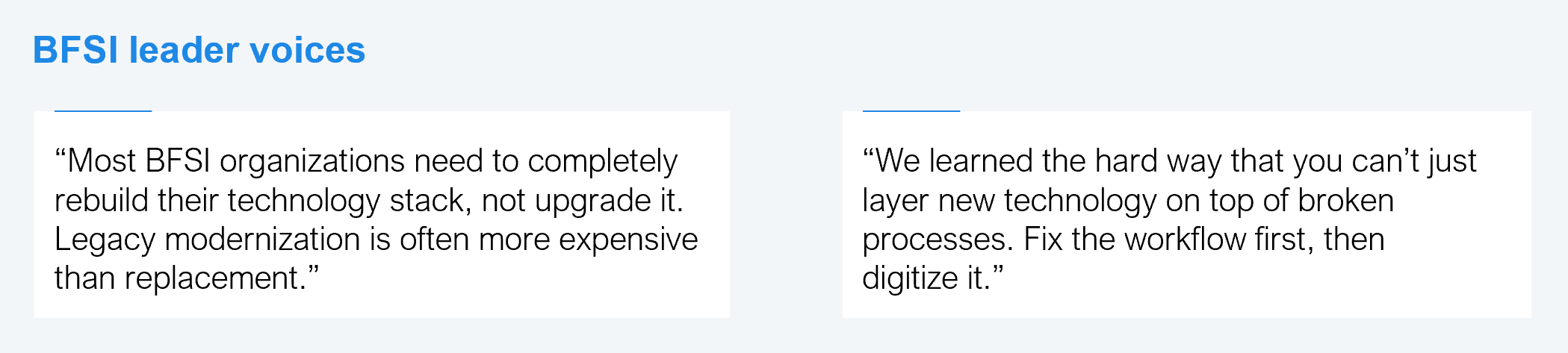
Decades of incremental patches and automations have left many back offices with brittle, siloed architectures. These monolithic platforms are costly to maintain and nearly impossible to integrate with modern APIs or third-party services. Every new automation or analytics initiative triggers extensive regression testing, driving projects over time and budget. As a result, teams spend more effort fighting the platform than innovating on top of it.
Legacy technology is the single biggest brake on back office transformation in Australia—cited by nearly half (48%) of BFSI leaders, compared to just 28% in India, where modernization cycles have been faster.
Key pain points:
CFOs and transformation sponsors face relentless pressure to optimize spend, especially when headline profit and loss (P&L) numbers look healthy. Back-office modernization tends to be categorized as a cost center—making it harder to secure large, multi-year investments. At the same time, the ROI story remains fuzzy: benefits such as risk reduction, faster product launches, and improved compliance are difficult to quantify in traditional financial terms. This lack of financial clarity stalls decision-making and fuels repeated ‘wait-and-see’ postures.
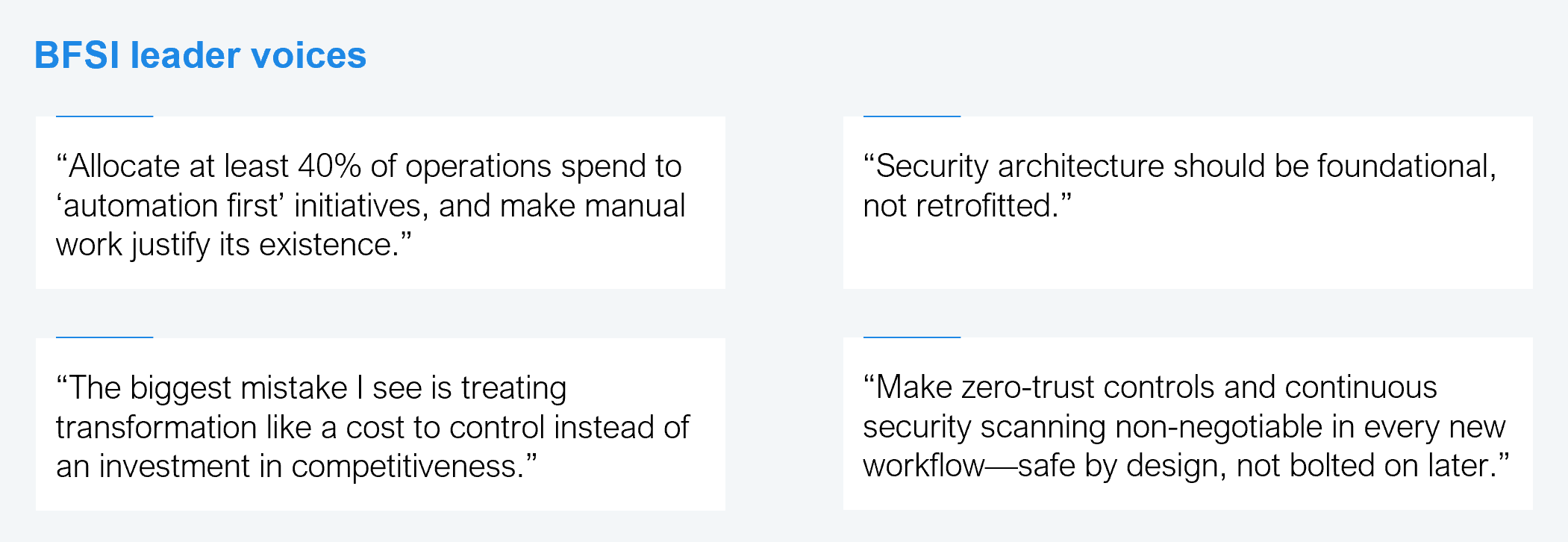
UK BFSI leaders are twice as likely as their Indian peers to cite budget and ROI uncertainty as their top transformation barrier (42% vs. 22%), underscoring a more cautious investment culture.
Challenges include:
BFSI back offices operate under some of the world’s most stringent regulatory regimes. Leaders worry that new digital workflows could introduce compliance gaps, obscure audit trails, or expose the explainability of blind spots, especially when AI agents are involved. Cybersecurity teams, accustomed to perimeter defenses, struggle to embrace DevSecOps models and continuous validation without interrupting daily operations. Any perceived security lapse risks fines, reputational damage, and loss of customer trust.
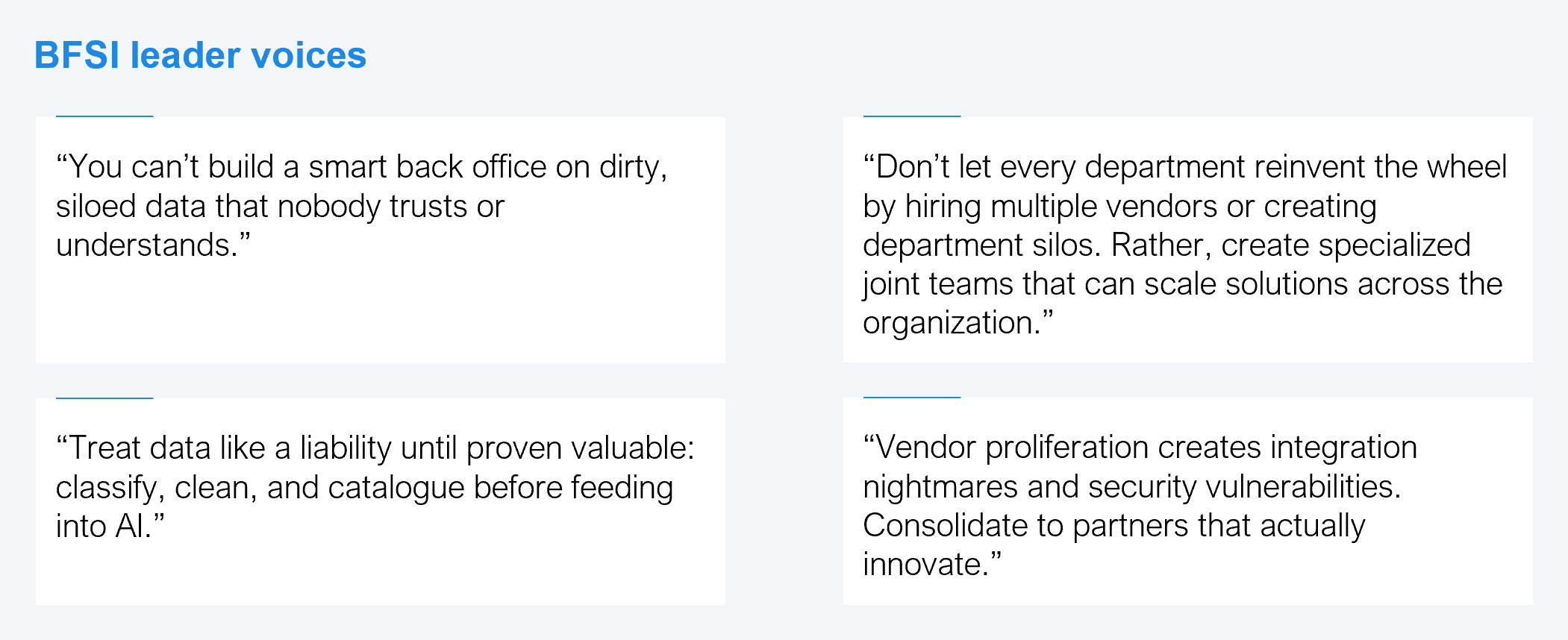
Canadian organizations are the most risk-averse, with 45% ranking security and trust as a top concern—well above the global average of 33%—while entities operating from India sit at the other end of the spectrum at 19%.
Security inhibitors include:
Automation and AI depend on clean, consistent data. Yet most back offices grapple with fragmented sources and low trust in master data. Key customers, products, and transaction records live in multiple versions across departments, leading to reconciliation nightmares and manual interventions. Without robust data governance, any ‘quick win’ initiative loses steam as exceptions mount and confidence erodes. Until data quality is treated as a first-class concern, advanced analytics and straight-through processing will remain aspirational.
In the US and France, more than 40% of BFSI enterprises struggle with data quality and governance compared to under 25% for entities operating from India—reflecting both the complexity and maturity of legacy data estates.
Core data hurdles include:
Many traditional technology partners still offer waterfall-style implementations and on-premise suites that aren’t built for rapid change. These vendors lack the API-first, modular architectures required for dynamic orchestration of services, making plug-and-play enhancements a pipe dream. Clients end up in multi-year engagements with limited demonstrable progress between milestones, sapping both budget and momentum. As a result, internal teams have grown skeptical of external roadmaps and are increasingly considering do-it-yourself or fintech collaborations. But without clear governance models, these collaborations also stall.
Vendor-related impediments typically have:
To decode the varying maturity and effectiveness of back office transformation in BFSI, we segmented the 505 global survey responses into three archetypes (see Exhibit 10):
India and Canada are leading the charge in radical back office transformation, with about 30% of BFSI enterprises in each market in this category—well above the global average of 21%.
Australia lags significantly at 11%.
The US sits near the average at 19%, signaling room for acceleration compared to the top-performing regions.
So what sets radical transformers apart? What can others learn from them?
Sample: 505 BFSI executives
Source: HFS Research in partnership with Iron Mountain, 2025
Radical transformers aren’t just more confident—they’re outpacing their peers in performance. Enterprises in this category reported over 8% revenue growth compared to 6.5% for incrementalists and just 5.5% for limited transformers. Their back office transformation is not framed as a cost-saving exercise but as a growth engine—improving CX, accelerating insight generation, and strengthening risk response.
Radical transformers are backing ambition with commitment. They are investing 50% more than incrementalists and more than twice as much as limited transformers in modernizing the back office. And this isn’t scattershot spending—it’s targeted investment. 40% of radical transformers expect to achieve enterprise-scale transformation within 12 months, compared to multi-year timelines for the rest.
For radical transformers, the primary objective is crystal clear: improve the digital interface and CX. Incrementalists, in contrast, focus on cost efficiency, while limited transformers prioritize regulatory compliance. This focus on CX signals a deeper understanding of the back office as a direct enabler of competitive differentiation, not just a behind-the-scenes processor.
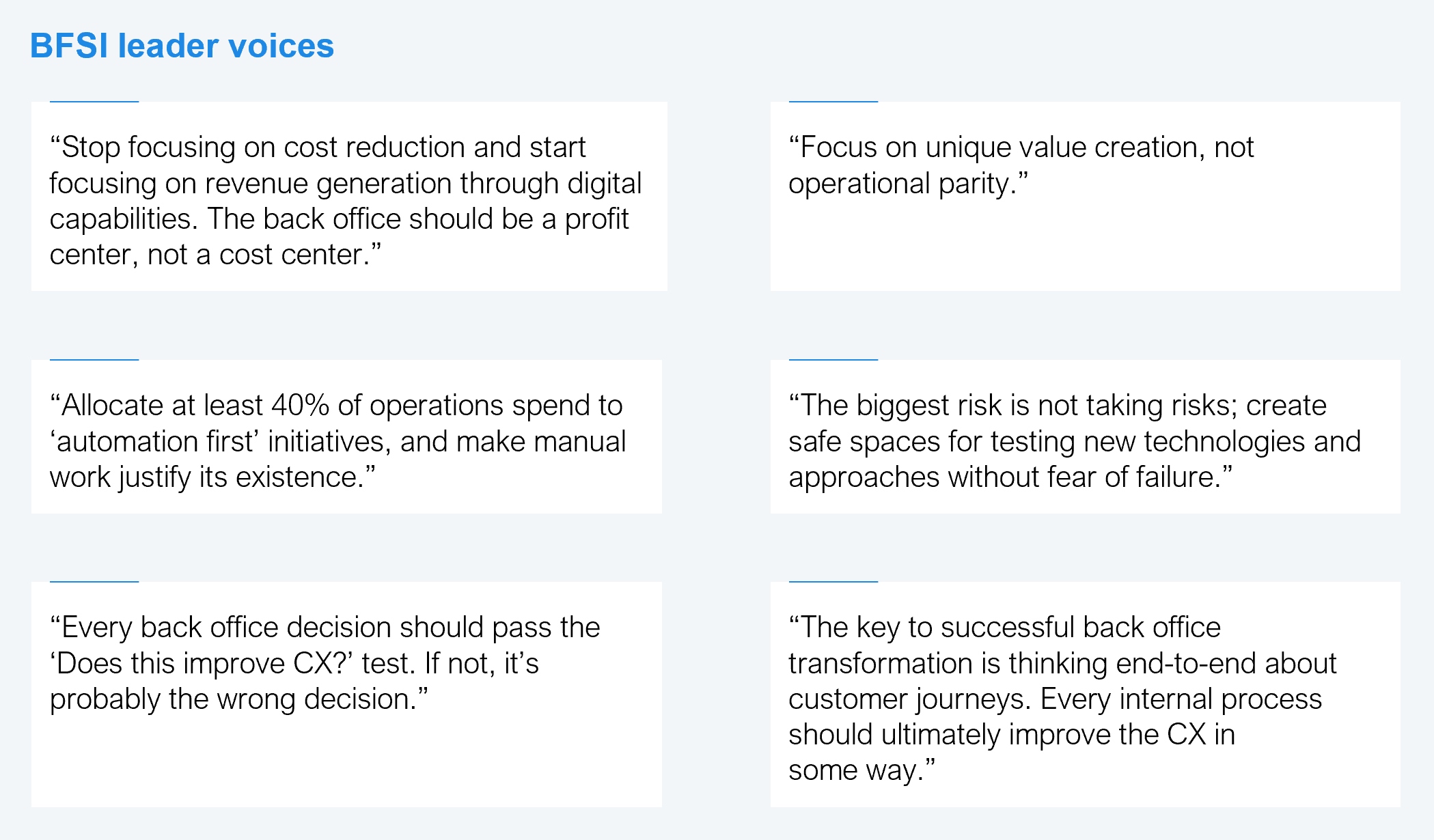
Radical transformers are scaling next-generation technologies across their enterprises at a pace their peers can’t match. A third are deploying no-code/low-code platforms, generative AI, advanced OCR, and continuous compliance solutions enterprise-wide—compared to just a quarter of incrementalists and 10–15% of limited transformers. They are building fluency now rather than waiting for technologies to mature.
These leaders know that technology alone doesn’t transform the back office—people do. 32% are investing significantly in reskilling and upskilling, compared to 23% of incrementalists and only 12% of limited transformers. The goal is a workforce ready for prompt-led workflows, AI-augmented roles, and an environment where human judgment complements automation.
Radical transformers track the impact of transformation through growth-oriented KPIs such as CX gains and product or service innovation. In contrast, incrementalists and limited transformers focus more on defensive measures such as reduced fines and compliance breaches. The difference in measurement reflects a difference in mindset—one group sees transformation as a driver of new value; the others see it as a way to protect existing value.
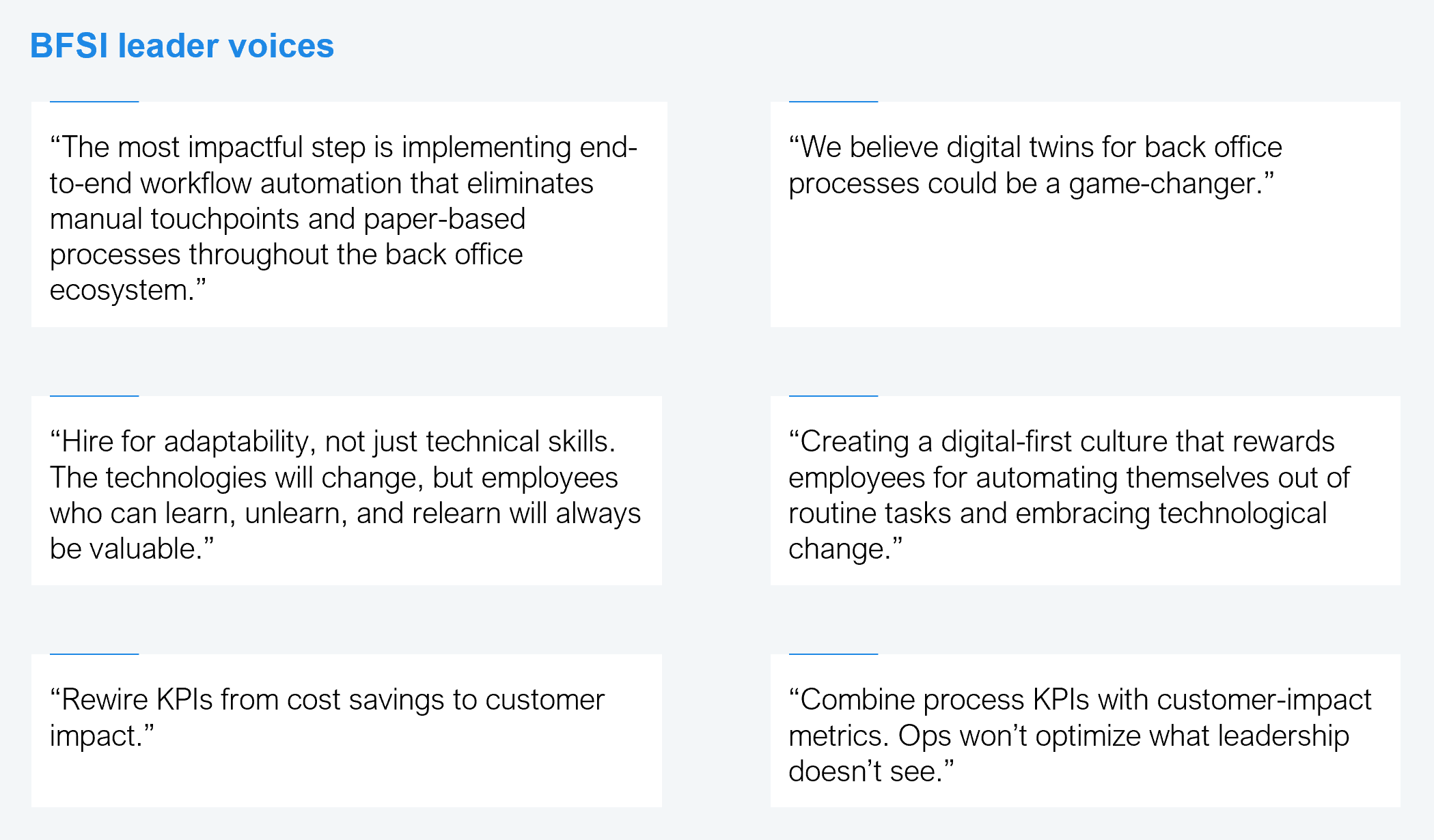
Radical transformers are proving that aggressive transformation of the back office isn’t just feasible—it’s profitable. For BFSI leaders looking to close the ambition–reality gap, the radical playbook is clear:
Invest with urgency, align with growth, upskill your people, and measure what matters.
Register now for immediate access of HFS' research, data and forward looking trends.
Get Started

If you don't have an account, Register here |
With the exception of our Horizons reports, most of our research is available for free on our website. Sign up for a free account and start realizing the power of insights now.
Our premium subscription gives enterprise clients access to our complete library of proprietary research, direct access to our industry analysts, and other benefits.
Contact us at [email protected] for more information on premium access.

