Market Vision Paper

Reinvent your ServiceNow service model with agentic AI

This Market Vision Paper is for enterprise leaders and ServiceNow transformation decision-makers evaluating how to move from legacy, labor-heavy delivery models to AI-first, outcome-oriented service frameworks.

Executive summary

If you’re leading a ServiceNow transformation, know that more than two-thirds of implementations stall after the first wave of use cases, not because the platform lacks capability, but because delivery models are stuck in a pre-AI era. Stop buying labor. Start demanding AI-first specialists who deliver reusable intellectual property (IP), engineer for trust, and drive real adoption. These capabilities—designed for scale and speed—unlock ServiceNow’s potential as an AI-native orchestration engine.

This paper, developed in partnership with NewRocket and based on interviews with executives leading ServiceNow transformations, outlines why enterprises are moving away from generic service models, how agentic AI is rewriting the rules of transformation, and what a results-first, trust-embedded delivery framework looks like in practice.

Legacy service models cause up to two-thirds of ServiceNow programs to stall

More than 85% of the Global 2000 companies license ServiceNow, yet two-thirds of the platform’s capabilities remain underutilized. Most ServiceNow programs stall after the first wave of use cases. Why? The platform isn’t the problem. The problem is that traditional delivery models centered on staff augmentation and siloed IT deployments haven’t adapted to what ServiceNow has become: a strategic platform for AI-native enterprise operations.

With capabilities like Now Assist, Flow Designer, and the AI Control Tower, ServiceNow has evolved into an orchestration platform powered by AI agents that generate code, triage issues, summarize documents, and drive self-service. Rather than seeking extra hands on projects, enterprise leaders must demand that their service provider deliver outcomes that land faster, scale smarter, and stay resilient. The mandate must include service delivery models built on reusable IP, upgrade-safe assets, domain-aligned patterns, and embedded governance that ensures measurable and auditable outcomes. These ingredients reduce risk, compress timelines, and help keep investments in the ServiceNow platform in sync with business change.

HFS research in Exhibit 1 shows the frustration is real:
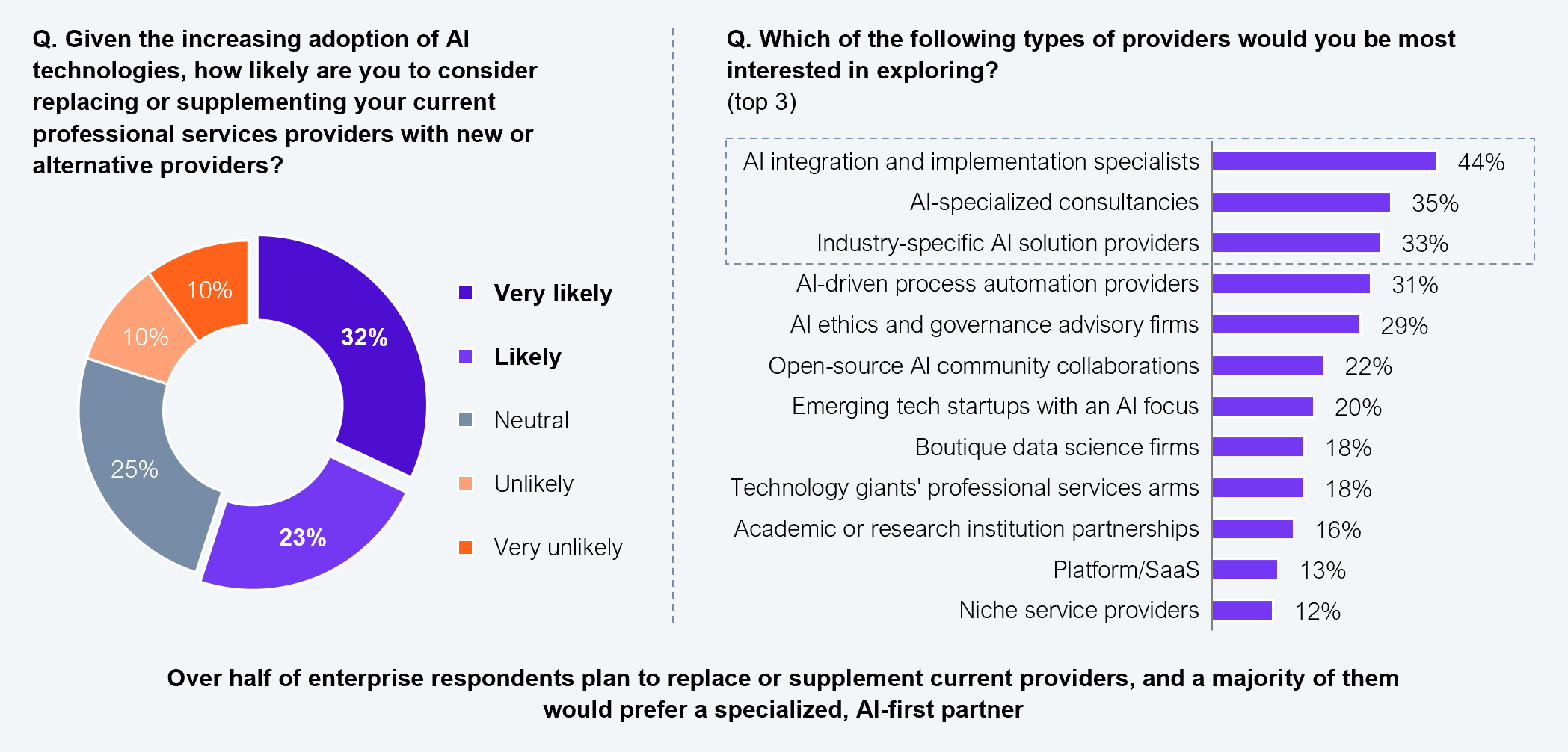
  • 55% of executives are open to switching providers.
  • 44% of those executives prefer AI strategy and implementation specialists over legacy players.
Exhibit 1: Enterprises are growing tired of current professional services, leading to an appetite for AI and implementation specialists

Two-part chart based on 1005 survey participants. The left portion is a donut chart showing likelihood of replacing or supplementing current professional services providers: 32% very likely, 23% likely, 25% neutral, 10% unlikely, 10% very unlikely. The right portion is a horizontal bar chart showing which types of providers enterprises would most be interested in exploring (top 3 selections): AI integration and implementation specialists lead at 44%, followed by AI-specialized consultancies at 35%, industry-specific AI solution providers at 33%, AI-driven process automation providers at 31%, AI ethics and governance advisory firms at 29%, open-source AI community collaborations at 22%, emerging tech startups with an AI focus at 20%, boutique data science firms at 18%, technology giants' professional services arms at 18%, academic or research institution partnerships at 16%, platform/SaaS at 13%, and niche service providers at 12%. The callout notes that over half of enterprise respondents plan to replace or supplement current providers, and a majority would prefer a specialized, AI-first partner. Source: HFS Research, 2025.

Sample: 1005 survey participants
Source: HFS Research, 2025

Enterprise leaders expect the ServiceNow platform to orchestrate cross-functional workflows and host AI-native experiences. This requires service providers to start with outcomes—time-to-value, risk, experience, cost—and build AI-native workflows, trust guardrails, and adoption paths around them. Enterprises should demand that service providers embed trust into the delivery to enable the shift from tech-first to value-realized.

Enterprise buyers should seek trusted, specialized solutions around ServiceNow, not headcount

A seismic shift is underway as enterprise buyers shift from a labor scale to an outcome scale. They’re buying precision, productized IP, and embedded transformation logic from their service provider. Yet most providers have not caught up to this shift, buyers are losing patience, and the shift is accelerating.

HFS data shows 36% of enterprises prefer partners that deliver highly specialized, task-specific solutions from their service providers (see Exhibit 2). As one human resources operations executive at a major financial services firm put it,

There’s a benefit to having somebody who knows how to specialize and really go deep on a topic versus a jack of all trades versus master of none…Pure-play ServiceNow is a big deal.

— Human resources operations head of a leading financial services company
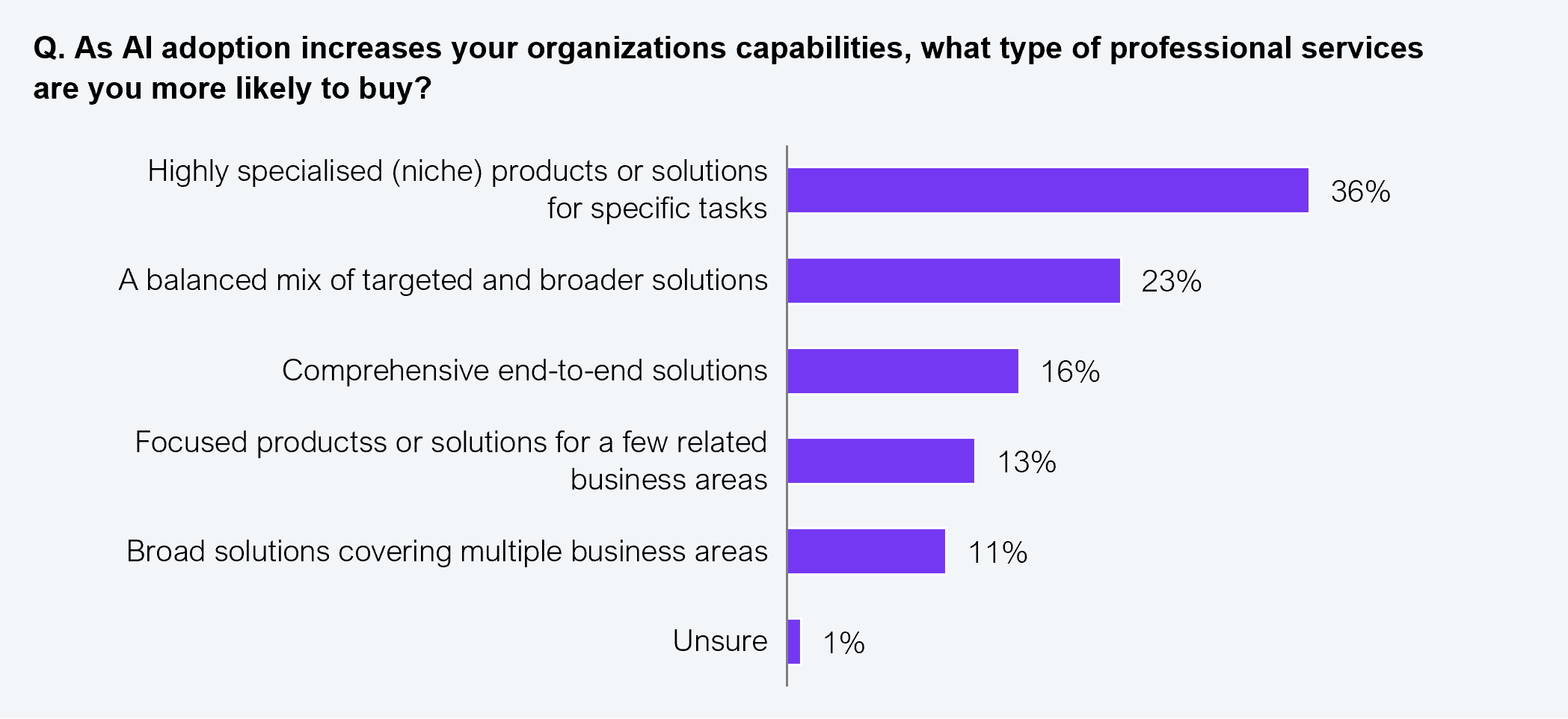
Exhibit 2: Specialization attracts enterprise buyers seeking professional services

Horizontal bar chart showing enterprise buyer preferences for types of professional services as AI adoption increases, based on 1005 survey participants. Highly specialized (niche) products or solutions for specific tasks leads at 36%, followed by a balanced mix of targeted and broader solutions at 23%, comprehensive end-to-end solutions at 16%, focused products or solutions for a few related business areas at 13%, broad solutions covering multiple business areas at 11%, and unsure at 1%. Source: HFS Research, 2025.

Sample: 1005 survey participants
Source: HFS Research, 2025

Deep platform fluency and pure-play focus now matter more than provider size, and this should trigger a reset in how enterprises select partners:

  • Specialized IP reduces delivery risk and speeds up deployment.
  • Upgrade-safe assets ensure resilience and extensibility.
  • Domain-specific patterns improve predictability and compliance.
  • Baked-in governance ensures measurable outcomes, trust, and reliability.

AI is transforming the ServiceNow platform and the services that surround it. Buyers are decisively shifting from an FTE-heavy model to a more AI-led approach for services built on the ServiceNow platform.

Agentic AI is rewriting the playbook for ServiceNow transformation

Agentic AI isn’t hype; it’s a delivery model disruptor. One global financial institution illustrates the shift. Its human resources (HR) teams were buried in repetitive tickets, disconnected systems, and outdated knowledge bases. By deploying agentic AI as an onboarding agent and knowledge generator, the firm saved more than $13 million annually, cut onboarding time by 40%, and achieved more than 90% accuracy, freeing HR for strategy and giving employees faster, more consistent answers.

These agents do more than follow rules; they reason, collaborate, and take goal-directed actions within enterprise guardrails. On ServiceNow, they triage tickets, suggest next-best actions, and orchestrate complex processes that improve
over time.

Agentic AI rewrites the enterprise playbook in four ways
  • Delivery model: More of the transformation becomes software-defined. Partners ship productized, testable, and upgrade-safe agents and patterns.
  • Value realization: Time-to-value compresses as reusable agents are adapted, rather than being built from scratch. Benefits compound as agents learn across instances.
  • Risk posture: Governance shifts from after-the-fact inspection to policy-as-code with permissions, explanations, and audit trails embedded into the agent runtime.
  • People and adoption: The user experience evolves from “click-through portals” to human-ready coworkers—intuitive surfaces where agents and people share context, explain decisions, and hand off safely.

Agentic AI moves beyond hype to represent a significant shift in how enterprises automate and orchestrate work (see Exhibit 3).
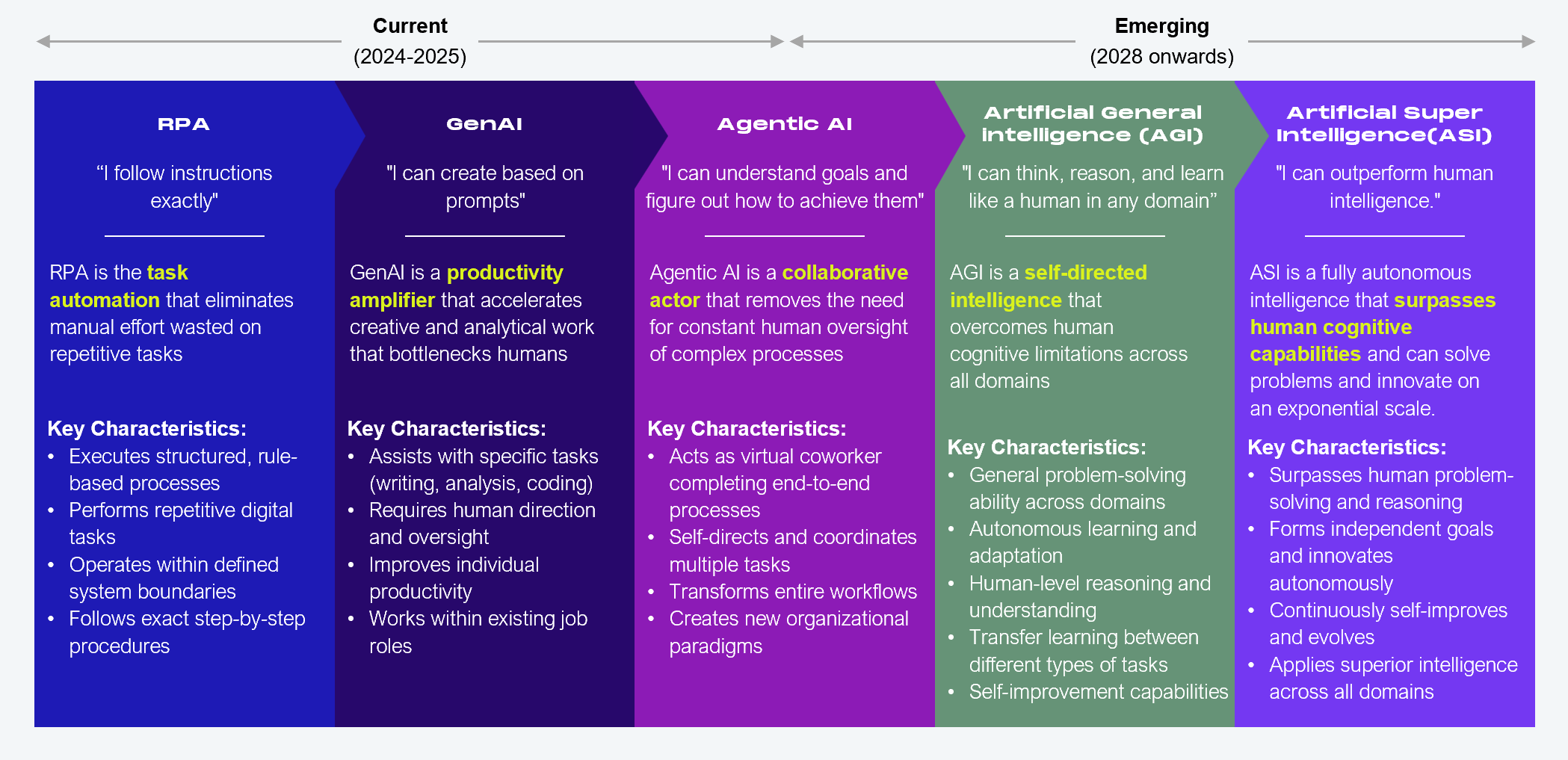
Exhibit 3: Agentic AI is part of an AI continuum, a virtual coworker able to understand and achieve goals set by humans

Five-column comparison diagram illustrating the AI continuum from current (2024 to 2025) to emerging (2028 onwards). The five stages are RPA, GenAI, Agentic AI, Artificial General Intelligence (AGI), and Artificial Super Intelligence (ASI). RPA is defined as task automation that eliminates manual effort wasted on repetitive tasks, with characteristics including executing structured rule-based processes, performing repetitive digital tasks, operating within defined system boundaries, and following exact step-by-step procedures. GenAI is defined as a productivity amplifier that accelerates creative and analytical work that bottlenecks humans, with characteristics including assisting with specific tasks such as writing, analysis, and coding, requiring human direction and oversight, improving individual productivity, and working within existing job roles. Agentic AI is defined as a collaborative actor that removes the need for constant human oversight of complex processes, with characteristics including acting as a virtual coworker completing end-to-end processes, self-directing and coordinating multiple tasks, transforming entire workflows, and creating new organizational paradigms. AGI is defined as a self-directed intelligence that overcomes human cognitive limitations across all domains, with characteristics including general problem-solving ability across domains, autonomous learning and adaptation, human-level reasoning and understanding, transfer learning between different types of tasks, and self-improvement capabilities. ASI is defined as a fully autonomous intelligence that surpasses human cognitive capabilities and can solve problems and innovate on an exponential scale, with characteristics including surpassing human problem-solving and reasoning, forming independent goals and innovating autonomously, continuously self-improving and evolving, and applying superior intelligence across all domains. Source: HFS Research, 2025.

Source: HFS Research, 2025

Agentic AI is resetting the economics of transformation

What once took years now takes months or weeks—without cutting corners. This speed only works when agentic AI is built on solid foundations: clean data, embedded governance, domain-aligned processes, platform fluency, and intuitive design. Without these, agents stall at the demo stage. With them, they scale safely and deliver repeatable value.

HFS Research data shows that 45% of enterprises cite specialist expertise as key when choosing AI partners, and this will jump to 48% in the next three to five years as complexity increases (see Exhibit 4). The message is clear: To unlock agentic AI at scale, you need partners who bring platform mastery, reusable agents, and deep domain know-how, all in one AI-first package.
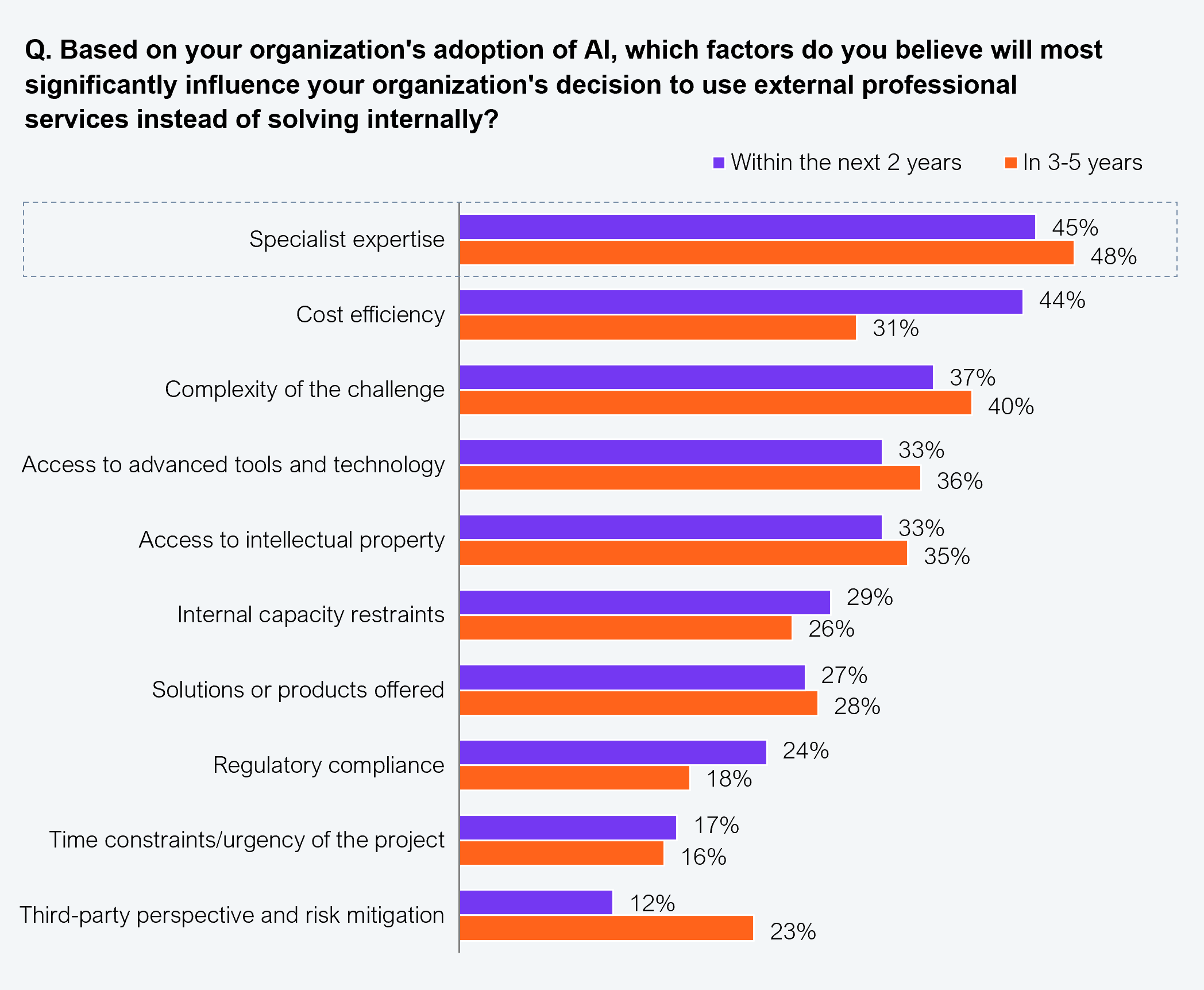
Exhibit 4: Specialist expertise ranks at the top of reasons for enterprises seeking external professional services

Paired horizontal bar chart showing factors that will most significantly influence enterprises' decisions to use external professional services instead of solving internally, comparing within the next 2 years versus in 3 to 5 years, based on 1005 survey participants. Specialist expertise leads: 45% within 2 years, 48% in 3 to 5 years. Cost efficiency: 44% within 2 years, 31% in 3 to 5 years. Complexity of the challenge: 37% within 2 years, 40% in 3 to 5 years. Access to advanced tools and technology: 33% within 2 years, 36% in 3 to 5 years. Access to intellectual property: 33% within 2 years, 35% in 3 to 5 years. Internal capacity restraints: 29% within 2 years, 26% in 3 to 5 years. Solutions or products offered: 27% within 2 years, 28% in 3 to 5 years. Regulatory compliance: 24% within 2 years, 18% in 3 to 5 years. Time constraints/urgency of the project: 17% within 2 years, 16% in 3 to 5 years. Third-party perspective and risk mitigation: 12% within 2 years, 23% in 3 to 5 years. Source: HFS Research, 2025.

Sample: N=1005 survey participants
Source: HFS Research, 2025

Traditional service models focus on leveraging low-cost delivery, but people-heavy models erode return on investment (ROI) over time. Leaders must be aware that maximizing the value of ServiceNow transformations requires an approach that focuses on the value delivered by the service provider, not the offshore headcount. This means partnering with service providers who lead with outcomes and clearly embed and engineer trust throughout the delivery process. Provider choice must be based on the results they create, including time-to-value, cost-to-serve, risk reduction, and experience gains. Then stay with them when those results are reliable, explainable, and safe to scale.

Expect these outcome-first approaches
  • Results-focused: Quantified outcomes serve as the North Star, and work is prioritized based on value hypotheses and governed by the metrics that matter.
  • Designed for adoption: Your provider should design for adoption with intuitive user experiences, inline guidance and explainability, clear responsibility models, embedded change enablement, and measurement of value delivered rather than standard usage SLAs.
  • Industry-ready: Expect industry-specific domain models, controls, and reference integrations that fit how your business actually runs and complies.
  • Trust by design (cross-cutting): Seek these features embedded across discover, build, deploy, and operate: data quality pipelines, role- and policy-based guardrails, transparency into why and how decisions are made, and performance and resilience at scale.

In practice, these principles come together through a layered capability model. Each layer reinforces the others—strategy links investment to outcomes, design drives adoption, AI agents accelerate work, platform expertise ensures upgrade resilience, and productized IP reduces delivery risk. Together, they embed trust and governance across the lifecycle, ensuring transformation delivers measurable value at speed and scale.

Turn to providers with these critical end-to-end capabilities

Enterprises must turn to service providers that bring an end-to-end set of capabilities around ServiceNow transformation:

  • Strategic consulting helps build a value roadmap that links outcomes to platform capabilities, and defines priorities, KPIs, funding logic, and risk thresholds that keep transformation accountable.
  • Design and user experience create human-ready experiences with clear guidance, intuitive workflows, and explainability baked in, driving adoption beyond go-live.
  • Reliable AI embeds reusable agents that accelerate decisions and automate multi-step tasks, governed by policy-as-code and designed for continuous learning.
  • Platform expertise enables delivery of upgrade-safe solutions, such as data models, integrations, performance, and security, aligned to ServiceNow’s evolving guardrails.
  • Productized IP packages best practices, workflows, and agent patterns as reusable assets that are versioned, tested, and supported like software.

Service providers who can bring this layered approach ensure transformation is not a one-off implementation but a continuously evolving capability, combining strategic foresight, technical depth, AI enablement, and scalable IP.

The Bottom Line: Outdated service models are throttling the ROI on ServiceNow investments. Change the model, and the results will follow.

ServiceNow is becoming the platform for AI-native orchestration. To unlock its full potential, enterprises must demand outcomes as the North Star, engineer trust into delivery, emphasize human-ready execution and platform native engineering, and demand productized IP from their implementation and transformation partners.

Only focused specialists who deliver measurable, repeatable value will matter as AI becomes the operating fabric.

Sign in to view or download this research.

Login

Register

Insight. Inspiration. Impact.

Register now for immediate access of HFS' research, data and forward looking trends.

Get Started

Download Research

    Sign In

    Sign up for a free
    research account

    With the exception of our Horizons reports, most of our research is available for free on our website. Sign up for a free account and start realizing the power of insights now.

    Digests/Newsletters: Overviews of the latest news, insight, and research by HFS.

    HFS Events: Exclusive invitations to HFS webinars, roundtables, and summits, bringing together key industry stakeholders focused on major innovations impacting business operations.

    By registering you agree to our privacy policy.

    I hereby consent that HFS Research can process my personal data.

    Premium Access

    Our premium subscription gives enterprise clients access to our complete library of proprietary research, direct access to our industry analysts, and other benefits.

    Contact us at [email protected] for more information on premium access.

    Help

    If you are looking for help getting in touch with someone from HFS, please click the chat button to the bottom right of your screen to start a conversation with a member of our team.

    [email protected]

      Contact Ask HFS AI Support