This Market Impact Report is for CIOs, chief AI officers, and enterprise transformation leaders across banking, insurance, manufacturing, retail, and media assessing how to move beyond AI experimentation and embed AI into core business strategy at scale.

Central to the evolution of society is the concept of creative destruction. It is the process where innovations replace and render obsolete older ones, thus creating new economic paradigms. This has been true across history, from hunter-gatherers to people navigating the shifts brought by agriculture, the industrial revolution, the advent of the internet, and now the artificial intelligence (AI) era.
We now stand at a fresh inflection point, arguably the most disruptive since the dawn of the internet—with AI poised to reshape how enterprises operate, make decisions, and deliver value. It is becoming the ultimate disruptor, capable of amplifying human abilities and accelerating business outcomes through real-time insights, dynamic personalized experiences, and autonomous decision-making. This inflection point offers enterprises an unprecedented opportunity to reimagine the value they deliver for customers and stakeholders alike.
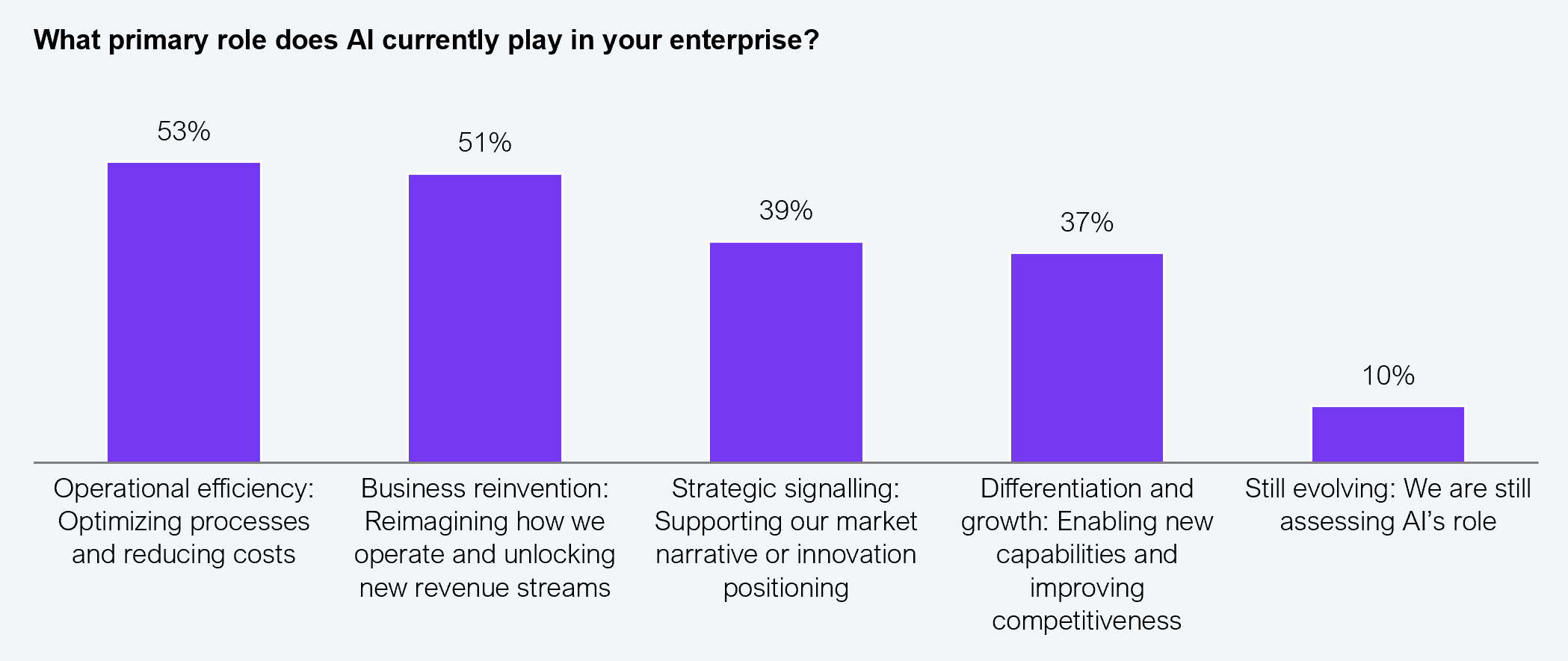
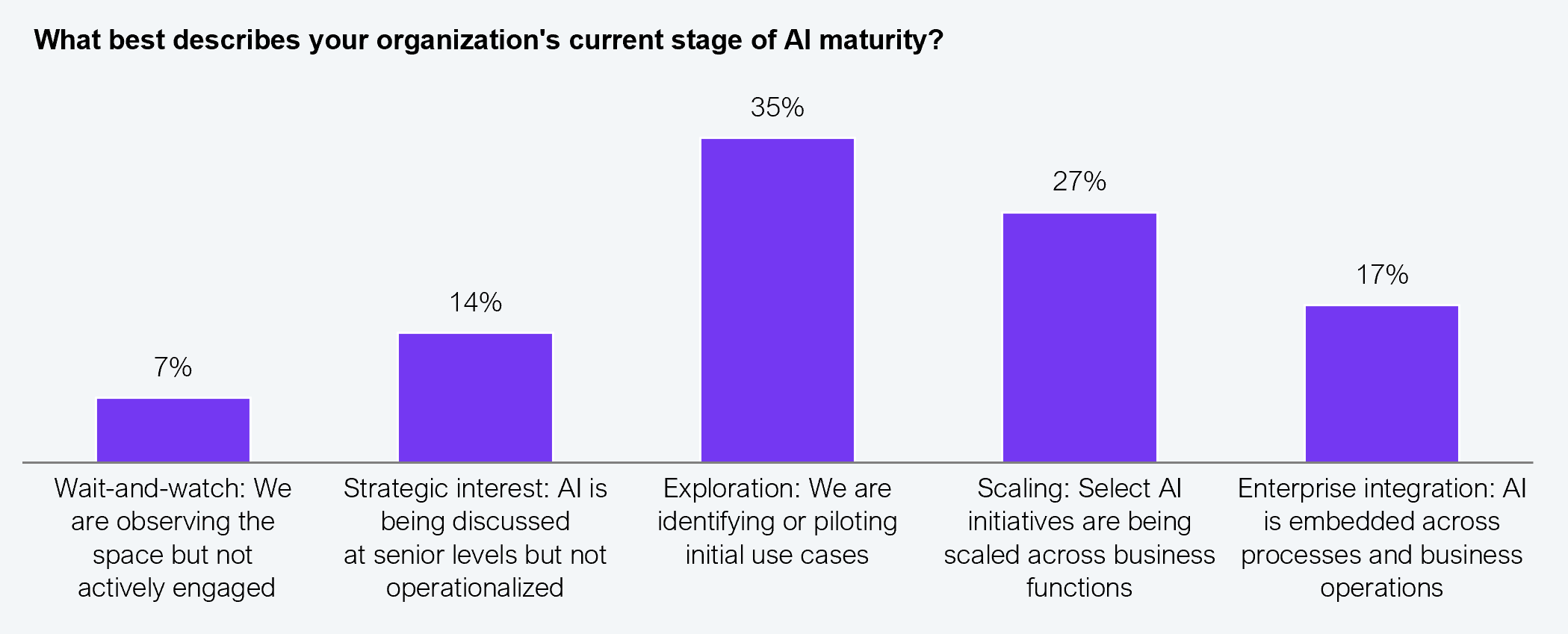
Yet, despite the enormous potential, 83% of enterprises (part of this study’s survey) remain in the early stages of adopting AI, iterating in the margins. Initiatives often stall at the experimentation phase as organizations grapple with scaling challenges, unclear strategies, and a lack of ecosystem readiness. In fact, for one in two enterprises, many AI solutions remain at the experimentation stage (POC, pilot) and fail to scale. Although operational efficiency is widely cited as AI’s primary role, productivity gains will soon become table stakes rather than a differentiator. Recognizing this, enterprises are turning to their ecosystems to drive deeper, more strategic value—75% of them expressed openness to working with new, specialized, or non-traditional AI partners. This shift signals the transition from labor-intensive service models to intelligent, scalable, outcome-driven orchestrators of value.
We use AI in the underwriting space, and we moved from months and weeks of analysis work to actually hours and minutes.
— CIO at an international bank
HFS Research, in partnership with LTIMindtree, has studied the potential of AI for enterprises and its purpose, impacts, and manifestations. More than 500 business and technology leaders across five industries, including banking, insurance, manufacturing, retail, and media were interviewed for this study.
The key insights gathered reflect how enterprises are getting prepared for the age of AI.


We are actually reaching a point of AI-first culture. Today, anything related to AI has an implication toward revenue.
— A chief innovation officer at an international bank


AI enables enterprises to fundamentally rethink their core purpose—move beyond traditional roles as mere providers of goods and services to become partners in delivering outcomes that really matter. Increasingly, businesses recognize AI’s broader role in orchestrating richer customer and stakeholder experiences, enabling integrated ecosystems, and unlocking new sources of value. For example, a telecom provider can leverage AI to provide real-time, personalized service recommendations based on usage patterns. Alternatively, a logistics firm can partner with e-commerce and fintech players to create an AI-powered fulfillment and payment network, enabling better operational visibility and faster delivery times.
Delivering such outcomes at scale requires a shift in focus. Organizational priorities must move beyond operational efficiencies toward continuous innovation, new value creation, and incremental revenue streams (see Exhibit 1). For example, JPMorgan Chase introduced a generative AI tool called LLM Suite, designed to enhance employee productivity and support in its asset and wealth management division. This tool functions as a research analyst, providing information, solutions, and advice to users. Similarly, Bank of America’s virtual financial assistant, Erica, surpassed 1.5 billion client interactions, offering personalized financial advice and assistance through its mobile banking app. On the retail front, Walmart utilizes AI to create personalized shopping experiences by offering tailored recommendations and promotions to individual customers, enhancing customer engagement and driving higher sales. Reflecting this shift, over half (51%) of enterprises today view AI primarily as a catalyst for reimagination, recognizing that failure to adapt means risking competitive disadvantage.
Another compelling example is LTIMindtree’s BlueVerse, an enterprise AI ecosystem that operationalizes AI at scale, enabling organizations turn reimagination into action. BlueVerse supports the full AI lifecycle, from design to deployment, through a combination of enterprise-grade platform, accelerators, solution kits, specialized AI services, and a marketplace of more than 300 industry-specific AI agents. It enables rapid integration into existing workflows across sectors such as finance, retail, and manufacturing. With a focus on modularity, interoperability via MCP-compliant protocols, and built-in responsible AI governance, BlueVerse is especially suited for enterprises operating in highly regulated environments. By embedding such AI platforms into business processes and customer engagement models, the enterprise narrative to shift from process automation to transformation can be realized.
Sample: 504 enterprise leaders across Global 2000 enterprises
Source: HFS Research in partnership with LTIMindtree, 2025
Translating this ambitious vision into tangible outcomes requires enterprises to embed AI at the core of their operating model. Only 17% (see Exhibit 2) of organizations claim to have integrated it across their entire operations, highlighting a significant gap and immense potential for reinvention.
To close this gap, AI must become central to enterprise strategies—shaping their products and services through smart simulation of market conditions and responses and enabling AI-infused operations for real-time insights and decision-making. For instance, manufacturers can leverage predictive maintenance to prevent costly downtimes, while logistics firms can use real-time decision-making algorithms to optimize inventory and supply chain responsiveness. Companies such as Amazon and Netflix have exemplified successful reinvention by embedding AI into their core processes, driving personalization, operational efficiency, and proactive customer engagement at scale. Organizations must move beyond traditional structures to unlock similar impacts and fully commit to becoming agile, AI-powered enterprises. This transformation requires bold leadership and a clear top-down mandate to embed AI into the fabric of enterprise strategy and execution.
Sample: 504 enterprise leaders across Global 2000 enterprises
Source: HFS Research in partnership with LTIMindtree, 2025
We don’t look at AI as a technology. We look at AI in terms of what it can do for our business and around efficiencies, competitive differentiators, and ROI.
— A senior executive at an international bank
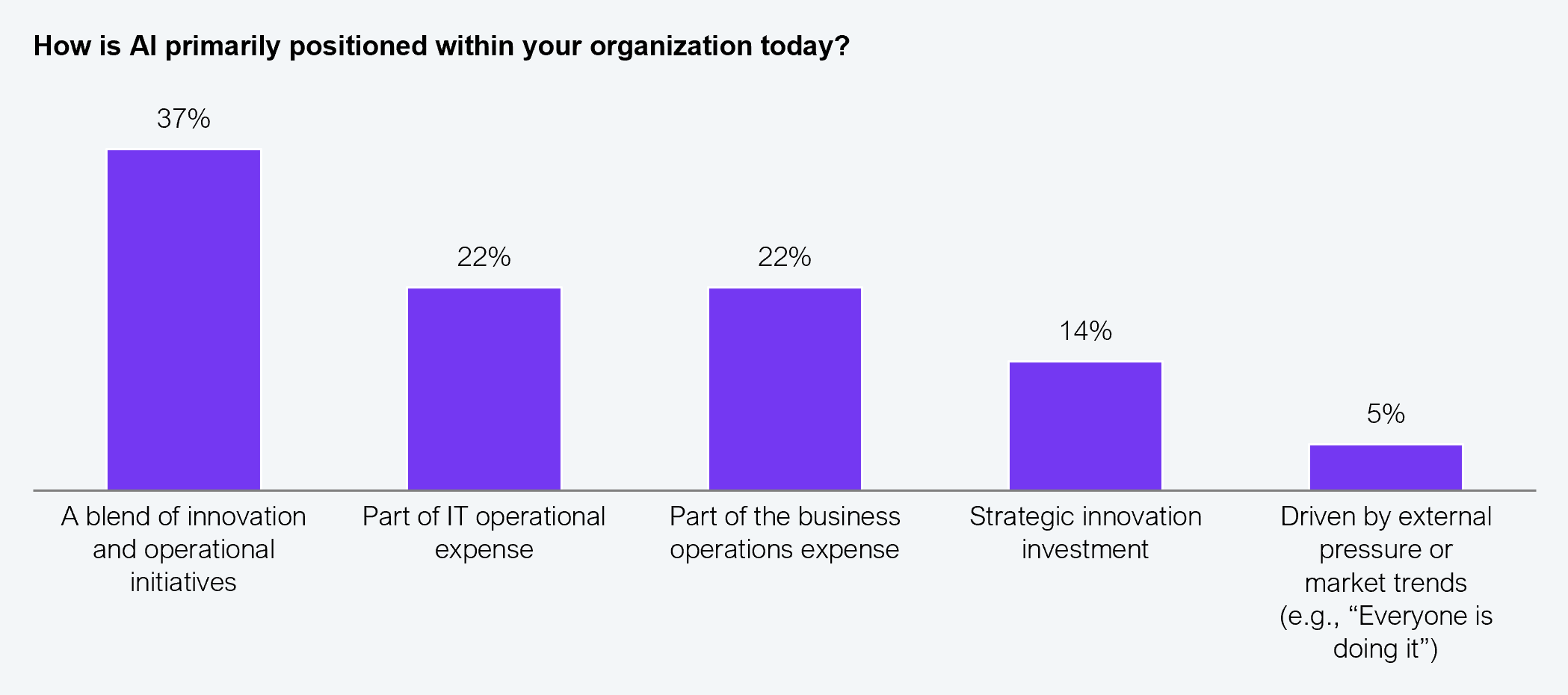
As businesses evolve, so do customer, employee, and stakeholder expectations—necessitating deeper, purpose-led engagement. AI gives enterprises the right tools to meet these expectations by delivering highly personalized, contextualized experiences aligned with stakeholder values and priorities. Despite this potential, only 37% of enterprises leverage AI strategically, balancing operational efficiency (see Exhibit 3) with transformative business outcomes. In contrast, 44% still treat AI as purely an operational expense (either part of IT or business operations), limiting its strategic value.
There are notable exceptions. For instance, Starbucks and Nike strategically use AI not just to reduce costs, but to build personalized, dynamic customer interactions that strengthen brand loyalty and stakeholder trust. Enterprises that fail to position AI strategically in their value propositions risk losing relevance, customer loyalty, and sustained competitive advantage in an increasingly AI-driven world.
Sample: 504 enterprise leaders across Global 2000 enterprises
Source: HFS Research in partnership with LTIMindtree, 2025

One of the key reasons that digital transformation initiatives have failed is the lack of alignment between business and IT stakeholders. Most enterprises still operate within rigid, siloed organizational constructs that limit agility and delay AI adoption. To fully realize its potential, enterprises must reimagine how capabilities are conceived, designed, and delivered, starting with rethinking the operating model itself. This means embedding AI into decision-making workflows, organizing around real-time data, and enabling cross-functional collaboration. The case for a true OneOffice (seamless connecting the front, middle, and back office) and further evolution to OneEcosystem (collaboration across multiple organizations for new sources of value) has never been stronger, and it is time for enterprises to act on it.
Delivering next-generation value requires a fundamental reimagination of the tools to make that happen. The form factor of current times will unlikely meet the value expectations of the future. Even the revolutionary smartphone, which turned consumer lives on their heads for the better for the past decade, is under pressure as OpenAI and IO join forces to reimagine the form factor of the future. In that case, online shopping and banking, linear manufacturing, and subscription-based streaming are all headed toward disruption. While the path to replacement may be uncertain, enterprises bold enough to reimagine are more likely to write the way forward than those playing it safe and being followers.
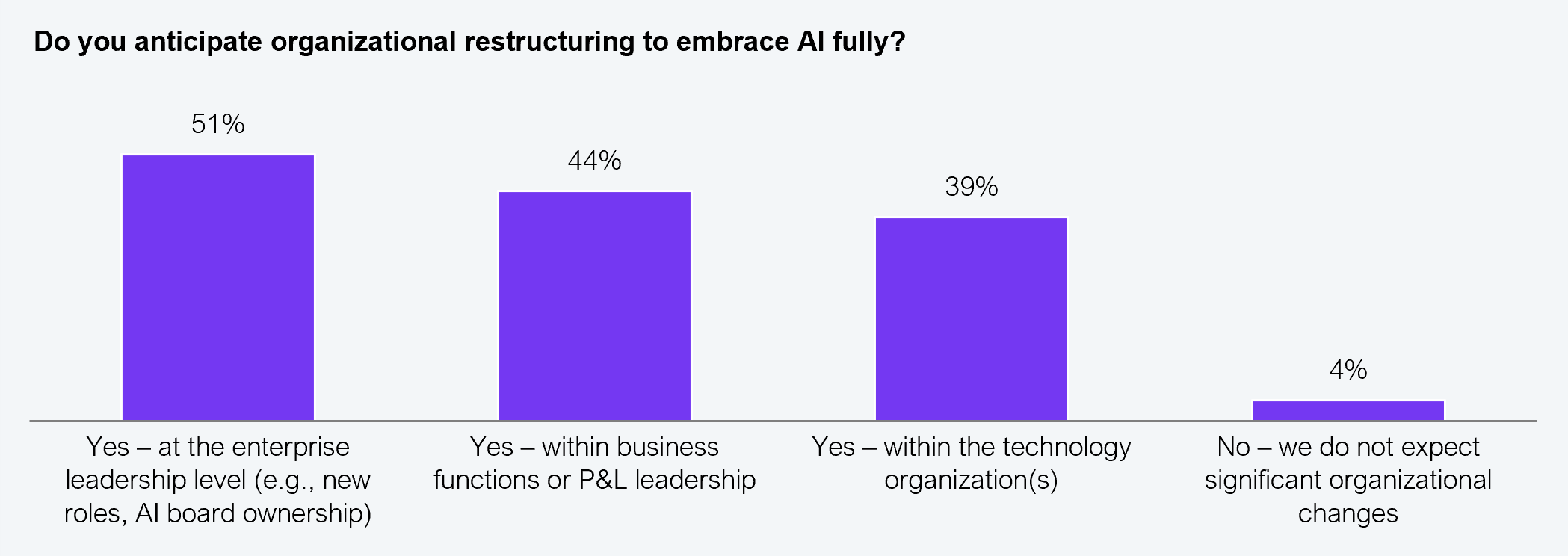
Reimagining enterprise capabilities will require a break from traditional organizational constructs. Many enterprises recognize the need for structural change to power their smart adoption of AI. 51% of enterprises (see Exhibit 4) plan to create new C-suite roles or AI-specific board committees, 44% expect to restructure their P&L and functional leadership to align AI ownership with revenue impact, and 39% are considering changes to their technology operating model. These moves signal a growing intent to embed AI at the highest levels of strategy and execution.
Sample: 504 enterprise leaders across Global 2000 enterprises
Source: HFS Research in partnership with LTIMindtree, 2025
The operating model should be intentionally designed for speed, enabling enterprises to move from pilots to scaled impact quickly and repeatedly. This demands flatter structures, agile funding mechanisms, empowered cross-functional teams, dynamic resource allocation, and continuous feedback loops that align delivery with evolving business needs.
Enterprises should use AI to deepen their relevance with customers by anticipating unmet needs, offering timely and personalized interactions, and embedding themselves meaningfully into everyday decisions and moments. This is about moving beyond transactional interactions to becoming trusted partners in their customers’ lives. A leading bank, for instance, can use AI to optimize internal workflows, anticipate major lifestyle events such as home purchases or tuition payments, and proactively tailor services. A retailer can leverage AI to detect subtle shifts in seasonal buying behavior and prompt customers with personalized recommendations in a proactive fashion.
To drive such relevance, enterprises must build AI capabilities rooted not just in their own industry context but, more importantly, in the operating realities of their end customers. This means designing AI around domain-specific experiences, behavioral signals, and situational triggers that vary widely across sectors. For example, in healthcare, AI must understand patient journeys and clinical interactions; in financial services, it must support life-stage-based advisory; in retail, real-time responsiveness and micro-segmentation are critical.
LTIMindtree’s BlueVerse Foundry illustrates how enterprises can operationalize this vision by helping business and technical users build and deploy agentic AI solutions via the BlueVerse Marketplace to automate tasks and decision-making in context. For example, marketing teams can use pre-built agents to personalize outreach at scale, while IT teams can automate issue detection and resolution. By embedding these agents into real business workflows, enterprises can move faster from insight to action and create measurable impact.
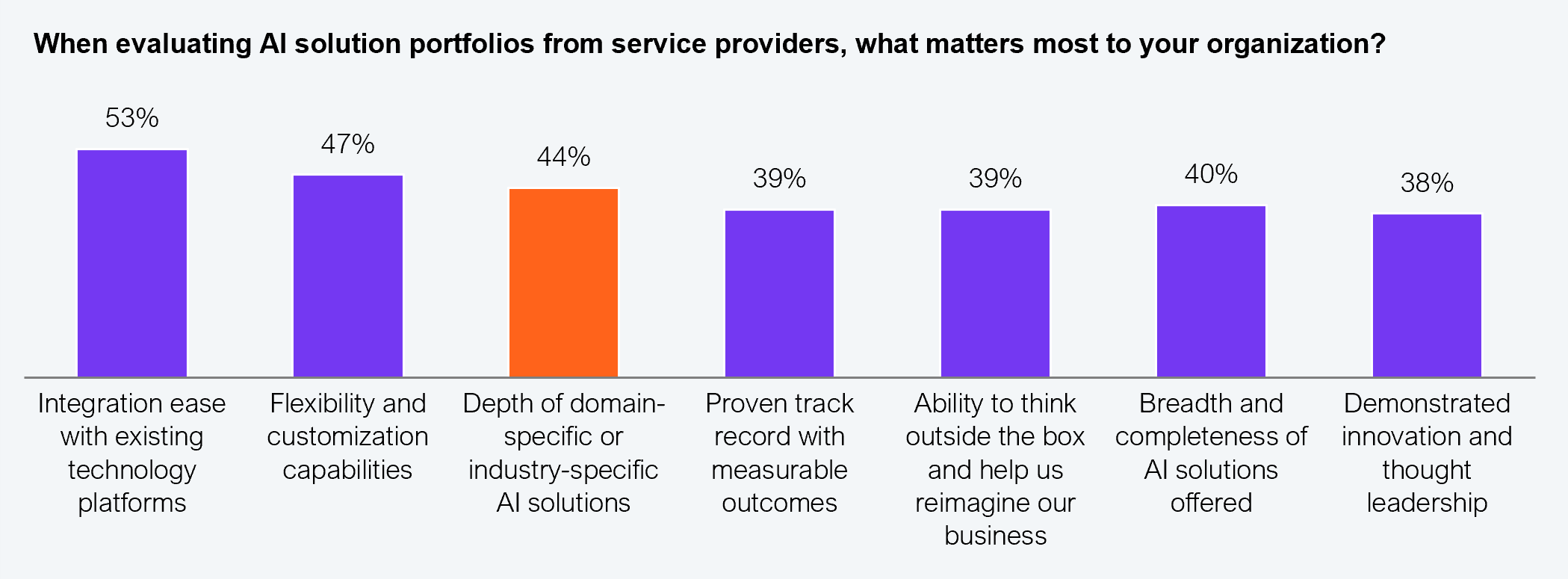
This pivot toward customer-contextual AI is also shaping enterprise expectations of their partners: 44% of leaders (see Exhibit 5) cite depth of domain-specific solutions as a top priority when evaluating AI portfolios, underscoring a shift from generic capabilities toward tailored, situationally aware solutions that create real customer impact.
Sample: 504 enterprise leaders across Global 2000 enterprises
Source: HFS Research in partnership with LTIMindtree, 2025
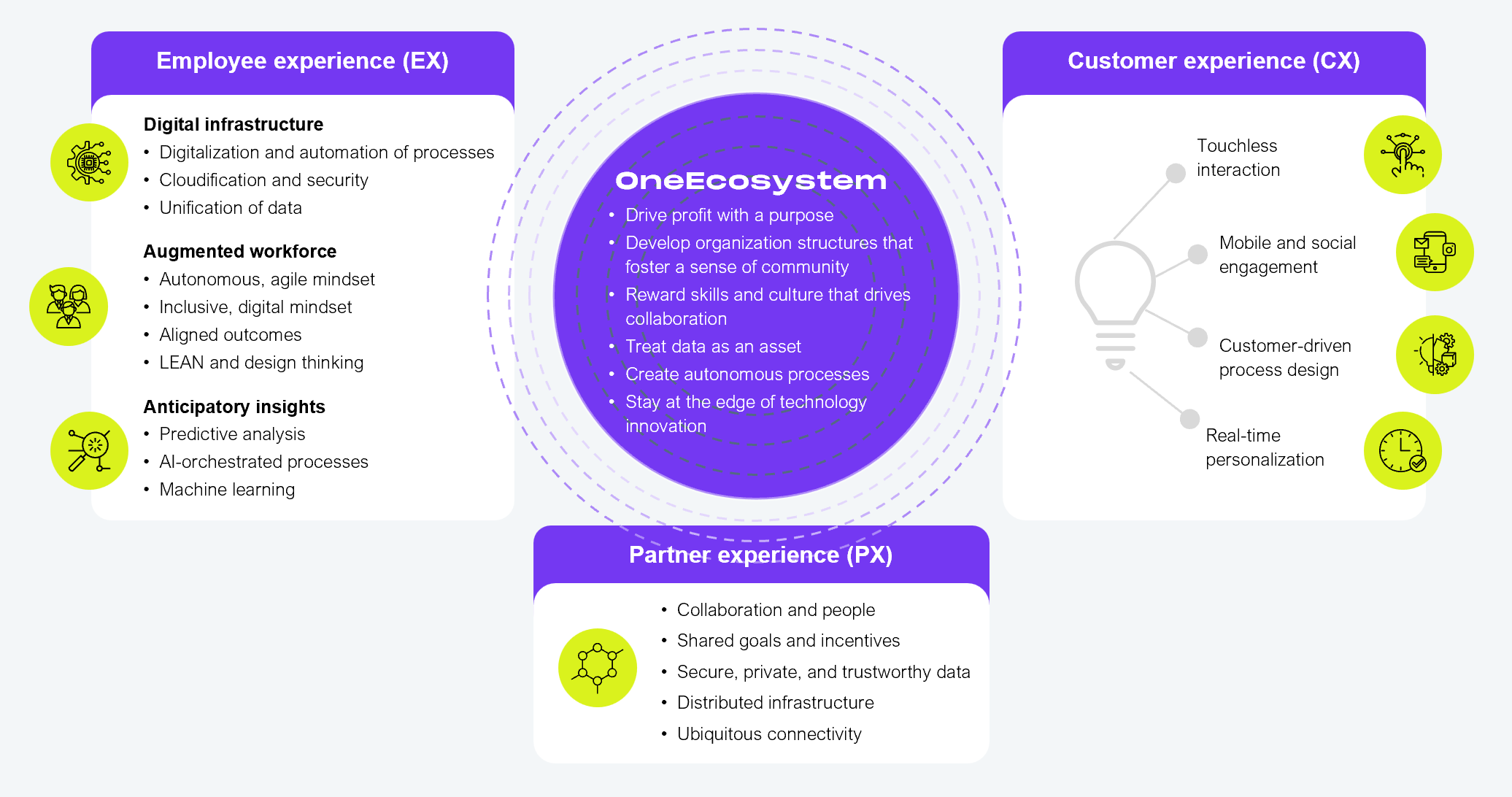
As enterprises chart their AI transformation journeys, one truth stands out: they cannot do it alone. The path forward requires embracing a OneEcosystem (see Exhibit 6) mindset—where value is co-created through interconnected partnerships of customers, employees, and customers that transcend traditional silos. This ecosystem must bring together hyperscalers, service providers, cybersecurity experts, AI start-ups, academic institutions, and regulators—not as separate players, but as an integrated network aligned to shared outcomes. Success will no longer be defined by who owns the stack, but by how well enterprises can orchestrate experiences and capabilities across this ecosystem to drive innovation, scale, and differentiation. For instance, BMW’s collaboration with Microsoft, along with a network of suppliers and software vendors, exemplifies the OneEcosystem mindset—co-developing an open industrial platform that integrates AI, IoT, and cloud to drive smart manufacturing at scale across its global plants and partner ecosystem.
The speed at which enterprises build and activate OneEcosystem will directly correlate with how quickly they unlock new markets, elevate customer value, and deliver sustainable financial growth.
Source: HFS Research, 2025
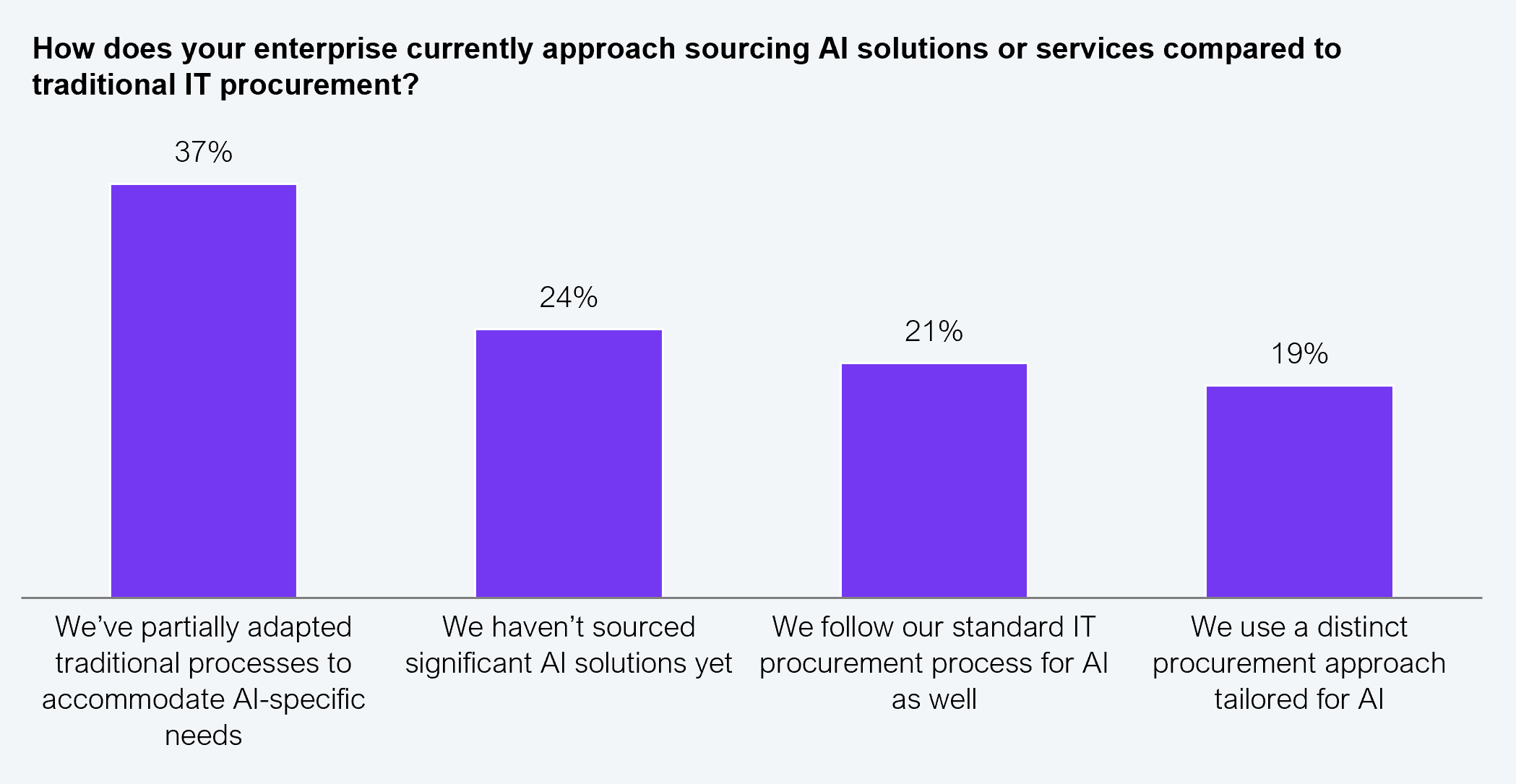
However, activating OneEcosystem is not possible without fundamentally rethinking how enterprises select, engage, and onboard partners. Traditional IT procurement, built for stability and cost control, is misaligned with the speed, flexibility, and risk appetite needed for AI-led innovation. Only 18% of enterprises have adapted their sourcing approaches to reflect these new realities (see Exhibit 7).
A distinct AI procurement strategy is essential—not just to streamline vendor selection, but to evaluate critical criteria such as innovation readiness, data governance practices, responsible AI usage, and scalability. It allows enterprises to fast-track the onboarding of niche and high-impact partners, adopt flexible and outcome-based contracting models, and ensure faster access to emerging capabilities across the ecosystem. In doing so, enterprises move from managing suppliers transactionally to orchestrating collaborative partnerships that drive strategic value.
Sample: 504 enterprise leaders across Global 2000 enterprises
Source: HFS Research in partnership with LTIMindtree, 2025
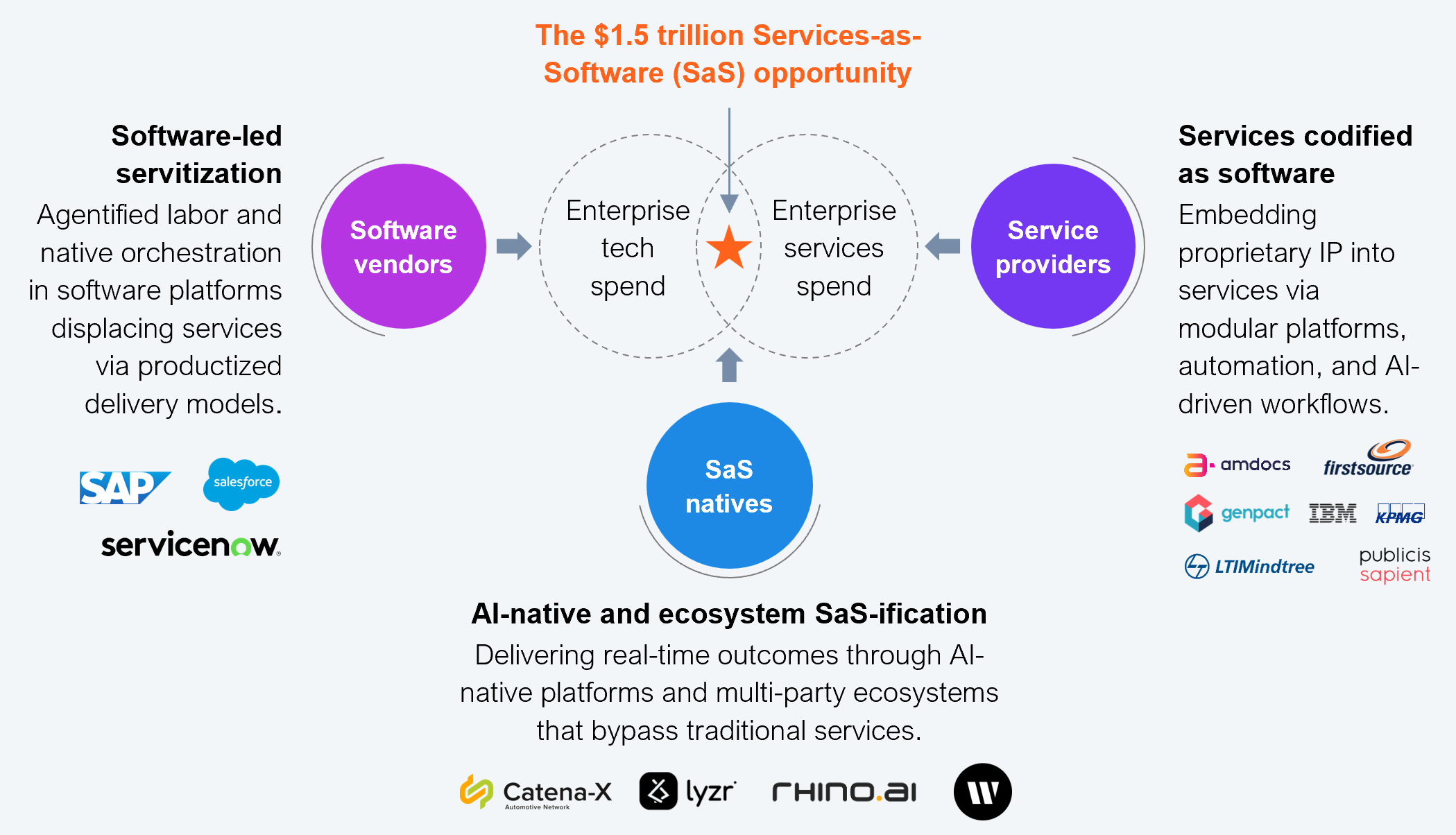
As enterprises lean into an ecosystem-driven approach to AI, they must prepare for a fundamental shift unfolding across the supply landscape: traditional services and software are no longer distinct swim lanes. Service providers are codifying years of delivery expertise into reusable, software-based assets, while SaaS and platform players are moving upstream to offer service-like experiences anchored in outcomes. This shift is giving rise to SaS, where modular, intelligence-infused solutions embed process logic, automation, and AI into the core of delivery.
Source: HFS Research, 2025
LTIMindtree’s BlueVerse shows service delivery is evolving to work more like software. Instead of relying on manual processes, it uses AI-powered tools to automate tasks and help teams make better decisions. For example, it applies advanced anomaly detection, self-healing capabilities, and AI-driven change impact analysis in software engineering—accelerating development and enhancing the stability of digital products.
More importantly, the platform shows how the supply ecosystem itself is changing—moving away from custom-built, labor-heavy services toward ready-to-use, intelligence-infused components. By turning delivery expertise into modular, reusable, marketplace-based agentic AI solutions, BlueVerse helps enterprises respond faster to change, reduce costs, and scale solutions more easily across teams and business units. This kind of shift is central to how enterprises will consume and deliver services in an AI-first world.
This evolving supply ecosystem expands the range of choices available to enterprises. However, capitalizing on this shift requires enterprises to revisit how they evaluate partners. Traditional procurement models built around headcount, resource commitments, and unit costs are no longer sufficient. Enterprises need to develop new evaluation frameworks that focus on modularity, embedded intelligence, integration flexibility, and alignment to business outcomes.
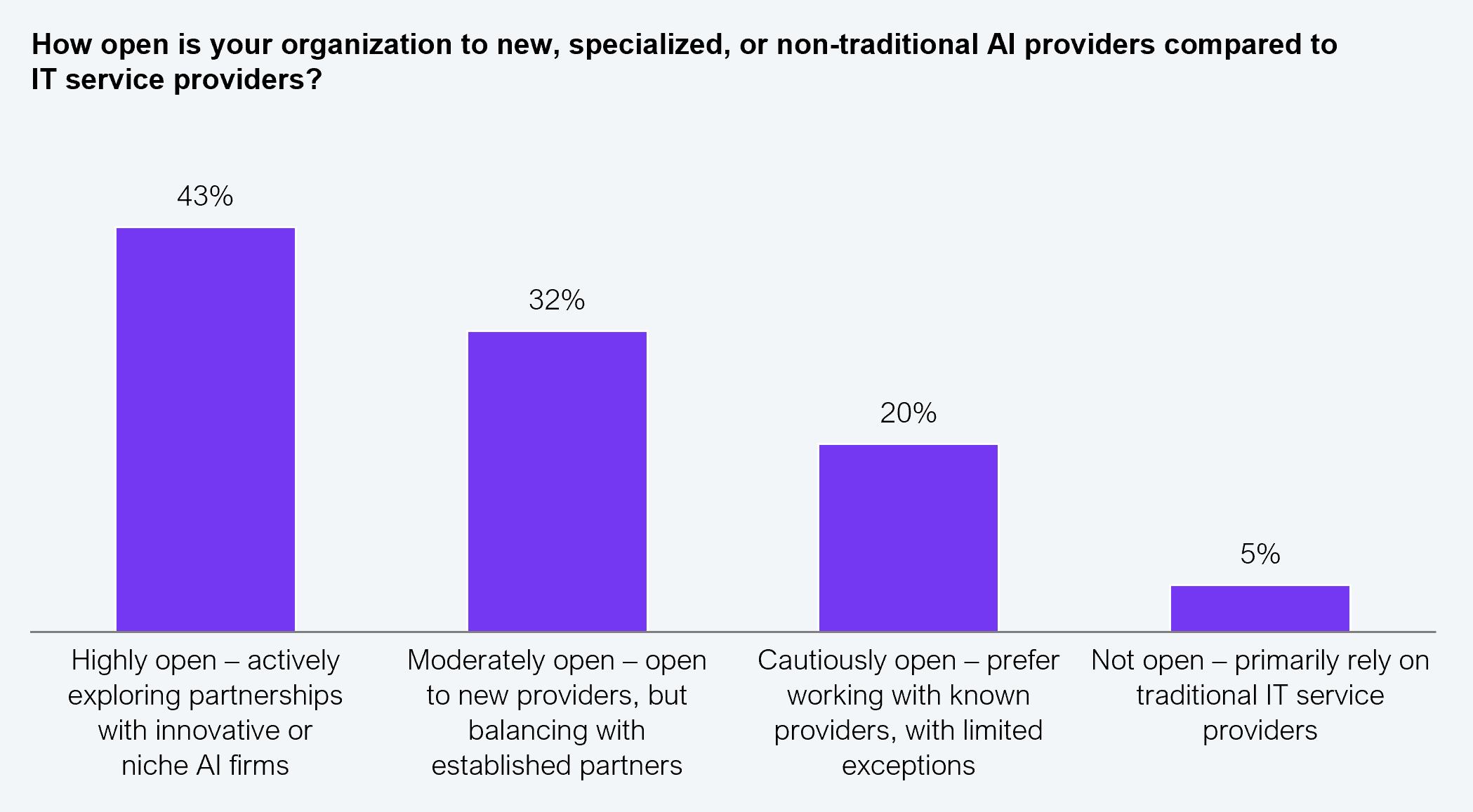
Notably, 43% of enterprises (see Exhibit 9) indicate a high degree of openness to engaging with specialized or niche AI providers over traditional, larger vendors. This trend reflects a deliberate strategic pivot, prioritizing agility, innovation, and tangible business outcomes over brand recognition or project scale alone. For instance, banks are increasingly partnering with fintech startups to embed AI-driven credit decisioning and fraud detection tools, enabling real-time lending decisions and more personalized risk profiles—capabilities that would take longer to develop internally.
Sample: 504 enterprise leaders across Global 2000 enterprises
Source: HFS Research in partnership with LTIMindtree, 2025

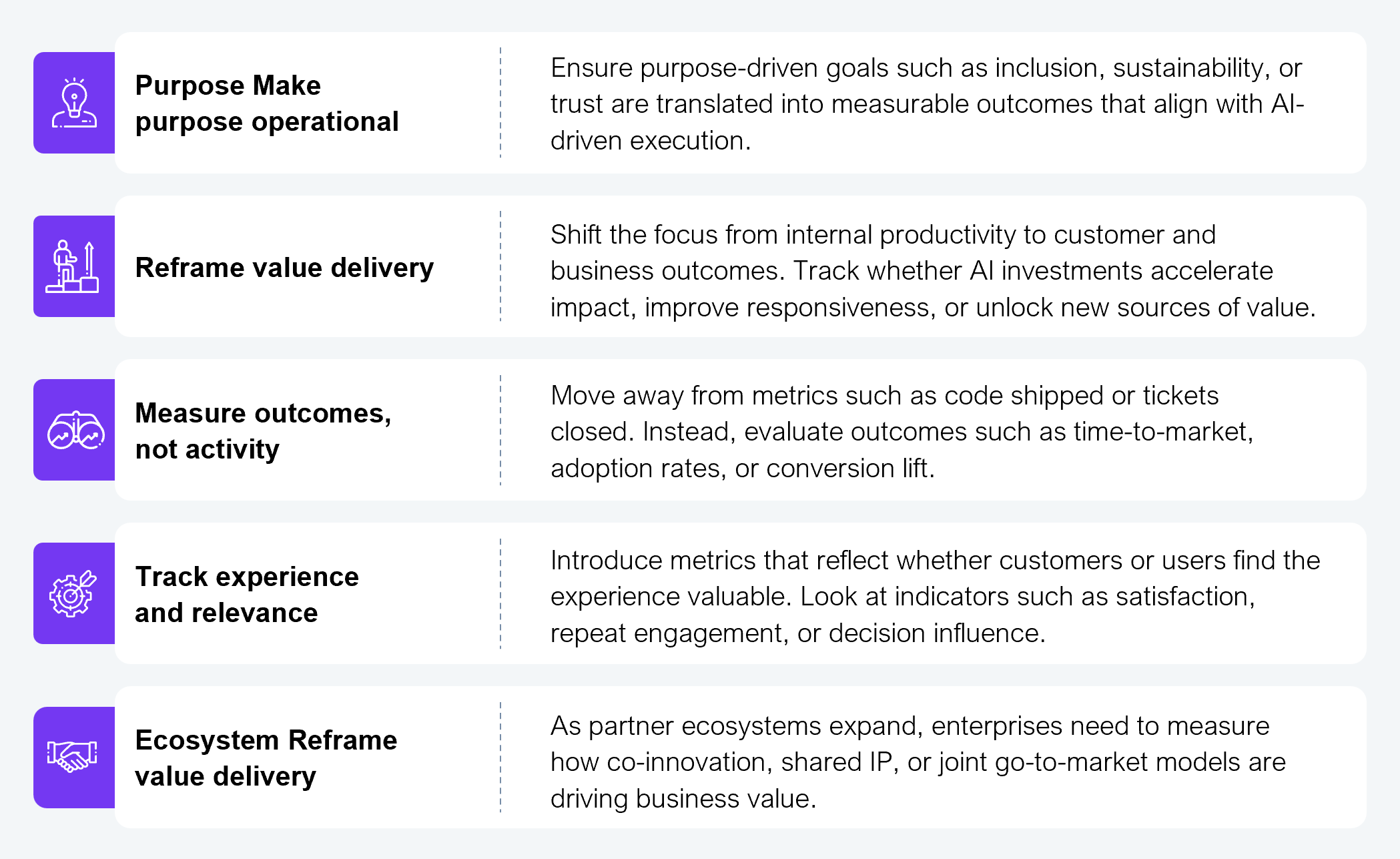
Growth and profitability remain essential, but how enterprises achieve these outcomes and track progress must evolve. Traditional KPIs focused on efficiency, activity levels, or linear delivery no longer reflect the realities of AI-first operations. As enterprises move from experimentation to scaled AI deployment, their measurement frameworks should reflect impact, relevance, and the ability to adapt in real time.
Success now depends on whether enterprises can improve decision velocity, strengthen stakeholder engagement, and become more integral to their customers’ goals. This requires resetting how metrics are defined, tracked, and acted on.
Source: HFS Research, 2025
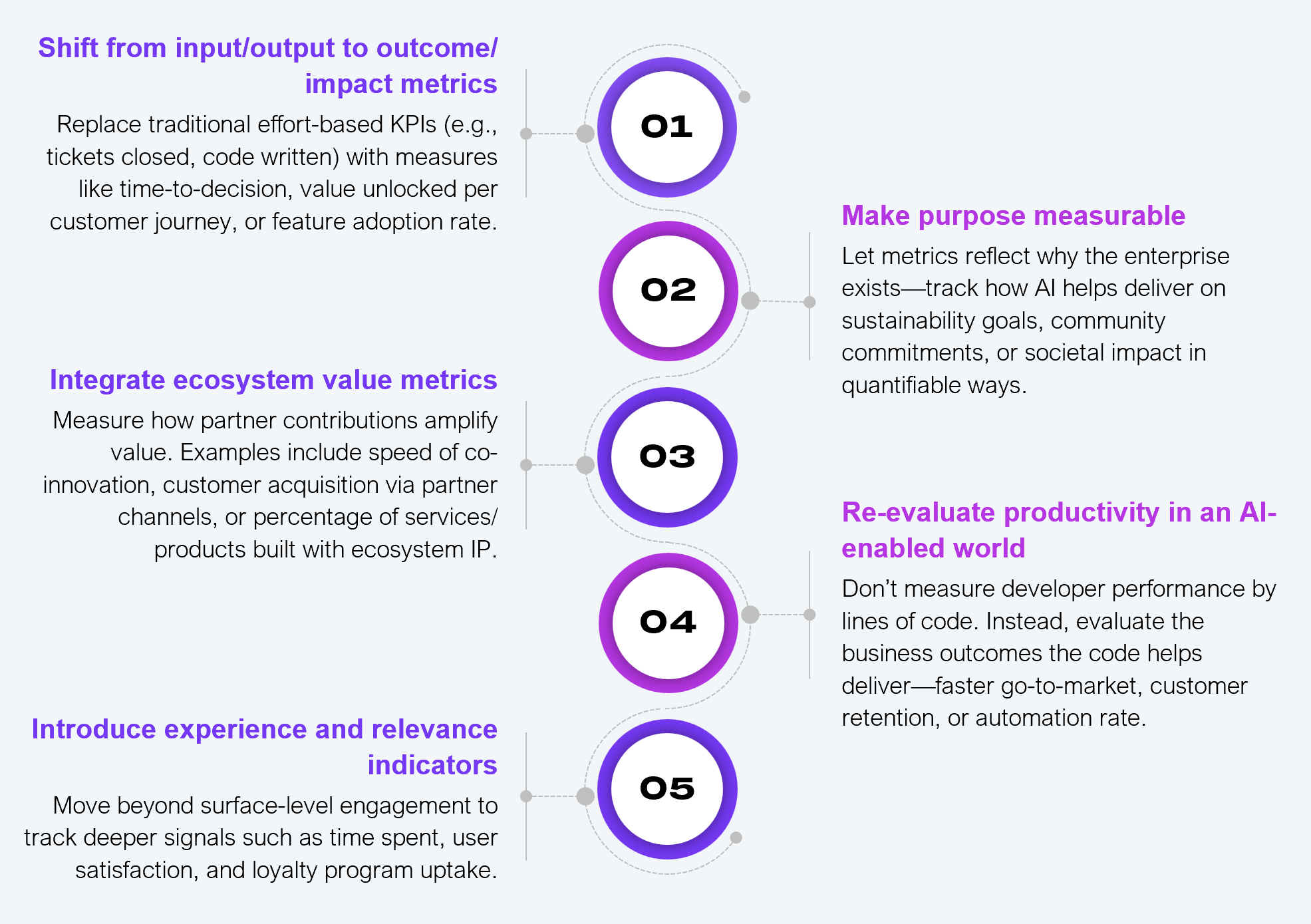
The shift toward an AI-powered enterprise brings a golden opportunity to break free from outdated KPIs and rethink what success truly means. Traditional dashboards—centered on productivity, efficiency, and linear growth—must evolve to reflect new realities driven by AI, ecosystem value, and customer-centric outcomes.
Instead of tracking how quickly an engineer writes code, enterprises should measure the business value that code enables. As AI tools take over basic tasks, impact becomes the true differentiator—the features being used, the experience they enhance, and the revenue they unlock. For example, a media company should look beyond just viewership figures and explore the depth of audience engagement: Do viewers rewatch content, subscribe, or share? Does a major live event generate adjacent sector outcomes such as merchandise sales or application downloads?
To get there, enterprises must reshape their executive dashboards and measurement.
Source: HFS Research, 2025
Reinventing metrics will help organizations go beyond tracking operations and give leaders a roadmap to success in an AI-first world, one where evolving customer expectations will require enterprises to reinvent.
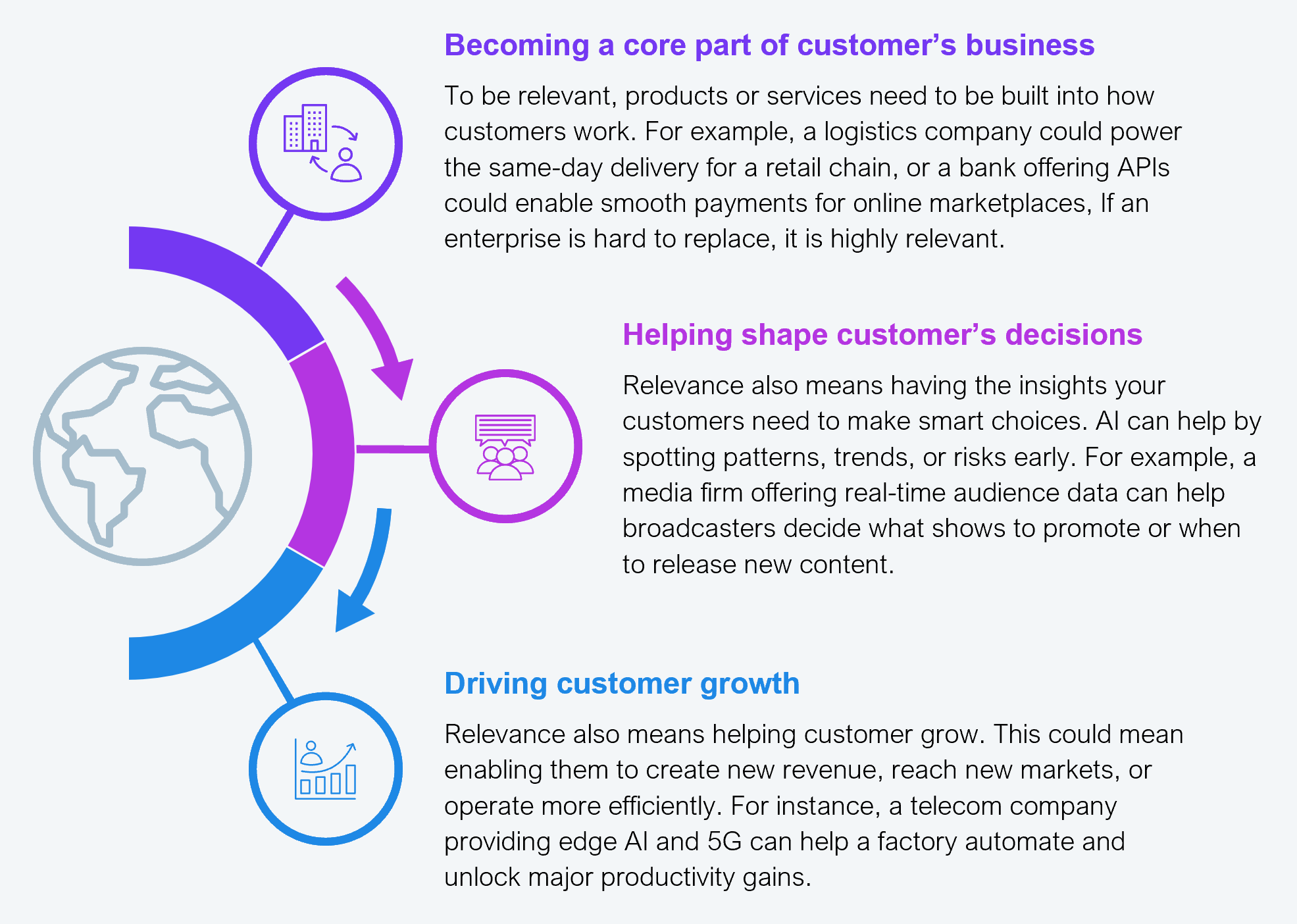
Customer expectations are constantly changing. To stay relevant, enterprises should do more than just meet current needs—they must become key enablers of their customers’ long-term success. AI can help them understand customer behavior better, anticipate their needs, and deliver more timely, useful solutions. The most relevant enterprises are those that consistently add value and become part of the way their customers live and work.
Source: HFS Research, 2025
In today’s world, this kind of relevance isn’t a nice-to-have—it’s a must-have. Enterprises must aim higher and show up as essential partners that make a real difference in their customers’ success.
To lead—not just compete—in the AI-first economy, enterprises must craft a pragmatic, outcome-oriented roadmap.
These five priorities can help organizations scale purposefully and stay ahead of the curve:





Register now for immediate access of HFS' research, data and forward looking trends.
Get StartedIf you don't have an account, Register here |
With the exception of our Horizons reports, most of our research is available for free on our website. Sign up for a free account and start realizing the power of insights now.
Our premium subscription gives enterprise clients access to our complete library of proprietary research, direct access to our industry analysts, and other benefits.
Contact us at [email protected] for more information on premium access.