Market Impact Report

AI is ready, but your operating model and change muscle are not

This HFS Market Impact Report, produced in partnership with Wipro, is for CIOs, CEOs, CHROs, and C-suite transformation leaders at large enterprises who need a leadership blueprint for turning AI investment into disciplined, measurable business outcomes.

Executive summary

If you are a CxO who has spent the past year being told to “infuse AI across the enterprise,” you are not alone, and you are probably running out of ways to say you are making good progress without actually having to prove it. AI has become the new baseline expectation, which means the gap between what is announced and what is demonstrated is quietly widening at the top of most organizations.

HFS Research, in partnership with Wipro, surveyed 101 C-suite executives at enterprises over $1 billion in revenue to pinpoint where that gap really is. The answers were consistent, and the pattern was clear: AI readiness is no longer primarily a technology challenge. The models are capable, but the operating models are not.

We found five pressure points that decide whether AI becomes a durable advantage or disintegrates into fragmented activity. Each is within leadership’s control, and none requires a new model.

What we found:
    • AI FOMO is driving leaders to report progress without proof points.
      Only 21% of leaders are fully confident their AI investments reflect measurable value. Eighty-seven percent (87%) are investing faster than they can prove value, and 72% don’t even have a consistent way to measure it. The proof gap is not closing; it’s just being disguised by a flurry of activity.
    • Human + AI teaming is arriving faster than operating models are adapting.
      Ninety percent (90%) expect hybrid Human + AI teams to be standard within three years, including 53% who expect it within the next 12 months. Yet among those already operating in hybrid mode, only 23% have formal operating models. The work is arriving before the rules are written.
    • Leaders are not blocked by trust in AI; they are blocked by fear and workflow design.
      The top barrier to Human + AI teaming is not skepticism about technology. The biggest hurdle is employees’ fear of being replaced by AI, at 37%. Employees not having shared ownership of AI workflows is not far behind, at 31%. They trust the tools; only 8% cite distrust in AI as a hurdle, so the system is the problem, not the model.
    • Context is the ROI unlock, yet only a minority has it.
      Only 13% have AI deeply embedded in their day-to-day workflows. Just 18% of AI initiatives are purpose-built for unique workflows. In lightly contextual environments, 83% struggle to separate AI activity from outcomes; in deeply embedded environments, that falls to 23%.
    • Enterprise-wide redesign is the real bottleneck.
      Only 18% are embedding intelligence across the enterprise, while the other 82% are redesigning in pockets or still in pilots. Without enterprise-wide standards and shared accountability, wins stay trapped in functions and advantage never compounds.

AI investment without operating model redesign isn’t transformation; it is an expensive way to prove you were paying attention. The enterprises that treat it as an operating model reset will be the ones with something real to show for it.

01. AI FOMO is driving leaders to report progress without proof points

Your board wants an AI story, and you gave them one, but can you defend it?

AI has entered a new phase. It has shifted from “nice to have” to “explain why you do not have it,” and as a CxO, you are usually the one holding the microphone when that question lands. Boards want momentum, peers want headlines, and teams are told to deliver at speed. In that climate, visibility can pass for progress.

That is how AI FOMO takes over. Action feels safer than restraint. Deployment feels safer than discipline. Speed becomes the strategy. Enterprises get AI into production, then realize too late that production is not the same as transformation.

Most leaders believe AI is creating value, but only a minority can prove it

The most revealing number in the study is that only 21% of C-suite leaders are fully confident that their current AI efforts reflect real, measurable business value rather than just create the appearance of progress (see Exhibit 1). The remaining 79% have some confidence that AI is working, but they stop short of saying so without hedging a bit.

That gap matters because it impacts credibility. Organizations are projecting confidence publicly, but internally, they are still uncertain and negotiating what “value” means.
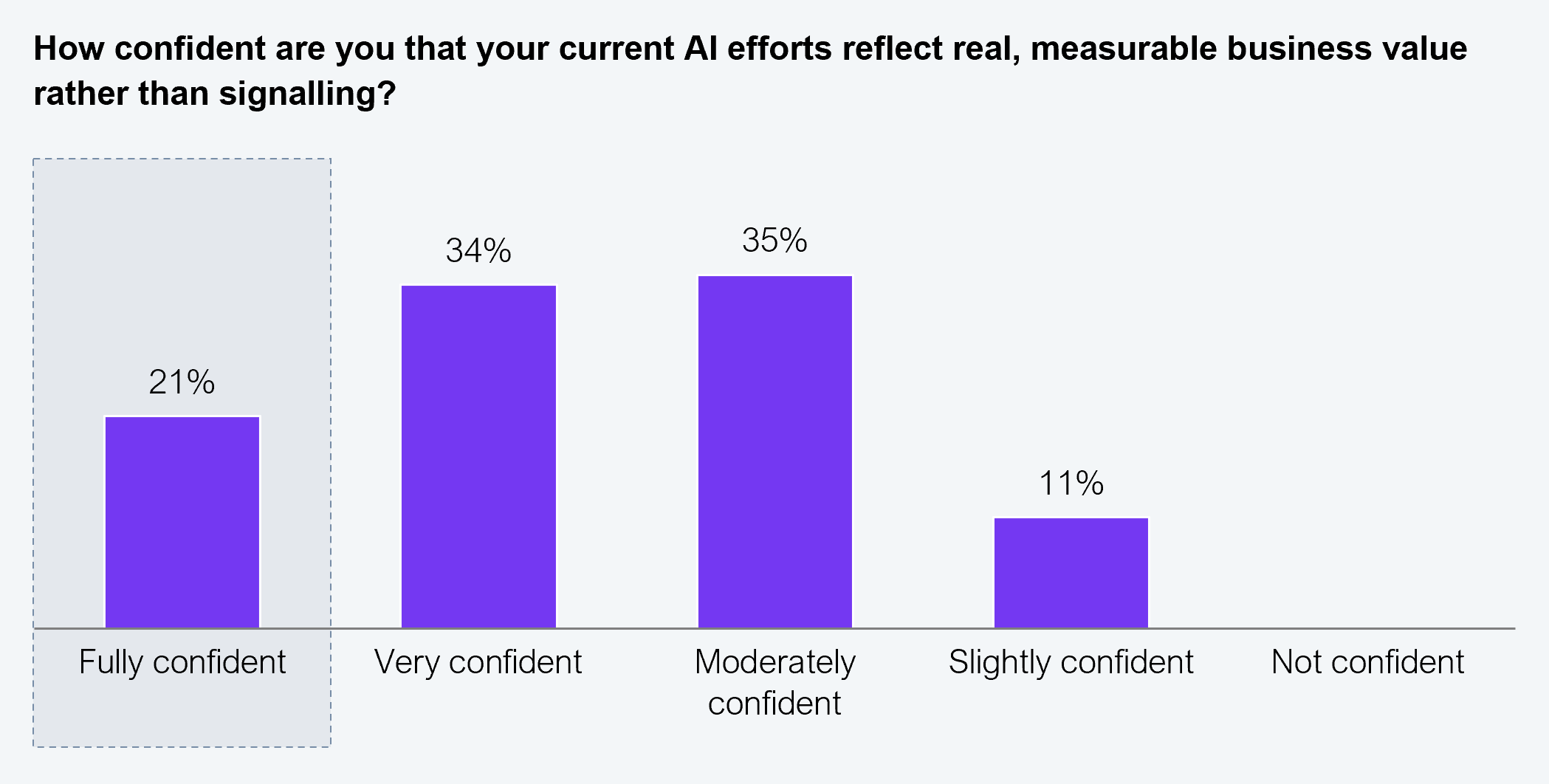
Exhibit 1: Leaders broadly believe AI is creating value, but only 21% can say it with full confidence

Vertical bar chart showing C-suite responses to the question "How confident are you that your current AI efforts reflect real, measurable business value rather than signalling?" Five response categories are shown along the horizontal axis. Fully confident: 21%. Very confident: 34%. Moderately confident: 35%. Slightly confident: 11%. Not confident: 0%. Sample: 101 C-suite executives from Fortune 200 firms. Source: HFS Research, 2026.

Sample: 101 C-suite executives from Fortune 200 firms
Source: HFS Research, 2026

External pressure is shaping investment faster than plans can justify it

Two-thirds of leaders (65%) say urgency and external pressure—not a clear plan—are driving AI spending, and 69% say they feel obligated to show visible AI progress even when outcomes remain uncertain (see Exhibit 2).

This mix is the hallmark of FOMO-driven investment. Speed and visibility are shaping the decision logic, not the data. The flashy investments are outpacing the proof points. This clash neatly explains why proof and measurement so consistently lag investment. Nobody set a standard before the work started.
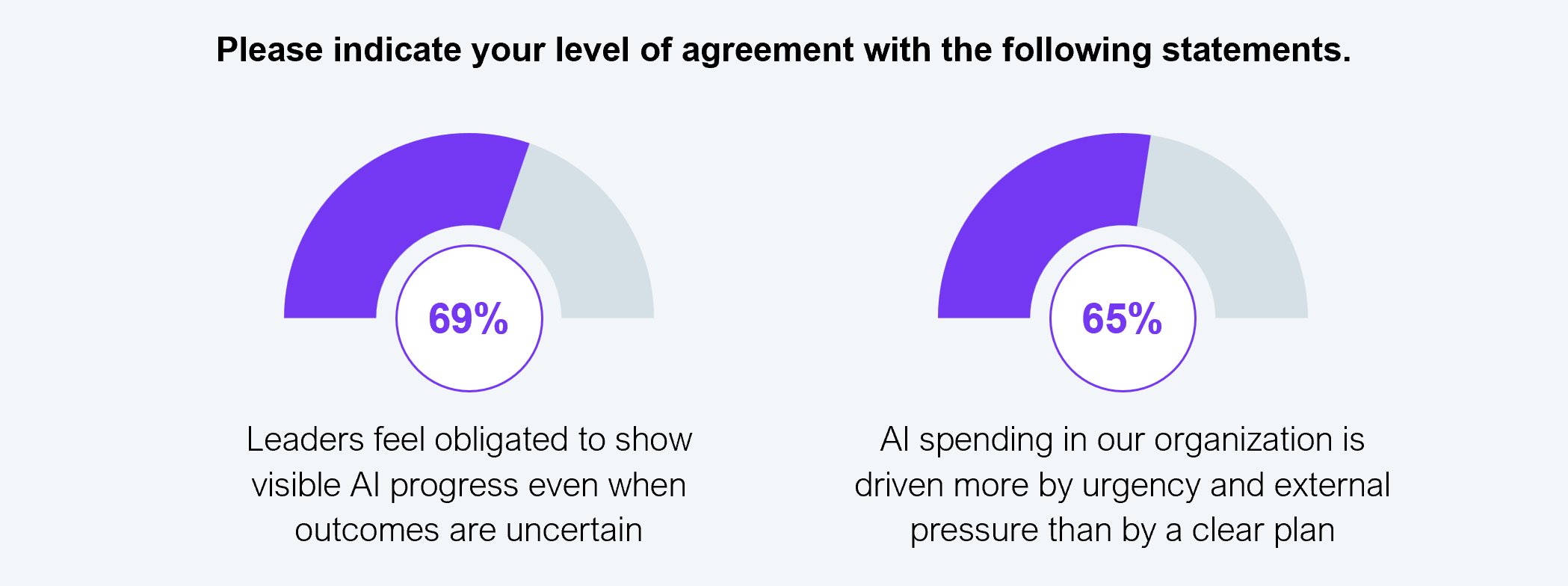
Exhibit 2: Urgency and the pressure to show progress are driving AI investment more than clear plans

Two donut charts showing the percentage of C-suite leaders who agree with two statements. Left donut: 69% agree that leaders feel obligated to show visible AI progress even when outcomes are uncertain. Right donut: 65% agree that AI spending in their organization is driven more by urgency and external pressure than by a clear plan. Sample: 101 C-suite executives from Fortune 200 firms. Source: HFS Research, 2026.

Sample: 101 C-suite executives from Fortune 200 firms
Source: HFS Research, 2026

The measurement gap isn’t a temporary lag; it’s how most programs are set up

Eighty-seven percent (87%) say their organization is investing in AI faster than it can prove value. They are moving at a lightning pace, but without a finish line: 72% lack a consistent and trusted way to measure AI value (see Exhibit 3). As a result, 62% say they struggle to distinguish AI activity from real business results, which is another way of saying that most of the portfolio is built on assertions rather than evidence.

The risk is not dramatic; it is cumulative. Initiatives accumulate that nobody can quite measure, cannot quite defend to a skeptical stakeholder, and cannot quite stop because no one agreed on success criteria before the work started.
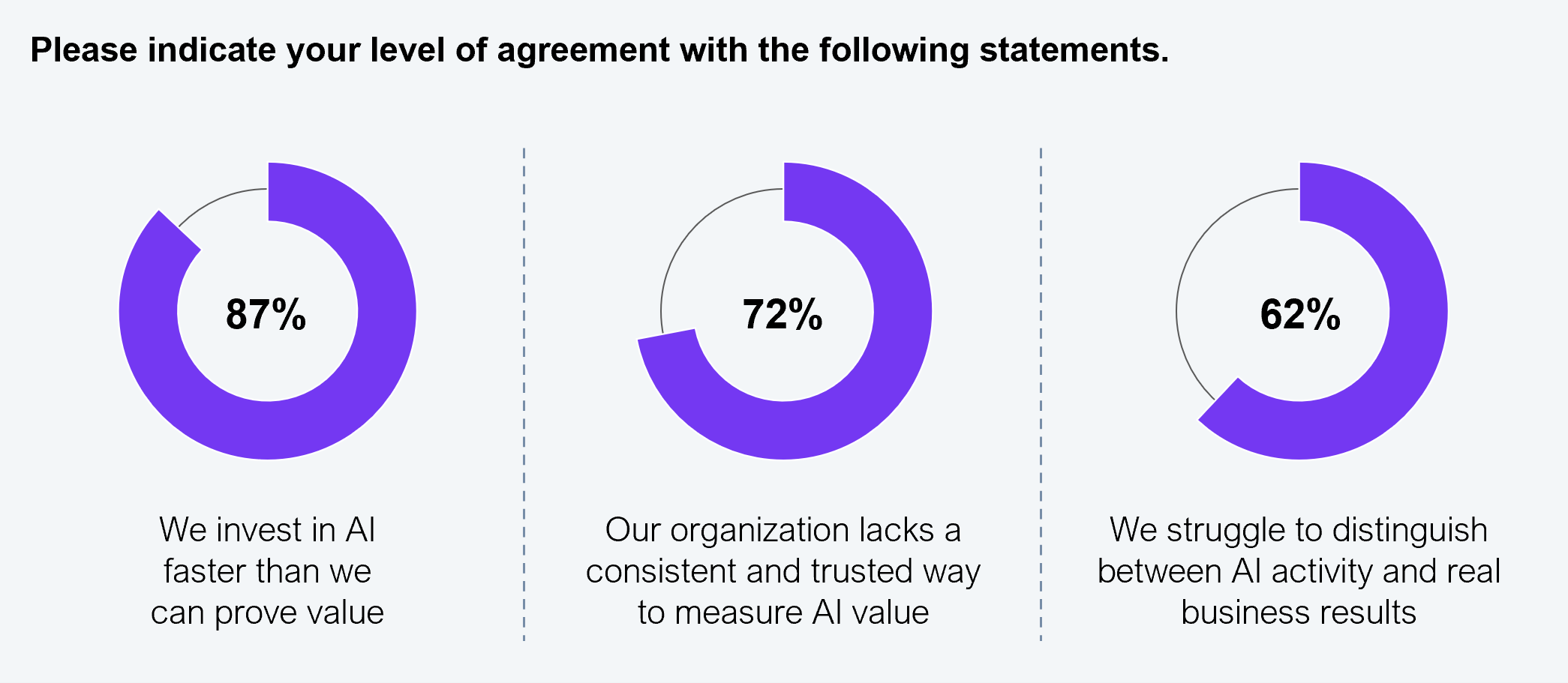
Exhibit 3: Investment is accelerating faster than enterprises can measure or validate outcomes

Three donut charts showing the percentage of C-suite leaders who agree with three statements. First donut: 87% agree that their organization invests in AI faster than it can prove value. Second donut: 72% agree that their organization lacks a consistent and trusted way to measure AI value. Third donut: 62% agree that they struggle to distinguish between AI activity and real business results. Sample: 101 C-suite executives from Fortune 200 firms. Source: HFS Research, 2026.

Sample: 101 C-suite executives from Fortune 200 firms
Source: HFS Research, 2026

Turn AI FOMO into capital discipline

External pressure will not disappear, but leadership can change the cadence. Shift the incentive structure by defining outcome ownership before a project is deployed, setting proof thresholds before expansion, and making it acceptable to stop or redesign initiatives that cannot demonstrate value. Speed is still important; it just needs to accelerate something other than the narrative.

02. Human + AI teaming is arriving faster than operating models are adapting

Your next co-worker may be a bot, but your operating model is only set up for humans.

AI is no longer sitting politely, patiently biding time in the pilot phase. Organizations are threading it into the decision-making workflows, and the timeline is moving faster than most organizations have noticed.

The timeline to standard hybrid teaming is faster than most enterprises planned for

Ninety percent (90%) of enterprises expect hybrid Human + AI teams to become standard within three years. Many say hybrid execution is already underway, or they expect it within the next 12 months (see Exhibit 4).

This isn’t a measured, controlled rollout but an abrupt reality shift. Intelligence is being distributed into the tools and workflows people already use, compressing the timeline for enterprises to define how to govern shared work.
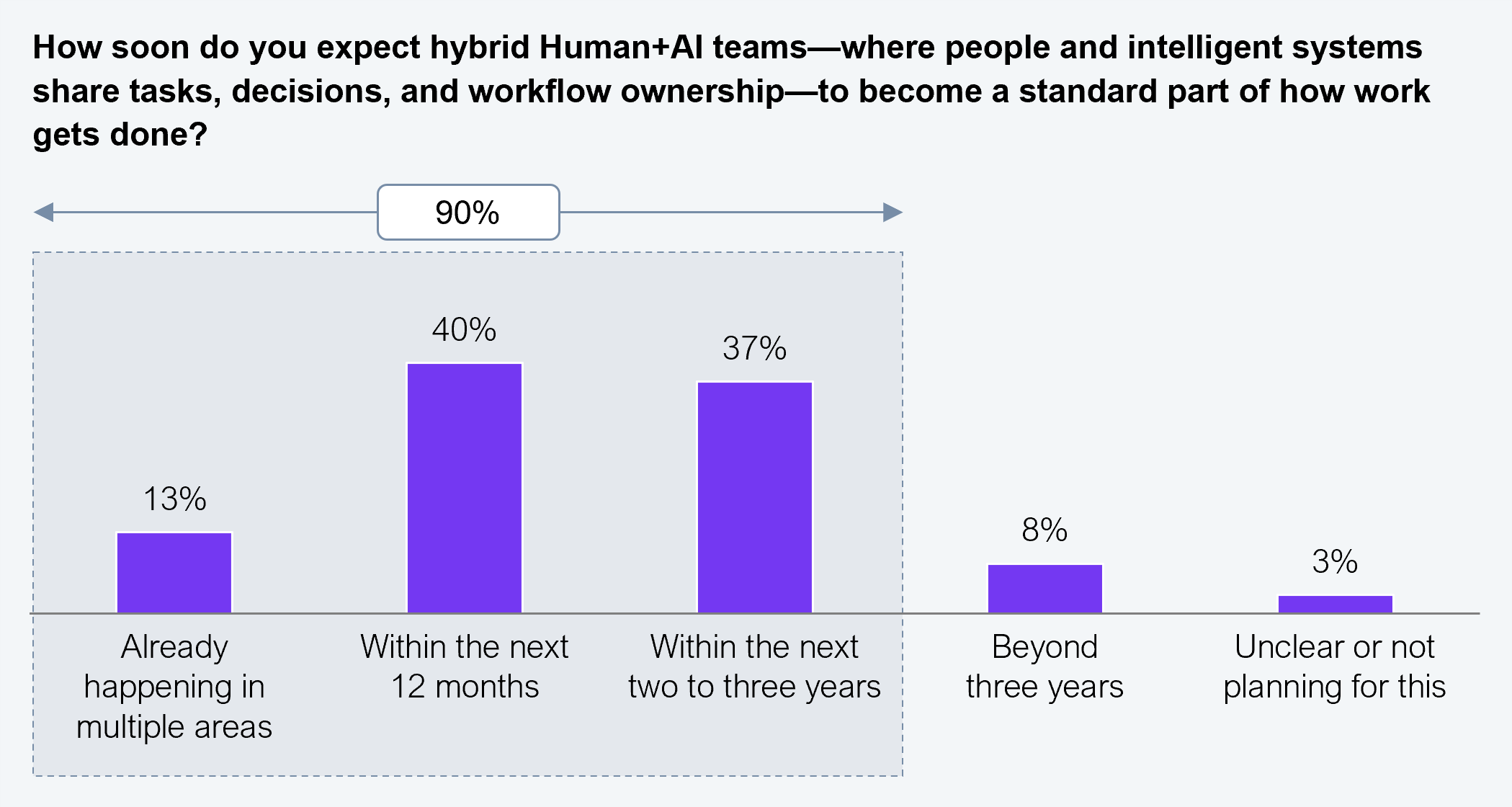
Exhibit 4: Hybrid Human + AI teaming will become standard faster than most enterprises have prepared for

Vertical bar chart showing C-suite responses to the question "How soon do you expect hybrid Human+AI teams – where people and intelligent systems share tasks, decisions, and workflow ownership – to become a standard part of how work gets done?" Five response categories are shown along the horizontal axis. Already happening in multiple areas: 13%. Within the next 12 months: 40%. Within the next two to three years: 37%. Beyond three years: 8%. Unclear or not planning for this: 3%. A bracket spanning the first three categories is labeled 90%, indicating the combined share expecting hybrid teaming within three years. Sample: 101 C-suite executives from Fortune 200 firms. Source: HFS Research, 2026.

Sample: 101 C-suite executives from Fortune 200 firms
Source: HFS Research, 2026

Early adopters are adding governance after the fact

A small portion, 13%, say hybrid teams are already operating in multiple areas. The dominant model in Exhibit 5 is still AI supporting humans with task execution (69%), rather than initiating work independently (15%). Even so, only 23% of early hybrid adopters have formal operating models in place, which means most hybrid team work is running on hope and informal conventions.

Working without governance is fine until something goes wrong, then it quickly becomes complicated, and ownership of the outcome becomes murky.
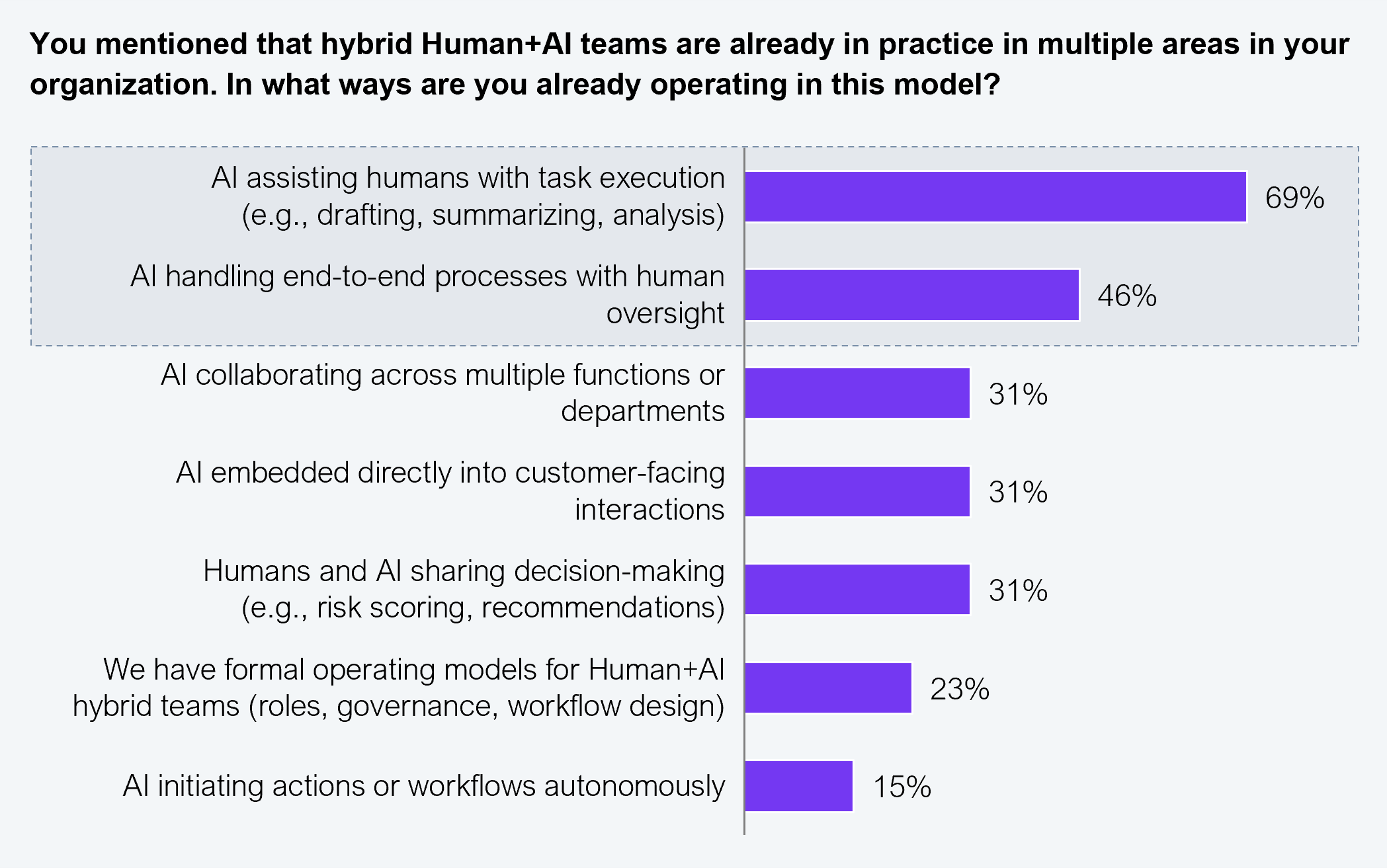
Exhibit 5: Among early hybrid adopters, operating models lag far behind what is already in practice

Horizontal bar chart showing the ways in which C-suite leaders who are already operating hybrid Human + AI teams describe their current model. Respondents could select multiple options. The question asked was "In what ways are you already operating in this model?" AI assisting humans with task execution (e.g., drafting, summarizing, analysis): 69%. AI handling end-to-end processes with human oversight: 46%. AI collaborating across multiple functions or departments: 31%. AI embedded directly into customer-facing interactions: 31%. Humans and AI sharing decision-making (e.g., risk scoring, recommendations): 31%. We have formal operating models for Human + AI hybrid teams (roles, governance, workflow design): 23%. AI initiating actions or workflows autonomously: 15%. Sample: 13 C-suite executives from Fortune 200 firms. Source: HFS Research, 2026.

Sample: 13 C-suite executives from Fortune 200 firms
Source: HFS Research, 2026

Hybrid readiness is concentrating first on where work is already digital and measurable

Hybrid Human + AI work is furthest along in IT and engineering (55%) and customer service and CX (48%), where some tasks have been digital and automated for a while with a positive impact on measurable productivity (see Exhibit 6).

The harder challenge sits in finance, HR, and shared services, where hybrid teaming requires redesigned accountability and governance rather than just access to better tools. Supply chain lags furthest because the combination of physical operations and meaningful risk exposure makes the question of shared ownership with AI more difficult to answer.
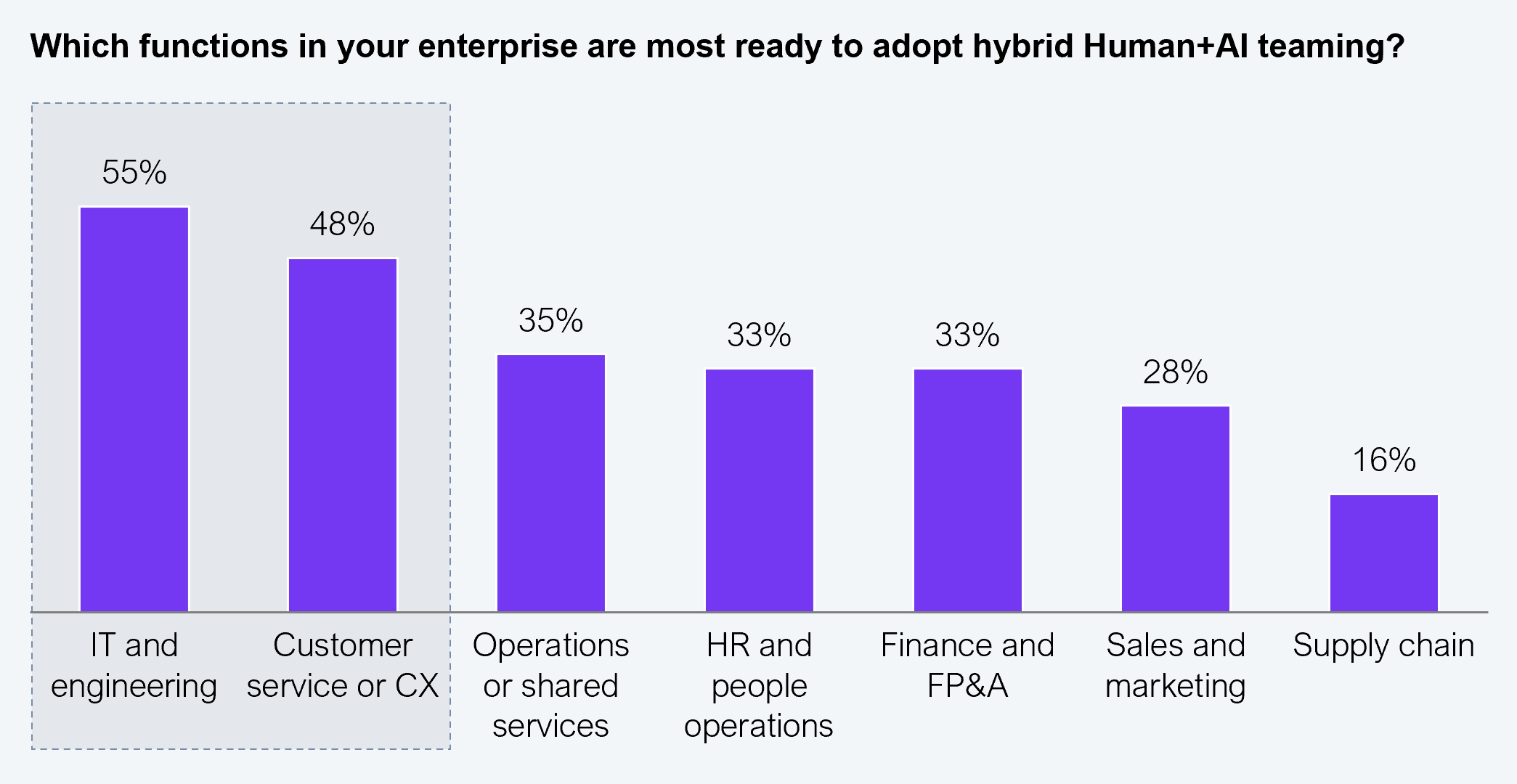
Exhibit 6: Hybrid readiness is concentrated in digital and high-volume execution functions

Vertical bar chart showing C-suite responses to the question "Which functions in your enterprise are most ready to adopt hybrid Human+AI teaming?" Seven functions are shown along the horizontal axis. IT and engineering: 55%. Customer service or CX: 48%. Operations or shared services: 35%. HR and people operations: 33%. Finance and FP&A: 33%. Sales and marketing: 28%. Supply chain: 16%. Sample: 101 C-suite executives from Fortune 200 firms. Source: HFS Research, 2026.

Sample: 101 C-suite executives from Fortune 200 firms
Source: HFS Research, 2026

Define operating rules before hybrid execution becomes ungovernable

Organizations that formalize hybrid operating rules before their informal conventions are baked into culture and process will find governance much less painful than those that try to retrofit it after a high-profile incident. Defining decision rights and escalation paths is less exciting than deploying new capabilities, but it is the work that determines whether hybrid execution becomes a durable operating model or an ongoing accountability dispute.

03. Leaders are not blocked by trust in AI; they are blocked by fear and workflow design

Leaders want human judgment to flourish, but the incentives say otherwise.

Across almost every leadership team, the stated ambition is consistent: AI should take the repetitive work so people can focus on judgment, creativity, and the things humans are genuinely better at. It is a compelling vision. Most organizations currently live in the gap between stating it and operationalizing it.

The barrier to Human + AI teaming is not the technology; it is the operating model

Enterprises keep treating hybrid adoption as a technology confidence issue. The data says otherwise. The real constraint is not whether people trust the model. It is whether they trust the operating model around it.

Fear of replacement leads at 37%, followed by workflows not designed for shared ownership at 31%, while only 8% cite lack of trust in AI recommendations as the primary barrier (see Exhibit 7). In other words, the workforce is not primarily saying, “We do not believe the AI.” They are saying, “We are not clear on where we stand when the AI is involved.”

Consider a customer service rep using an AI-assisted bot. The system drafts responses, recommends next-best actions, and resolves low-complexity tickets autonomously. The promise is faster, cheaper, and better service. The reality is more complicated. The rep is still accountable for the customer experience, but the bot is shaping tone, speed, and escalation. When the AI optimizes for handle time instead of relationship quality, or escalates too late, who owns the miss? The rep? The model owner? The function leader who set the KPI?

If that answer is fuzzy, adoption friction is not resistance; it is rational self-protection.
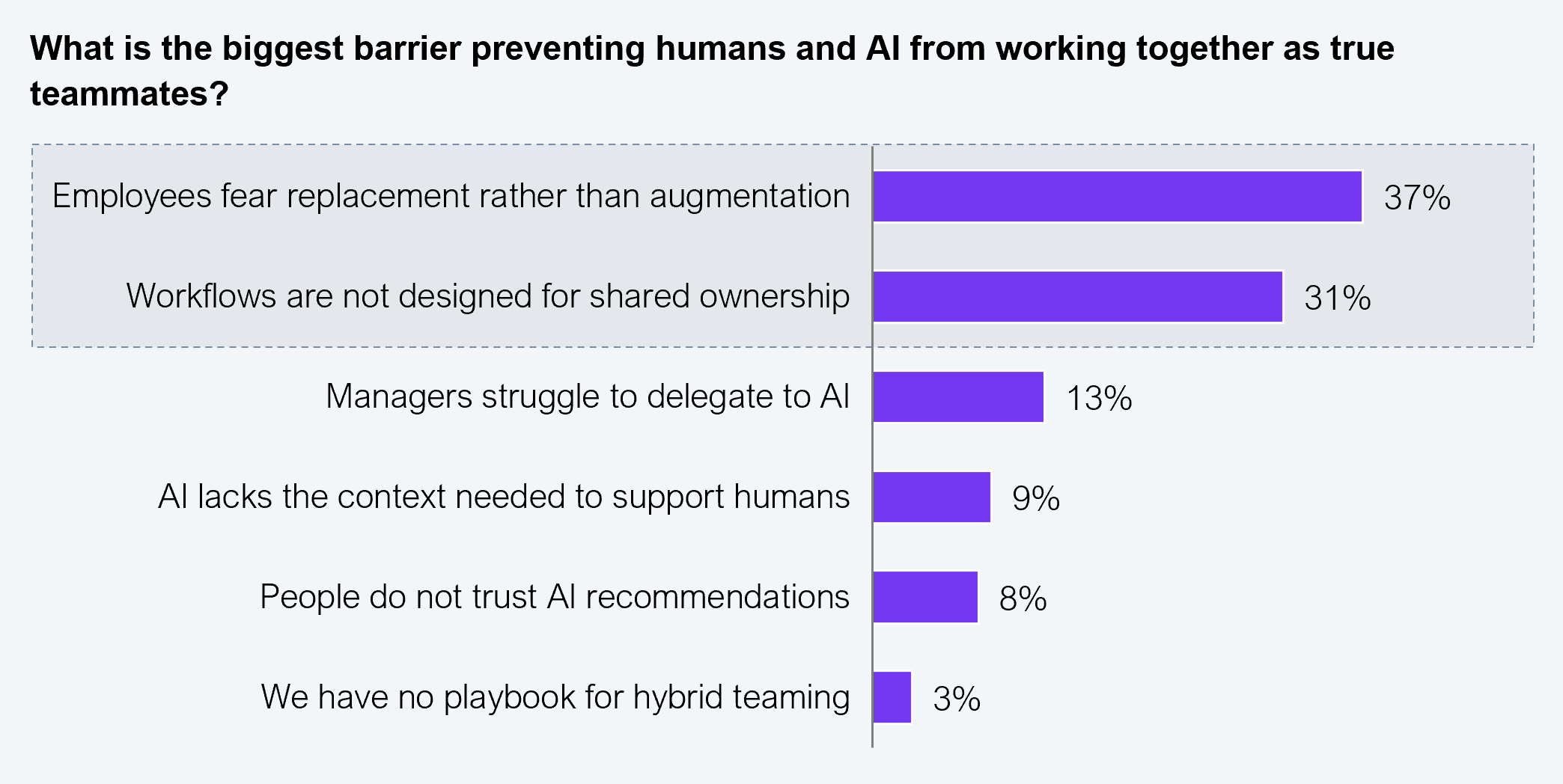
Exhibit 7: The biggest barriers to Human + AI teaming are human and structural, not distrust of AI

Horizontal bar chart showing C-suite responses to the question "What is the biggest barrier preventing humans and AI from working together as true teammates?" Six response options are shown. Employees fear replacement rather than augmentation: 37%. Workflows are not designed for shared ownership: 31%. Managers struggle to delegate to AI: 13%. AI lacks the context needed to support humans: 9%. People do not trust AI recommendations: 8%. We have no playbook for hybrid teaming: 3%. Sample: 101 C-suite executives from Fortune 200 firms. Source: HFS Research, 2026.

Sample: 101 C-suite executives from Fortune 200 firms
Source: HFS Research, 2026

The intent to elevate human work is widespread, but the operating model design to deliver it is not

Nearly two-thirds of leaders (63%) say their organizations are highly or fully intentional about using AI to free employees for higher-order work, but only 20% have embedded this into enterprise-wide design principles (see Exhibit 8). The other 80% are applying it selectively, in major workflows or across limited areas, which is the organizational equivalent of wanting a culture of creativity while measuring people on volume.

When roles are not redefined and incentives are not updated, the freed time tends to fill with more tasks rather than different work, and employees never see the elevation that was promised.
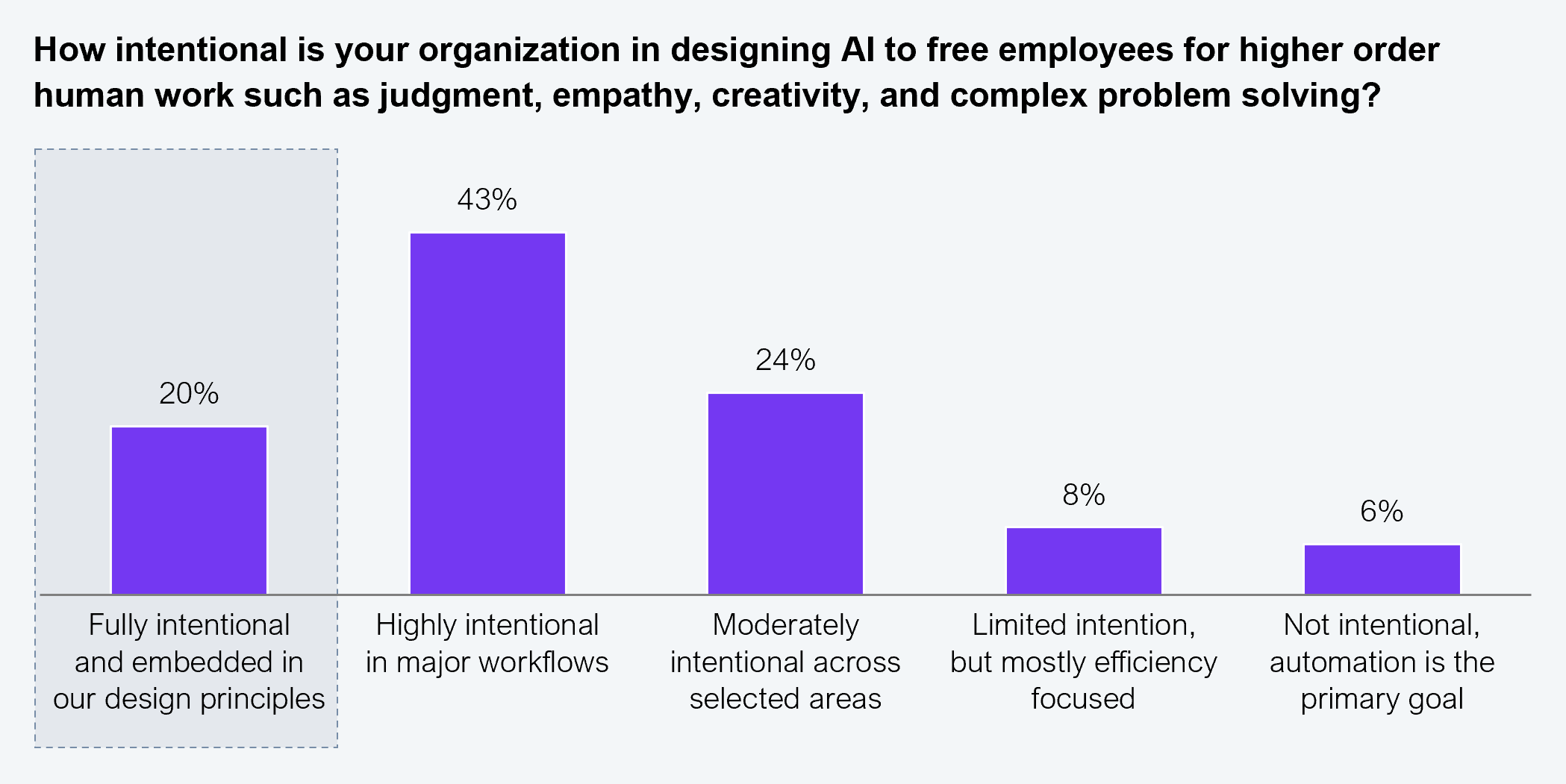
Exhibit 8: Most organizations aim to elevate human work with AI, but only a minority have embedded it as a design principle

Vertical bar chart showing C-suite responses to the question "How intentional is your organization in designing AI to free employees for higher order human work such as judgment, empathy, creativity, and complex problem solving?" Five response categories are shown along the horizontal axis. Fully intentional and embedded in our design principles: 20%. Highly intentional in major workflows: 43%. Moderately intentional across selected areas: 24%. Limited intention, but mostly efficiency focused: 8%. Not intentional, automation is the primary goal: 6%. Sample: 101 C-suite executives from Fortune 200 firms. Source: HFS Research, 2026.

Sample: 101 C-suite executives from Fortune 200 firms
Source: HFS Research, 2026

Enterprises agree on what human capabilities matter, but struggle to build them at scale

Leaders align closely on which capabilities grow more valuable as AI scales, including creativity, complex problem framing, empathy, and judgment. At the same time, they report significant gaps in creative reimagination, data literacy, critical reasoning, and strategic thinking (see Exhibit 9).

This symmetry is the tell. Enterprises know the human capabilities that matter most, but those capabilities are the hardest to institutionalize because they require redesign, not just training. If roles, incentives, and performance metrics remain anchored in output volume, employees will optimize accordingly, regardless of how many AI tools sit in the workflow.
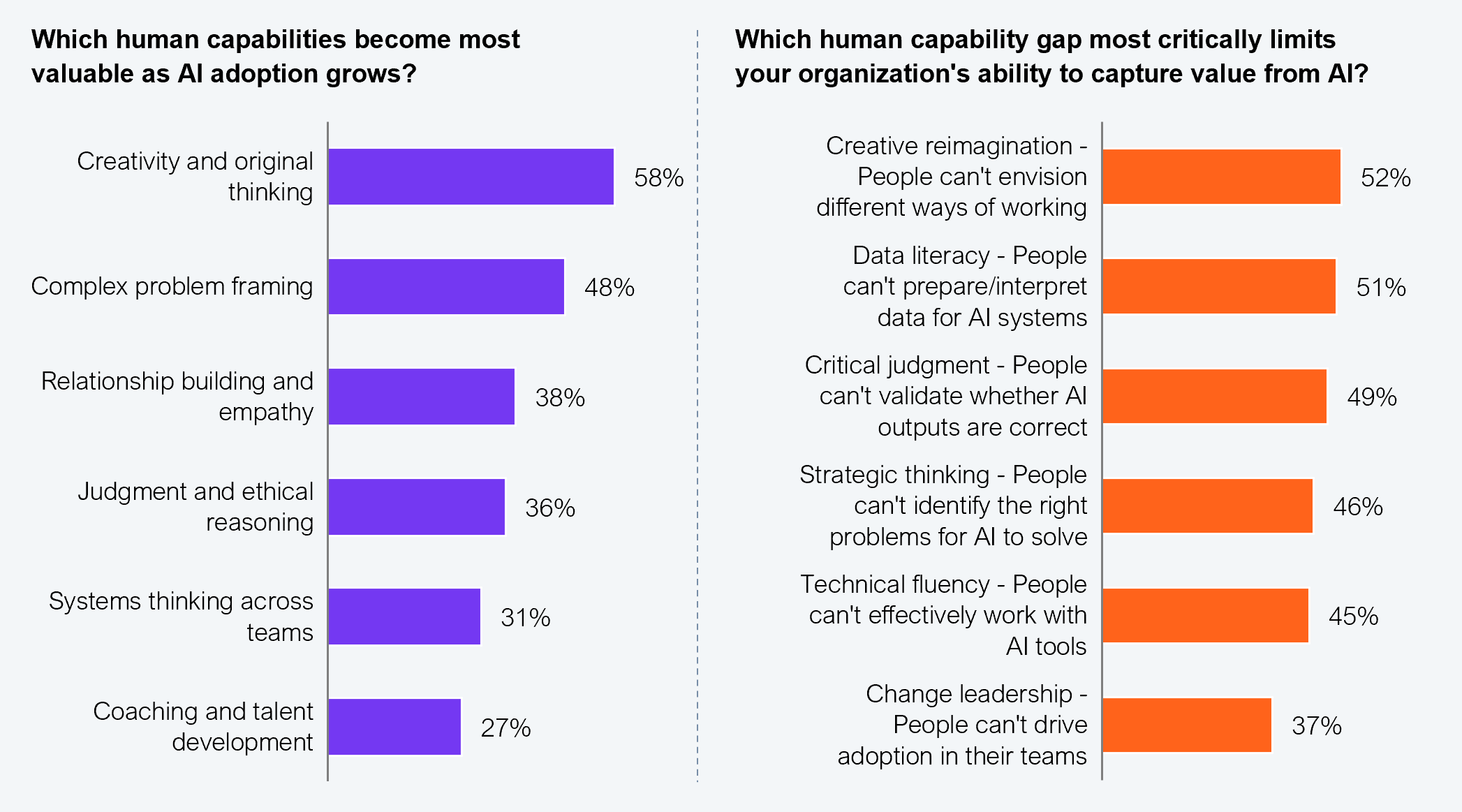
Exhibit 9: The biggest capability gaps are precisely the capabilities AI is making more valuable

Two side-by-side horizontal bar charts. Left chart shows C-suite responses to "Which human capabilities become most valuable as AI adoption grows?" Six capabilities are shown. Creativity and original thinking: 58%. Complex problem framing: 48%. Relationship building and empathy: 38%. Judgment and ethical reasoning: 36%. Systems thinking across teams: 31%. Coaching and talent development: 27%. Right chart shows responses to "Which human capability gap most critically limits your organization's ability to capture value from AI?" Six gaps are shown. Creative reimagination, people can't envision different ways of working: 52%. Data literacy, people can't prepare/interpret data for AI systems: 51%. Critical judgment, people can't validate whether AI outputs are correct: 49%. Strategic thinking, people can't identify the right problems for AI to solve: 46%. Technical fluency, people can't effectively work with AI tools: 45%. Change leadership, people can't drive adoption in their teams: 37%. Sample: 101 C-suite executives from Fortune 200 firms. Source: HFS Research, 2026.

Sample: 101 C-suite executives from Fortune 200 firms
Source: HFS Research, 2026

Make the human contract explicit, then redesign roles, metrics, and accountability around it

Elevating human contribution at scale requires the operating model to back it up. Redesigning roles so higher-order work is explicitly rewarded, updating performance metrics so judgment carries more weight than throughput, and equipping managers to develop people rather than just coordinate tasks are the structural changes that turn intent into a capability. Organizations that instead treat this as a communication challenge will keep making the same announcement every year.

04. Context is the ROI unlock, yet only a minority has it

Same AI, completely different results—the difference is context.

The pattern is familiar to anyone who has tried to scale enterprise AI. A model works well in a controlled setting, but then meets the actual organization, with its legacy systems, policy exceptions, workflow variants, and the seventeen different ways different teams do the same process. The model is not the problem. The absence of context is.

Only 13% have deeply embedded AI, and two-thirds of current initiatives are still generic

Only 13% of organizations report AI deeply embedded in the specific realities of their industry and workflows (see Exhibit 10). Most sit in the moderate range: 48% are moderately contextual and 27% highly contextual, which, in practice, means AI is being used but not truly woven into how the work runs.

The initiative mix reflects this; 35% are customized versions of existing solutions, 32% are industry-agnostic tools such as general copilots and chatbots, and only 18% are purpose-built for unique workflows and proprietary processes (see Exhibit 11). Two-thirds of enterprise AI is generic or near-generic, and that is the main reason for most ROI credibility problems.
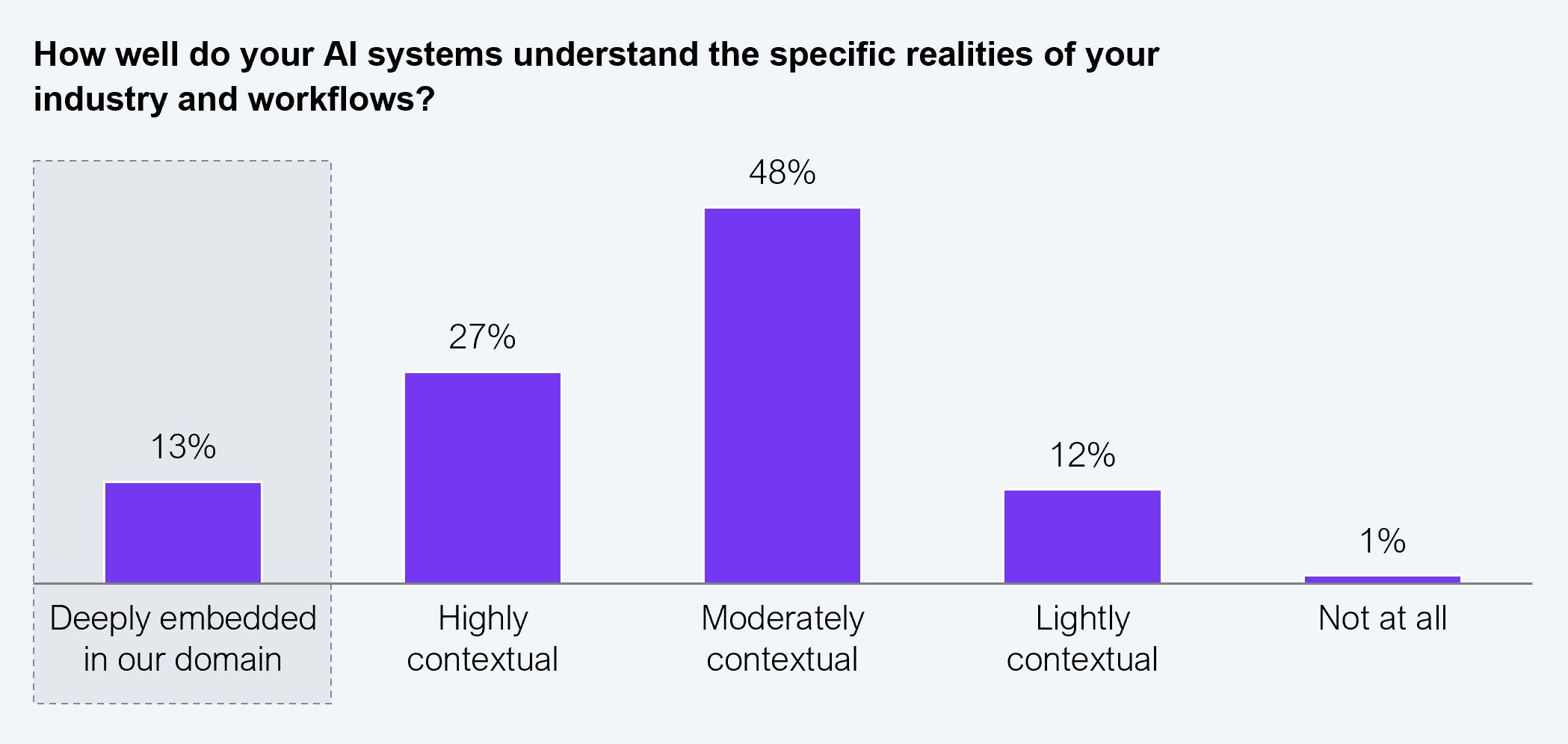
Exhibit 10: AI context depth across the enterprise

Vertical bar chart showing C-suite responses to the question "How well do your AI systems understand the specific realities of your industry and workflows?" Five response categories are shown along the horizontal axis. Deeply embedded in our domain: 13%. Highly contextual: 27%. Moderately contextual: 48%. Lightly contextual: 12%. Not at all: 1%. Sample: 101 C-suite executives from Fortune 200 firms. Source: HFS Research, 2026.

Sample: 101 C-suite executives from Fortune 200 firms
Source: HFS Research, 2026
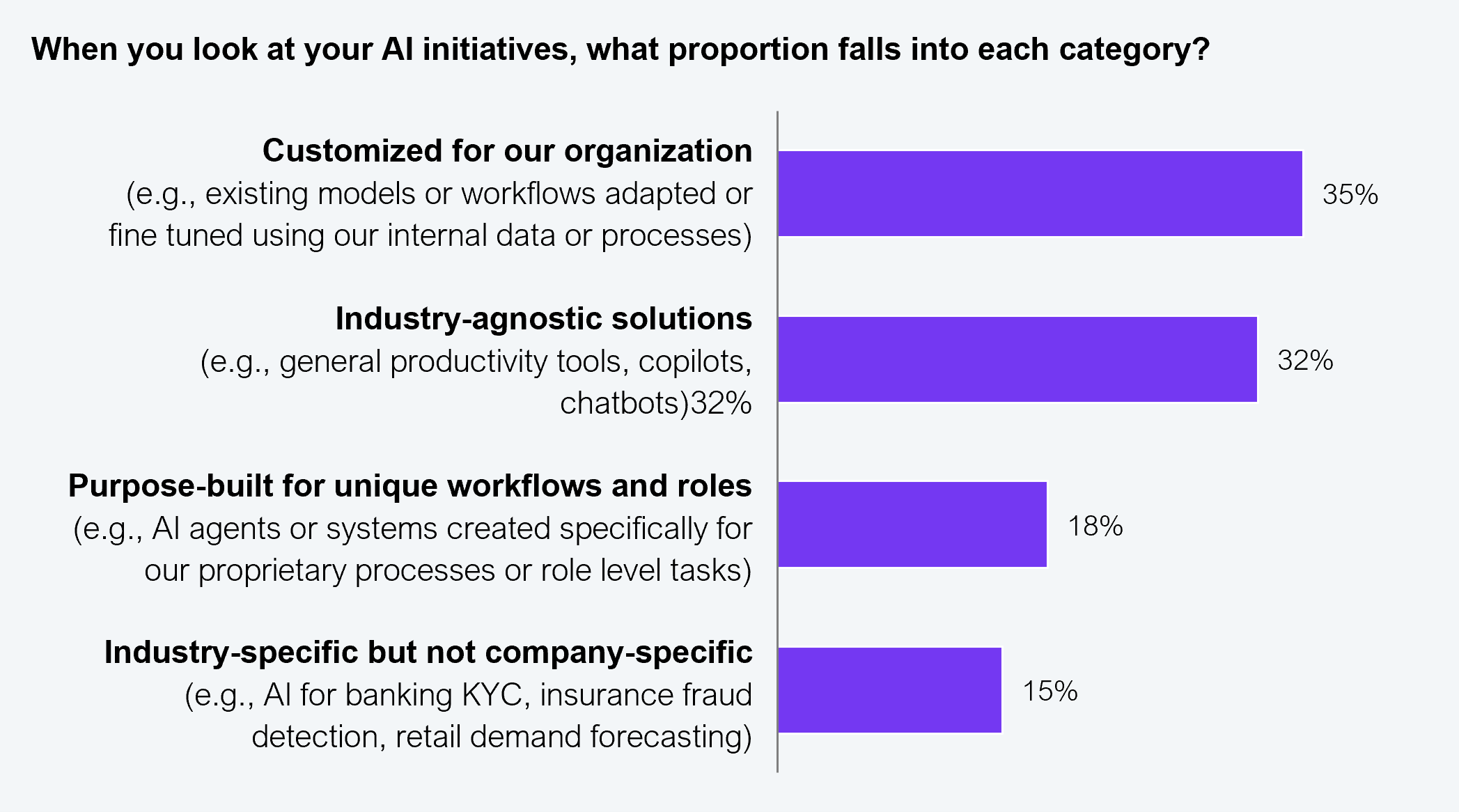
Exhibit 11: Most enterprise AI is still being adapted rather than designed around proprietary work

Horizontal bar chart showing C-suite responses to the question "When you look at your AI initiatives, what proportion falls into each category?" Four categories are shown. Customized for our organization (existing models or workflows adapted or fine tuned using internal data or processes): 35%. Industry-agnostic solutions (general productivity tools, copilots, chatbots): 32%. Purpose-built for unique workflows and roles (AI agents or systems created specifically for proprietary processes or role-level tasks): 18%. Industry-specific but not company-specific (e.g., AI for banking KYC, insurance fraud detection, retail demand forecasting): 15%. Sample: 101 C-suite executives from Fortune 200 firms. Source: HFS Research, 2026.

Sample: 101 C-suite executives from Fortune 200 firms
Source: HFS Research, 2026

Context is what collapses the gap between AI activity and provable business results

The proof gap data makes the case for context more directly than any argument could. In lightly contextual environments, 83% struggle to distinguish AI activity from real business results and 83% lack a consistent way to measure AI value (see Exhibit 12).

In deeply embedded environments, only 23% have that problem, and no one reports a lack of consistent measurement. Same technology. Completely different ability to say what it is actually worth. Context creates the shared reference points that make AI output interpretable in business terms, and without them, every AI result requires a lengthy explanation that eventually stops being convincing.
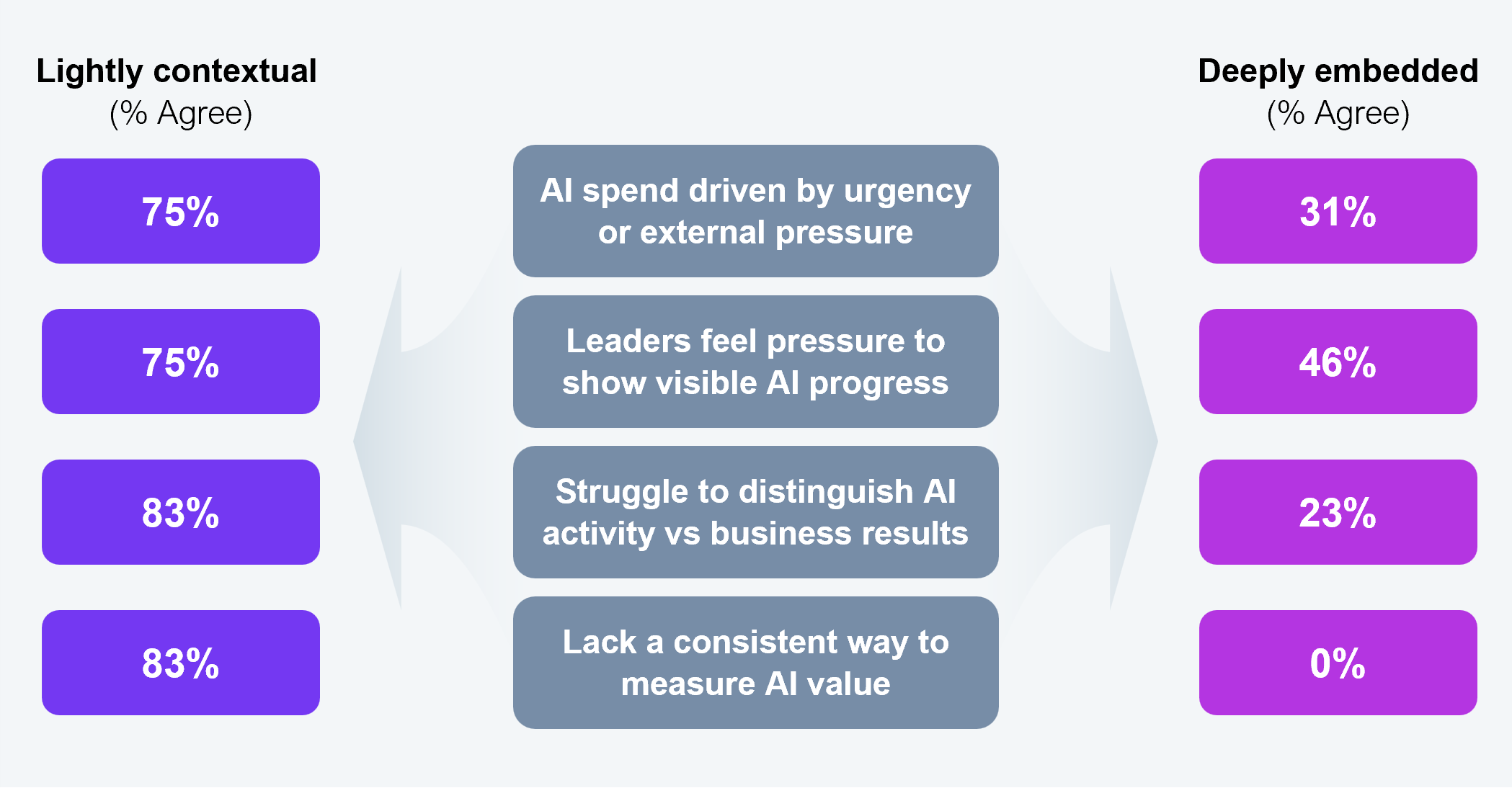
Exhibit 12: Deep context collapses the proof gap between AI activity and measurable business outcomes

Two-column comparison table contrasting outcomes between lightly contextual and deeply embedded AI environments. The left column shows percentage agreement in lightly contextual environments; the right column shows percentage agreement in deeply embedded environments. Four metrics are compared. AI spend driven by urgency or external pressure: lightly contextual 75%, deeply embedded 31%. Leaders feel pressure to show visible AI progress: lightly contextual 75%, deeply embedded 46%. Struggle to distinguish AI activity vs. business results: lightly contextual 83%, deeply embedded 23%. Lack a consistent way to measure AI value: lightly contextual 83%, deeply embedded 0%. Sample: 101 C-suite executives from Fortune 200 firms. Source: HFS Research, 2026.

Sample: 101 C-suite executives from Fortune 200 firms
Source: HFS Research, 2026

The blockers to contextual AI are structural, not a lack of ambition

The blocker is not a lack of ambition. The most cited constraints are regulations limiting specialization (43%), a lack of expertise to define contextual AI (41%), and data not organized for contextual intelligence (40%) (see Exhibit 13). These are real infrastructure problems, and when they are present, the path of least resistance is a generic rollout that generates visible activity quickly. The trade-off is entirely predictable: visible activity, contested value, and a proof gap that gets harder to close as the portfolio grows.
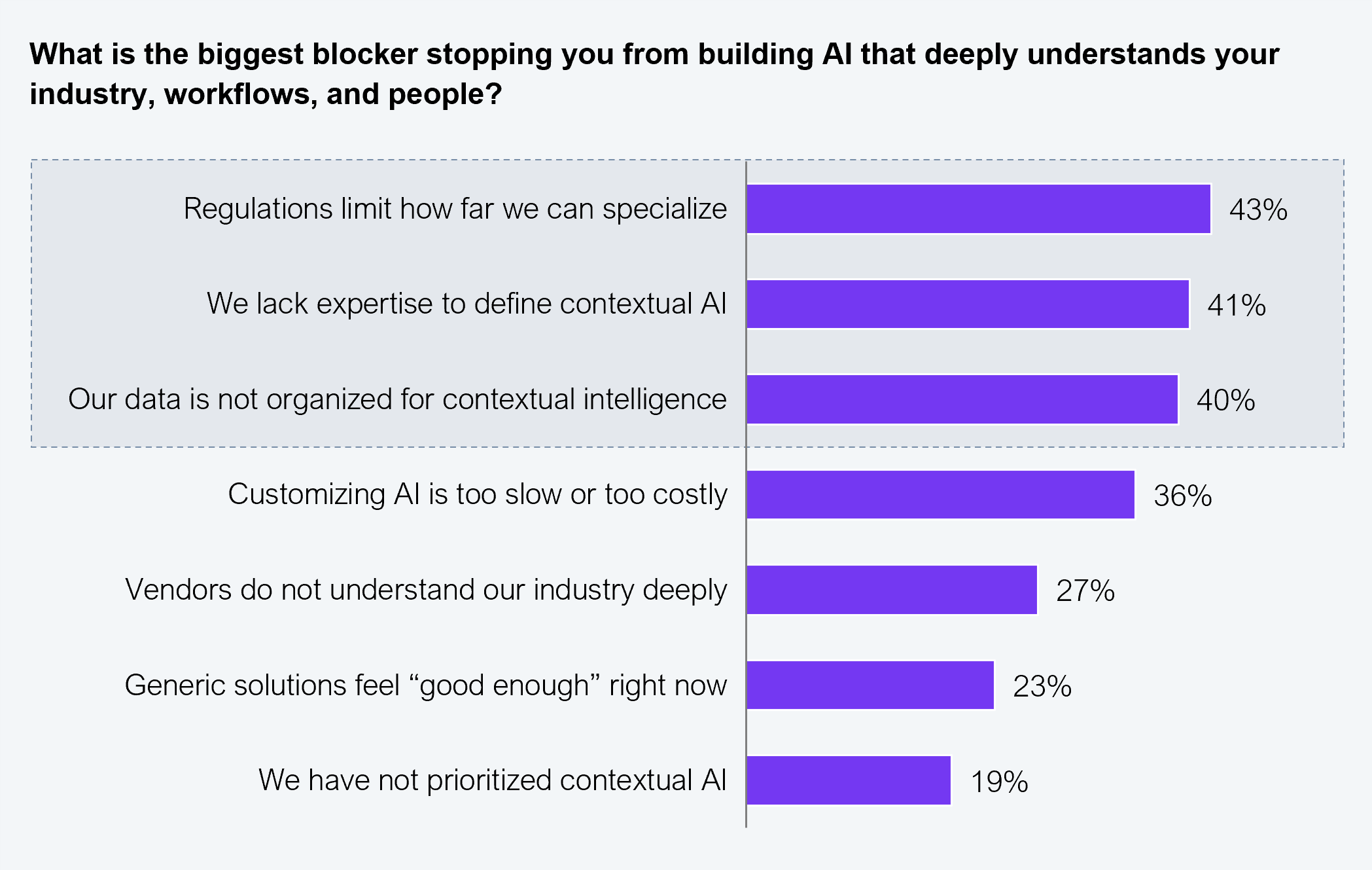
Exhibit 13: The blockers to contextual AI are regulation, skills, and data readiness

Horizontal bar chart showing C-suite responses to the question "What is the biggest blocker stopping you from building AI that deeply understands your industry, workflows, and people?" Seven response options are shown. Regulations limit how far we can specialize: 43%. We lack expertise to define contextual AI: 41%. Our data is not organized for contextual intelligence: 40%. Customizing AI is too slow or too costly: 36%. Vendors do not understand our industry deeply: 27%. Generic solutions feel good enough right now: 23%. We have not prioritized contextual AI: 19%. Sample: 101 C-suite executives from Fortune 200 firms. Source: HFS Research, 2026.

Sample: 101 C-suite executives from Fortune 200 firms
Source: HFS Research, 2026

Invest in the domain context so AI value becomes provable and repeatable

Domain data, workflow instrumentation, and clear human-in-the-loop logic are not glamorous investments, but they are what transform AI output into something that can be measured, defended, and scaled. Organizations that make this investment early find that the next expansion is a disciplined rollout of something proven. Organizations that skip it find that the next expansion is a broader rollout of something they still cannot measure.

05. Enterprise-wide redesign is the real bottleneck

You don’t have an AI strategy. You have 12 AI experiments and a fragmentation problem.

AI does not scale because you expanded the license agreement. It scales when you weave intelligence into how work flows across the enterprise: decisions, handoffs, escalations, and performance feedback. That is the actual transformation threshold, and it is exactly where most organizations are stuck. Launching AI generates applause. Redesigning how work runs across functions generates resistance, political complexity, and long conversations about ownership. One of those is much easier to schedule.

Only 18% are embedding intelligence enterprise-wide, while the majority redesign in pockets

Only 18% say intelligence is embedded across the enterprise (see Exhibit 14). The largest group (31%) is redesigning selected workflows, and 24% are redesigning end-to-end processes in key areas, meaning 54% of organizations are still in pockets or pilots. The problem with pockets is not that the work is not real; it is that pockets do not compound. Standards diverge across functions, governance becomes situational, and what looks like a broad transformation from the outside is a collection of localized improvements with no path between them.
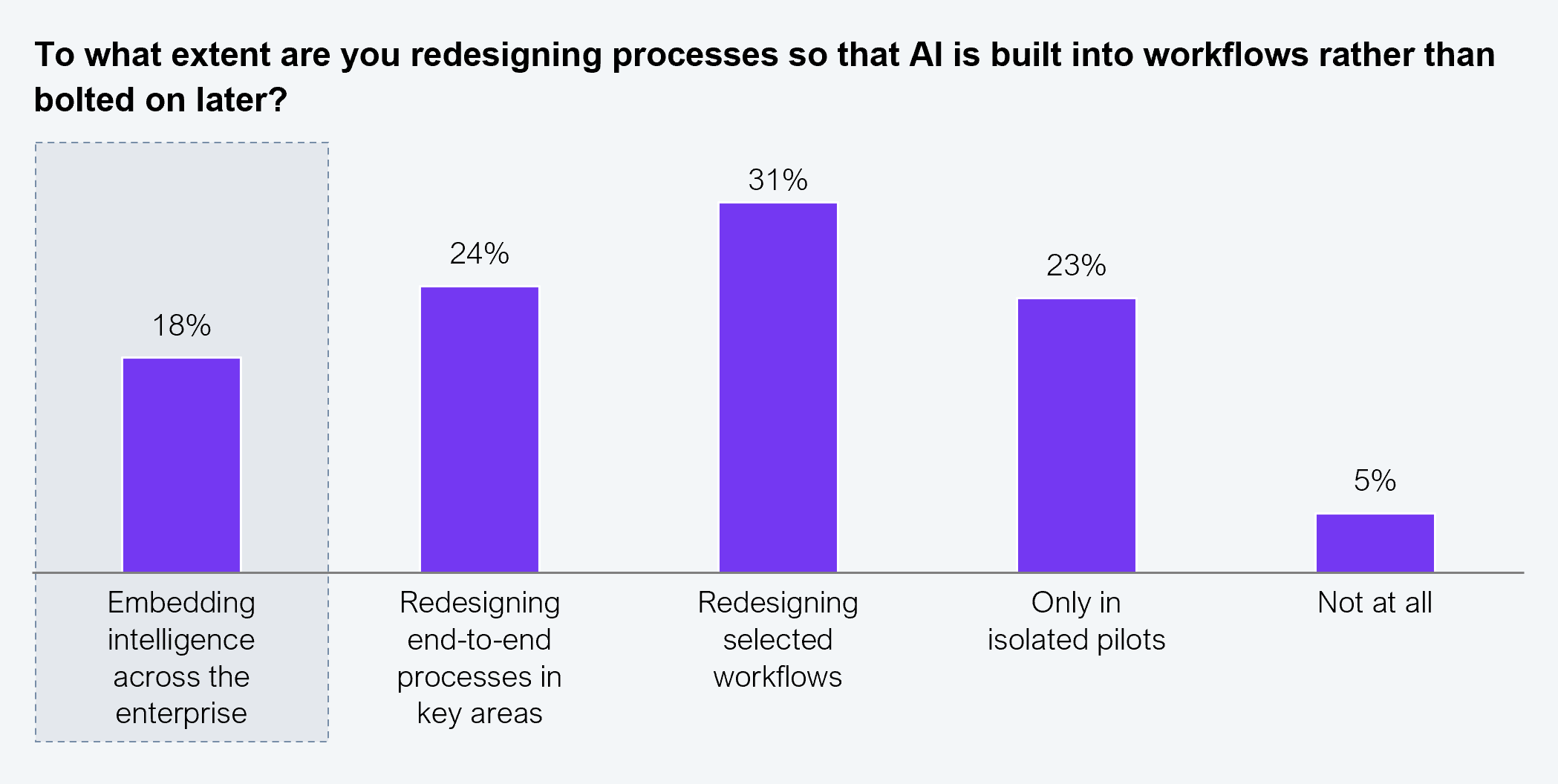
Exhibit 14: Enterprise-wide AI redesign remains rare, and most transformation is localized

Vertical bar chart showing C-suite responses to the question "To what extent are you redesigning processes so that AI is built into workflows rather than bolted on later?" Five response categories are shown along the horizontal axis. Embedding intelligence across the enterprise: 18%. Redesigning end-to-end processes in key areas: 24%. Redesigning selected workflows: 31%. Only in isolated pilots: 23%. Not at all: 5%. Sample: 101 C-suite executives from Fortune 200 firms. Source: HFS Research, 2026.

Sample: 101 C-suite executives from Fortune 200 firms
Source: HFS Research, 2026

The highest-value opportunity is embedding intelligence where workflows break down across functions

Leaders are clear about where integrated intelligence would matter most: performance monitoring (25%), pattern recognition and prediction (21%), customer interactions (19%), and compliance and risk checks (19%) (see Exhibit 15). These are the pressure points where humans currently manually interpret signals, reconcile systems that don’t talk to each other, and escalate risks that could have been flagged earlier. Embedding intelligence at these points improves judgment, accelerates detection, and removes the connective tissue work that consumes time without creating value. The lower scores for cross-functional handoffs (10%) and decision routing (6%) are a tell: most organizations are still optimizing within functions, and the harder redesign across the coordination layer between them has not yet started.
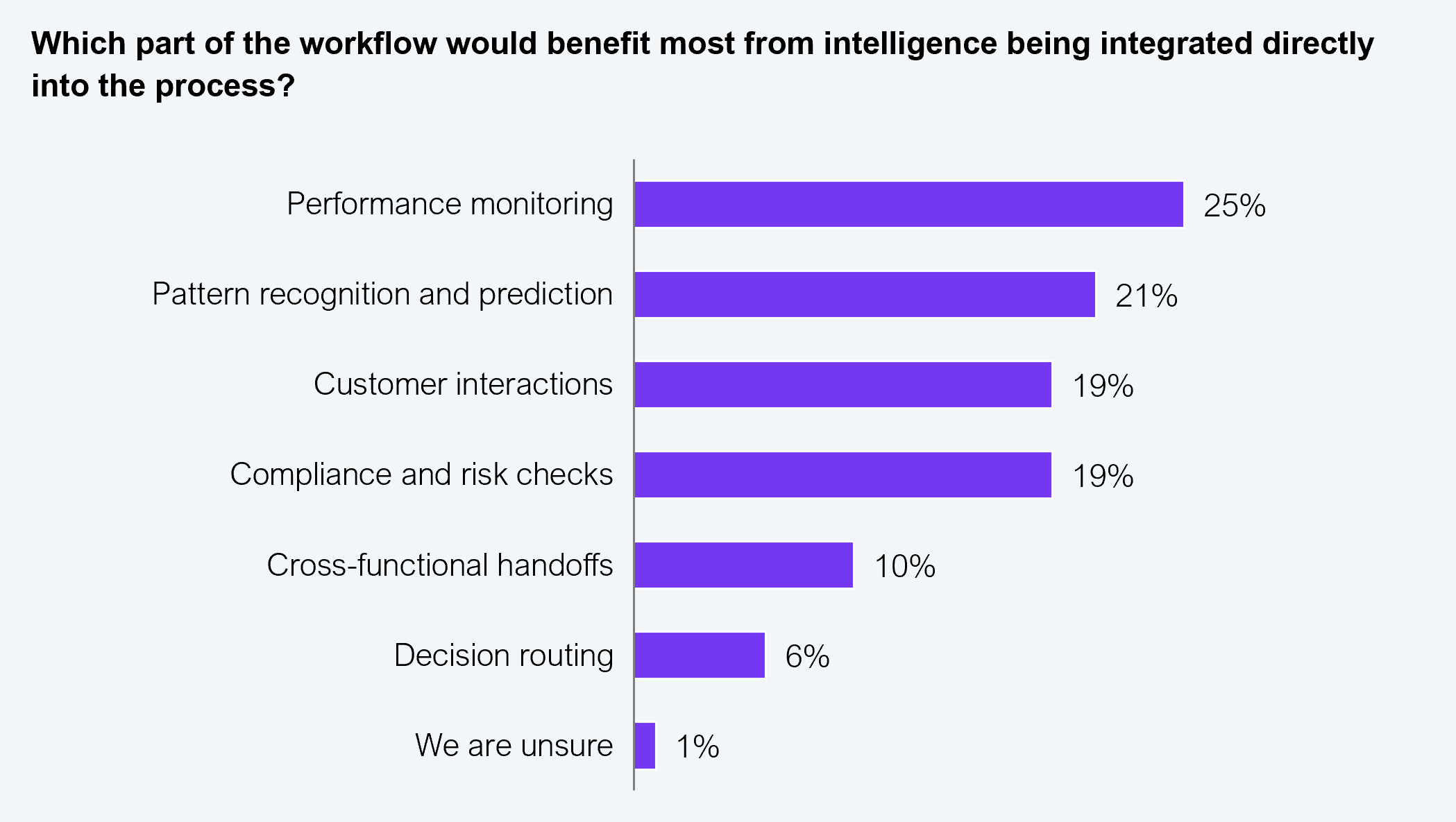
Exhibit 15: Enterprises see the greatest payoff from intelligence embedded in monitoring, prediction, and customer execution

Horizontal bar chart showing C-suite responses to the question "Which part of the workflow would benefit most from intelligence being integrated directly into the process?" Seven response options are shown. Performance monitoring: 25%. Pattern recognition and prediction: 21%. Customer interactions: 19%. Compliance and risk checks: 19%. Cross-functional handoffs: 10%. Decision routing: 6%. We are unsure: 1%. Sample: 101 C-suite executives from Fortune 200 firms. Source: HFS Research, 2026.

Sample: 101 C-suite executives from Fortune 200 firms
Source: HFS Research, 2026

Break the pocket problem by aligning enterprise standards before fragmentation hardens

Localized wins do not accumulate into transformation without someone responsible for connecting them. Aligning standards for tools, data, measurement, and accountability before each function develops its own conventions is what creates the conditions for intelligence to travel. When that alignment exists, scaling becomes the expansion of something coherent. Without it, scaling is just more fragmentation.

Five leadership moves to scale AI with control

Enterprise AI has entered its execution phase, and the constraint is no longer model capability. It is whether leadership can align discipline, accountability, context, and orchestration before scale turns misalignment into something expensive to unwind.


    • Enforce capital discipline before scale outruns proof.
      Replace visible progress with business-owned outcomes as the funding standard. Define proof thresholds before expansion and create genuine organizational permission to stop or redesign initiatives that cannot demonstrate value. When discipline leads the investment cycle, momentum compounds evidence rather than replacing it.
    • Codify hybrid Human + AI execution as an operating model, not an experiment.
      Define decision rights, override norms, and set escalation triggers before shared execution becomes an informal convention. When those rules are embedded in workflows and audit mechanisms, accountability is explicit rather than assumed, and the differentiator becomes clarity of ownership rather than the sophistication of the tool.
    • Redesign the human contract before fear becomes the ceiling.
      Clarify how roles evolve, what remains human accountable, and how performance is evaluated in hybrid environments. Equipping managers to develop people rather than just coordinate tasks changes the signal the organization sends about what AI is doing to careers, and when that signal is clear, adoption tends to accelerate from the people who were initially most skeptical.
    • Embed context deeply into priority workflows so ROI becomes defensible.
      Investing in domain data, workflow instrumentation, and human-in-the-loop logic transforms AI output into accountable execution. Deep contextual embedding is the difference between the impact that can be measured and scaled and the activity that remains permanently contested whenever someone asks for proof.
    • Orchestrate enterprise-wide redesign before fragmentation hardens.
      Aligning standards for tools, data, measurement, and accountability across functions creates the conditions for intelligence to travel cleanly across workflow boundaries. Redesigning where coordination breaks down, rather than where experimentation is easiest, is what converts pocket wins into an advantage that compounds across the organization rather than staying trapped inside it.
The Bottom Line: AI is ready. The differentiator is not who deploys more tools, but who redesigns their operating model with enough discipline to compound advantage.

The organizations that align capital discipline, hybrid execution rules, human role architecture, contextual embedding, and cross-functional orchestration will, in two to three years, look like they had a strategy all along. The ones that scaled activity without the operating model will be the cautionary case studies in the next round of research.

Sign in to view or download this research.

Login

Register

Insight. Inspiration. Impact.

Register now for immediate access of HFS' research, data and forward looking trends.

Get Started


Download Research

    Sign In

    Sign up for a free
    research account

    With the exception of our Horizons reports, most of our research is available for free on our website. Sign up for a free account and start realizing the power of insights now.

    Digests/Newsletters: Overviews of the latest news, insight, and research by HFS.

    HFS Events: Exclusive invitations to HFS webinars, roundtables, and summits, bringing together key industry stakeholders focused on major innovations impacting business operations.

    By registering you agree to our privacy policy.

    I hereby consent that HFS Research can process my personal data.

    Premium Access

    Our premium subscription gives enterprise clients access to our complete library of proprietary research, direct access to our industry analysts, and other benefits.

    Contact us at [email protected] for more information on premium access.

    Help

    If you are looking for help getting in touch with someone from HFS, please click the chat button to the bottom right of your screen to start a conversation with a member of our team.

    [email protected]

      Contact Ask HFS AI Support