
Programming a cognitive assistant (CA) to mimic human responses will frequently result in unhappy customers/employees or broken transactions. Remember, any interactive digital tool is centered on human-centric interactions to achieve a successful transaction of information or purchase, and the user expects an experience that leads to meeting their needs. This means smart CAs must learn from making the desired behaviors occur, not simply mimicking text to appear “intelligent”. Like RPA technology is only finding growth through having human attendance to prefect solutions, CA tech is no different. Modern AI solutions are dependent on learning business and human logic on a continual human-in-the-loop evolution basis, that get refined over time.
Advances in machine learning (ML) and other aspects of CA technology allow for speedy, accurate information processing, but that’s where it should stop. If a bot can’t adequately process a request, it’s time for a human to step in to teach it how to get it right, rather than persist with the CA mimicking more even complicated conversations or handling additional complex requests. The bot could then learn from the human’s actions.
Intelligent Automation should aim to produce CAs with the intent of fulfilling tasks efficiently and accurately, deprioritizing relatability. It is in this way that the societal lines between humans and machines is maintained. Clear boundaries mitigate technology’s ability to reflect human biases and negatively affect customer experience.
Tech often goes wrong in mimicking empathy and other distinctly human social behaviors
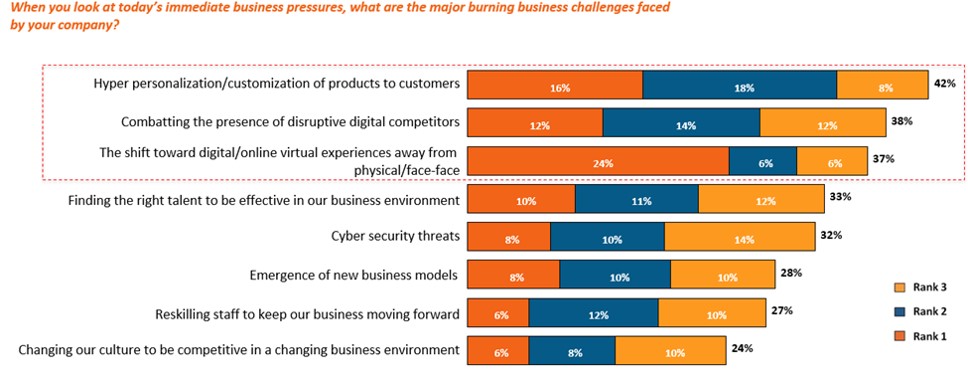
Exhibit 1: Enterprise leaders are keen to change the way customers interact with their organizations
Source: HFS Research supported by KPMG, “State of Operations and Outsourcing” 2019
Global 2000 Enterprise Leaders, n = 355
The best AI is driven human understanding supported by smart algorithms in context
As Exhibit 1 depicts, the issue of personalizing products to consumers is one of the leading challenges in today’s marketplace. Personalization through the humanization and subsequent increased relatability of technology is at the forefront of CA innovation as CAs are taught to reflect human traits through names, voices, and responses. To understand the reasoning against feigning human traits, you must first understand the pitfalls of anthropomorphism (attributing human characteristics or behavior to non-human entities). The blurring of social boundaries between humans and objects is a constant source of tension: CAs are not human or capable of empathy, rather they are trained to mirror relatability, often through machine learning. They can also mimic human bias, reflecting the culture in which they are trained, further adding to cultural tensions.
Commercial cognitive assistants with female names exemplify this reflection and are proven to perpetuate sexist behaviors and gender roles into virtual assistant positions. Microsoft’s artificial intelligence (AI) chatbot Tay (another example of deliberate female depictions) experimented with “conversational understanding” on Twitter in 2016. Within 24 hours, the bot tweeted racist, sexist, and bigoted slurs based on the information it had processed, causing public outrage and mistrust of the technology.
In short, relying purely on the technology will miss so much context as your CA solutions develops. It requires a constant human intervention to ensure real user empathy. There is a reason why Netflix is targeting hiring 10,000 content developers instead of relying heavily on algorithms and smart technology to have superior content alignment to its subscribers in a cut throat market.
Future cognitive assistant developments should be more human in their understanding, but less human in their responses
Arguably, humans need a semblance of “humanity” to feel more comfortable using CAs. Basic chatbots have difficulty understanding queries outside of their pre-programmed linguistic capabilities. Nuances in language make getting technology to respond with accuracy and precision exceedingly difficult. Frustrated consumers repeat questions more simply or look elsewhere for answers bypassing chatbot-related innovation. We advise enterprises to increase AI and CA programs’ recognition capabilities. They can attain high levels of success using ML and databases because bots can access and acquire enormous quantities of data to interpret queries and respond accordingly, increasing the chances that the user will be satisfied with their interaction when the CA understands their query and responds with precision on the first try.
That said, these programs should not respond with similar linguistic capabilities. The responses should be concise—acting more human in their understanding while maintaining social barriers between humans and machines.
The distinct lack of human characteristics in CA applications—beyond improved accuracy and speed of response—can be beneficial to customers
Take the reduction of bias in the recording of HR violations as an example. New CAs can anonymously report inappropriate workplace actions and harassment claims. Victims can report with less discomfort or fear; the bot asks all necessary follow up questions in formats utilized by psychologists and in police reports to gain information confidentially about the misconduct, mitigating human biases in the workplace.
CAs have improved the completion of lengthy processes like reviewing documents, call center scripted questioning, and customer service reporting, by moving most of the processes to online typed responses. Errors often made over the phone (spelling errors, for example) are reduced when the task is placed in the consumer’s control. The consumer can not only see exactly what the line of questioning is but can also respond with precision.
The dehumanization of these tasks has enhanced the consumer experience when dealing with standardized questioning and responses. Strictly human interactions often confuse these processes.
IPsoft’s Amelia and IBM’s Watson provide examples that harness both human nature and AI/ML technology to create CAs with minimal disruption to employees or consumers
CA software such as IPsoft’s Amelia can respond to queries with the speed and accuracy expected, but once the technology can go no further, a human is connected to respond to the query. The data pool from which it learns, then, stems from real human responses by company employees, which allows it to adapt to changes across the industry and customer questions.
IBM’s Watson CA asks specific questions for clarity and searches knowledge bases for accurate query responses. IBM specified that Watson is not meant to completely mimic human interaction but to enhance the user experience, and it can work at 95% accuracy.
The Bottom Line: There is a fine line between developing cognitive assistants to handle personal queries and reports with speed and accuracy and one that oversteps the necessary boundaries between humans and technology.
Commercialized chatbots can degrade the customer experience where the humanization of query responses goes wrong. Anthropomorphism of products allows leeway for racially and culturally charged issues to arise within responses that could very easily be avoided. Find the right balance. Technology should only be human enough to understand humans, yet not enough to start reflecting cultural biases. Within enterprises, CAs are most successful through the utilization of basic queries and accurate responses. Deliberately dehumanized aspects of CAs can be beneficial in workplace tasks through HR reports and standardized forms as human error and bias can be completely removed in the process. The use of ML should simply refine the use of CA technology; take care to prevent it from reflecting (positive and negative) cultural norms of the society in which the technology is trained.
Register now for immediate access of HFS' research, data and forward looking trends.
Get StartedIf you don't have an account, Register here |
With the exception of our Horizons reports, most of our research is available for free on our website. Sign up for a free account and start realizing the power of insights now.
Our premium subscription gives enterprise clients access to our complete library of proprietary research, direct access to our industry analysts, and other benefits.
Contact us at [email protected] for more information on premium access.

