
As CIOs migrate more business data to the cloud, securing it will take up a much larger portion of corporate mindshare. To assure executives of their cloud’s cybersecurity credentials, the major public cloud providers are investing heavily to woo potential clients in a competitive market. Google is the latest to reposition its cyber capabilities; CIOs would be wise to assess the firm’s security roadmap and plans to secure cloud environments.
Google’s latest investment in cloud security comes with its intake of Chronicle, which had been an independent subsidiary of Alphabet since 2015. It developed a cybersecurity intelligence and analytics platform using Google-originated techniques as part of Google’s X moonshot factory.
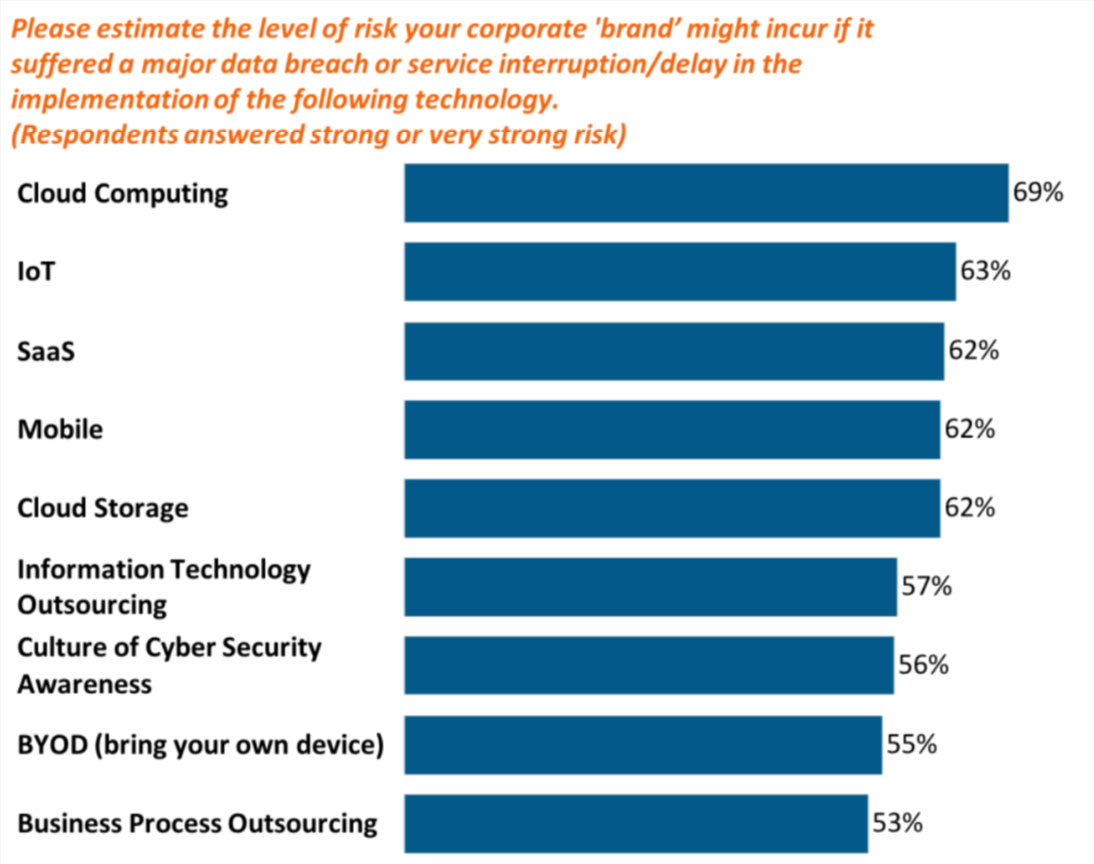
Exhibit 1: Cloud emerged as the number one security risk amongst various technologies that HFS assessed
Source: HFS Research, State of Security
What does Chronicle bring to the Google Cloud armory?
CIOs should be rightly cynical about firms touting magical security capabilities, so let’s dig into the details and find out what bringing Chronicle into the Google Cloud business can offer. During its time in the X moonshot factory, Chronicle developed a raft of services and solutions to secure the modern enterprise.
At the top of the list is VirusTotal, a malware intelligence services firm Chronicle acquired several years ago. According to Google executives, giving this team access to the pool of threat data Google Cloud uses to secure its environments will generate real value. The firm will also bring in its security telemetry platform Backstory, which enables enterprises to identify incidents and hunt for threats. The pair is a powerful toolset, particularly when it is combined with the threat visualization capabilities of the firm’s other software, Uppercase, which delivers threat signal data to clients to provide early warnings.
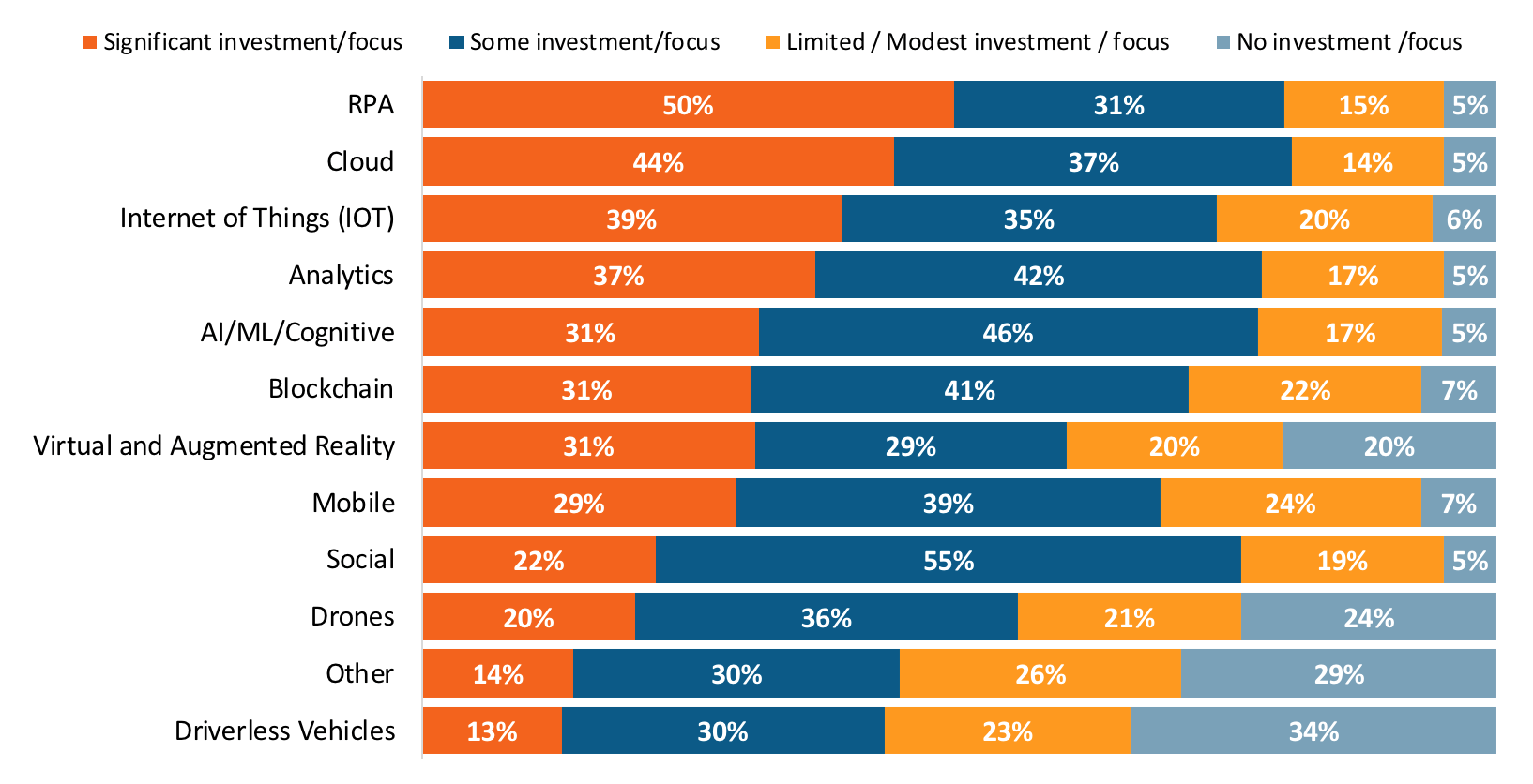
Ninety-five percent of enterprise leaders are investing in the cloud—they must look at their partners’ security credentials
Enterprises are moving data and services to the cloud with increasing enthusiasm (see Exhibit 1); however, securing data must come hand-in-hand with cloudification. Increasingly, enterprise leaders are looking for public cloud providers to come armed with a full arsenal of cybersecurity capabilities to save them from the architectural challenges of layering third-party security technologies on top of cloud environments.
Exhibit 2: Investment to help achieve cost-saving goals
Q: How much investment or focus is your organization making in the following year to help you achieve operational cost-saving goals?
Source: HFS Research
Alphabet’s push to bring Chronicle into the Google Cloud business tells us two things. First, Google Cloud has a plan for securing client environments, which is an important shift as corporate mindshare moves toward cybersecurity, instead of its core focus of analytics and AI, when discussing points of differentiation between Google and the other hyperscale cloud providers. Second, it helps show off the broader capabilities the Alphabet parent company can offer, particularly from its incubators and investment businesses such as the X moonshot factories. As the cyberthreat landscape evolves, the winning services firms will be those that can out-innovate threats and competitors. If Google cloud continues to benefit from the cross-pollination of talent, services, and IP from the mothership, then its future as a trusted cloud partner is more certain.
The Bottom Line: Google’s growing cyber capabilities should reassure CIOs looking for a long-term hyperscale cloud partner.
In an environment where enterprises are confidently migrating to the cloud and the threat landscape is rapidly evolving, finding a partner that is willing to invest in innovative capabilities is key. Alphabet’s decision to move cybersecurity firm Chronicle into the Google Cloud business sets a reassuring tone for the market. However, CIOs must continue to focus on security and push their cloud partners to innovate and keep evolving their security offerings.
CIOs should also maintain the mindset that technology is not the only concern, business needs to understand that technology is not a silver bullet and that human factors also play a significant part in security, as highlighted in previous HFS work. Social engineering for example, is a credible risk to keep in the forefront of one’s mind.
Register now for immediate access of HFS' research, data and forward looking trends.
Get StartedIf you don't have an account, Register here |
With the exception of our Horizons reports, most of our research is available for free on our website. Sign up for a free account and start realizing the power of insights now.
Our premium subscription gives enterprise clients access to our complete library of proprietary research, direct access to our industry analysts, and other benefits.
Contact us at [email protected] for more information on premium access.

