Point of View

Buy outcomes, not solutions: the enterprise case for intent-native services

This HFS Point of View is for CIOs, sourcing leaders, and enterprise transformation leaders redesigning how they buy services to own business outcomes as AI absorbs execution.

As AI absorbs execution, value moves to defining the outcome and governing how it is reached. To capture this value, the CIO must change the legacy ways of buying IT solutions and start composing solutions around the business intent.

Every enterprise CIO has lived this meeting: The provider’s quarterly review shows every service level green, yet the number the business cares about has not moved. This gap is not just a delivery failure, and switching providers will not close it.

It is the signature of a buying model from a different era, where enterprises are boxed in by the activities providers sell, providers execute them, and translating activities into business outcomes is the enterprise’s unpaid job. AI now makes this model defunct, as agents absorb execution and value, moving to composing solutions around business intent. We call this intent-native services. In this PoV, we will unpack examples from our market conversations and our work with enterprises in HFS AI-First Deal Labs, showing that the appetite to buy differently is already ahead of the contracts being signed and how enterprises should change their operating model to enable intent-native services.

The way enterprises buy services is defunct

Everything in the traditional model, from time-and-materials rates to managed services agreements to output-based pricing, prices human effort. Delivery methods have evolved, but the economics underneath have not, and the dissatisfaction is now measurable: Two-thirds of enterprise leaders expect to change the mix, scope, delivery, and commercial model of their providers.

The instinct is to blame providers, but the evidence points to four structural gaps (intent, orchestration, operational, and accountability) in how enterprises buy (see Exhibit 1). These gaps live in the buying model rather than in any supplier, which is why a better supplier cannot close them.
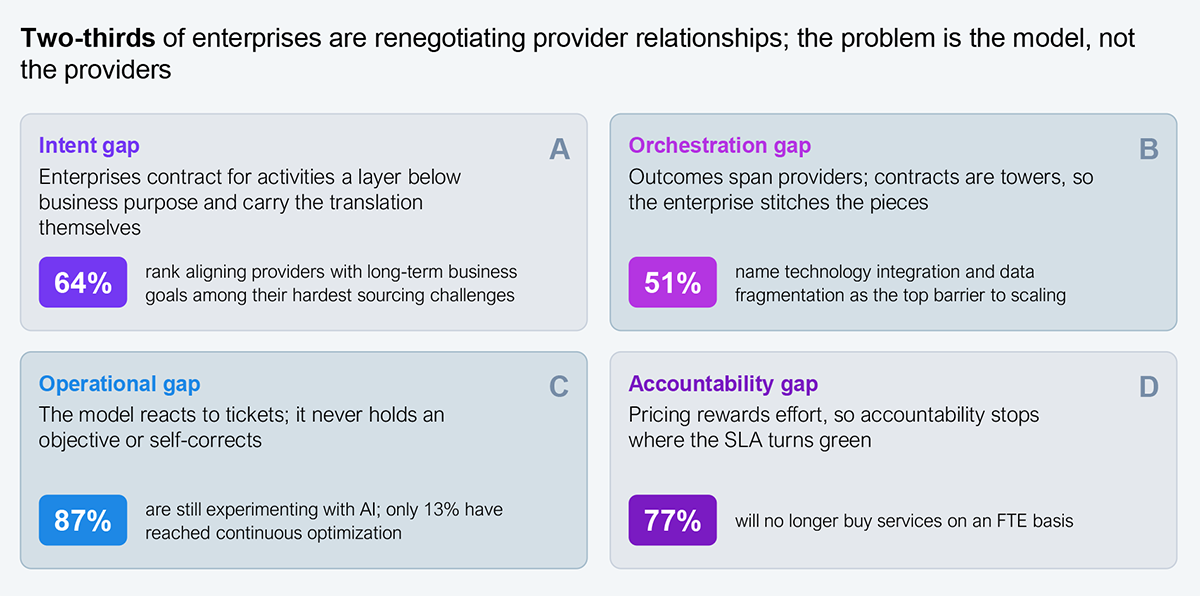
Exhibit 1: Four structural gaps prevent the current services model from delivering business outcomes

Four-quadrant diagram presenting the structural gaps in the current services buying model, beneath a banner stating that two-thirds of enterprises are renegotiating provider relationships and that the problem is the model, not the providers. Quadrant A, the intent gap, shows enterprises contract for activities a layer below business purpose and carry the translation themselves; 64% rank aligning providers with long-term business goals among their hardest sourcing challenges. Quadrant B, the orchestration gap, shows outcomes span providers while contracts are towers, so the enterprise stitches the pieces; 51% name technology integration and data fragmentation as the top barrier to scaling. Quadrant C, the operational gap, shows the model reacts to tickets and never holds an objective or self-corrects; 87% are still experimenting with AI and only 13% have reached continuous optimization. Quadrant D, the accountability gap, shows pricing rewards effort, so accountability stops where the SLA turns green; 77% will no longer buy services on an FTE basis. Source: HFS Research, survey of 505 enterprise business and IT leaders across the Global 2000, 2025.

Source: HFS Research, survey of 505 enterprise business and IT leaders across the Global 2000, 2026

Intent-native services abstract orchestration and execution

Intent-native services are oriented around the business outcome an enterprise wants, not the activities a provider performs to deliver it. The enterprise declares the intent, meaning the outcome it needs together with the constraints, risk appetite, and success conditions that bound it. Everything required to meet the intent is abstracted beneath it: a delivery ecosystem orchestrating across platforms, agents, and providers.

The defining feature is the boundary between what the enterprise sees (see Exhibit 2). Above the line sit intent and governance, which remain visible to the business. Below it sit orchestration and execution, whose complexity is hidden from the business consuming the service, much as a cloud service hides its infrastructure. not ask the enterprise to specify or manage the work; it asks the enterprise to define and govern the outcome and holds the ecosystem accountable for reaching it.
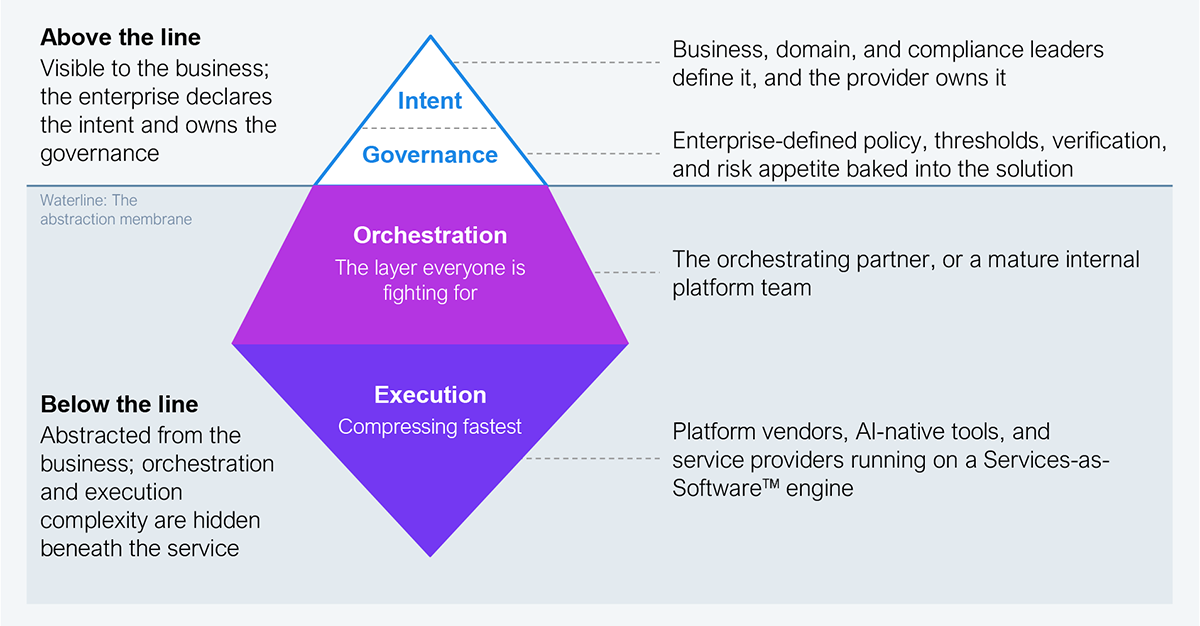
Exhibit 2: The intent-native services operating model

Layered diagram of the intent-native services operating model, drawn as four stacked layers split by a waterline labeled the abstraction membrane. Above the line, visible to the business, sit two layers: intent, which business, domain, and compliance leaders define and the provider owns, and governance, covering enterprise-defined policy, thresholds, verification, and risk appetite baked into the solution. Below the line, abstracted from the business, sit two layers: orchestration, run by the orchestrating partner or a mature internal platform team, and execution, run by platform vendors, AI-native tools, and service providers on a Services-as-Software™ engine. Source: HFS Research, 2026.

Source: HFS Research, 2026

Enterprises need to reorient the buying process around business intent

The reorientation is to make the business outcome, rather than the solution, the unit the firm works in. In practice, it is three moves (see Exhibit 3):

  • First, the firm defines the intent as a measurable business result before any solution is on the table, so the work begins with a goal like improving sales efficiency by a set amount rather than implementing a new application.
  • Second, it composes the solution from whatever actually reaches that intent, which may be a platform, a process change, better data, new incentives, or removing a system that is in the way, and which deliberately ignores the provider’s own P&L structure.
  • Third, it owns the realized outcome, so that “done” means the number moved and not that the system went live, with pricing and accountability following the result. Services-as-Software™ is the engine that delivers all of this.

The legacy answer to an aging core need not be a multi-year migration to SAP or Oracle. If what the business needs is decision-ready and audit-ready numbers at any moment, whatever system holds the ledger, then the composed solution is to keep the existing ledger in place as a headless system of record, run an agentic close and reporting layer over it, and drop the migration. The migration, however fast or slow, was never the outcome. It was an artifact the firm assumed it had to build.
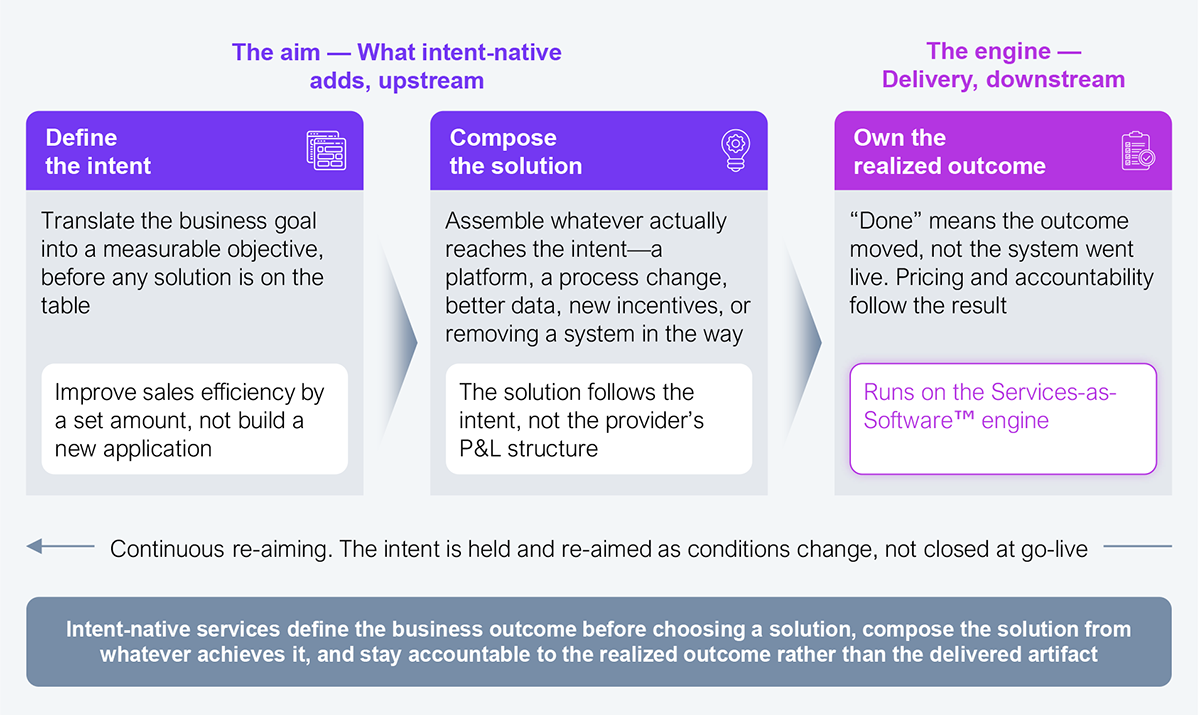
Exhibit 3: Intent-native services define the, compose the solution, and own the outcome

Three-step process diagram showing how intent-native services define the intent, compose the solution, and own the outcome, split into the aim upstream and the engine downstream. Step 1, define the intent, translates the business goal into a measurable objective before any solution is on the table, such as improving sales efficiency by a set amount rather than building a new application. Step 2, compose the solution, assembles whatever actually reaches the intent, whether a platform, a process change, better data, new incentives, or removing a system in the way, so the solution follows the intent rather than the provider's P&L structure. Step 3, own the realized outcome, defines done as the outcome moving rather than the system going live, with pricing and accountability following the result, and runs on the Services-as-Software™ engine. A continuous re-aiming band beneath the steps notes that the intent is held and re-aimed as conditions change, not closed at go-live. Source: HFS Research, 2026.

Source: HFS Research, 2026

Intent-native services are already working in live enterprise engagements

Based on our market conversations and our work with enterprises in HFS AI-First Deal Labs reveals that enterprise appetite to buy differently is already ahead of the contracts being signed now, each following the same arc from the current model to defining the intent, composing the solution, and owning the outcome (see Exhibit 4).
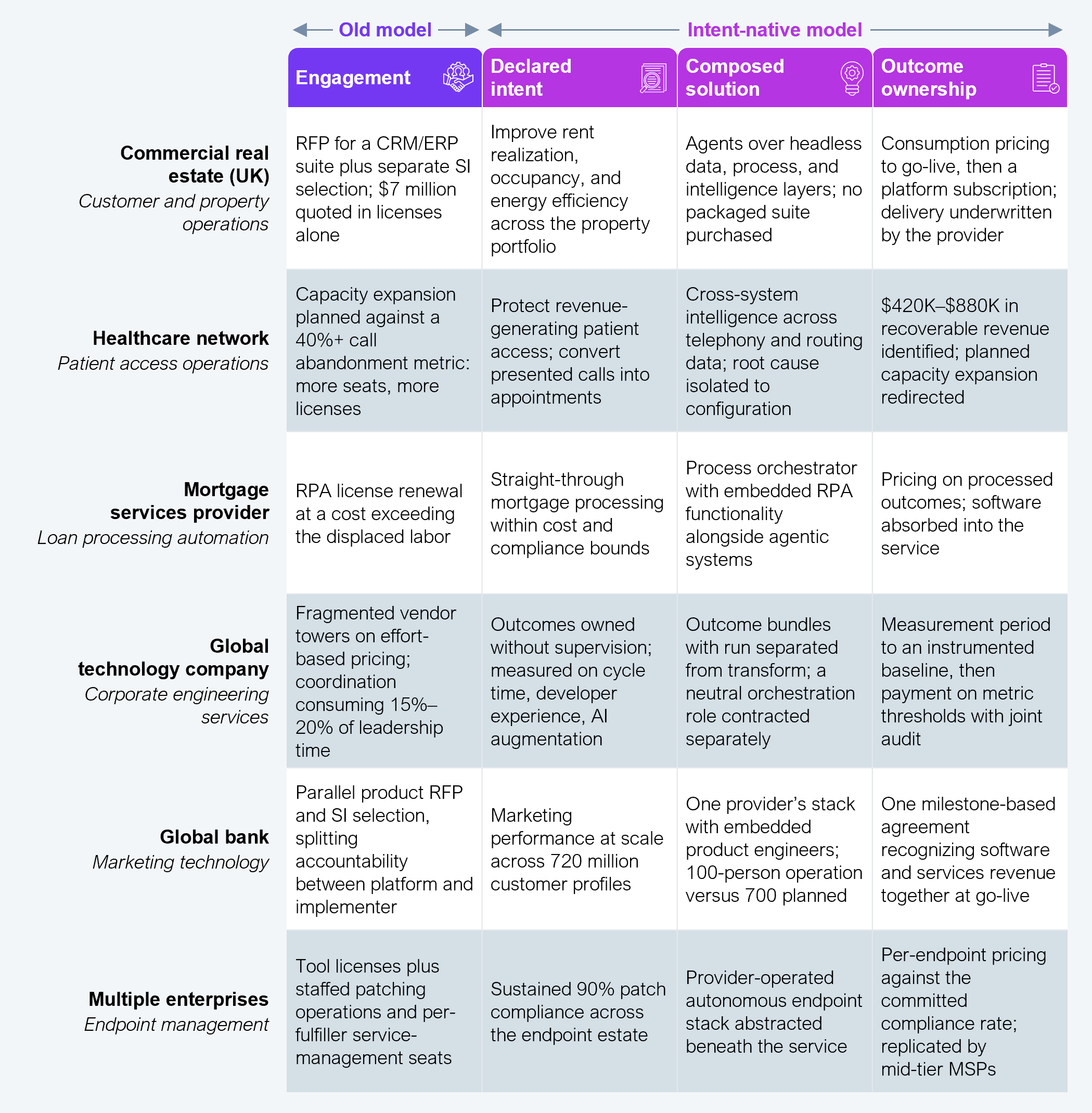
Exhibit 4: Examples of enterprise engagements that demonstrate the intent-native model across industries and service lines

Comparison table of six AI-First Deal Labs enterprise engagements, with columns for the engagement, what was being bought under the old model, the declared intent, the composed solution, and outcome ownership. In commercial real estate (UK), customer and property operations: the old model was an RFP for a CRM/ERP suite plus separate SI selection, with $7 million quoted in licenses alone; the declared intent was to improve rent realization, occupancy, and energy efficiency across the property portfolio; the composed solution put agents over headless data, process, and intelligence layers with no packaged suite purchased; outcome ownership shifted to consumption pricing to go-live, then a platform subscription, with delivery underwritten by the provider. In a healthcare network, patient access operations: the old model planned capacity expansion against a 40%+ call abandonment metric, meaning more seats and more licenses; the declared intent was to protect revenue-generating patient access and convert presented calls into appointments; the composed solution applied cross-system intelligence across telephony and routing data, isolating root cause to configuration; outcome ownership identified $420K to $880K in recoverable revenue and redirected planned capacity expansion. In a mortgage services provider, loan processing automation: the old model renewed an RPA license at a cost exceeding the displaced labor; the declared intent was straight-through mortgage processing within cost and compliance bounds; the composed solution used a process orchestrator with embedded RPA functionality alongside agentic systems; outcome ownership priced on processed outcomes with software absorbed into the service. In a global technology company, corporate engineering services: the old model ran fragmented vendor towers on effort-based pricing, with coordination consuming 15% to 20% of leadership time; the declared intent was outcomes owned without supervision, measured on cycle time, developer experience, and AI augmentation; the composed solution used outcome bundles with run separated from transform and a neutral orchestration role contracted separately; outcome ownership ran from a measurement period to an instrumented baseline, then payment on metric thresholds with joint audit. In a global bank, marketing technology: the old model ran a parallel product RFP and SI selection, splitting accountability between platform and implementer; the declared intent was marketing performance at scale across 720 million customer profiles; the composed solution used one provider's stack with embedded product engineers, a 100-person operation versus 700 planned; outcome ownership used one milestone-based agreement recognizing software and services revenue together at go-live. In multiple enterprises, endpoint management: the old model bought tool licenses plus staffed patching operations and per-fulfiller service-management seats; the declared intent was sustained 90% patch compliance across the endpoint estate; the composed solution used a provider-operated autonomous endpoint stack abstracted beneath the service; outcome ownership priced per endpoint against the committed compliance rate, replicated by mid-tier MSPs. Source: HFS Research, 2026.

Source: HFS Research, 2026

Adoption happens through recurring trigger points, not an overnight transformation

Moving to intent-native services is not an overnight change. It alters what is contracted, how solutions are composed, how performance is measured, and how accountability is distributed. No enterprise can rewrite all of it at once, and attempting to make this transformation would create more risk than the model removes. Adoption instead happens at specific moments when those structures are already open for decision. HFS identifies such trigger points in Exhibit 5.
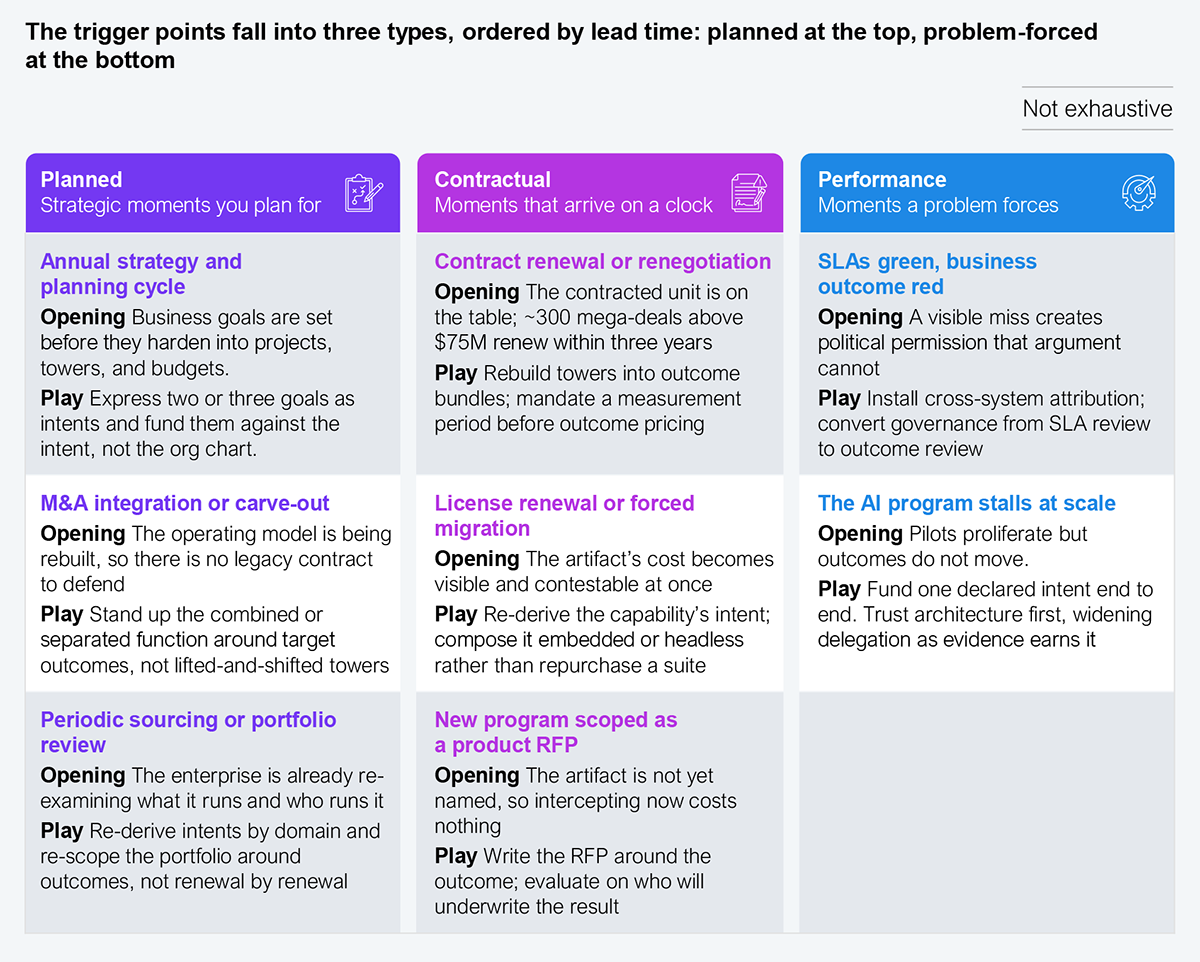
Exhibit 5: Trigger points give enterprises the opening to shift to intent-native services

Framework grid of trigger points that give enterprises the opening to shift to intent-native services, organized into three types ordered by lead time, with planned moments at the top and problem-forced moments at the bottom; each trigger lists an opening and a recommended play. The planned type, strategic moments you plan for, holds three triggers: the annual strategy and planning cycle, where business goals are set before they harden into projects, towers, and budgets, with the play to express two or three goals as intents and fund them against the intent rather than the org chart; M&A integration or carve-out, where the operating model is being rebuilt with no legacy contract to defend, with the play to stand up the combined or separated function around target outcomes rather than lifted-and-shifted towers; and periodic sourcing or portfolio review, where the enterprise is already re-examining what it runs and who runs it, with the play to re-derive intents by domain and re-scope the portfolio around outcomes. The contractual type, moments that arrive on a clock, holds three triggers: contract renewal or renegotiation, where the contracted unit is on the table and roughly 300 mega-deals above $75M renew within three years, with the play to rebuild towers into outcome bundles and mandate a measurement period before outcome pricing; license renewal or forced migration, where the artifact's cost becomes visible and contestable at once, with the play to re-derive the capability's intent and compose it embedded or headless rather than repurchase a suite; and a new program scoped as a product RFP, where the artifact is not yet named so intercepting now costs nothing, with the play to write the RFP around the outcome and evaluate on who will underwrite the result. The performance type, moments a problem forces, holds two triggers: SLAs green but business outcome red, where a visible miss creates political permission that argument cannot, with the play to install cross-system attribution and convert governance from SLA review to outcome review; and the AI program stalling at scale, where pilots proliferate but outcomes do not move, with the play to fund one declared intent end to end and trust architecture first, widening delegation as evidence earns it. The exhibit is marked not exhaustive. Source: HFS Research, 2026.

Source: HFS Research, 2026

The plays differ, but the discipline is constant. Start where outcomes are easy to define and errors stay contained, then carry the proven model into other areas. The triggers also compound, because an enterprise that writes its intents in this year’s strategy cycle meets next year’s renewals knowing what to contract for, and that compounding is the real first-mover advantage.

Enterprises must control orchestration, directly or through a neutral partner

No participant in today’s supply ecosystem can deliver intent-native outcomes on its own. The reason is structural. The role calls for four capabilities at once: influence over the technology stack deep enough to stand behind the platform, delivery embedded enough to own the workflow, data and context the enterprise can build on, and governance that lets the enterprise verify before it delegates. No incumbent holds all four.

The supply side is converging on the role from two orthogonal directions (see Exhibit 6).
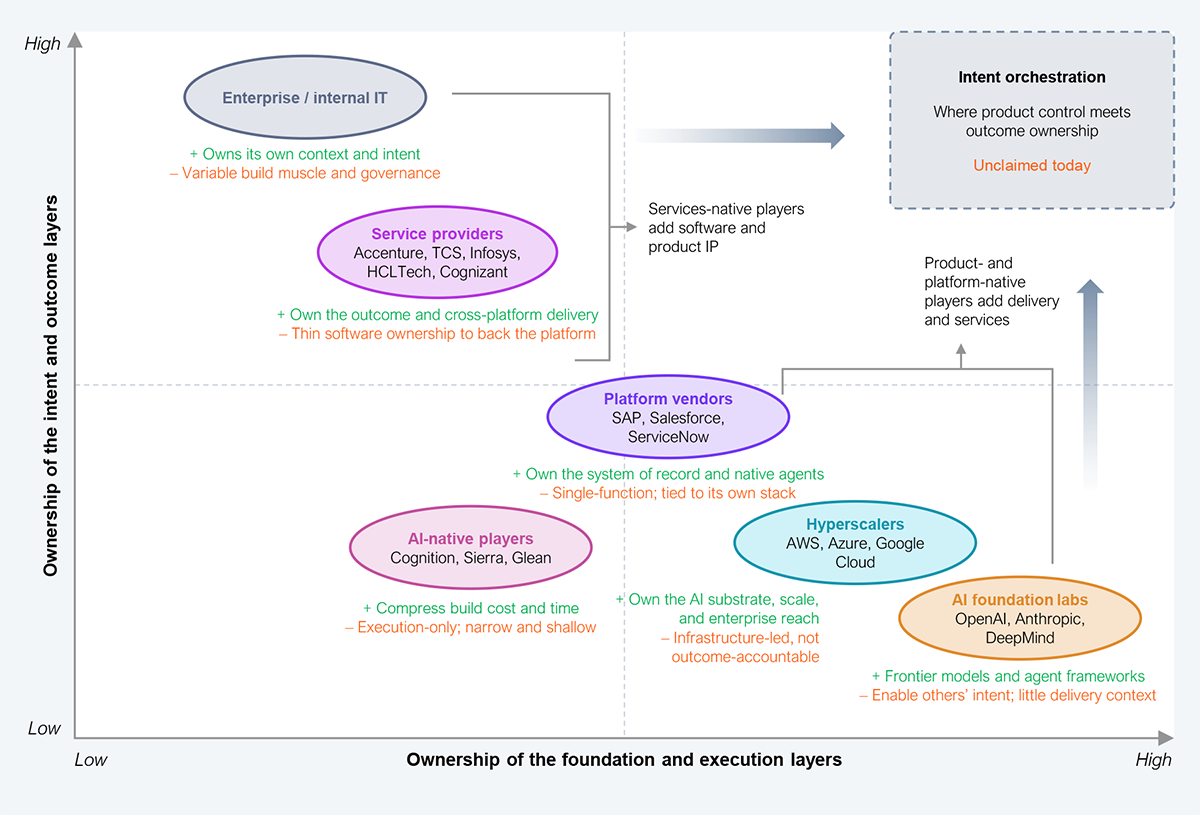
Exhibit 6: Intent orchestration is the unclaimed center every supply cohort is converging on

Two-by-two matrix plotting supply cohorts by ownership of the foundation and execution layers on the horizontal axis, from low to high, and ownership of the intent and outcome layers on the vertical axis, from low to high. The top-right quadrant, where high product control meets high outcome ownership, is labeled intent orchestration and marked unclaimed today. Positioned high on intent and outcome ownership but lower on foundation ownership are enterprise and internal IT, which own their own context and intent but have variable build muscle and governance, and service providers Accenture, TCS, Infosys, HCLTech, and Cognizant, which own the outcome and cross-platform delivery but have thin software ownership to back the platform. Positioned lower are AI-native players Cognition, Sierra, and Glean, which compress build cost and time but are execution-only, narrow and shallow; platform vendors SAP, Salesforce, and ServiceNow, which own the system of record and native agents but are single-function and tied to their own stack; hyperscalers AWS, Azure, and Google Cloud, which own the AI substrate, scale, and enterprise reach but are infrastructure-led and not outcome-accountable; and AI foundation labs OpenAI, Anthropic, and DeepMind, which offer frontier models and agent frameworks but enable others' intent with little delivery context. Two arrows show convergence on the unclaimed center: services-native players adding software and product IP move toward higher foundation ownership, and product- and platform-native players adding delivery and services move toward higher intent and outcome ownership. Source: HFS Research, 2026.

Source: HFS Research, 2026

Product-native players, the platform vendors, hyperscalers, and AI foundation labs, hold the lower stack and are building delivery and services arms to move up toward owning outcomes. Services-native players, the global service providers, and enterprises themselves hold the outcome and the context and are building software and product IP to move toward influence over the stack. Foundation labs standing up deployment units and a provider like HCLTech evolving its software arm are the same motion from different sides.

Neutrality is an advantage, so any cohort whose influence rests on its own stack pays a penalty as an orchestrator, which favors independent providers and enterprises.

The Bottom Line: Redesign how you buy services now, or inherit an operating model assembled from vendor defaults.

The shift from execution to intent is already underway. What remains open is who sets its terms. Left to default, the enterprise’s operating architecture is set by the platforms and providers it happens to buy from. Designed deliberately, it becomes an asset in its own right: the outcomes the enterprise declares, the intent it governs, and the orchestration it owns or co-owns.

That makes this an accountability decision before it is a technology one. The enterprises that move first will decide three things: which outcomes to own, how to share and delegate accountability as trust is earned, and whether to hold orchestration or hand it over. That choice will compound an advantage that the rest spend the decade trying to close. The clock started when execution became software. The only choice left is whether to lead the redesign or inherit someone else’s.

Sign in to view or download this research.

Login

Register

Insight. Inspiration. Impact.

Register now for immediate access of HFS' research, data and forward looking trends.

Get Started

Download Research

    Sign In

    Sign up for a free
    research account

    With the exception of our Horizons reports, most of our research is available for free on our website. Sign up for a free account and start realizing the power of insights now.

    Digests/Newsletters: Overviews of the latest news, insight, and research by HFS.

    HFS Events: Exclusive invitations to HFS webinars, roundtables, and summits, bringing together key industry stakeholders focused on major innovations impacting business operations.

    By registering you agree to our privacy policy.

    I hereby consent that HFS Research can process my personal data.

    Premium Access

    Our premium subscription gives enterprise clients access to our complete library of proprietary research, direct access to our industry analysts, and other benefits.

    Contact us at [email protected] for more information on premium access.

    Help

    If you are looking for help getting in touch with someone from HFS, please click the chat button to the bottom right of your screen to start a conversation with a member of our team.

    [email protected]

      Contact Ask HFS AI Support