
This HFS Hot Tech report is for chief strategy officers, heads of research, and enterprise intelligence leaders evaluating AI agent platforms to automate high-cost analytical and strategy workflows at speed and scale.
Mindcorp.ai is automating—not just assisting—high-value knowledge work through AI-powered agent teams. The platform is as close to the fulfilment of the HFS Services-as-Software (SaS) vision (see Exhibit 1) that we have seen to date. Unlike traditional software-as-a-service (SaaS), the SaS model focuses on delivering services primarily through technology, minimizing human intervention, and maximizing efficiency. Mindcorp prefers to think of humans as the copilot, in a reversal of the traditional characterization of the human-machine relationship.
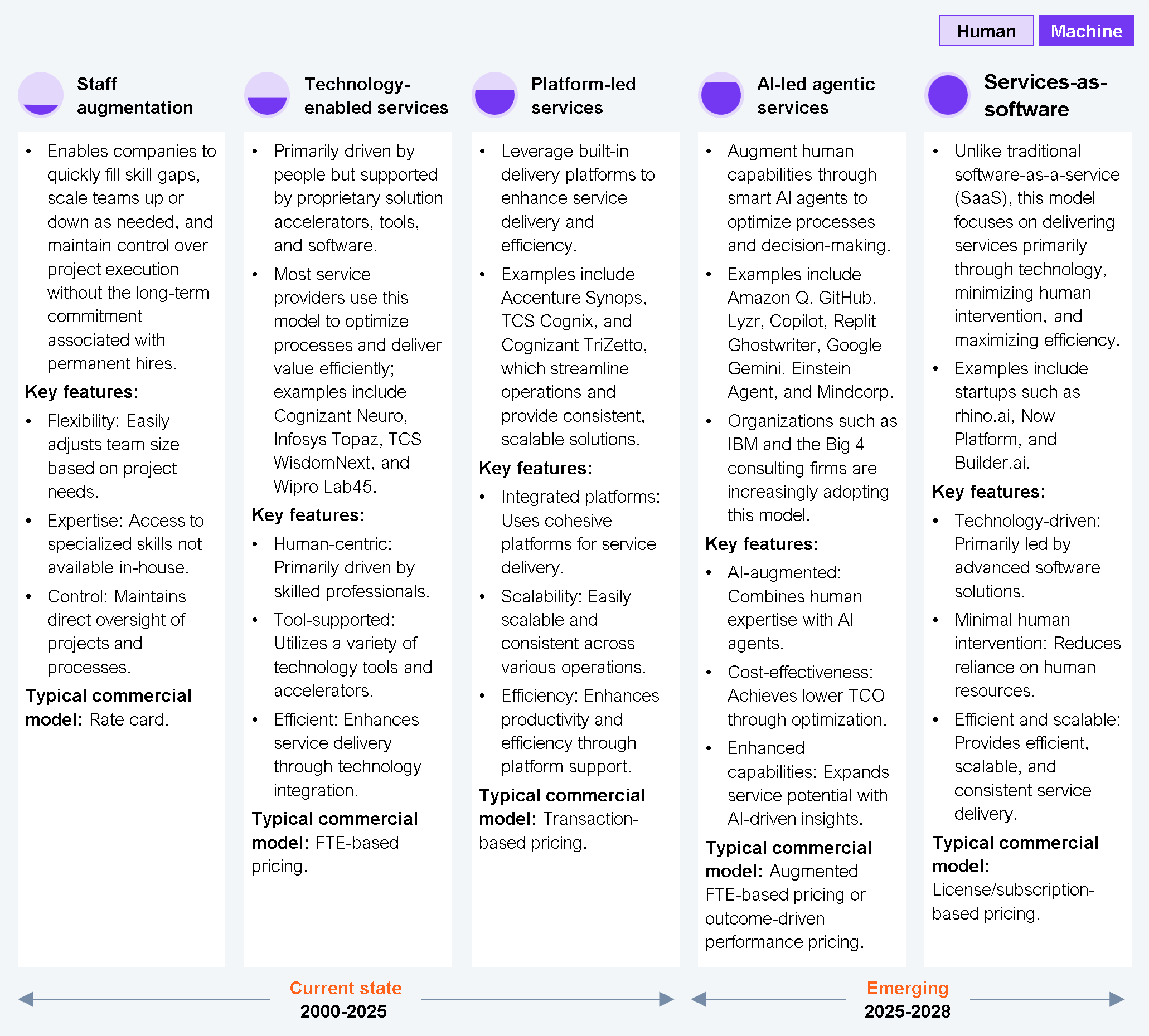
Source: HFS Research, 2025
Mindcorp’s core platform, Cognition, is an intelligent operating system for enterprise-grade analysis, research, and strategy development. It’s already powering deep analytical workflows within global management consulting firm Kearney and is starting to scale across other global enterprises where the speed and depth of business insight are mission-critical.
With its agent-based approach, fact-checking system, and ability to operationalize AI in consulting-like workflows, Mindcorp is helping enterprises go from question to trustable insight at unprecedented speed.
At Kearney, Mindcorp reduced a complex four-week manual workflow for CEO briefings to just one day. The software is specifically trained on Kearney’s processes, outperforming generic LLMs. This customization led to improved efficiency and output quality.
One leader told us the platform generates B+ first drafts, surpassing the initial work quality of the level of associates who would usually be engaged in compiling the research. The outcome is also delivered without the high-cost and time-consuming management overhead of briefing and checking on the progress of a team of analysts. This capability allows more partners to prepare for CEO-level conversations, enhancing overall productivity, with human oversight still crucial for the final 5%.
AI ‘copilots’ might summarize documents or brainstorm ideas—but Mindcorp’s Cognition platform delivers full-cycle analysis, strategy, and decision support with a rigor few human teams can match.
Built to tackle the limitations of generic LLM tools, Cognition uses a network of 10,000+ AI agents—each modeled after a real-world professional role—to collaborate and execute complex research and business analysis tasks. These aren’t glorified prompts—they are virtual professionals capable of carrying out entire workflows, from data sourcing to insight generation and verification.
For research-intensive organizations—consulting firms, corporate strategy units, private equity players, and R&D-heavy enterprises—Cognition provides a fast, scalable, and trustworthy way to generate strategic answers, not just information.
1. From chatbot to full analyst stack
Cognition builds and executes entire research workflows—10 to 15 objectives with hundreds of steps—across thousands of sources. It synthesizes findings into structured reports and strategy recommendations. For example, a single Cognition project has produced over 50 reports and mined 4,000+ websites in a few hours—something that would require weeks and teams of analysts by hand.
2. Verified AI, not just confident AI
Cognition applies a patent-pending fact verification system that independently checks the outputs of AI agents using real-world data, logic, and math. Unlike other tools that let LLMs check their own work, Mindcorp validates insights through independent reasoning and data triangulation.
3. No model training—heuristics power the intelligence
Cognition doesn’t rely on fine-tuning foundation models. Instead, it uses a heuristics-based system to shape how agents think and behave—allowing the use of any LLM (including open-source models) while maintaining role-specific reasoning and behavior. This avoids the overhead of model training while delivering custom-tailored cognitive processes—delivered through structured rules, role-based reasoning patterns, and domain-specific task flows to shape how AI agents behave.
4. Built for analysts, not amateurs
The platform is designed for power users: analysts, researchers, strategists. The firm claims it’s ‘Photoshop for business intelligence’, not a consumer-grade co-pilot. While end users can leverage templates for common use cases (competitive intelligence, synergy analysis, tariff impact), they also retain granular control to edit flows, choose agents, and iterate on deliverables.
5. Killer use case: Enterprise research teams
Mindcorp’s early traction is strongest in research-intensive organizations such as consulting firms and strategy units. Kearney, for example, has used Cognition to cut a core analysis process from several hundred thousand dollars and four weeks per process to less than $10K and four hours, in environments where every insight cycle counts toward revenue or M&A decisions.
Mindcorp.ai is radically reshaping how enterprise intelligence is produced. While the market is awash with copilots and AI summarizers, Cognition has a different ambition: automate high-value, high-cost research and strategy work with a virtual workforce of expert agents.
Its platform isn’t just faster—it’s more verifiable. But what really gives Mindcorp its edge is its early discipline: focusing on firms and workflows where traditional research is slow, expensive, and human-resource-heavy. Consulting firms, strategy functions, and diligence teams are the first wave—but the implications go much further.
Enterprises that depend on trusted insights to make billion-dollar decisions—whether in finance, supply chain, or policy—need a system like Cognition. And, unlike many GenAI platforms still stuck in POC land, Mindcorp has real use cases, real clients, and real cost savings.
Maintaining quality while expanding across new verticals, use cases, and client sophistication levels will test the limits of both team and infrastructure. But if Mindcorp can industrialize its current success without diluting its value proposition, it could become a new backbone for enterprise intelligence in the AI-first era.
HFS Hot Tech is an exclusive group of emerging players, each with a differentiated value proposition for the HFS OneOffice or HFS OneEcosystem. This Hot Tech has been selected for its alignment with the HFS OneOffice.
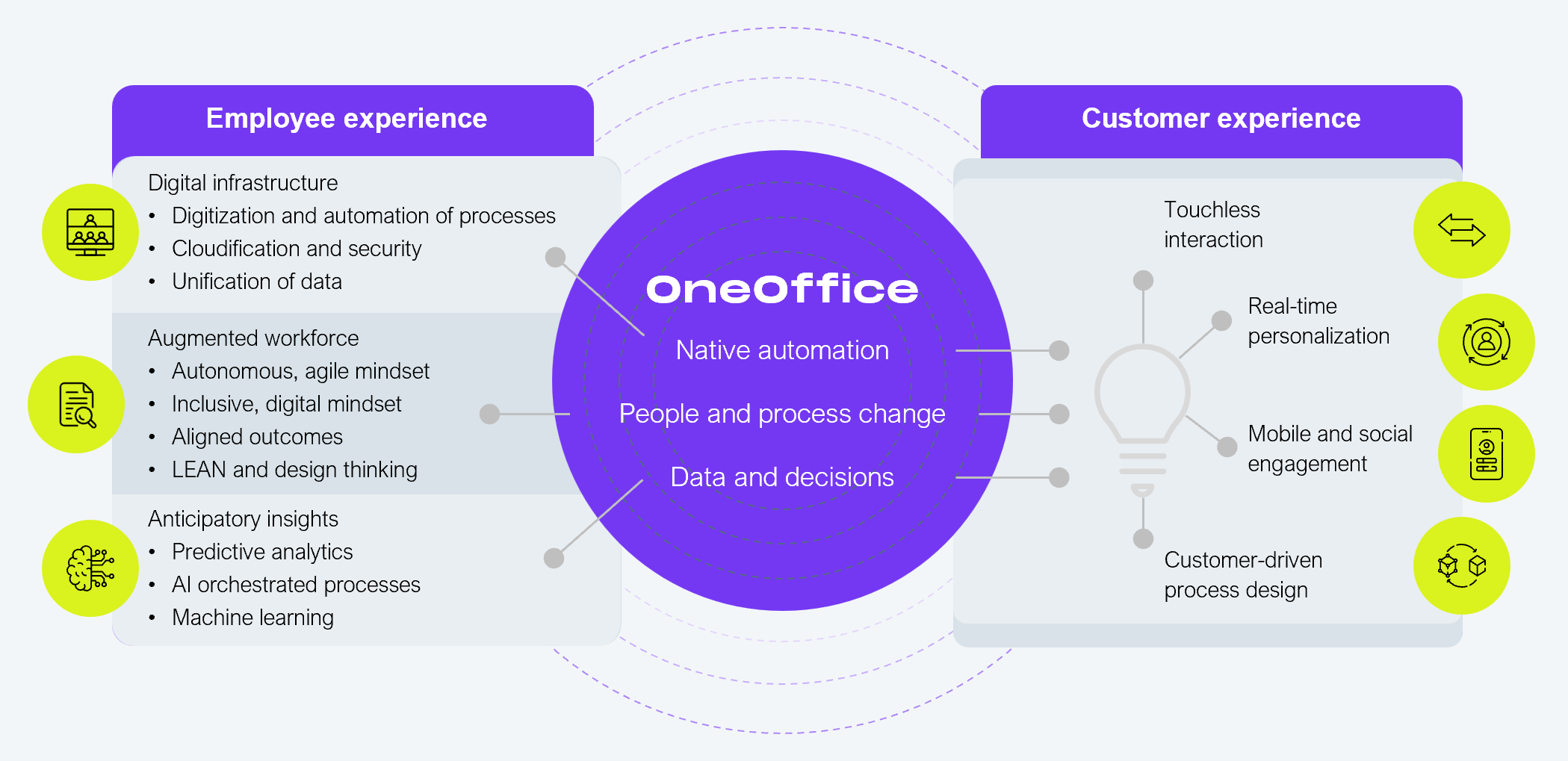
Source: HFS Research, 2025
HFS analysts regularly speak with numerous exciting startups and emerging players. We designate a select few as HFS Hot Tech based on their offerings’ distinctiveness, ecosystem robustness, client impact, financial position, and—in this case—impact on our OneOffice framework.
HFS Hot Techs may not have the scale and size required to feature them in our Horizons reports, but they have the vision and strategy to impact and disrupt the market. In the rapidly changing digital operations space, enterprises realize they can’t be everything to everyone. Enterprises consuming third-party services, service providers, and technology providers need a smart ecosystem to succeed and survive in the future.
HFS Hot Techs are service and technology providers handpicked by our analysts to help you flesh out your smart ecosystem with offerings that solve today’s complex business problems and exploit market opportunities. HFS Hot Tech organizations display truly differentiated offerings and out-of-the-box thinking that can be inspiring and useful.
This report profiles one HFS Hot Tech selected through our rigorous five-step assessment. The HFS Hot Tech designation remains in place for one calendar year. Every Hot Tech joining our program remains listed on our exclusive and searchable database.
Register now for immediate access of HFS' research, data and forward looking trends.
Get StartedIf you don't have an account, Register here |
With the exception of our Horizons reports, most of our research is available for free on our website. Sign up for a free account and start realizing the power of insights now.
Our premium subscription gives enterprise clients access to our complete library of proprietary research, direct access to our industry analysts, and other benefits.
Contact us at [email protected] for more information on premium access.


