As agentic AI intensifies the pressure to deliver value out of existing enterprise software-as-a-service (SaaS) investments, Salesforce has become the first major vendor to restructure how its partner ecosystem is held accountable. The company overhauled its Consulting Partner Program for FY27, replacing a bloated model with a leaner one anchored in verified delivery outcomes and incentivizing partners to drive consumption, not just deal closure.
The shift reflects a broader change in the SaaS market, where implementation success is no longer enough and partners are increasingly expected to prove real platform adoption. For CIOs, the implication is clear: it’s time to rethink how implementation partners are selected, evaluated, and governed.
Roughly 44% of enterprises said they are not getting the ROI expected from their enterprise SaaS investments, while 32% believe they can get more value (see Exhibit 1). The core problem isn’t technology but the lack of accountability for implementation outcomes. Consulting partners and platform vendors have both sidestepped this responsibility, arguing that enterprise processes, data, and change management lie beyond their control. The old partner model made it nearly impossible to judge delivery quality: scorecards and partner tiers measured partner sales activity, not outcomes, and incentives were structured to reward deal closure, not value realization.
Salesforce has redesigned its partner program to close this gap. The new model makes partner performance and accountability visible, giving CIOs the transparency to choose the right partner.
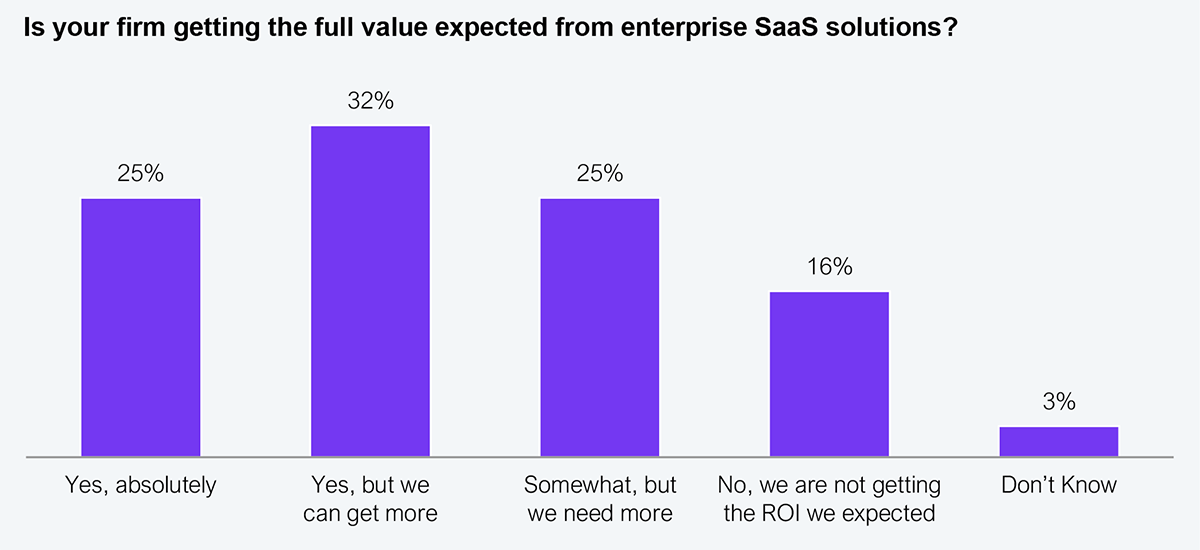
Base: 705
Source: HFS Research, 2026
The partner program redesign has three important takeaways:
The redesigned program hands CIOs new tools, but the lesson goes beyond Salesforce. As SaaS vendors face more pressure to prove adoption and value, enterprise buyers will need to apply tougher standards on how they select, contract, and govern partners. Three imperatives stand out:
For years, the SaaS value gap was an open secret where vendors sold licenses, partners closed deals, and accountability for actual business outcomes belonged to no one. Salesforce’s FY27 program redesign signals that this model is no longer acceptable in the agentic era. What Salesforce has done is structurally realign its ecosystem around verifiable outcomes and end-to-end accountability. CIOs who internalize this shift earlier will raise their expectations and hold partners to a higher bar. Those who don’t will keep absorbing the value gap alone.
Register now for immediate access of HFS' research, data and forward looking trends.
Get StartedIf you don't have an account, Register here |
With the exception of our Horizons reports, most of our research is available for free on our website. Sign up for a free account and start realizing the power of insights now.
Our premium subscription gives enterprise clients access to our complete library of proprietary research, direct access to our industry analysts, and other benefits.
Contact us at [email protected] for more information on premium access.