
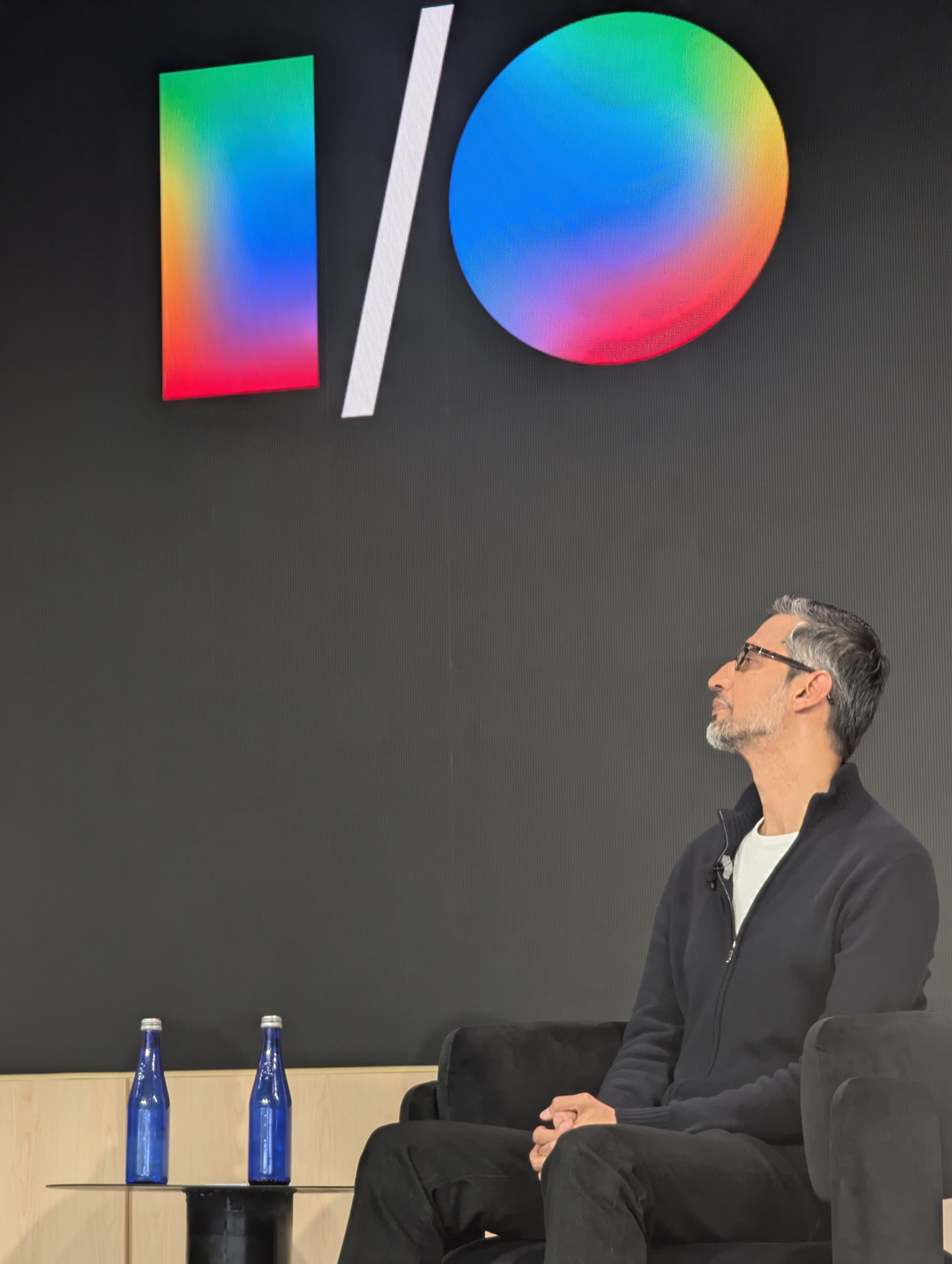
This HFS Research Highlight is for CIOs and CTOs resetting their AI services architecture in light of Google I/O 2026 and the accelerating shift to Services-as-Software™.
Enterprises still planning AI services architecture for 2027 are likely already a cycle behind. While OpenAI and Anthropic build out services firms with forward-deployed engineers (FDEs) in customer accounts to translate model capability into outcomes, and Google, too, is recruiting hundreds of FDEs, Google I/O 2026 can be read as a product-led validation of HFS Services-as-Software (SaS). Google is embedding the software into its customer accounts, enabling firms to translate AI capabilities into outcomes themselves.
Gemini 3.5 Flash, Antigravity 2.0, Gemini Spark, and the Universal Commerce Protocol and Agent Payments Protocol (UCP and AP2) are important far beyond the developer community I/O targets. For CIOs and CTOs, the flurry of updates serves as a prompt to bring forward the reset of your AI services architecture. Google is arguably pulling the Services-as-Software timeline forward by 12 to 18 months.
One striking proof point came from Antigravity, Google’s agent-first development environment. Ninety-three sub-agents worked in parallel for 12 hours, made more than 15,000 model requests, processed 2.6 billion tokens, and built a functioning operating system from scratch, all for less than $1,000 in compute. That would have been a traditional engineering services project measured in months, with a seven-figure price tag.
One demo does not a market make, but this one does at least confirm the Services-as-Software era is in touching distance. Gemini 3.5 Flash made it possible: frontier-comparable, four times faster than peer models, at less than half the price. The pattern recurs across I/O announcements, referencing Spark as an async agent across email, calendar, and docs, and search agents running continuous background tasks. Categories of work that have required people, such as engineering, admin, and research, begin to look like services that long-running multi-agent systems can deliver end to end.
Source: HFS Research, 2026
CEO Sundar Pichai’s remark that CIOs are “blowing through annual token budgets, and it’s only May” was telling. Top Google Cloud customers process a trillion tokens a day; shifting 80% of workloads to Flash would save over $1 billion annually. Capability now looks less like the binding constraint; the big decisions center on unit economics at scale.
Google also brought us news of the expansion of the Universal Commerce Protocol, positioned as “the HTTP of agentic commerce.” It now counts Amazon, Meta, Microsoft, Salesforce, and Google in its coalition. This cross-industry alignment signals that no single vendor expects to deliver agentic commerce alone. The Agent Payments Protocol introduces cryptographic mandates so agent-initiated purchases are auditable and revocable—a tamper-proof paper trail for “my agent bought what?”
SynthID’s adoption by OpenAI, Kakao, and ElevenLabs extends the trust layer. The Model Context Protocol (MCP) gives third parties the integration surface. Together, these could form the rails for cross-vendor agentic services. Enterprises without a posture on UCP, AP2, and MCP by 2027 risk becoming price-takers in the next layer of commerce.
Among other announcements at I/O 2026 was the return of Google Glass with third-party branding. And while consumer land will get excited, enterprises should consider this revival part of Google’s building of a new interface for enterprise work. Voice is front and center.
Audio glasses built in collaboration with Samsung, Warby Parker, and Gentle Monster ship this fall with hands-free Gemini and built-in cameras. Voice-native Docs Live and Gemini Live arrive with regional dialects (and languages). Spark is designed for asynchronous mobile use. For roughly 2.7 billion deskless workers globally, the largest underserved enterprise software cohort on the planet, this could be an interface paradigm that fits.
A field engineer, a nurse on a ward, or a retail associate could now run AI assistants without putting work down to type. OpenAI and Anthropic can hire engineers, but they cannot put hardware on a frontline worker’s face. Watch that space.
Agents as FDEs may not yet eliminate enterprise services in regulated industries where humans must still own outcomes. But Services-as-Software is now looking less like a 2027 planning item and more like a 2026 procurement question. CIOs should audit their workhorse-to-frontier model ratio this quarter; a workload on a frontier model that a workhorse could handle is margin burned. CTOs must form a posture on UCP, AP2, and MCP now, while the protocol layer is being defined.
The CIOs and CTOs who reset architecture this quarter will at least be staying in line with the curve. Those who wait and watch will become price takers, and risk missing out on the competitive leap of services work delivered at high speed and low cost.
Register now for immediate access of HFS' research, data and forward looking trends.
Get StartedIf you don't have an account, Register here |
With the exception of our Horizons reports, most of our research is available for free on our website. Sign up for a free account and start realizing the power of insights now.
Our premium subscription gives enterprise clients access to our complete library of proprietary research, direct access to our industry analysts, and other benefits.
Contact us at [email protected] for more information on premium access.


