
Robotic process automation (RPA) and the alphabet soup of its extended variants–IA (intelligent automation), IPA (intelligent process automation), and RDA (robotic desktop automation)—drive efficiency in organizations. The primary aim of any automation program is deriving tangible business benefits. Increasingly, the automation success stories we hear are told by those who ensure that the change is a positive one for the people involved. Placing the priority on augmenting the people already in place might just be the secret sauce for a productive approach to automation that yields results, with machines and humans working in harmony to create a hybrid workforce of the future.
HFS, with support from Capgemini, is exploring the power of the digitally augmented workforce. Two large organizations, both Capgemini clients, that are achieving results with their RPA programs shared their journeys with HFS. This report draws on their experience with automation as Capgemini’s customers: UK-based InterContinental Hotels Group (IHG) and a European paper manufacturer. Both enterprises automated processes in their finance and other functions, which included many individual group companies across the globe, each with individual ERP instances.
Aim for business outcomes like higher customer satisfaction and employee satisfaction
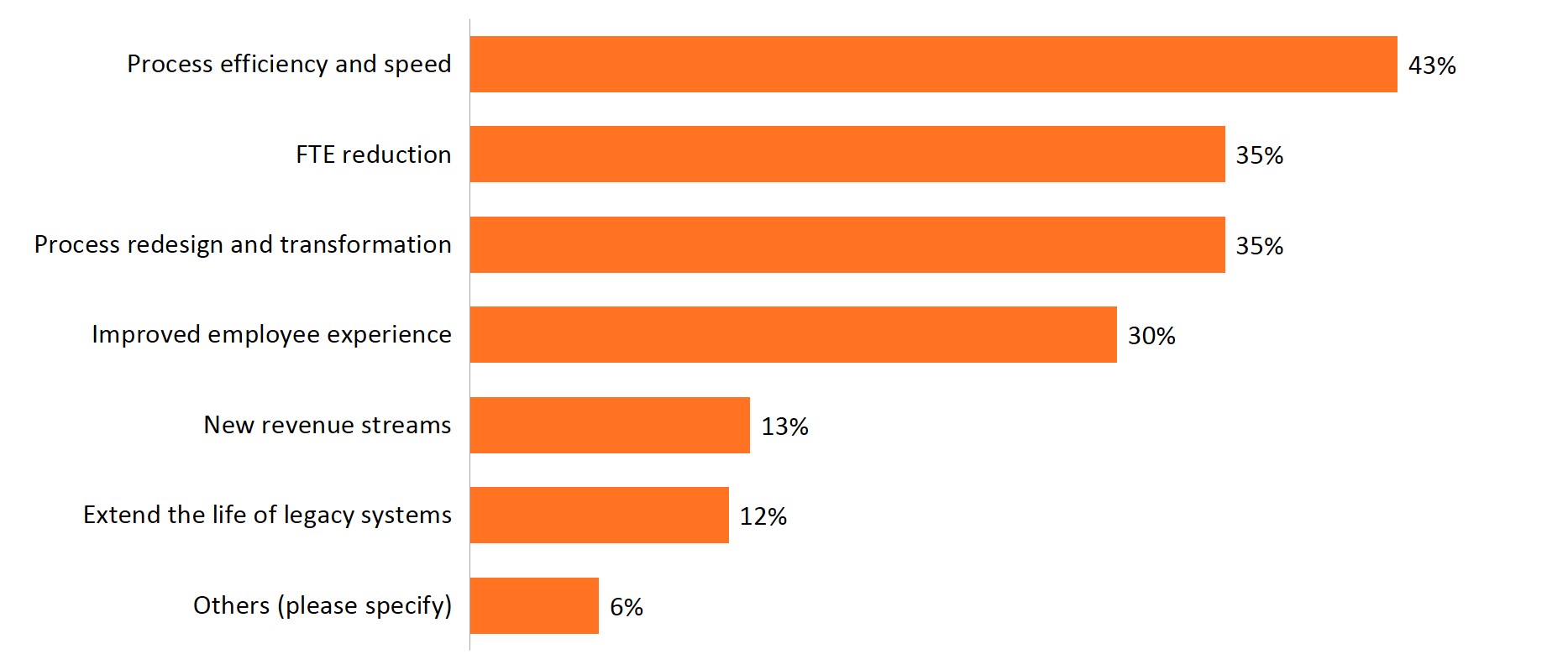
Smart approaches to RPA seek to positively impact the business from the start. HFS views cost decreases and revenue gains as better measures of success than bot count. Our research indicates that process efficiency and speed are the biggest benefits that organizations see when RPA works well.
Exhibit 1: Process efficiency and speed are the business benefits that enterprises see most often
What tangible business benefits is RPA helping you drive?
Source: HFS Research on Robotic Transformation Software, 2019 N = 307
While FTE reduction also ranks high, our featured organizations talked about FTE reduction as not adding new headcount rather than removing existing headcount—essentially supporting growth with a stable resource base, with an option of riding the attrition wave to do more with fewer resources. Along with augmenting peoples’ quality of work, the emerging concept of an elastic digital workforce on tap when transaction volumes spike is essential to the concept of the digitally augmented workforce. The paper manufacturer reported a 5% growth trajectory in transaction volumes, mainly through acquisition, and it also observed a trend of smaller invoice values and higher invoice volumes. Many arduous F&A processes in the shared services center, riddled with cumbersome copy-and-paste steps, were automated, such as invoices received and VAT reporting. RPA can also automate time-consuming formatting steps. Here, the emphasis is on freeing up peoples’ time from the drudgery of the process, allowing them to focus on error handling instead, eventually, the process becomes leaner. This approach provides the option of absorbing attrition into automation programs gradually and without alarming the existing employees that are critical to ensure success. It also works toward two often-overlooked positive outcomes with proven value: satisfied customers and satisfied employees.
Critical stakeholders must be on board from the start
There is a persistent tension between IT and business units. For automation programs, any misalignment between business and IT frequently causes problems. The paper management company we spoke with had support for RPA from the CFO from the outset, and IT also reports to the CFO. This helped smooth the path considerably. RPA fell within the remit of finance transformation and operations, which was jointly led by finance and IT.
IHG’s RPA program is business-led; the determination of value and prioritization is business-led, too. A number of routine, transactional processes across Finance, Sales, HR, and other functions were targeted for automation – interfacing with its main ERP and other underlying systems.
IHG’s program is aligned with the IT group partnering closely with IT processes and application access. A holistic view is necessary, not just driving RPA as a single lever as this risks pushing RPA with bias. Instead, it’s best to push the best solution for a given situation which is often multi-dimensional, e.g. RPA combined with process improvement and error reduction. Often a pain point is on IT’s roadmap but may not be set for resolution for 18-24 months. With RPA you can sometimes get to a partial resolution in the near-term and get to value sooner while the longer-term solution is being fully developed – or in some cases may not be needed at all.
There is still a tension that must be managed here; if bots are perceived as a fast option people from the business need guidelines on when RPA is the best answer and when other solution alternatives are in fact a better long-term fit. RPA teams must be clear about what they are not doing, as well as what they are doing. A lack of clarity here can dampen enthusiasm and lead to wasted effort.
RPA was not implemented in isolation; it was part of something bigger
IHG’s RPA journey was borne from a global enterprise-wide transformation program, focused on accelerating growth and streamlining operations.
“The digital workforce robots are now a core part of how we work. They are not going away, they are part of our way of thinking – now we think about what kind of person or digital worker is best to fill a need”
Derk Weinheimer, VP Transformation and Innovation, IHG
There was a noticeable evolution at IHG; initially, three to four automations were up and running, delivering significant savings. In time, IHG’s thinking matured, moving from an initial focus on cost to including broader growth and revenue-based targets as well. And the digital workforce is now a permanent feature. Derk Weinheimer, VP Transformation and Innovation at IHG says, “The digital workforce robots are now a core part of how we work. They are not going away, they are part of the way of thinking – now we think about what kind of person or digital worker is best to fill a need.”
IHG quickly realized that RPA in isolation was not a silver bullet; it saved arms and legs but didn’t release whole bodies. It was clear that there was a lot of opportunity in eliminating transactional activities and letting people focus on value-added work, working smarter, more efficiently, and more accurately through tasks with automation. This further evolved into a broader way of thinking, exploring new possibilities around how to make more use of automation solutions, including machine learning (ML) and artificial intelligence (AI) in the form of cognitive assistants in the call center to help achieve growth objectives, being smart about capturing incremental revenue, freeing up time for people to focus on underperforming hotels, increasing performance of call centers, and recapturing lost revenue. A holistic arm of the business that focuses on transformation and workforce augmentation uses RPA to achieve its goals.
Resolute in the knowledge that it could not build its automation program on cost savings alone, IHG developed weighted measures to prioritize workforce augmentation efforts. It rolled cost, quality, revenue, and customer satisfaction considerations into a framework rooted in company strategy. The framework identifies 30 benefit values, linked to 10 core company-wide metrics as reported to shareholders. Linking to the strategy group focused the prioritization process.
Organizations can combat resistance to change by demonstrating value, building trust, reducing risk, and letting business users lead the way
Resistance to change often impedes process automation. A simple but effective approach that yields results is letting the employees take the lead with process selection and prioritization, according to what they feel would augment their experience. Our paper manufacturer provided a physical box for employees to feed suggestions into the task prioritization funnel. Interestingly, their first attempt targeted end-to-end process automation, but this proved complicated. Tackling processes at the task level worked better, using bots to patch specific weaknesses in processes to augment the workforce and enable speed.
An employee-led approach generates a pull from the engaged business users who want to learn more about RPA’s capabilities and become hungry for more—quickly demanding more bots and more change. Pushing RPA out without employees’ early involvement runs the risk of it being perceived as a threat, invoking fear and resistance, ultimately risking program failure, or at least lackluster results.
IHG took the approach of proactively educating the business on RPA, from small-group brainstorming sessions to department-wide learning events focused on the benefits of automation, use cases, and dispelling common fears and misconceptions. When engaging with an area of the business for the first time, the team prefers to start with a simple automation that can quickly demonstrate value and build trust in the process before moving on to the more significant opportunities that drive greater value. In addition, IHG obtained internal seed capital to get started, so there was no cost to business units to get things up and running initially. Reducing risk and leaving only potential gain on the table proved highly effective—the ask was, “Give us three weeks. If you don’t like what you get, don’t use it.” The strategy worked well; business units found RPA useful.
Standard processes aren’t always as standard as you’d like to think
The paper manufacturer set out to improve quality in the finance function by reducing errors. Reducing the number of open items was tackled head-on; the aim is always to minimize this count. Starting on a baseline from two years prior of over six million open items, the manufacturer quickly cut the count to 200,000. It did not achieve this through RPA alone; it put lots of new fixes in place. However, trying to use RPA shone a light on so-called “standard” SAP processes across five captive services centers. Many differences emerged; while minor to the human eye, these differences presented challenges to software robots. Standardization levels continuously improved as an unplanned consequence of RPA implementation.
Top tips: Move fast, and don’t get caught up in pursuing perfection
A consistent viewpoint came from both enterprises on emerging best practices for digitally augmented workforces. The condensed advice was as follows:
Reskilling and retraining persist as strategic challenges
The paper manufacturer found that it was easy to retrain IT employees in RPA, but more challenging to retrain business specialists in IT. Moving forward, ideal employees for an automated F&A function are accountants with developer skills. IHG invests effort in supporting its people as they learn how to work with their new type of co-worker. People must understand digital workers’ capabilities so that more work can be delegated to them and they become “part of the team.”
Services partners, specifically Capgemini in the case of the enterprises we spoke with here, can help with many of the tricky parts, especially in navigating uncharted territory such as vendor selection, process identification and prioritization, upskilling and training, setting a plan or road map in place, and designing human-in-the-loop solutions when the expected efficiency is not reached by machines alone. More importantly, Capgemini provided methodologies, best practices, and an injection of experienced technical talent for short bursts at critical junctures. Scaling up and down quickly with critical and scarce resources is hard to do in-house. Service providers can work together with large enterprises to build their respective skillsets to their mutual benefit.
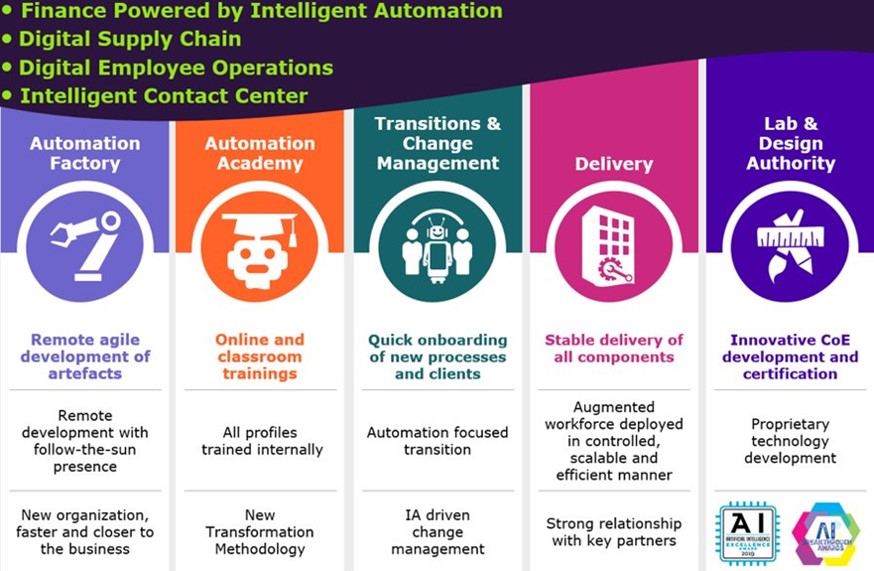
Exhibit 2: A digitally augmented workforce combines human and virtual components
Source: Capgemini, Intelligent Process Automation, 2019
The Bottom Line: Don’t view RPA as a cost take-out measure alone. Augmenting your existing workers and aiming toward better experiences and journeys through the lens of continuous improvement will lead to longer-term success.
In these examples of Capgemini’s RPA implementations, we can see the digitally augmented workforce in action and the power of automation to help drive business operation transformation, especially in the finance function. Targeting the experience, transforming and optimizing processes, minimizing touchpoints, and making people’s day-to-day work easier, faster, and more consistent all combine to drive a natural and organic momentum throughout business processes. This can overspill into adjacent functions where value is felt, and then more value is sought. With augmentation, the workforce is changing. People are acquiring and using new skillsets; once freed from repetitive tasks, they can focus on the increased value they can bring to the business.
Register now for immediate access of HFS' research, data and forward looking trends.
Get StartedIf you don't have an account, Register here |
With the exception of our Horizons reports, most of our research is available for free on our website. Sign up for a free account and start realizing the power of insights now.
Our premium subscription gives enterprise clients access to our complete library of proprietary research, direct access to our industry analysts, and other benefits.
Contact us at [email protected] for more information on premium access.

