
This HFS Point of View from the NYC Enterprise Debts Roundtable, conducted in partnership with Genpact in May of 2026, is for enterprise transformation leaders diagnosing the process, data, technology, and talent debts blocking AI at scale. The full enterprise debts study is out on June 15.
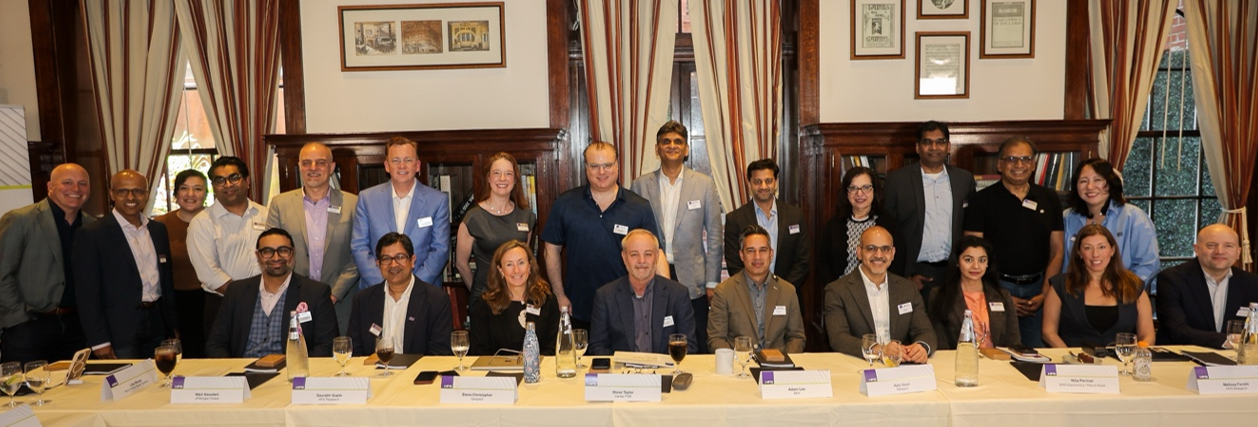
Enterprise AI at scale is being blocked by four interconnected debts that have accumulated over time: process, data, technology, and talent. We attach hard financial upside to resolving these debts in the forthcoming enterprise debts research, releasing June 15. Until the embargo is lifted, suffice it to say that the number is staggering. We brought 20 senior leaders to a roundtable in New York City to preview compelling data, red hot off this study in partnership with Genpact, and to pressure-test our key takeaways.
The answers were deeply nuanced but also hauntingly similar as we asked each person around the room one key question: “What is the single biggest thing keeping your AI ambition from becoming AI reality?”
While there is undoubtedly a mix of issues across the debts, the uncomfortable consensus around the table was that, fundamentally, we, the humans, are the problem. Two years ago, we might have blamed hallucinations, immature models, integration, and security. But at the roundtable, every leader in the room said some version of the same thing: The technology is ready, but we are not.
The CHRO of a global financial services firm put it plainly: “It’s not the technology, it’s organizational design, culture, people, and leadership.” The chief actuary of a national insurer sharpened it, relating that 85% of her workforce has no AI fluency at home, let alone at work. For those firms whose employees are experimenting with AI at home, we find a velocity gap challenge where people’s “Sunday experience” includes tools like ChatGPT in consumer life, but the “Monday experience” finds those same people stuck in an environment with less empowered access to AI tools than they’ve become accustomed to at home.
Worsening the velocity gap, there’s a real lack of focus and investment on training, reskilling, and the biggest hurdle of all, strategic coherence. The problem isn’t that enterprises lack an AI strategy; it’s that they have too much of it in the wrong form. Strategy is siloed within functions, fragmented across business units, and rarely stitched into a single enterprise-wide direction (Exhibit 1). Dozens of disconnected initiatives compete for funding and attention, with no shared view of priorities, ownership, or success metrics, resulting in frustrated leaders and stalled roadmaps.
We’ve seen this before, where enterprises act only on the tech part. There has been a limited amount of push on the process, talent, and data debt, while there’s been billions of dollars spent on trying to solve the debts with technology.
— Anil Nanduru, Global Business Leader – Consumer and Healthcare, and High Tech Software, Genpact
There is always this hope that there’ll be a knight in shining armor, a new vendor, a new technology, who’s going to solve all these problems. And for the last 30 years, we’ve created an IT services industry in which 70% is basically servicing the debts. None of that is reducing your debt.
— Saurabh Gupta, President, Research and Advisory, HFS Research
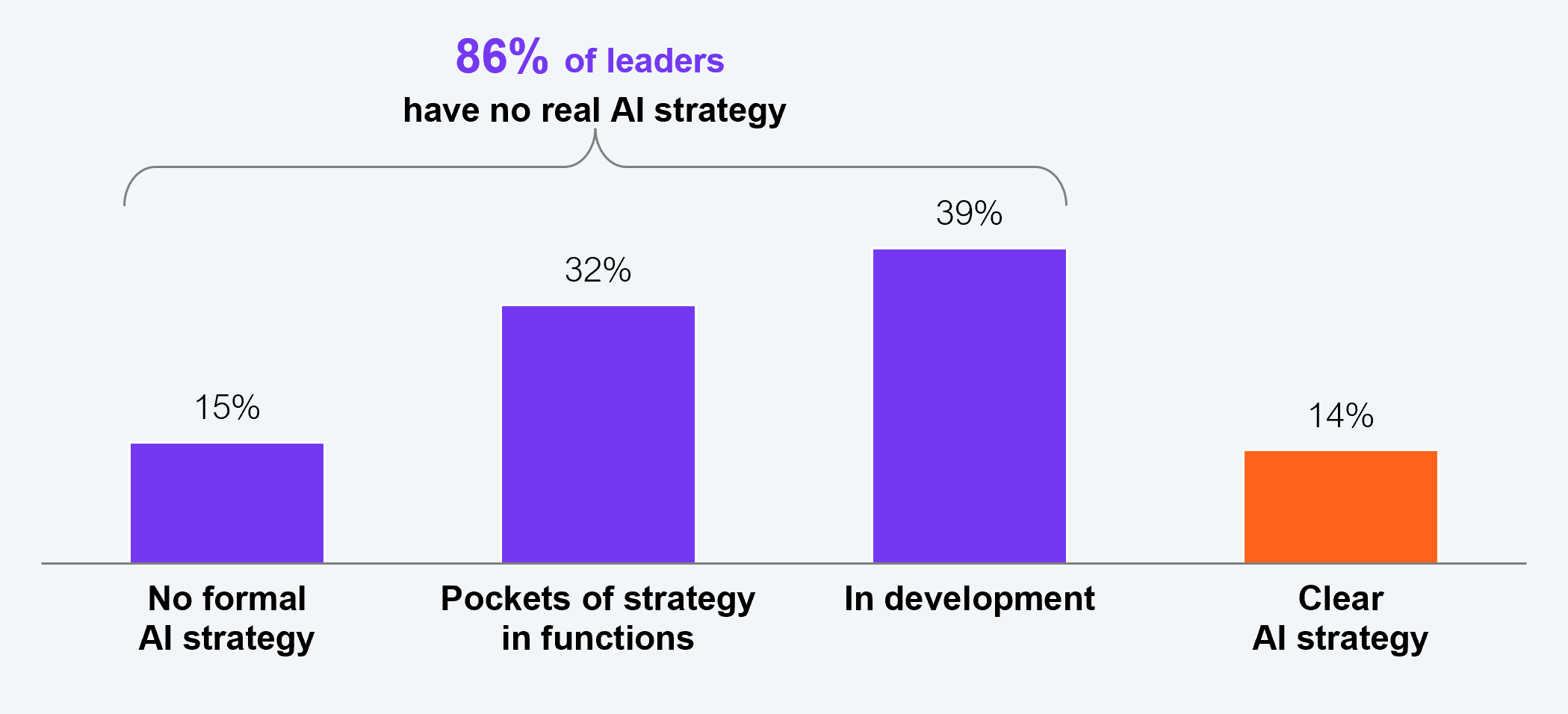
Sample: 505 AI decision makers across Global 2000 enterprises
Source: HFS Research, 2026
This lack of strategy is driving leaders to a frustrating, sometimes piecemeal approach to AI adoption across functions and workflows, where sometimes just doing something at all is better than waiting for a clear and shining North Star vision. Our delegates got into a heavy but healthy “bolt-on” vs. “build-in” debate. Half the room is wrapping agentic AI around legacy stacks, taking the win, and using the savings to fund the bigger rebuild. The other half is skeptical; bolt-ons add debt, plateau quickly, and don’t scale into anything that meaningfully changes the operating model. Our take is that this is a false binary. The operators making real progress run both velocities at once; bolt-ons fund the journey and built-ins develop the destination. As one of our delegates aptly pointed out, sequential thinking is itself a form of debt.
The most provocative question of the afternoon came from the CIO of a major NYC health system: Can you leapfrog the debt entirely? Drop the right agentic layer over unconnected systems, and suddenly the integration debt is irrelevant, right?
The counter from a senior Wall Street operator was hard to dismiss: bolt-ons plateau, regulators do not accept “94% accurate,” and the hard work still has to happen underneath. Essentially, you’ve still bolted on to your mess. The answer here is in the power of “and”: Leapfrog where you can, and still do the foundational work where you must. Anyone selling either as a single answer isn’t looking at the bigger picture.
A transformation lead at a major publisher named a debt we hadn’t measured: imagination debt. Most enterprises are still asking how to take 15 steps to 12. A small percentage of more mature organizations are asking what this work would look like if AI had always existed. The answer is almost never “the same workflow, faster.” It is a different workflow entirely, and that is the part most operating models are not yet built to imagine, let alone fund. A banking delegate put it this way: “We have lost the ability to unlearn. We are too wedded to our rules and ways of working.”
Three points of consensus emerged that will start to clear the way for tackling enterprise debts.
The debts are real, and the window to act on them is closing. Our forthcoming study reveals that a woefully small percentage of enterprises are taking meaningful steps to address the debts issue. We will share the data and our recommendations around how to diagnose the mix across process, data, technology, and talent to unlock the value of remediating those debts. Addressing these debts deliberately will lead to a virtuous cycle in which the debts are neither ignored nor leapfrogged, but aggressively attacked and resolved faster.
Our full Enterprise Debts study, in partnership with Genpact, will be released on June 15.
Register now for immediate access of HFS' research, data and forward looking trends.
Get Started


If you don't have an account, Register here |
With the exception of our Horizons reports, most of our research is available for free on our website. Sign up for a free account and start realizing the power of insights now.
Our premium subscription gives enterprise clients access to our complete library of proprietary research, direct access to our industry analysts, and other benefits.
Contact us at [email protected] for more information on premium access.

