Part 1 of the two-part interview series with Genpact’s CEO and Chief Strategy Officer
The traditional offshoring-driven labor-intensive outsourcing model is finding its bottom (and fast) as enterprises aspire to go “straight to digital.” One service provider that’s kept pace with the changing industry narrative is Genpact. The firm built on its LEAN Six Sigma process excellence culture (emanating from its GE heritage) with organic and inorganic investments in emerging technologies as typified by the AI-powered Genpact CORA assets. Company leadership talks about using the “Instinctive Enterprise” to get closer to the customer, which is aligned with our Digital OneOffice approach.
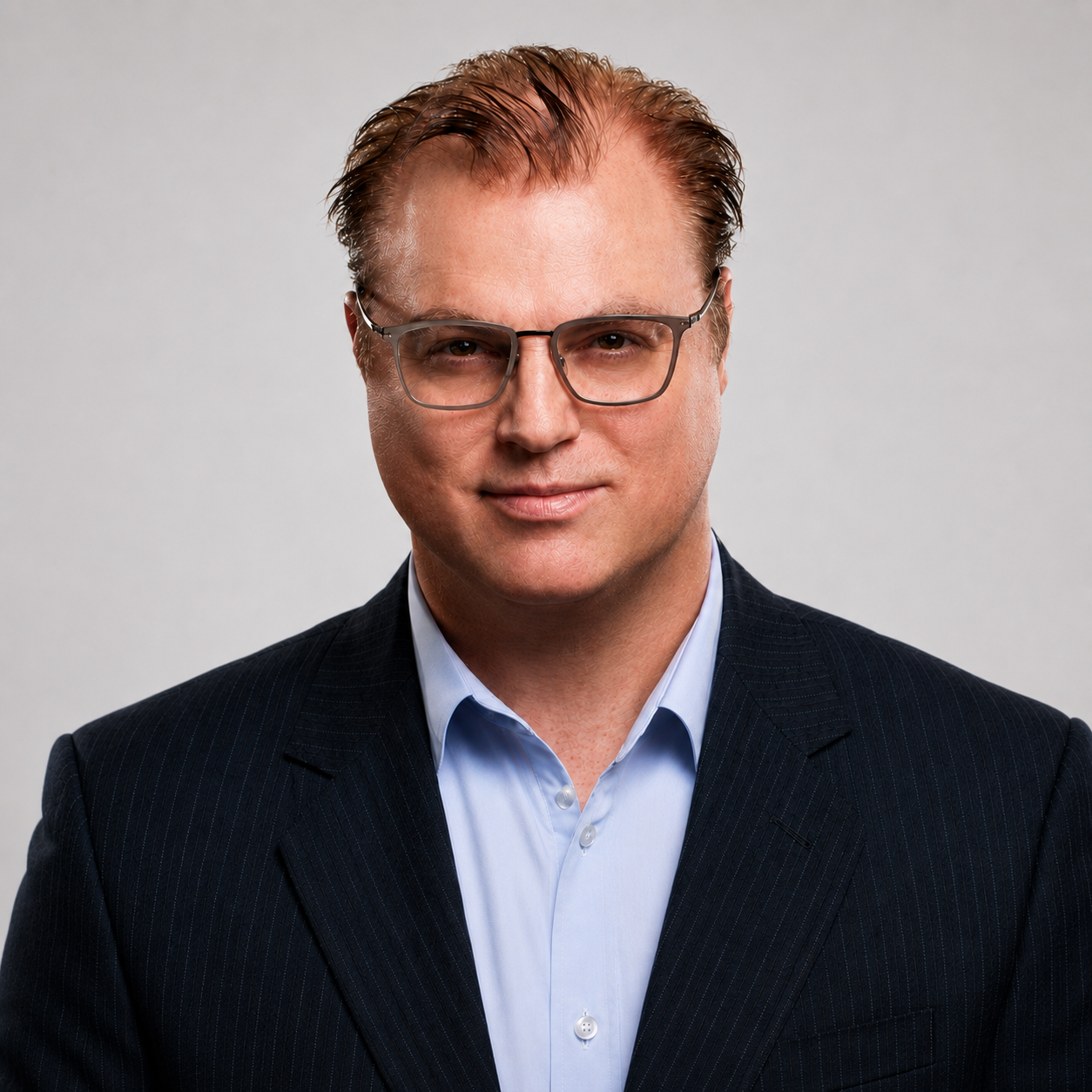
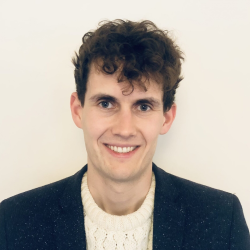
We recently caught up with Genpact’s CEO Tiger Tyagarajan and Chief Strategy Officer Katie Stein in a wide-ranging interview talking about the market developments and Genpact’s past, present, and future. Tiger will also be a part of our leadership panel at the upcoming HFS Summit in NYC on October 1-2 in case you’ve still not registered for the event!
Here is part 1 of this two-part series where Tiger and Katie talk about their best-ever quarter in six years and their recent strategic acquisitions.
Phil Fersht, CEO and Chief Analyst, HFS Research: What would you say is driving Genpact today versus a couple of years ago, and where you want to go over the next couple of years?
Tiger: We had what I would consider to be the best quarter in six years, both in terms of growth and where we got the growth from. It’s a culmination of a many-year journey to get there, with the added advantage that GE is now growing.
I would date our journey back to the last five years, in the way we measure our business, which is everything outside of GE. That’s been growing anywhere from double digits to mid-teens every year for the last six years. It went to the mid-teens mark in the first quarter, and GE also grew, so together, the company grew really well. It’s also a combination of the choices we made around industry verticals.
We’ve also been big believers that process makes a big difference. Two and a half years back, we did a pivot on our leverage of digital and analytics—how do we tilt the whole company in that direction? We said we’d do it, not for digital and analytics for their own sake, but for the purpose of driving outcomes for our clients. Our lens has always been operating leaders, risk leaders, supply chain leaders, and finance leaders, with IT being a big support.
We never used to see IT as a big support in the past, but obviously, it’s a huge, enabling buying center for us. Today we find we are selling to the business or the functional CXO, and we must also work with the CIO to ensure our solutions are fit for the digital environment they are building.
Phil: You say this was a big quarter, particularly in relation to GE. Can you expand a bit on that? You said that relationship was growing as well. What is shifting in that relationship?
Tiger: So, ever since GE went down the path of divesting its financial services business, post the financial crisis, we’ve been on a secular declining revenue base with GE. As they sold the businesses, they cut back on portfolios, etc. That process was pretty much done in 2018, and then the new leadership team that came in had us double down and take on more work. The work is broadly in the high end of the value chain of our core services areas, such as finance, sourcing and procurement, sales operations, etc. As a result, we grew by 75%. And this is after our revenues had declined with GE for nine years. It’s really the next level of value-add.
Katie: There’s more to come in the next few months. But there are several megadeals that we’ve made recently to increase domain and capability—a step function, if you would.
Phil: When I look over the last few years, you made that Headstrong acquisition, and that evolved, but since then, it’s been much more organic, and you’ve done smaller tuck-ins, like with Barkawi and others. Was that a very deliberate strategy? Do you still see that as the way you’re going?
Katie: Yes, it is our stated strategy. We talk about this all the time, but obviously, opportunistically, when something of scale comes along, we take a look. However, when you think about the tuck-in capabilities, we think of many of them as horizontal capabilities. So TandemSeven is our customer/user experience capability. The core algorithm of the Bridgewater deal is employee experience—it’s still customer experience, but the customer is the end-user. TandemSeven became a pivotal element of that deal; without TandemSeven, we couldn’t have led the design thinking methodology through the entire deal process.
We’ve always talked about the front, middle, and back office—or the HFS OneOffice experience. TandemSeven, for us, is unlocking the ability to shape deals differently and shape them with experience as the core proposition, versus just a “nice to have.” It’s opening up a vector of communication that didn’t exist before.
Tiger: I know the phrase “OneOffice” was your phrase Phil, and I think Bridgewater is a classic example of a OneOffice. We expect to be announcing a few other large deals soon where this is also the case.
Katie: I think, Phil, you were on to it, well beyond what any of us could realize it in the market, but now I see it [HFS’ OneOffice] in deals, becoming what the deal construct is versus stitching around the edges.
Tiger: And the wrapper around that is experience.
Phil: That’s interesting because HFS has been doing the same thing, the same way, for the last 30, 40 years, and we’ve been leveraging offshoring, shared services, and outsourcing… Just to do it a little quicker… Maybe a little faster.
And then with RPA, we’re moving data around the company faster, but we’re not doing anything differently. This is where we’re starting to look at how we actually rewire some of this work differently and then leverage technology to help us do that?
When you look at TandemSeven, are you starting to develop outcomes around the customer that are built into all the operations?
Katie: Yes, in the Bridgewater context, the deal is actually centered around customer experience outcomes as opposed to cost outcomes. With the CPG company that we haven’t announced yet, we’re talking about how we’re organized versus how we sell.
This is fundamentally changing how we go to market. We’re changing the way we’ll service their customer, or end-user, which is their sales organization. So, all of the visualization, all of the data, all of the processes are being rewired, with respect to the metrics, in service of sales as opposed to in service of the service line.
Phil: As you look at the traditional Genpact business, which was in large part built up from finance, accounting, and procurement, is it shifting as fast as you would like? Is a lot of it still fairly traditional? Do clients still want to buy in the same way? Or are you starting to see them wanting to procure differently and think more about outcomes? How fast is it moving, in your experience?
Katie: So, transformation services, for us, is the historical bedrock of the business. Eighteen months ago, approximately a quarter of our transformation services were embedded into large deals, meaning a good amount of it was retail flow off the side. In Q1 of this year, 75% of our transformation services are coming through these deals, and the scale of transformation services that were monetized in a deal has gone from less than 5% of a deal to 30% of it.
We see a trend happening—a shift in customers buying from window dressing to core proposition. Commercials and everything else are following off the back of that.
Phil: As we look at some of the more technology-driven areas like automation, AI, and digital, how do you find that is changing the conversation? Are you getting into more dialogues with the technology side of the house? Or are you still working through the operating suite, which you’ve built the business upon?
Tiger: We tend to work through the business and functional leaders, to begin with, more than starting with the CIO’s or CTO’s office.
That is still the way we work because we fundamentally believe that outcomes are the most important thing for our clients and for us, and we work backward from outcomes. I would say, five, seven years back, in many conversations, the CIO may have influenced the outcome, but we would never have seen it. It would be around, “Hey, do these guys know SAP? Do these guys know Oracle, etc.?” and, “Shouldn’t we talk to someone who knows them in depth?” But that would be a battle that wasn’t fought in our presence. Now, in almost every one of these situations, we have in our calendar, a clear desire to bring the CIO to the table, not wait for that to happen, because we know that the CIO will be an influencer.
I believe that ultimately, the business function decides the deal, but it can’t go against the CIO’s wishes completely. I think historically, our strength is on the operating and functional side of the house, and not necessarily the CIO relationships. We are on a journey to build that, and our acquisitions have helped a lot. We’ve made nine acquisitions in the last three years, and almost all of them have a line of sight with the CIO.
Phil: That’s interesting, especially when you get into supply chain areas, which is much more tech and finance.
So, over the years, I think you came close a couple of times to looking at more traditional IT services. Do you regret not going down that path? Or do you feel that that was dodging a bullet?
Tiger: We never came close enough to looking at any one of them. Our view has always been that bulking up on IT for the sake of bulking up on IT is not going to get us what we wanted. What we wanted were specific capabilities around new technology, and we have gone down the path of building, partnering, and acquiring.
Check out part 2 of this interview where we discuss the challenges with reskilling, data, and mindset and learn what sort of company Genpact will be in the next two years!
Register now for immediate access of HFS' research, data and forward looking trends.
Get StartedIf you don't have an account, Register here |
With the exception of our Horizons reports, most of our research is available for free on our website. Sign up for a free account and start realizing the power of insights now.
Our premium subscription gives enterprise clients access to our complete library of proprietary research, direct access to our industry analysts, and other benefits.
Contact us at [email protected] for more information on premium access.