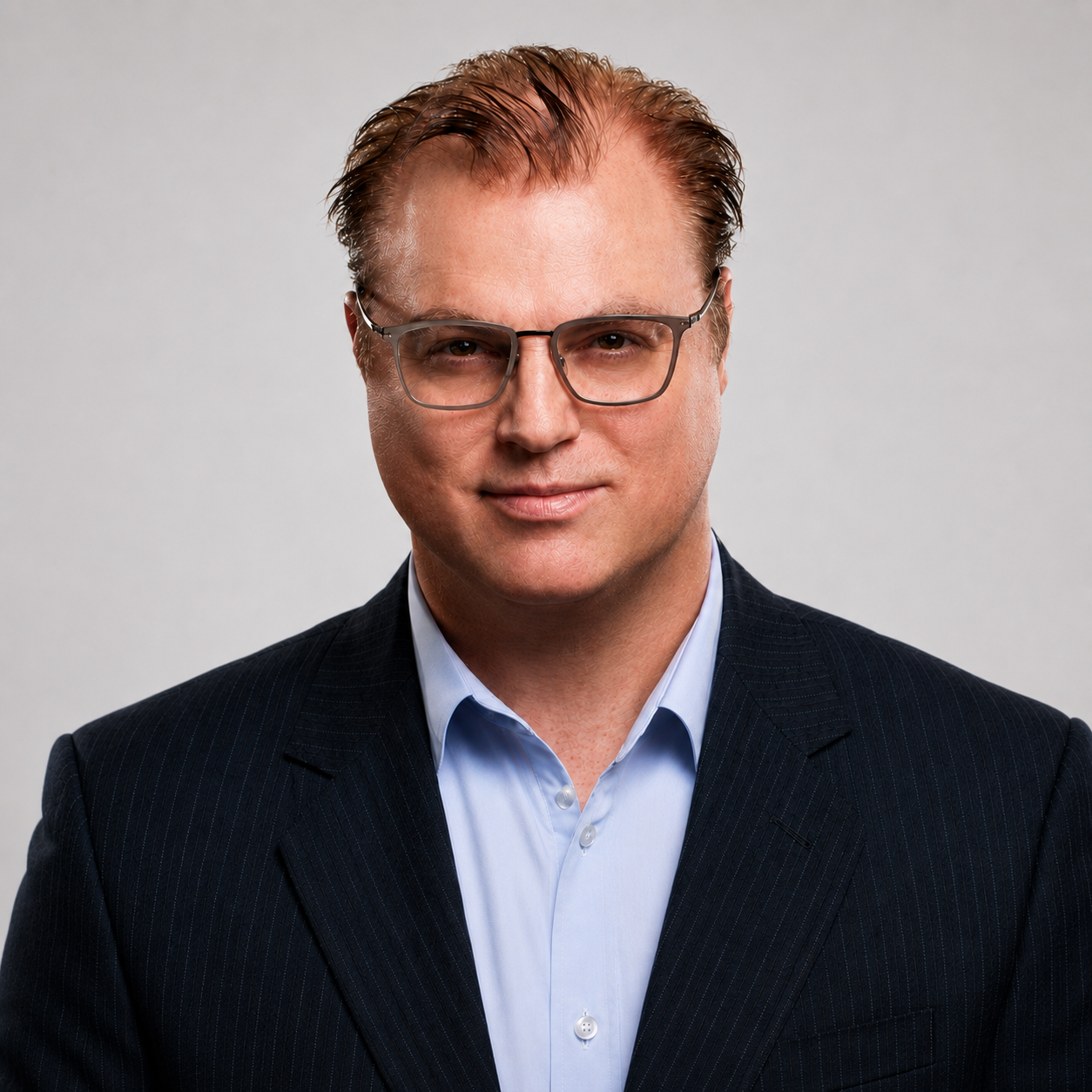
Phil Fersht recently had a candid conversation with Mohit Joshi, President, Infosys, about his views on the banking sector and the future of Infosys and the market as a whole.
Mohit openly admits that he had little knowledge of the technology services business while growing up in India; instead, he chose to spend his time studying for a degree in history. He then joined a business school and ultimately found himself in the banking industry. In the opening discussion, Mohit explained that he saw banking in India shift in 2000, becoming more commoditized—this is what sparked his curiosity about the world of technology. Eventually, through a friend, he found himself working for Infosys in Boston as a business development manager. Mohit moved around North America, watching Infosys grow from a $180 million company in 2000 to the almost $13 billion company it is now before moving to London, where he currently resides.
Here is part two of this two-part series, where Phil and Mohit move on to discuss the recent success of Infosys, how the firm must adapt to remain relevant in the future, and the wider IT services market.
Phil: We’ve talked a lot about the banking industry. You’re in a company that has had an excellent couple of years, and things are moving in the right direction in terms of stability of the firm. Infosys recently performed extremely well in our Banking and Financial Services Top 10 report.
So how do you see Infosys developing in the next couple of years? What do you see as the key challenges and key opportunities for the firm?
Mohit: I’ll take the key opportunities first. I think the key opportunity for us is the need for banks to invest in technology and to use technology to reshape their cost and customer interaction models. I think that will continue over many years. I have never met a bank that intends to spend less on technology over the next five years than they did in the previous five years. So, Infosys’ relevance will continue, because as a firm we:
I think the skillsets and the experience that we have will continue to remain extremely relevant for our clients. So, to that degree, I think we will get an increased share of the increased spending from banks on technology.
“From an access perspective, it’s important for us to look at our model very closely and see what makes us unique.”
Historically, Infosys and a lot of consulting firms have been very good at a number of things, but we need to figure out the couple of things that we are exceptional at. We are starting to get a glimpse of that and are working very hard on identifying the key differentiators for us and the key areas where we have expertise. Part of it is on the technology side, where we are focused very much on the live enterprise paradigm that we have outlined; however, from a business perspective, we have a couple of assets that truly make us unique.
We have Finacle. It is the most popular banking platform in the world, with over 1.3 billion end–user accounts and over a billion unique customers. Finacle is a next–generation platform with immense utility for banks as they’re looking to upgrade, replace, or have greenfield implementations of new platforms. Finacle is a unique asset for us to tie to our services story. The other story that we are building out is around platforms; we have at least five platform families in the company, as well as the Finacle family we have the McCamish family, a platform around mortgages, a learning platform and a strong set of platforms around automation and AI, to name a few.
So, we can link key customer opportunities, such as increasing their market share in the mortgages space where we have strong consulting and implementation stories, and we can increasingly also offer capabilities from Finacle. We are looking at the key revenue pools, where our customers really make money, whether it’s mortgages, lending, pensions, annuities, credit cards, or life insurance, and looking to bring together the combined proposition that we can take to them. Obviously, everybody else is trying to do the same thing at the same time, but I feel that our ability to speed this up will be one key determinant of our success.
“If we grow complacent with the fact that our track record and our execution excellence alone would carry us, it wouldn’t be enough.”
I think the second thing is the narrative. When Salil Parekh came in as the CEO, we worked together as a leadership team to identify why clients choose to work with a particular partner. We concluded that while a track record and execution excellence were very important, even more important at this time of digital disruption was the fact that you want to work with a partner that can see around corners and help you navigate your way through the digital disruption. Building up that narrative and building out next–generation capabilities is going to be very important. It wouldn’t be enough for us to grow complacent with the fact that our track record and our execution excellence alone would carry us. We need to retool the firm with digital skills, next-generation AI, blockchain, AR and VR type skills, and we need to retool our workforce and build new talent in the geographies in which we work. If we slack off or get distracted from any of these, then we will slowly become irrelevant.
Phil: Do you think you’ll have as many key competitors in two or three years, as well? Or do you feel that our own market is verging toward some actual consolidation now?
Mohit: I think you’re right, Phil. The market is consolidating in the middle. There are a lot of mid-sized players; historically, their main proposition was that they might not have the breadth of service offerings that the larger players have, but they were lower risk than the smaller players and would care more about your business. I think that proposition is not very attractive anymore.
Because large customers, the Fortune 1000 or Fortune 2000 customers, are not really worried about the fact that they may not be relevant or central to a partner’s journey, so the space in the middle is getting hollowed out. What is important for us is to make sure we provide the scale that other large players do, but, equally, that we are able to keep up with the latest trends, and that we’re able to quickly reinvent ourselves. The whole idea of agile and our DevOps didn’t really come from the large players; it came from the smaller players like ThoughtWorks or Bluebonnet. In the services space, unlike the product space, the need and ability to reinvent ourselves very quickly is crucial, and we will have to keep doing that.
Consolidation at the top is slightly more difficult because you end up with a huge overlap of customers. Most of the firms are $40 or $50 billion–plus in terms of market cap; it’s harder to see consolidation at the very top, except in some instances that I won’t name, where firms may have had a catastrophic 40% or 50% drop in their share price, and therefore may become vulnerable to a takeover. But excluding those exceptions, I think the top end will remain pretty stable with five or six main players, the middle will get hollowed out, and the smaller firms will remain buoyant as new firms evolve and some of the less successful firms die out or get swallowed up.
Phil: I’ll finish up with one last question. If I could anoint you the king of banking technology today, and you had one wish that I could grant for you, what would that wish be to change this industry?
Mohit: The biggest challenge for banks, unlike other industries, is the fact that you’ve got such fragmentation of applications. Every time a new service line came up, or every time a new market opportunity came up, people would build systems. Over time this has meant that a typical large global bank has upward of 5,000 applications. I think the cloud now presents a tremendous opportunity to consolidate a lot of these applications, but it is not the sexiest or the most appealing of opportunities. The biggest change that is required, from a bank’s perspective and a banking technology perspective, is still the cultural aspect. Banks are still incredibly siloed organizations. If I was the king of banking or the king of banking technology—if there was a way to unite the various arms of a bank around a common purpose and to rid them of silos and to get them working on a common platform, I think it would be a huge win. This is why incumbents are typically seen as more nimble, responsive, and successful; they are usually working off a common platform. It is hard to imagine a manufacturing company without an ERP backbone. Hopefully, you will see banks less siloed and working off common platforms, ideally on the cloud.
Phil: Well, you answered that very well. Really thank you for your time today, Mohit, it’s been good talking, and I look forward to meeting up with you again soon.
If you missed the first part of this interview, where Phil and Mohit discuss in-depth the banking industry as well as current disruptors and what is hindering digital transformation in the sector, click here
Register now for immediate access of HFS' research, data and forward looking trends.
Get StartedIf you don't have an account, Register here |
With the exception of our Horizons reports, most of our research is available for free on our website. Sign up for a free account and start realizing the power of insights now.
Our premium subscription gives enterprise clients access to our complete library of proprietary research, direct access to our industry analysts, and other benefits.
Contact us at [email protected] for more information on premium access.