This HFS Highlight is for CTOs, CIOs, and ER&D GCC leaders building vision AI capability for defect detection, real-time process monitoring, and shop-floor safety in manufacturing.
Improving speed, scale, and product quality, and employee safety continues to be a persistent challenge for manufacturers. In the semiconductor industry, vision AI is emerging as a powerful tool to automate the 2,000-plus steps involved in chip production by identifying areas the human eye can’t reach. CTOs and CIOs have an opportunity to use this technology to improve quality and throughput while ensuring shop-floor safety, potentially saving their enterprise millions of dollars.
ER&D GCCs, including those operating offshore, can bring vision AI’s capabilities to the plant. The tech integrates hardware, software, firmware, and human intelligence to not only identify defects much more accurately but also monitor shop floors, track manufacturing performance, and improve overall efficiency.
These opportunities, as well as the challenges of using vision AI, were discussed at the TechForward session with ER&D GCC leaders, held in collaboration with Micron, IIIT-H, and HYSEA, in July 2026.
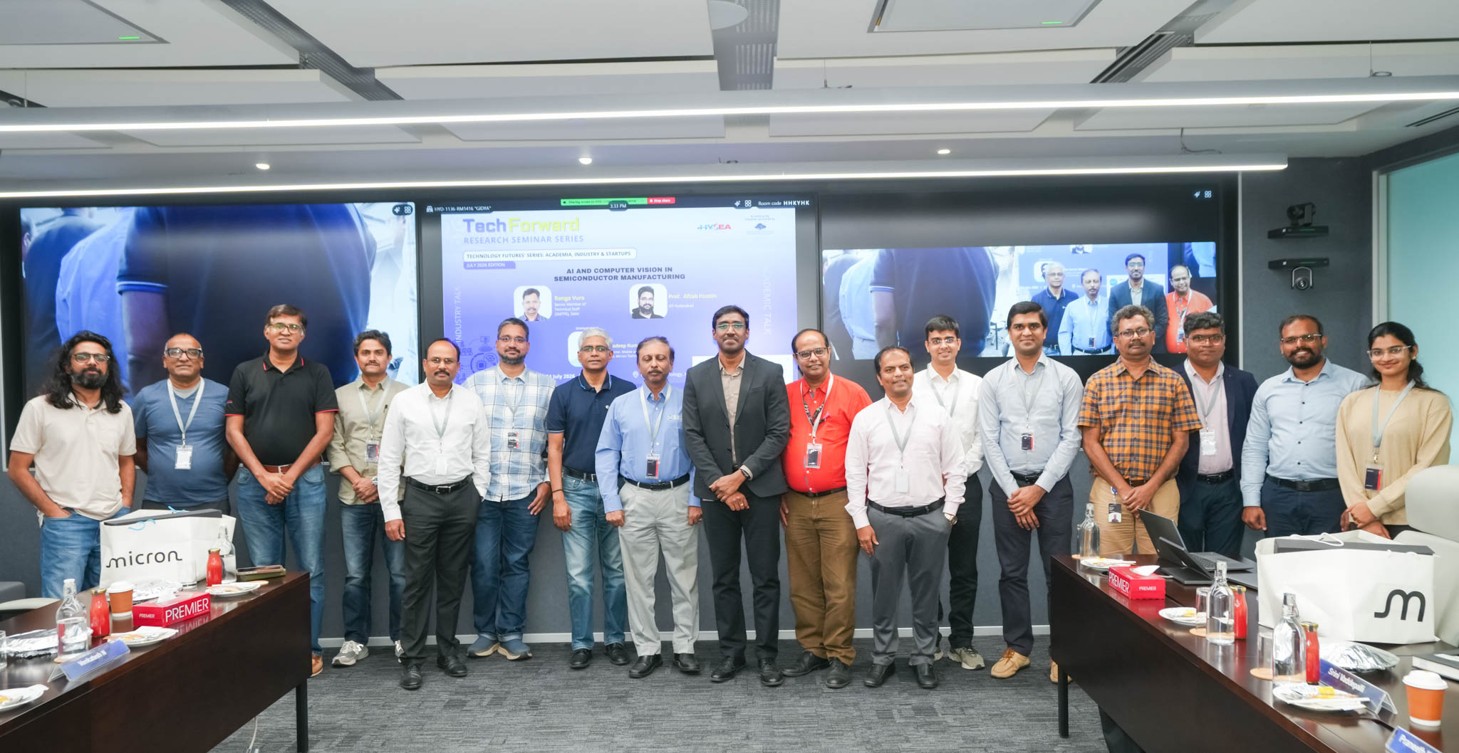
In the picture: Leaders from Micron, Thermo Fischer, Enovix, Silicon Labs, Cognizant, Octave, Hexagon, BOSCH, Qualcomm, Stellantis, and HYSEA, and IIIT-H professors
ER&D GCCs are already leveraging vision AI in limited use cases such as monitoring occupancy ratios for assets, inventory, and raw materials to maximize usage, and detecting defective products. An HFS survey identifies its growing potential in manufacturing (see Exhibit 1). When integrated with multimodal AI, GCCs can expand its scope by experimenting, failing fast, and learning to deploy more quickly to interpret a wider range of data to drive better outcomes and ROI.
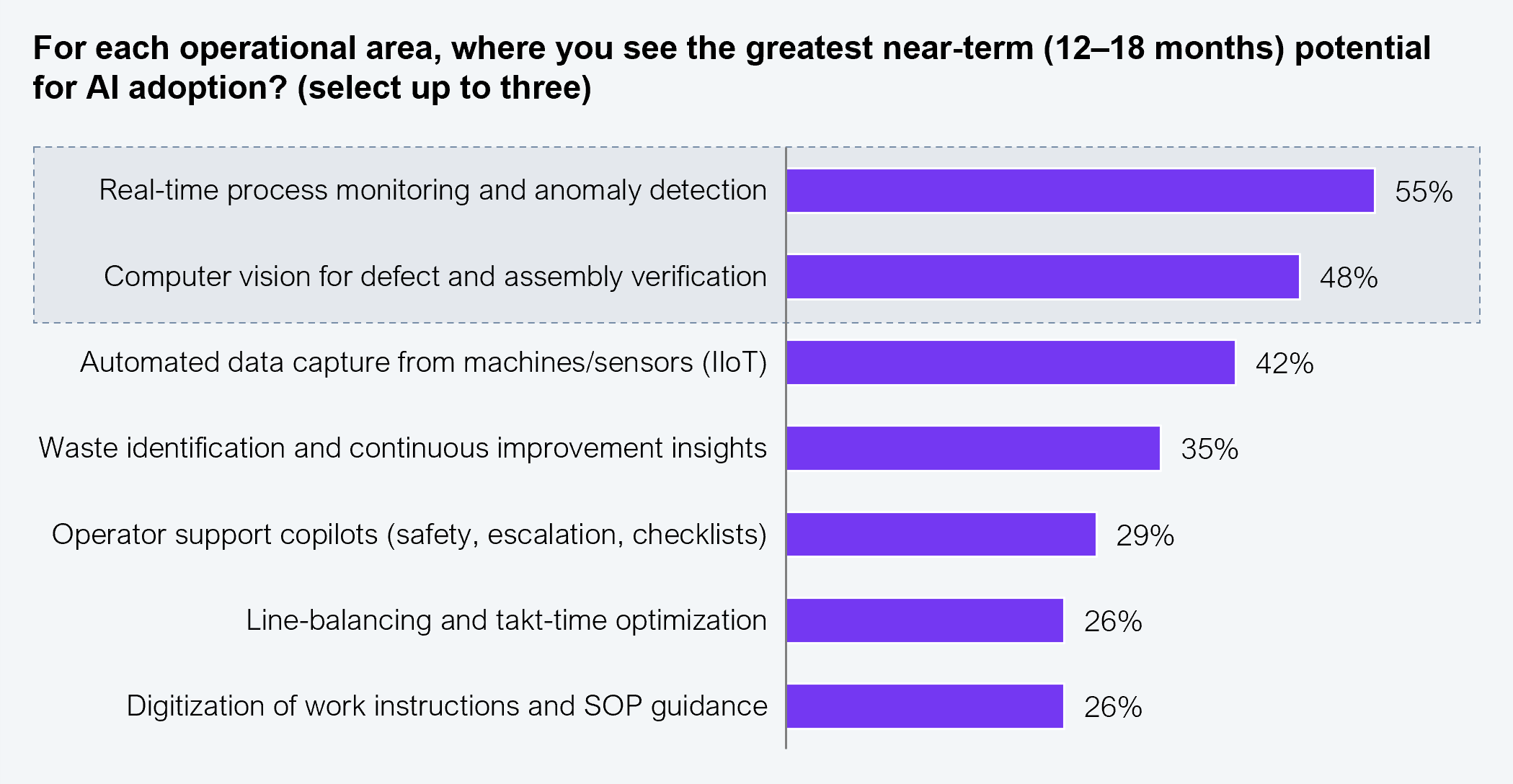
Sample size: 31 Forbes Global 2000 manufacturing enterprise decision makers on the AI use cases; The total does not add to 100% due to multiple selection options
Source: HFS Research Pulse, December 2025
ER&D GCCs can use vision AI to streamline the 2,000–2,500 steps involved in chip manufacturing, but integrating it across environments is complex. It requires coordination across various AI models, cloud services, and other components influenced by the plant, process, and personnel to capture data, analyze it, interpret the results, and trigger the right action.
HFS Agentic and GenAI Compass points out that service providers are already addressing some of these complex challenges. Some use cases include defect detection, physical testing of automobiles, and reduced incidents in plants, all made possible by integrating vision AI into edge devices, with cameras trained on vision language models (VLMs).
Here are some examples of provider use cases:
These use cases show that applying vision AI needs a strong data foundation, continuous model training, low latency, and skilled AI talent to effectively deploy these solutions and achieve the right outcomes.
The leaders at the roundtable talked about many challenges. Four areas emerged that needed attention:
Addressing these challenges requires more than improving individual models. ER&D GCCs must build a vision AI capability model that combines a reusable image data foundation, continuous model training, and hybrid edge-cloud architectures that balance interoperability, accuracy, and latency across processes and plants to deliver measurable improvements in quality, throughput, efficiency, and ROI.
Register now for immediate access of HFS' research, data and forward looking trends.
Get StartedIf you don't have an account, Register here |
With the exception of our Horizons reports, most of our research is available for free on our website. Sign up for a free account and start realizing the power of insights now.
Our premium subscription gives enterprise clients access to our complete library of proprietary research, direct access to our industry analysts, and other benefits.
Contact us at [email protected] for more information on premium access.