This HFS Take 5 report is for CIOs, chief AI officers, and enterprise transformation leaders working to make agentic AI reliable enough to trust in business-critical operations.
The challenge in enterprise AI is no longer about deploying it. It’s about proving that the business can rely on it to deliver intended business outcomes.
As AI moves beyond copilots to agents capable of making decisions and taking action, the definition of reliability is changing. It’s no longer measured by uptime or model accuracy alone. It’s measured by whether AI can consistently deliver business outcomes, remain under enterprise control, and earn the confidence of business leaders, customers, and regulators. Today, only 35% of executives say their AI clears that bar.
HFS Research, in partnership with TCS, surveyed 101 C-suite and technology leaders in the US and Canada to understand how enterprises are defining, measuring, and improving AI reliability in the agentic era. The mandate for leaders is clear: treat reliability as a business discipline, measured in outcomes, engineered beyond the model, and owned at the executive level.


AI is no longer judged by whether it can generate answers. It is judged by whether the business can depend on those answers to deliver business outcomes every day.
As AI moves beyond pilots and becomes embedded in business-critical operations, the challenge has fundamentally changed. Enterprises have spent the last two years experimenting with AI. The next challenge is proving it can work consistently, predictably, and at scale. That shift is now about aligning AI goals to the reliability requirements of larger enterprise outcomes.
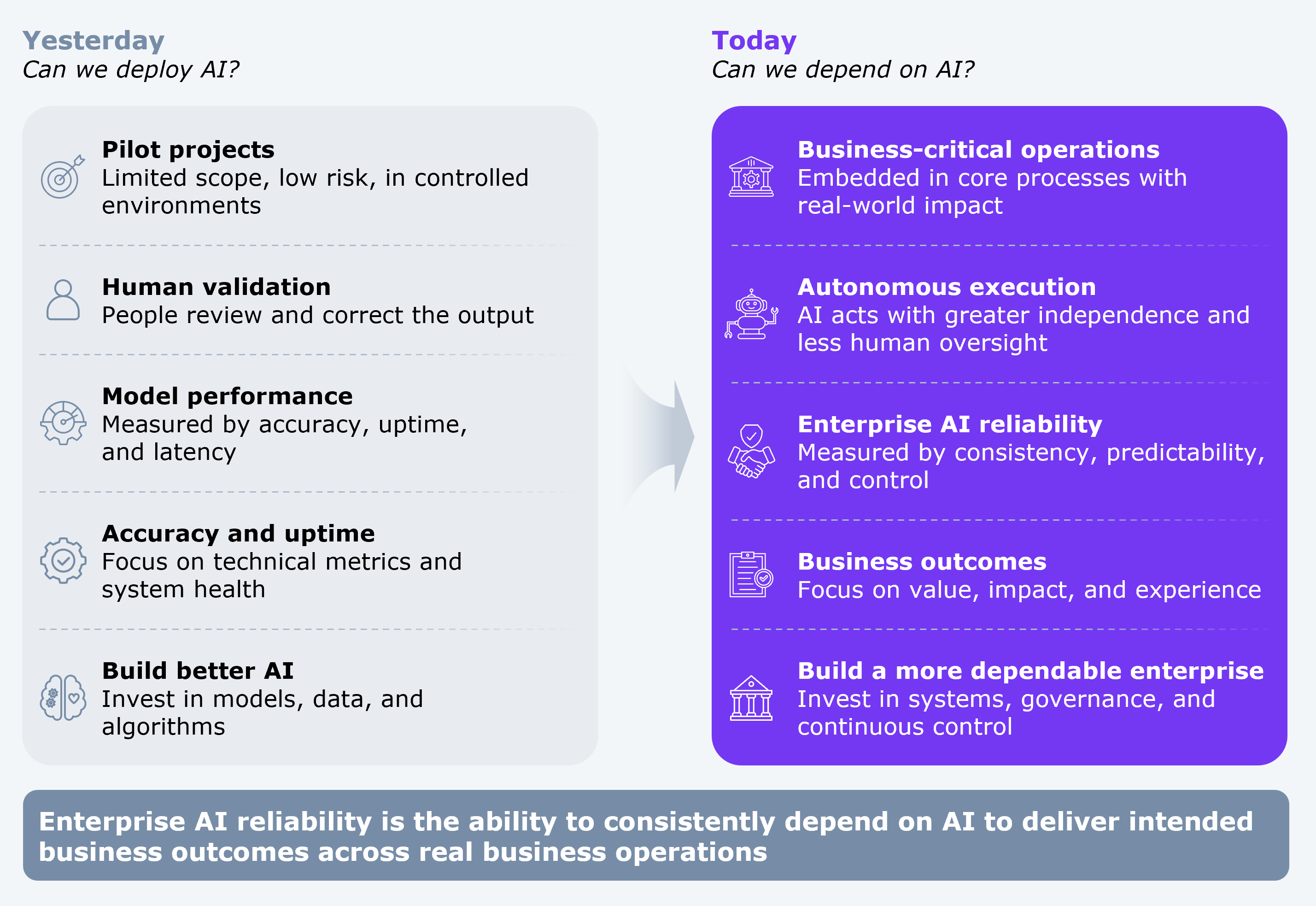
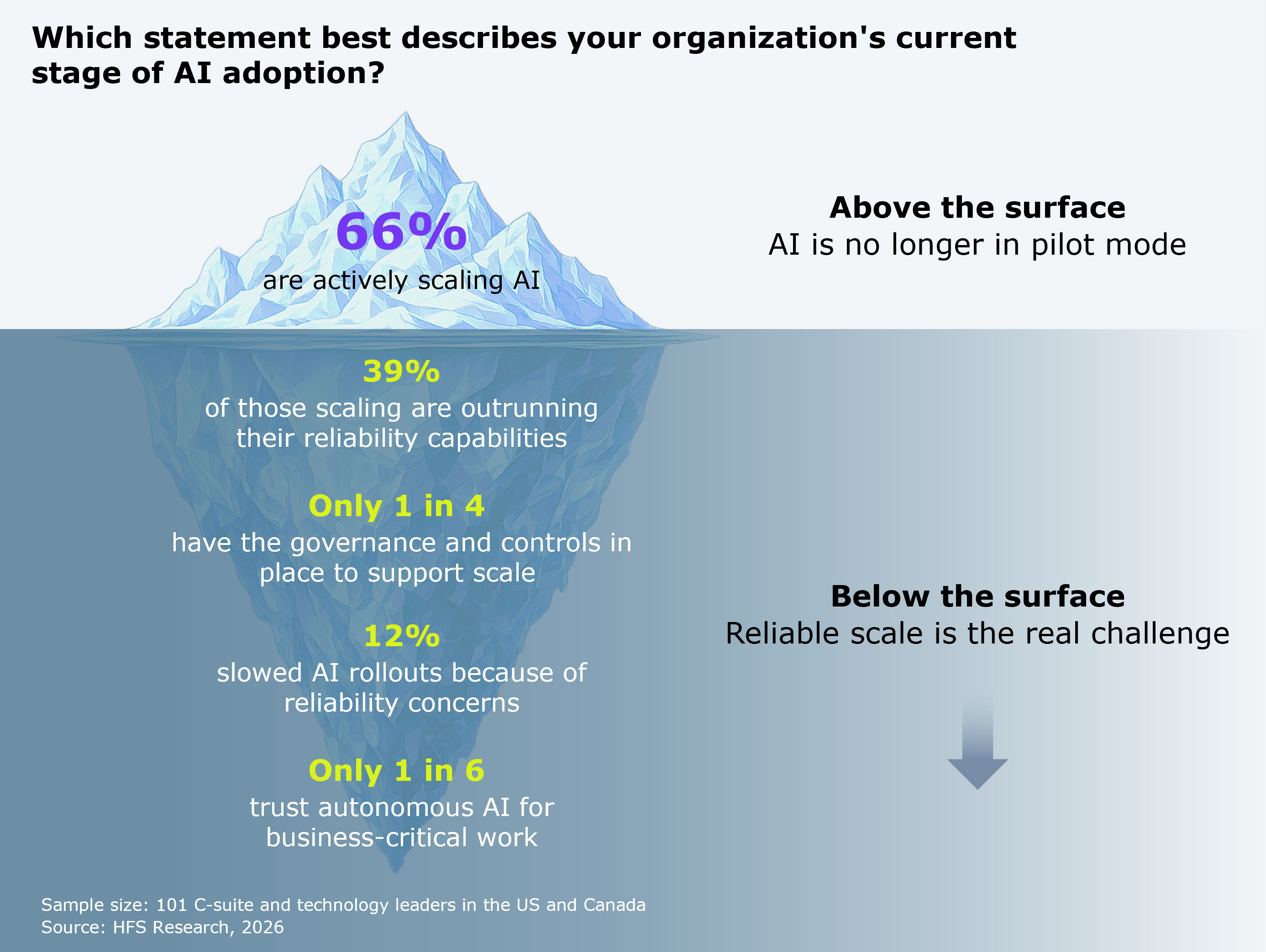
Most organizations have moved beyond asking whether AI can create value. The challenge is making AI dependable enough to support everyday business operations.
While 66% are actively scaling AI, many acknowledge they are moving faster than they can govern, control, and build trust in AI. That gap is beginning to slow down adoption, limit confidence in business-critical use cases, and make it harder to scale AI consistently across the enterprise.

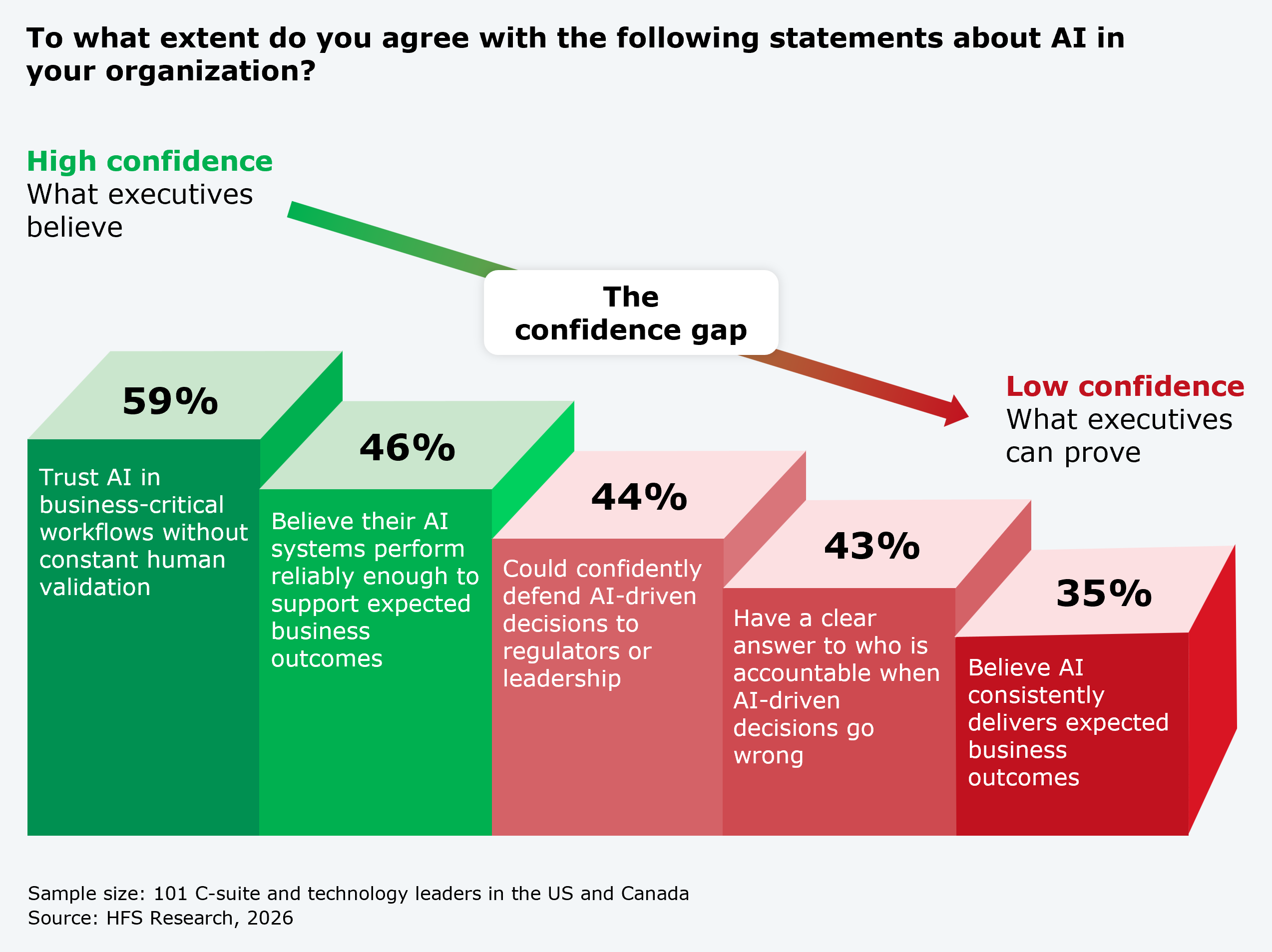
Enterprise confidence declines as the standard of proof increases.
Most organizations trust AI in principle, but confidence falls as AI moves closer to business-critical work. Believing AI works is very different from demonstrating that it consistently delivers business outcomes, that decisions can be explained, and that accountability is clear.
Enterprise AI reliability is built on evidence, not belief.

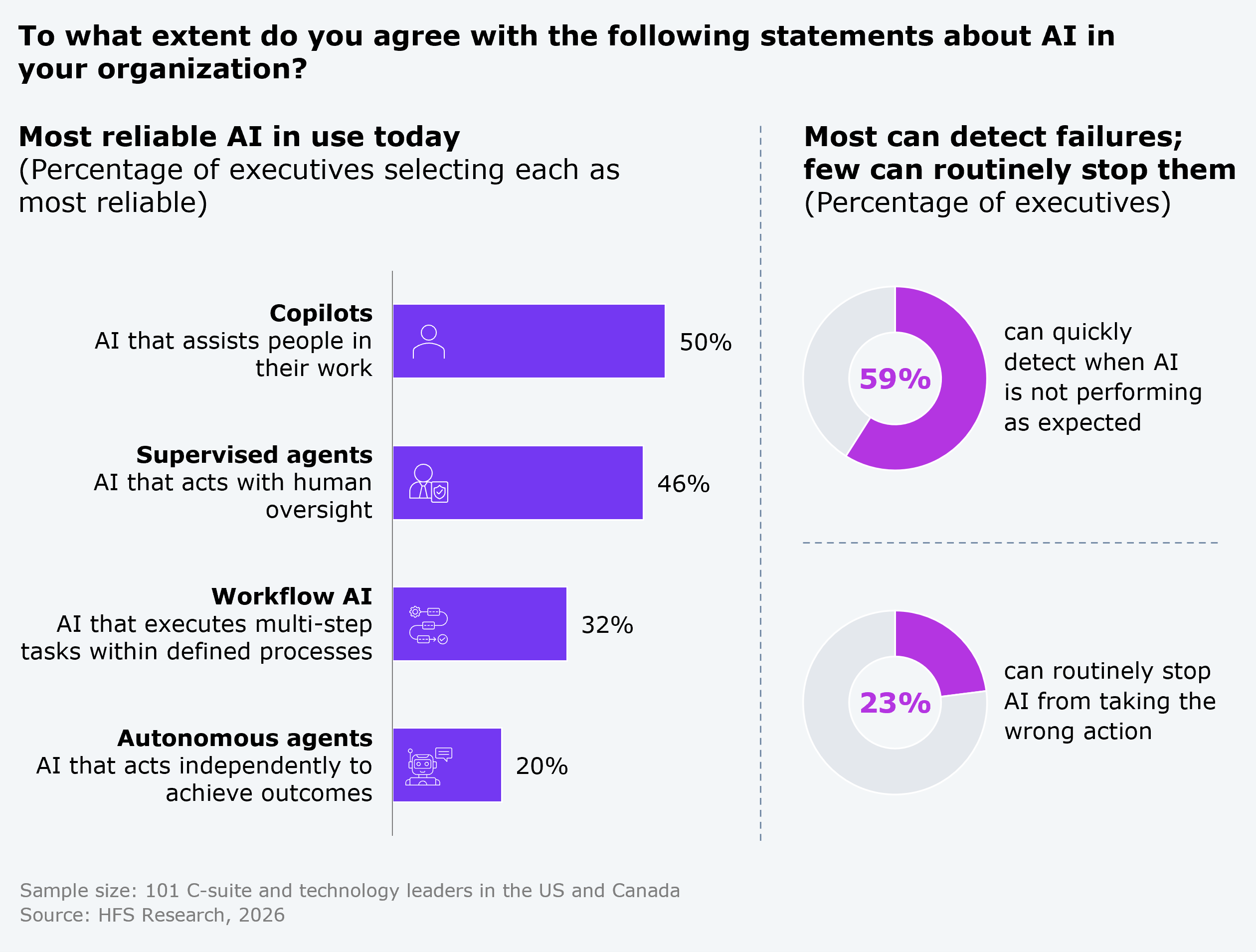
Organizations are most confident in AI when people remain involved. Copilots and supervised agents are considered the most reliable because humans can intervene when needed. Confidence falls as AI takes on greater responsibility.
Nearly six in ten organizations can detect when AI isn’t performing as expected, but fewer than one in four can routinely stop it before errors cascade into business disruption.

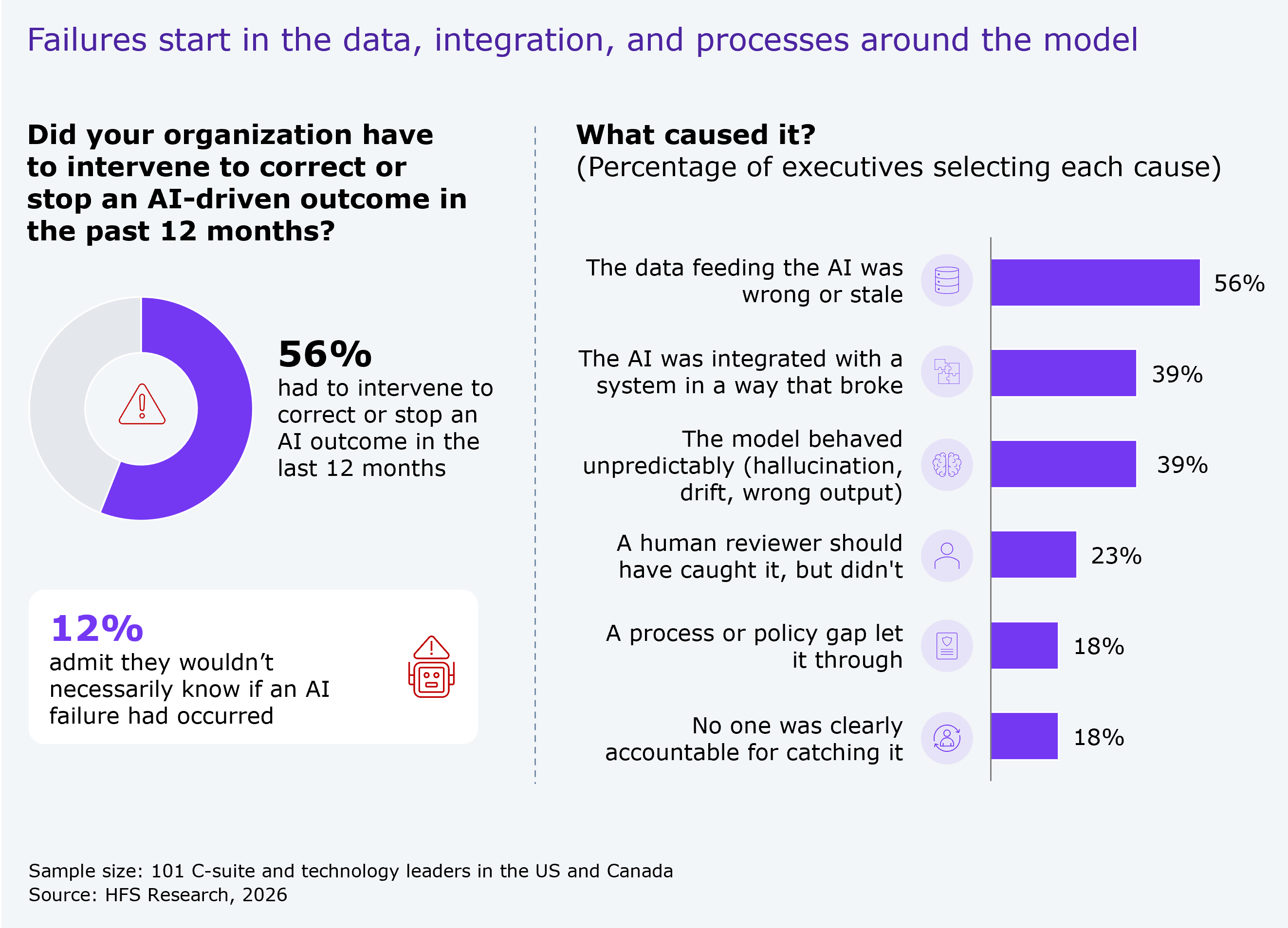
More than half of organizations have had to intervene to correct or stop an AI-driven outcome in the past year. While model behavior receives most of the attention, failures are more often rooted in poor data, broken integrations, and operational gaps.
Foundation models proved their value by making sense of publicly available information. Enterprise AI succeeds only when it can reliably work with enterprise information. It depends on fragmented customer, financial, operational, and product data that is often siloed, inconsistent, or poorly integrated. The challenge shifts from generating intelligent responses to connecting AI with enterprise information it can reliably use.
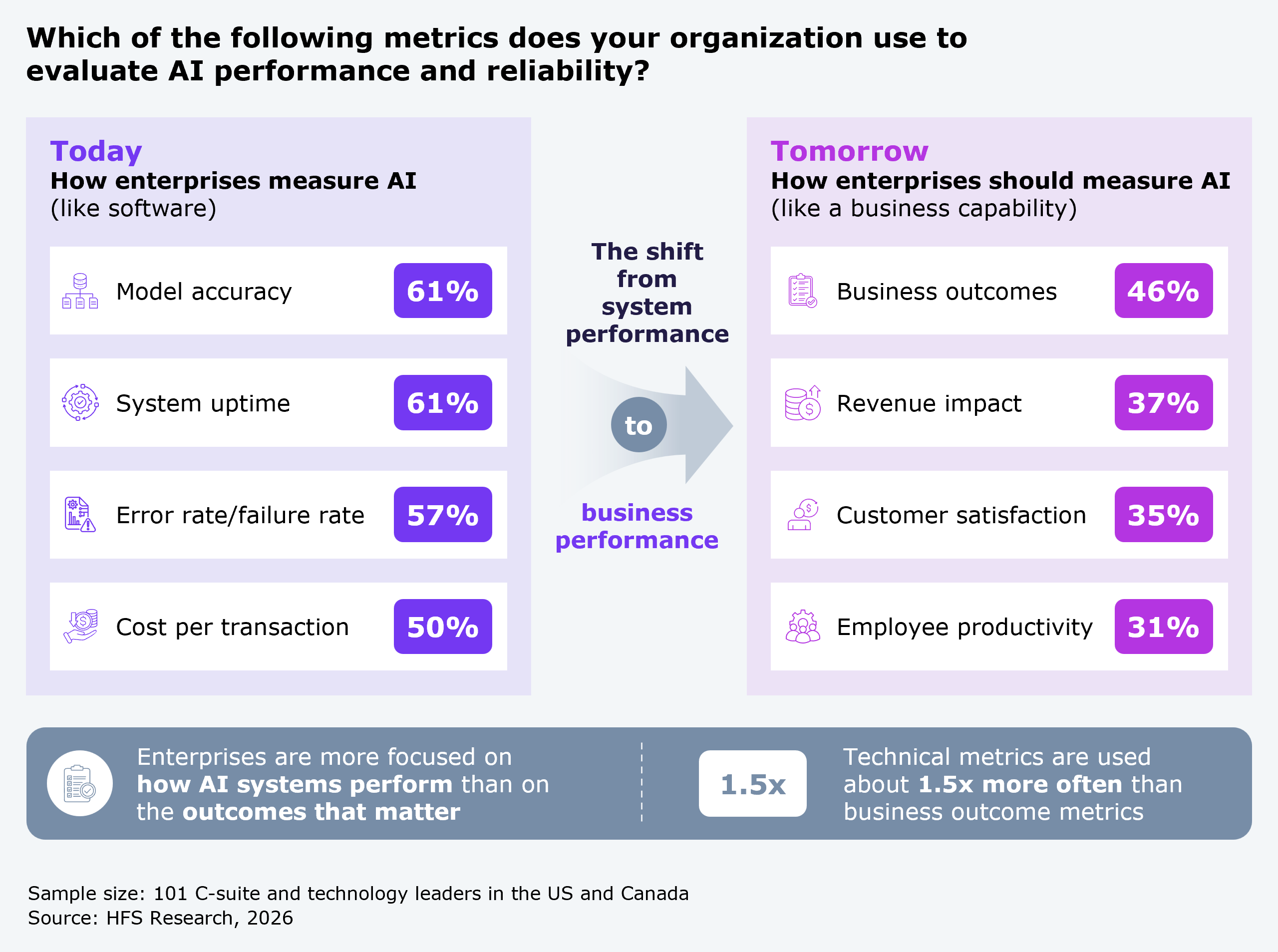
Enterprise AI has moved beyond technical experimentation, but the way organizations measure success hasn’t kept pace. Accuracy, uptime, and error rates remain the dominant measures of AI reliability, while far fewer organizations measure whether AI improves business outcomes, drives revenue, or creates better customer experiences.
That creates a disconnect. AI isn’t deployed to achieve high uptime. It’s deployed to improve business performance. As AI becomes embedded in core operations, reliability must be measured by the consistency of business outcomes, not simply the stability of the technology.

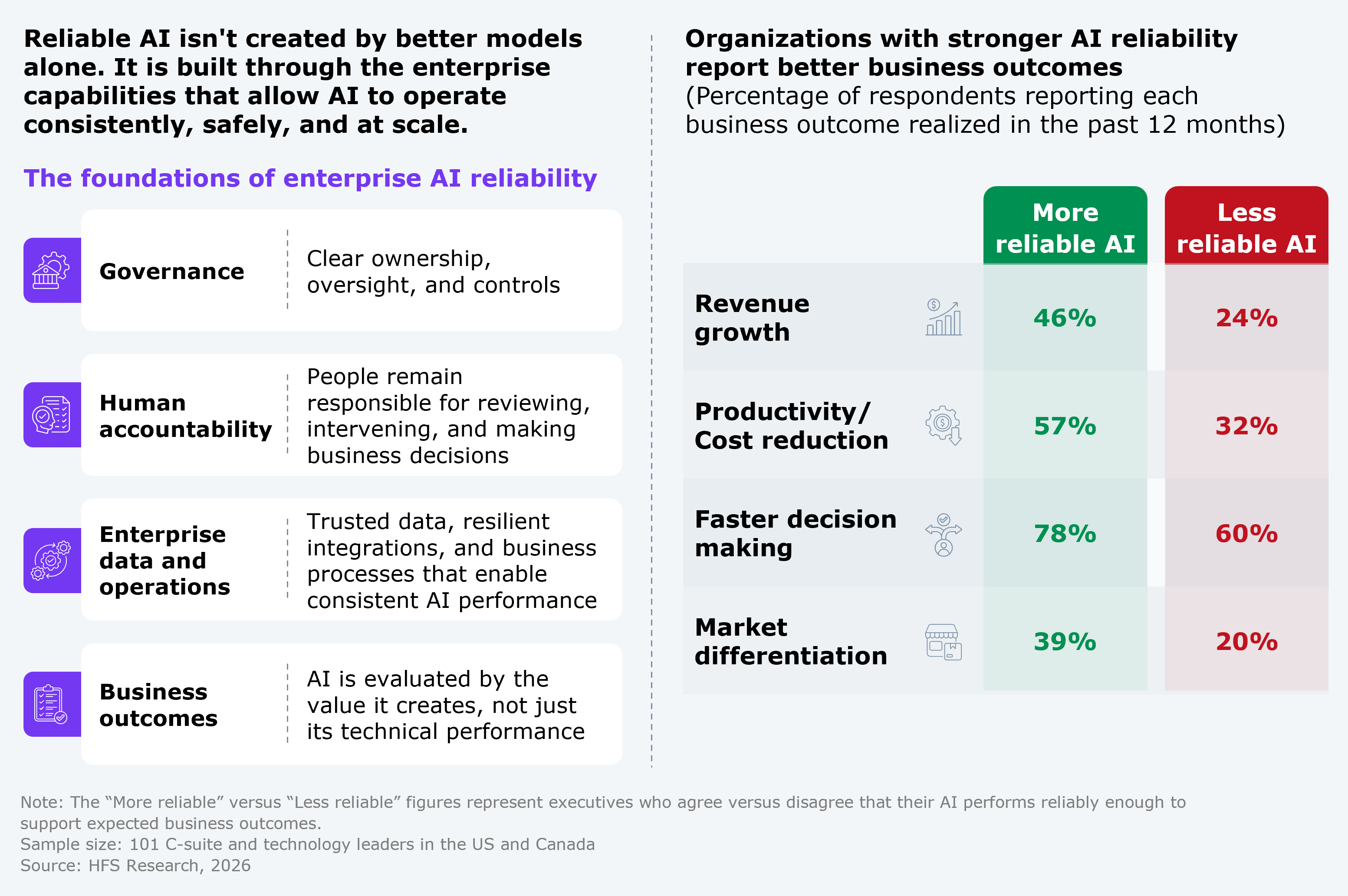
Reliable AI is becoming the multiplier between AI investment and business value
Reliability is no longer simply a technical capability. It is the business capability that determines whether AI investment translates into measurable value. As AI becomes embedded in core business processes, the organizations that create the greatest advantage won’t necessarily deploy the most AI. They’ll be the ones building AI that the business can depend on for outcomes.
Register now for immediate access of HFS' research, data and forward looking trends.
Get StartedIf you don't have an account, Register here |
With the exception of our Horizons reports, most of our research is available for free on our website. Sign up for a free account and start realizing the power of insights now.
Our premium subscription gives enterprise clients access to our complete library of proprietary research, direct access to our industry analysts, and other benefits.
Contact us at [email protected] for more information on premium access.