The HFS Point of View “ER&D GCCs, make your leaders, data, and talent ready to scale industrial AI” is for manufacturing CIOs, CTOs, and ER&D GCC leaders building the leadership, data, and talent readiness needed to move industrial AI beyond pilots.
Manufacturing CIOs and CTOs are still struggling to scale AI beyond pilots. While machine learning, vision AI, and predictive analytics applications deliver significant gains, manufacturing operations are often hindered by heterogeneous and uncontextualized data, limited access, and regulatory constraints.
According to the U.S. Census Bureau, AI usage in manufacturing (15%) remains lower than in the information (39.7%) and finance (33.9%) sectors, as it requires multiple layers of standardization and contextualization. The data variability is multi-fold, spanning inventory, temperature, pressure, energy consumption, vibration, density, and, more importantly, safety. The issue is contextualizing these vast volumes of data for meaningful outcomes.
Increasing industrial AI adoption starts with reengineering data generated across multiple machines, formats, plants, and systems. This cannot be addressed by in-sourcing to GCCs alone. Manufacturers must orchestrate with multiple ecosystem partners and make their enterprise leaders, data, and people AI-ready to accelerate deployment and improve ROI.
The CIOs and technology leaders we spoke with consistently highlighted the high upfront capital costs for hardware, middleware, software, sensors, and IT/OT integration in their automation journey, often without clear business value or ROI. Their biggest obstacle in scaling industrial AI success is not model capability. It is about overcoming fragmented, inaccessible, and low-quality data, lack of context, and poor IT/OT integrations (see Exhibit 1). Only a few manufacturers have high-quality, well-governed data that’s accessible to the right people.
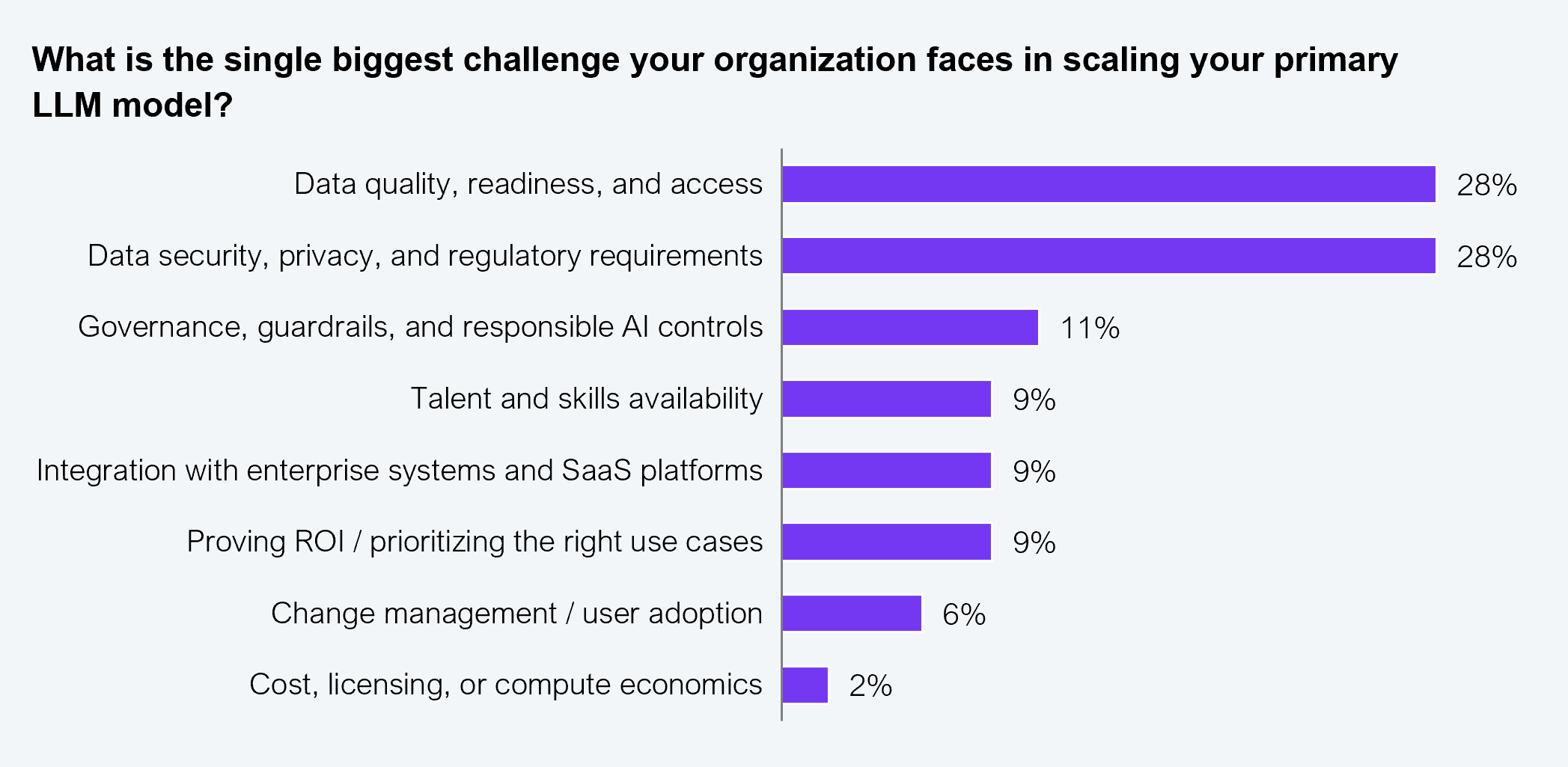
Sample size: 57 Forbes Global 2000 manufacturing, energy and utilities, and life science enterprise decision makers; total does not add to 100% due to multiple selection options
Source: HFS Research Pulse, June 2026
Before 2022, ER&D GCCs were primarily executing transactional tasks that headquarters demanded and commanded. That role expanded after the launch of large language models (LLMs) and the urgency to innovate to remain competitive. With cloud technologies in place, GCCs have easier access to data for issue resolution and to accelerate innovation using image and video analytics and sensor-based data shared through edge gateways, APIs, and secure VPNs.
Because LLMs are non-deterministic, most ER&D and industrial GCCs are investing heavily in AI trust, risk, security, and governance frameworks (see Exhibit 2). They have moved beyond experimenting and piloting multiple projects internally and with partners to now decommissioning third-party tools, integrating multiple services, and building their own platforms. HFS refers to this transition as Services-as-Software™.
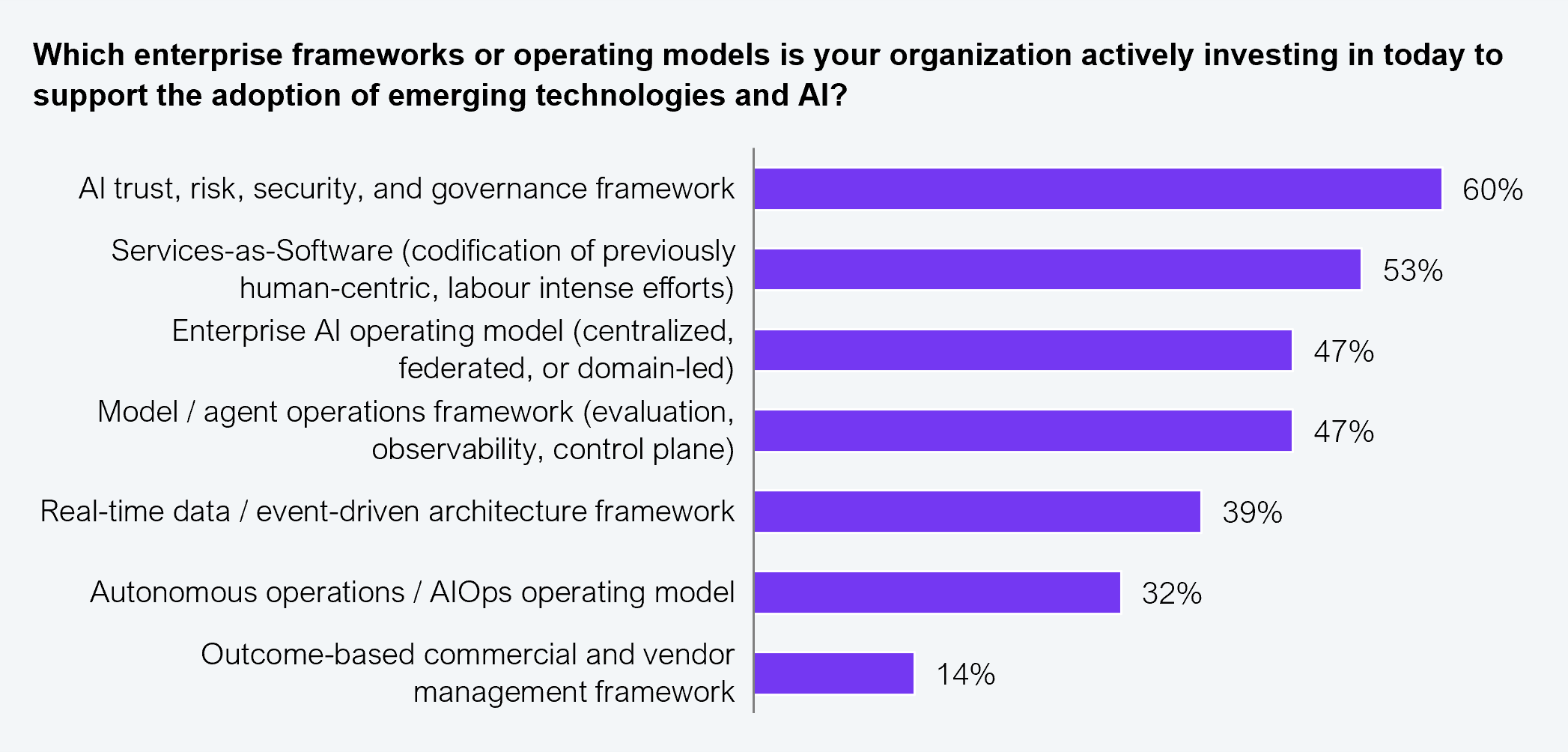
Sample size: 57 Forbes Global 2000 manufacturing, energy and utilities, and life science enterprise decision makers; total does not add to 100% due to multiple selection options
Source: HFS Research Pulse, June 2026
Some India-based ER&D GCCs are already seeing results, saving their parents millions. An auto manufacturer’s GCC developed a predictive model called Robot Wizard to predict robot arm failures hours in advance. Qualcomm, which leads in filing the highest number of patents from India, committed a $150 million investment through Qualcomm Ventures in AI, IoT, mobility, and industrial applications to build a strong partner ecosystem of IT services providers, academia, and startups.
But these are outliers. According to the HFS GCC Intel 360 data suite, roughly 960 ER&D GCCs in India are struggling to innovate at the same scale as Qualcomm. The gap is the lack of readiness, specifically whether leaders can turn their data into decisions to make machines work intelligently.
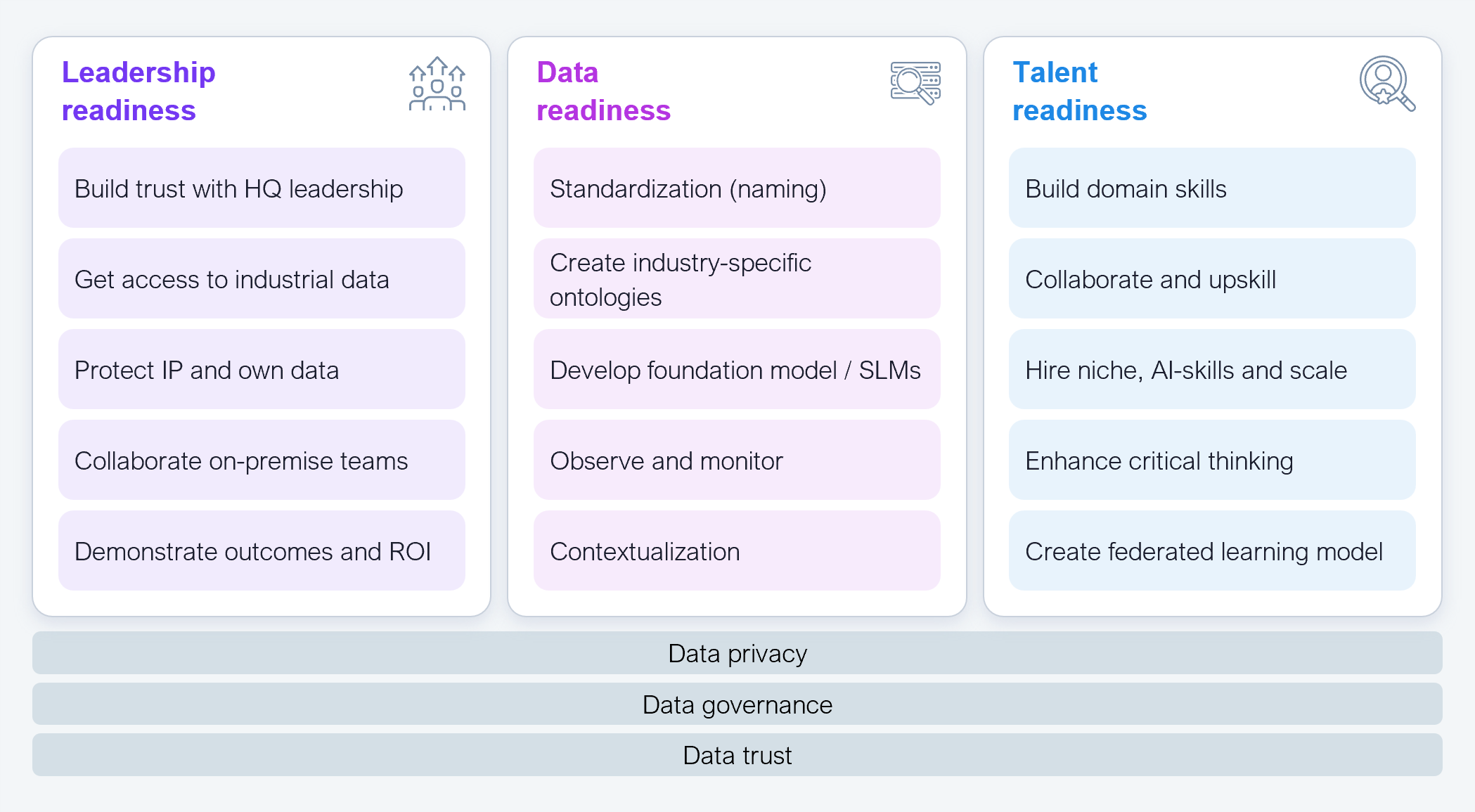
ER&D GCCs that develop IP and consistently drive innovation have a clear understanding of the value and outcomes that AI can deliver. They have strong leadership in place, along with established data standardization and contextualization practices, and build their talent for new manufacturing methods. In essence, they are investing in leadership, data, and people to accelerate the industrial AI journey (see Exhibit 3).
Source: HFS Research, 2026
Manufacturers should focus on these three areas:
Leadership readiness: Align on a shared enterprise vision that applies to GCCs, business units, and functions, percolating down to individuals. Work toward building trust, enabling ownership, and giving the right data to the right leaders to drive data readiness initiatives. Many global group companies are already giving their GCCs full ownership to drive outcomes. As a CTO an auto manufacturer group put it:
For us, R&D is one big team. And with regard to the India center, I love to say that in each and every Mercedes, there is a bit of India in it. We started with hardware, but now it’s massively into software, infotainment, and autonomous driving.
– Jörg Burzer, Mercedes-Benz Group CTO
Data readiness: Standardize and contextualize your raw data by tagging it to a machine, process, asset, or batch. Recognize that the process may not be the same for a sister plant with different standardization rules. Building a meaningful data architecture that can derive insights and create products requires deep multimodal analytics, AI, engineering, domain, and technical expertise. An example of this practice is Bosch Software and Digital Solutions (Bosch SDS), which partnered with NxtGen to launch India’s sovereign industrial AI cloud to support Industry 4.0, digital twins, and manufacturing cloud deployments. This involved structuring and contextualizing vast volumes of data and integrating it with AI, managed infrastructure, edge, and engineering-led AI solutions.
Talent readiness: Invest in building “T”-shaped talent, wherein the vertical bar of the “T” represents specialist depth and the horizontal bar reflects cross-functional collaboration and interpersonal skills. Leading GCCs are also broadening their niche skills into industrial, materials, and chemical engineering, as well as healthcare. For example, the Medtronic Engineering and Innovation Center (MEIC) in Hyderabad is co-developing connected critical-care solutions with Apollo clinicians and other healthcare professionals through an AI-enabled ICU that doubles as a collaborative innovation hub.
Register now for immediate access of HFS' research, data and forward looking trends.
Get StartedIf you don't have an account, Register here |
With the exception of our Horizons reports, most of our research is available for free on our website. Sign up for a free account and start realizing the power of insights now.
Our premium subscription gives enterprise clients access to our complete library of proprietary research, direct access to our industry analysts, and other benefits.
Contact us at [email protected] for more information on premium access.