
HFS Research developed the Digital OneOffice and key imperatives of a OneOffice strategy that can help enterprises design and create successful transformational experiences. We use this model to define how companies must adapt their operations to be more customer-centric, nimble, and intelligent in today’s environment of digital transformation; it is how successful organizations meet and anticipate their customers’ needs. In a Digital OneOffice, organizational silos are broken down, facilitating immediate data flow between customers and business functions and placing customers’ needs at the heart of core business processes. This study segmented companies which are further along their journey toward OneOffice experiences to learn what OneOffice “Trailblazers” are doing to get more customer- centric. We found the 5 key strategic imperatives that companies must adopt in order to transform their organizations toward alignment to the customer.
The highest performing organizations across the Global 2000 companies are rethinking operations and transforming interactions to support the customer experience.
HFS Research developed the Digital OneOffice and key imperatives of a OneOffice strategy that can help enterprises design and create successful transformational experiences. We use this model to define how companies must adapt their operations to be more customer-centric, nimble, and intelligent in today’s environment of digital transformation; it is how successful organizations meet and anticipate their customers’ needs. In a Digital OneOffice, organizational silos are broken down, facilitating immediate data flow between customers and business functions and placing customers’ needs at the heart of core business processes.
Communication distinctions like “front” and “back” office disappear—leaving a single, unified company, where supporting customers and anticipating their needs becomes native to the entire organization. Organizations can directly tie employee performance to customer impact and measure staff, motivated by a customer centric-culture, across all business functions by the same goals.
At its core, the OneOffice is about making customer, employee and partner experiences the centerpiece of an enterprise’s strategy and operations. Many companies are putting customers at the heart of their business to stay relevant, fend off disruption, and drive consistent improvement to their balance sheets; this requires a path toward the OneOffice, where back-office processes are modernized and connected to support customer experience. Creating digital interfaces is just the beginning. The hard work of digitalizing and connecting all the underlying support elements and making them more intelligent is underway.
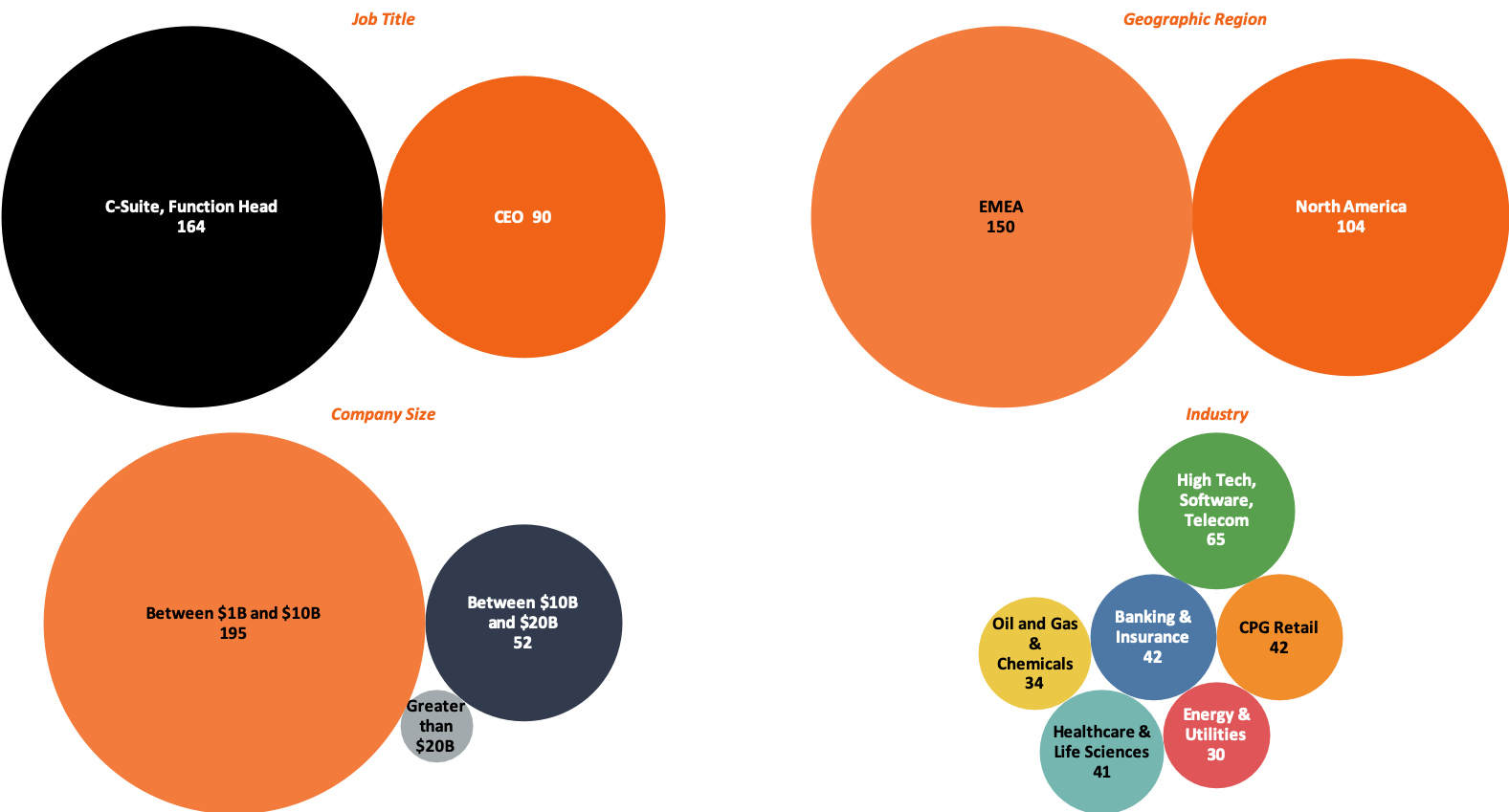
HFS investigated alignment with the OneOffice by surveying 252 enterprises across six industries in North America and EMEA. Key study findings include:
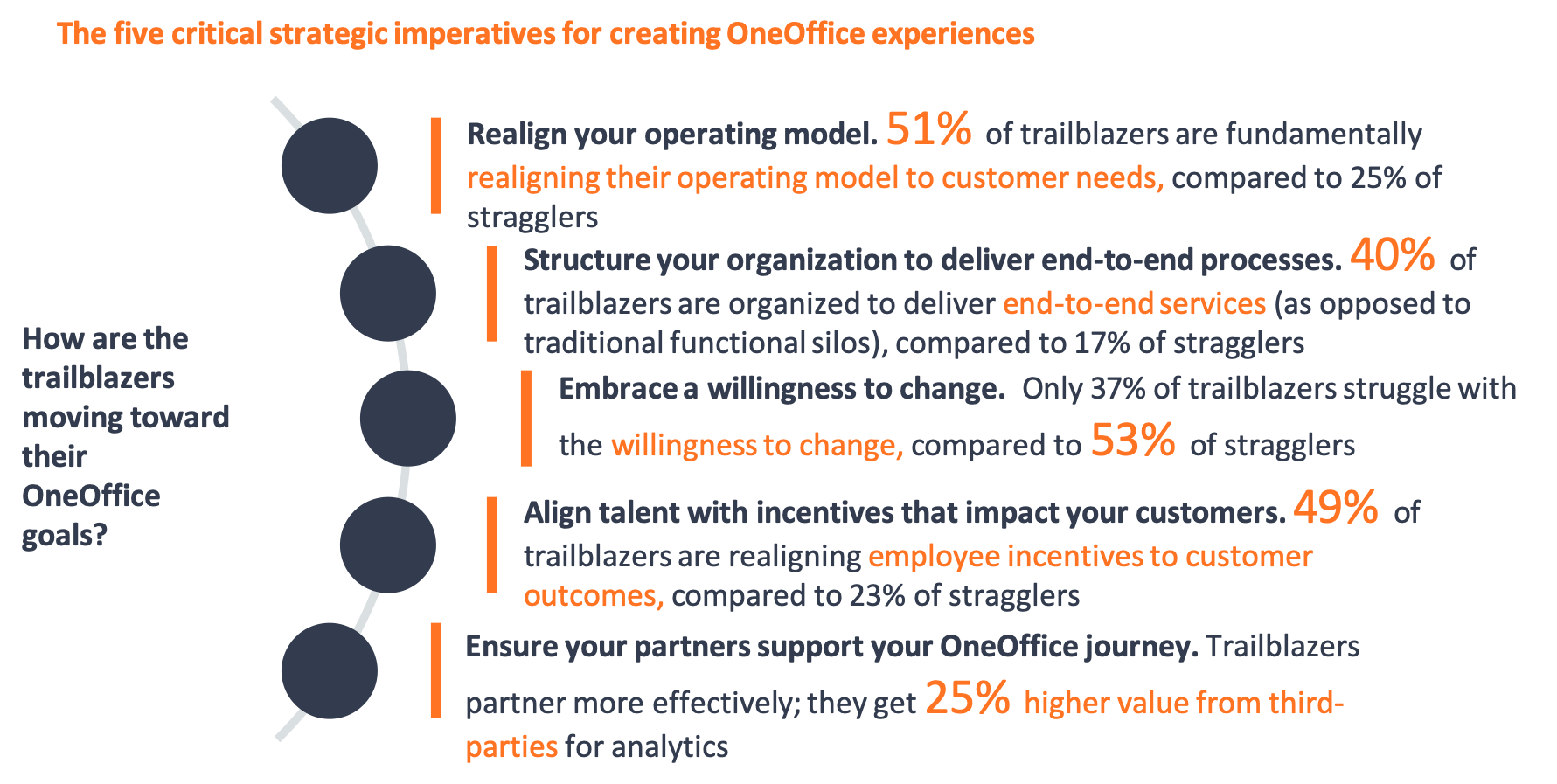
We divided the respondents into four quartiles of maturity and identified the top and bottom quartiles as “trailblazers” and “stragglers” respectively. The trailblazers are those respondents that have greater implementation levels of each of the components of OneOffice. These two groups also have several contrasting characteristics. Through a comparison of these characteristics, we identified the five critical strategic imperatives which companies need to adopt in order to move toward their OneOffice goals (Exhibit 1).
Exhibit 1: Trailblazers point to the critical changes companies must make to transform
Source: HFS Research, 2019, n=252
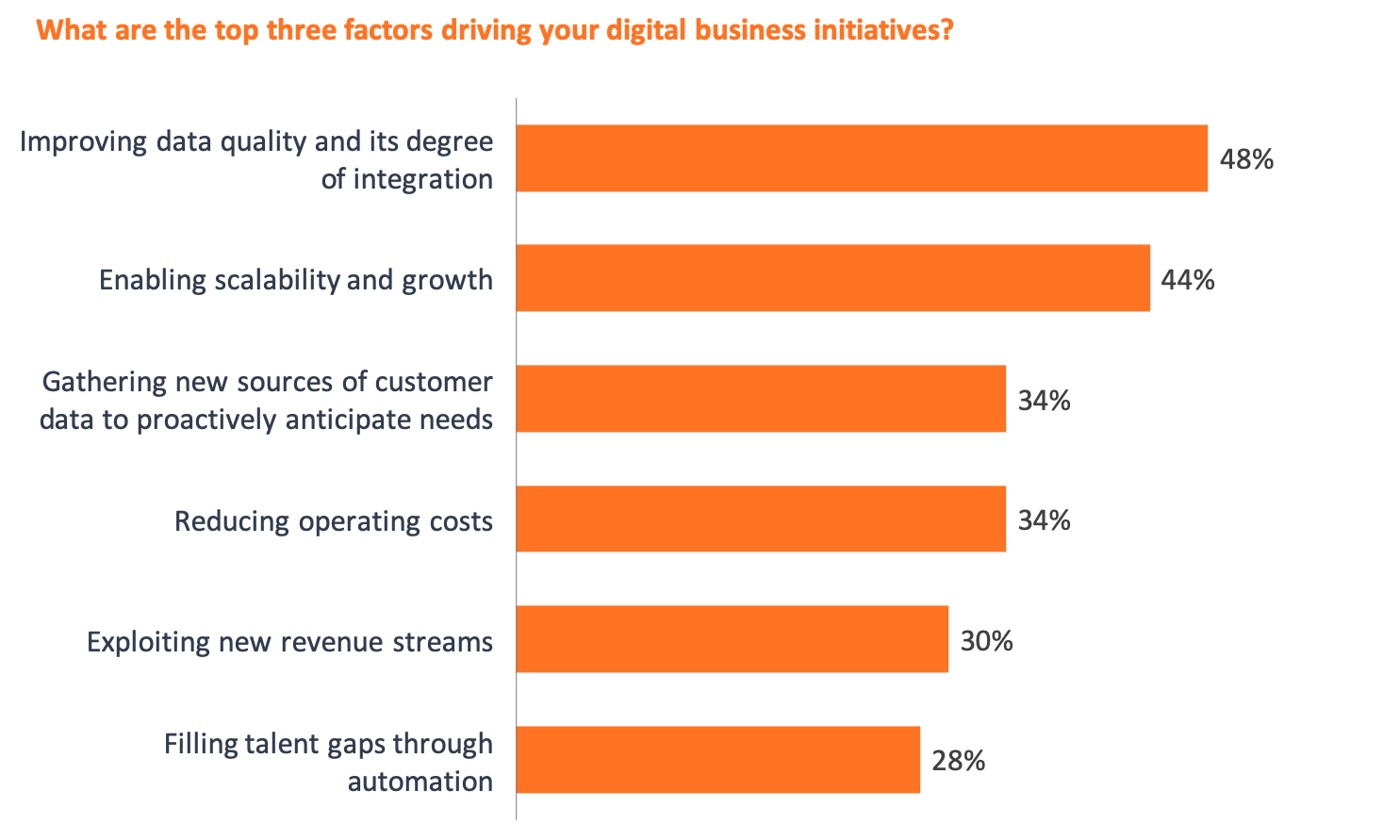
In addition to the usual imperative of lowering costs, Global 2000 organizations face some critical factors that are driving their digital agendas. While cost reduction is important, improving data integration and quality and enabling scalability and growth actually ranked higher in driving organizations’ digital business initiatives (Exhibit 2). These two factors are intrinsically linked as data is the cornerstone of growth—leveraging data to generate insights for improving customer-centricity and operational efficiency can fuel the enterprise transformation most companies seek. Tied for third in importance, along with cost reduction, is gathering new sources of customer data, which can help businesses anticipate customer needs. A predictive and proactive approach to interacting with customers is one of the fundamentals of the OneOffice.
Exhibit 2: Data is the cornerstone to driving growth
Source: HFS Research, 2019, n=252
The trends we identified show that companies are struggling with how to manage their data, make it more effective for customers’ needs, and use it to fuel growth. This aspiration to capitalize on data and enable scalability and growth is something that requires a vision, alignment across the enterprise, and an execution plan. Enter the Digital OneOffice Experience (Exhibit 3), a framework for savvy enterprises to align operations to use data better and become more collaborative, unified, dynamic, and intelligent.
In the hyperconnected economy, enterprises of all types have quickly learned that a customer-centric digital capability is only effective if it is an enterprise-wide initiative that connects back and front offices. The OneOffice is a guide for the experiences organizations want to create for their employees, partners and customers.
Exhibit 3: The Digital OneOffice Experience

Source: HFS Research, 2019
You can only provide a predictive, real-time customer experience if your operations can service customers’ needs in real-time. Companies can gain a foothold over competitors if they embed intelligence into the organization to anticipate these needs.
The Digital OneOffice can only exist when teams function autonomously across the front, middle, and back offices to promote processes with real-time data flows that support rapid decision-making. It’s where the front, middle, and back offices will cease to exist, as they will be, simply, OneOffice. With a digital underbelly and intelligent support functions such as HR, finance, and customer support, the OneOffice is wired with the customer in mind. The Digital OneOffice is about evolving to focus experiences, in order to survive and succeed.
Digital, in its purest form, is all about transforming the business to create, support, and sustain the immersive digital customer experience. An “immersive” customer experience leverages the omnichannel (mobile, social, and interactive technologies) and produces meaningful analytics to provide a digital experience for the organization and its customers, employees, and partners up and down the supply chain. The OneOffice organization needs a support function to service those customers, one that is less about reacting to issues as they arise and more about predicting customer needs and preventing problems. But, the front office must be strongly tied to the rest of the organization in order to be anticipatory and predictive.
Digitally driven organizations must create a digital underbelly that supports the front office by automating manual processes, digitizing manual documents, and leveraging smart devices and IoT where they are present in the value chain. An organization’s digital strategy cannot be effective if it doesn’t automate processes intelligently. Forget all the hype around robotics and jobs going away—this is about making processes run digitally so that smart organizations can grow their digital businesses and create new work and opportunities. The digital underbelly is akin to a “central nervous system” which processes all the elements necessary to make the organization function.
Organizations need their internal support functions, such as IT, finance, HR, and the supply chain, to support the customer experience rather than operate in some sort of vacuum. Organizations need to support the front office’s quickly shifting needs. Managers seek talent that can learn on the job instead of requiring years of related work experience, which might no longer be relevant in these fast-changing markets. Work cultures need to encourage individuals to spend more time interpreting data, understanding the needs of the front end of the business, and ensuring that support functions keep pace with the front office.
Devoting more time to these tasks is especially critical in industries that are more dependent than ever on real-time data, that use multiple channels to reach their customers, and that think out-of-the-box with disruptive business models. We all need to make sure we can keep operations running smoothly, but if we can’t proactively create a better customer experience using digital channels or challenge the logic of running a process a certain way, we will struggle to create a work culture that can attract the bright minds we need to take us forward. People want to feel like they are a part of something and that their work matters—move away from the rigid corporate structures of the past, which have too many management layers and where departments run siloed like mini-empires. We need to invest in driven managers that understand how to motivate and collaborate across business functions. The sales, marketing, customer service, IT, finance, HR, and supply chain functions depend on each other to be effective.
Smart organizations are already breaking down the silos and creating multidisciplinary teams, using collaborative tools and design thinking methods across delivery centers to keep their staff motivated and creative and to challenge the old way of doing things.
Last, but certainly not least, the OneOffice organization is laser-focused on designing business processes that align with its desired digital customer experiences to become more competitive and effective in its market. OneOffice is not about a forensic approach to collecting and archiving historical data to discover what went wrong; it’s about using the data to predict problems and devise smart strategies to get ahead of them. OneOffice is about embedding smart cognitive applications into process chains and workflows, and it’s about learning from mistakes and new experiences along the way. This is the organization’s neural network.
The beauty of the OneOffice organization is that legacy systems and ERP are no longer holding back the organization from business progress. Cognitive technologies, advanced analytics, and robotic process automation (RPA) can create the functions necessary for operating in digital environments by automating and extracting data in real-time to respond to markets, support critical decisions, and stay ahead of the game. Even the most disruptive of digital businesses, such as Uber and Airbnb, use traditional IT systems, IT support, and BPO (business process outsourcing) support to get things done. The key is to “ring-fence” the legacy so it can’t constrict emerging technology from enabling the business.
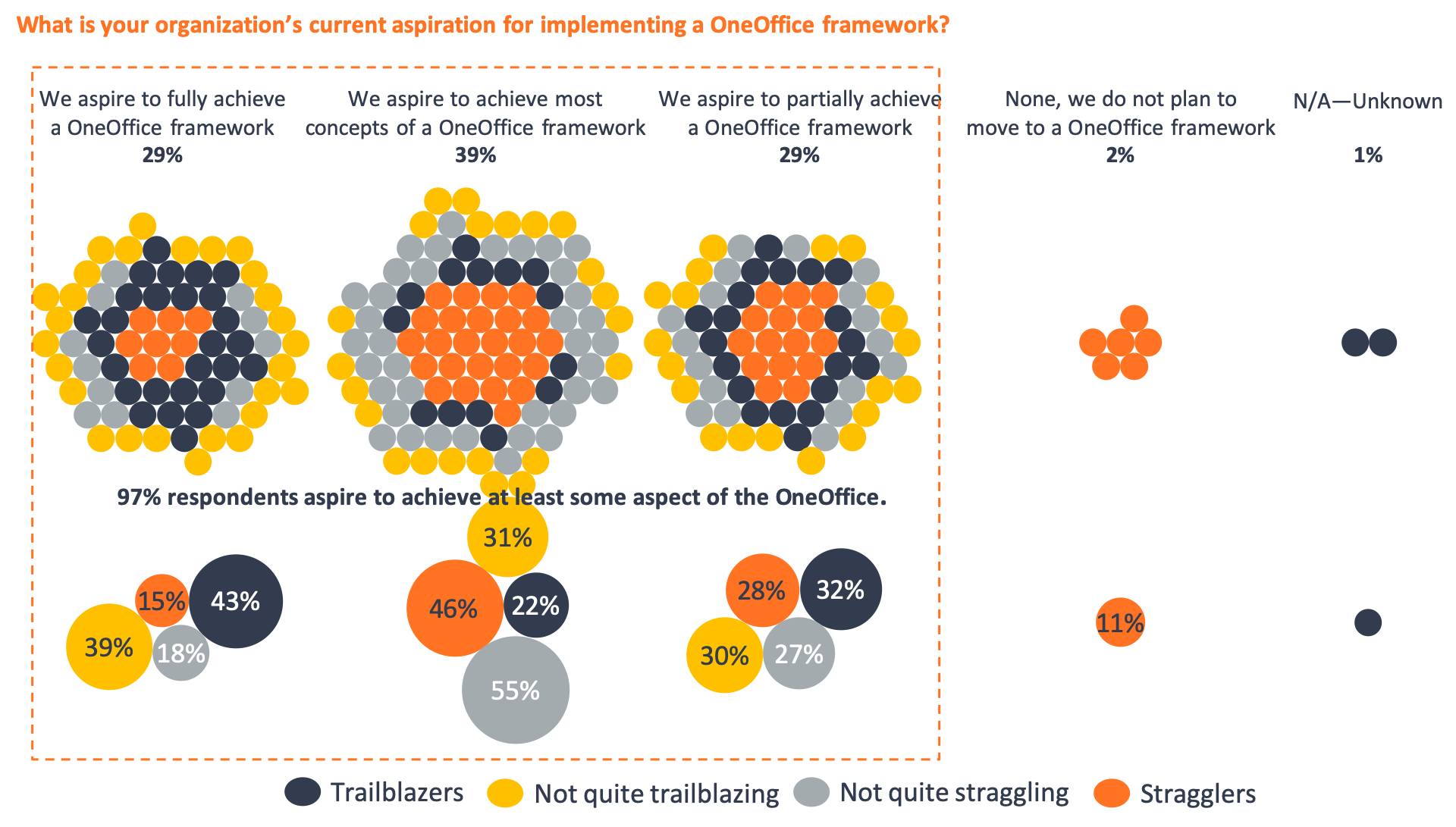
Virtually all of the executives we surveyed found that the OneOffice aspiration resonated with the goals of their organization, whether advancing swiftly toward it or gazing at it far in the distance (Exhibit 4). The stragglers have the highest rate of no aspiration towards OneOffice, with 11%.
Exhibit 4: Most companies aspire to achieve some elements of the OneOffice
Source: HFS Research, 2019, n= 252
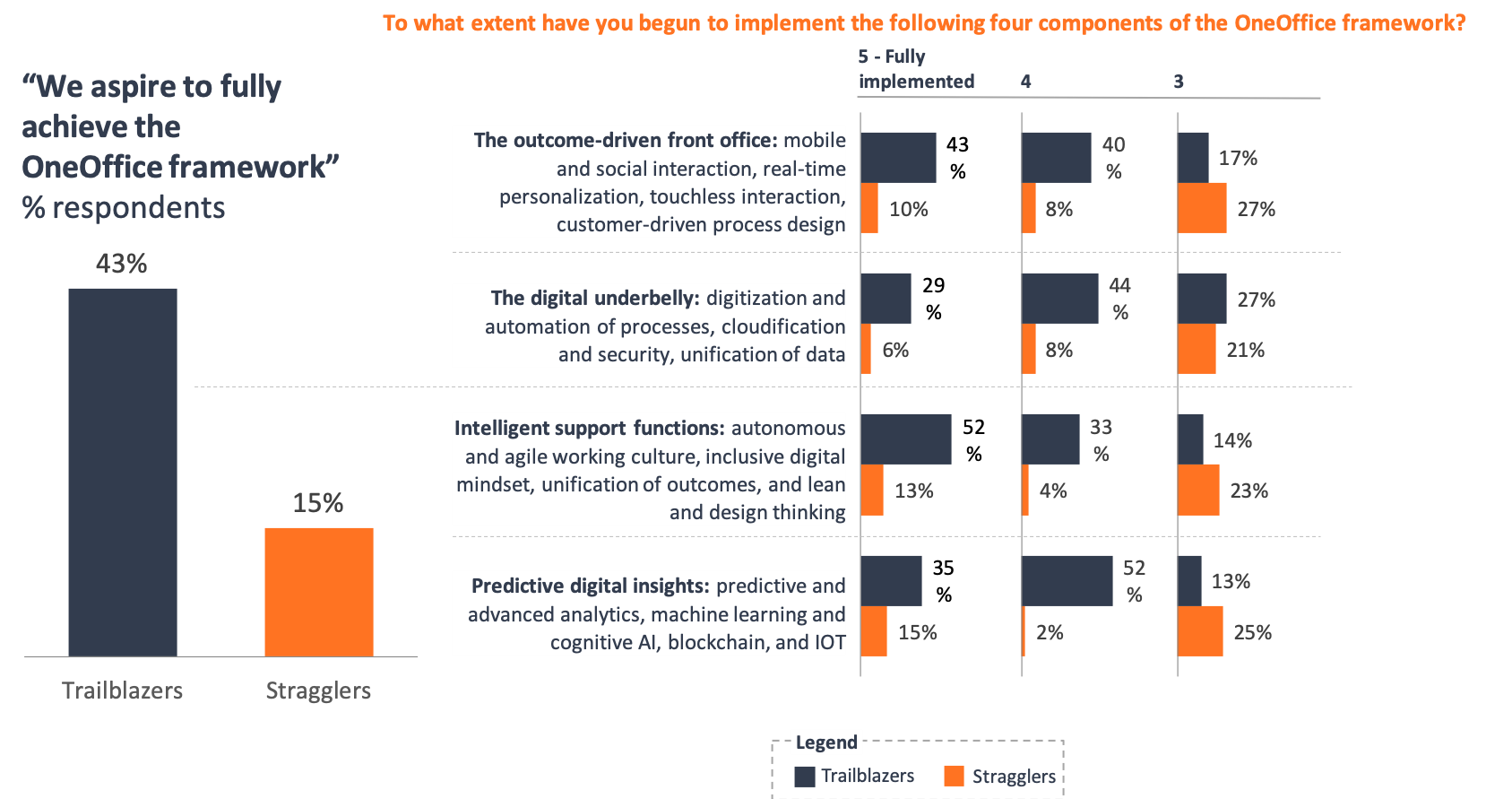
To better understand the efficacy of the OneOffice, we divided the respondents into four quartiles of maturity and identified the top and bottom quartiles as “trailblazers” and “stragglers” respectively. The Trailblazers are the respondents that claim to be further along in implementing each of the four components of OneOffice. In contrast, the Stragglers are those companies which have the lowest adoption of each of the components of OneOffice (Exhibit 5).
Exhibit 5: OneOffice trailblazers have embraced the model and are further along the path
Source: HFS Research, 2019, n= 252
By comparing and contrasting the characteristics of the two groups, the trailblazers and the stragglers, we identified significant differences that have some thought-provoking implications for what it takes to realize OneOffice experiences. Our research highlights five key success factors to execute on the OneOffice promise of increased customer centricity. We’ve broken each one down in depth.
#1. Realign your operating model around your customers’ needs
The first critical imperative to achieving success with OneOffice is a fundamental realignment of the enterprise operating model. Indeed, 51% of trailblazers, as compared to only 25% of stragglers, have defined a vision and strategy to focus activities on their customers and their needs. This results in organizational and governance changes around how work is executed, often resulting in the breaking of traditional functional silos. We see new roles such as chief data officers, innovation leads, and heads of customer experience driving the alignment across the organization and ensuring powerful change agents such as analytics and AI are part of the solution.
#2. Structure your organization to deliver end-to-end processes
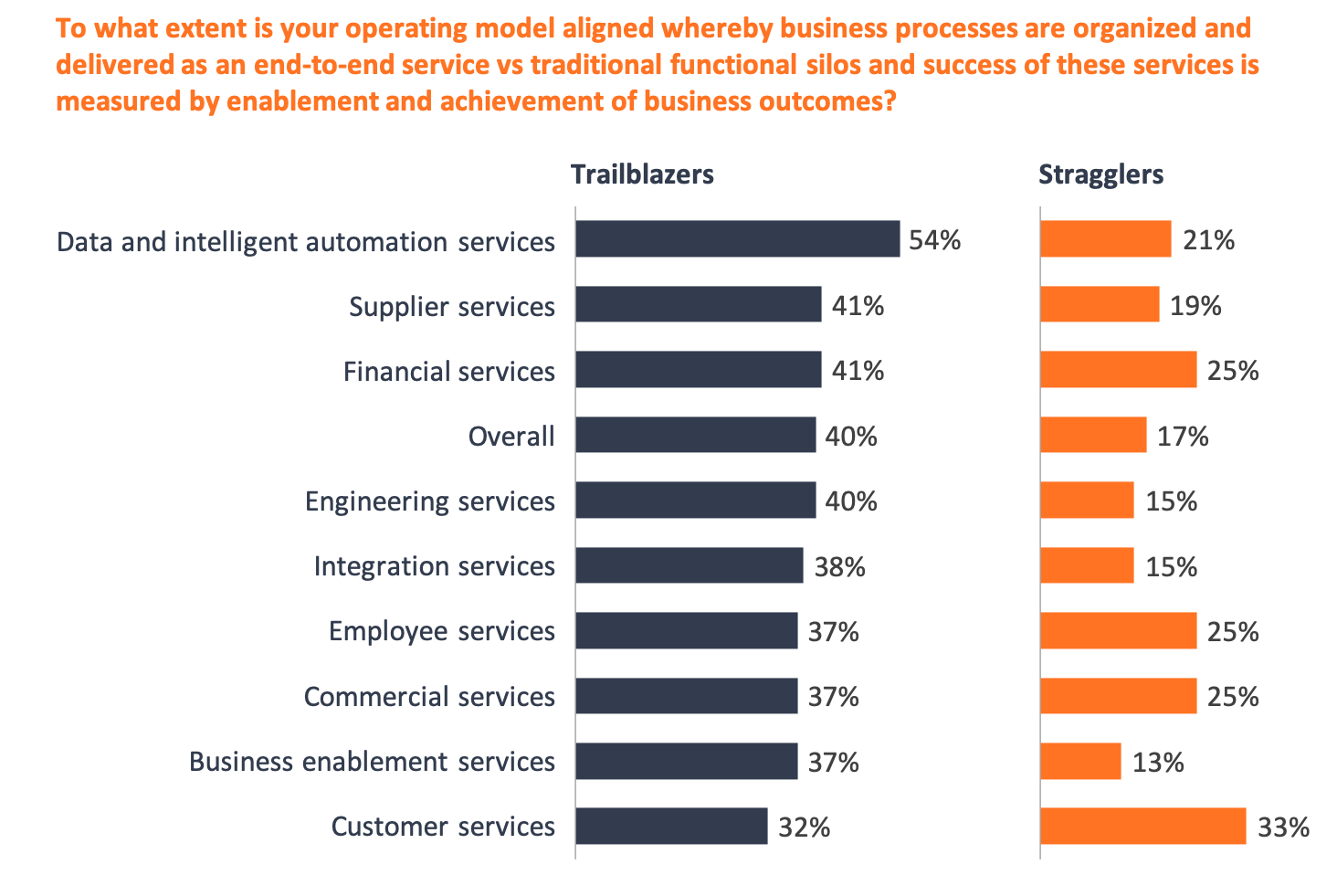
Compared to the other respondents, trailblazers have aligned more of their operations as end-to-end services, particularly for data and intelligent automation services (Exhibit 6). This is a critical success factor because a key tenet of the OneOffice is the dissolution of operational silos. The OneOffice doesn’t require flashy front-end user interfaces, but it does require connecting the entire organization by breaking down organizational barriers and integrating data behind the scenes—looking at the organization from the inside out.
Exhibit 6: OneOffice trailblazers are operationally organized as end-to-end services, not as silos
Source: HFS Research, 2019, Trailblazers =63, Stragglers =48
#3. Embrace a willingness to change: trailblazers struggle with skill, and stragglers struggle with will
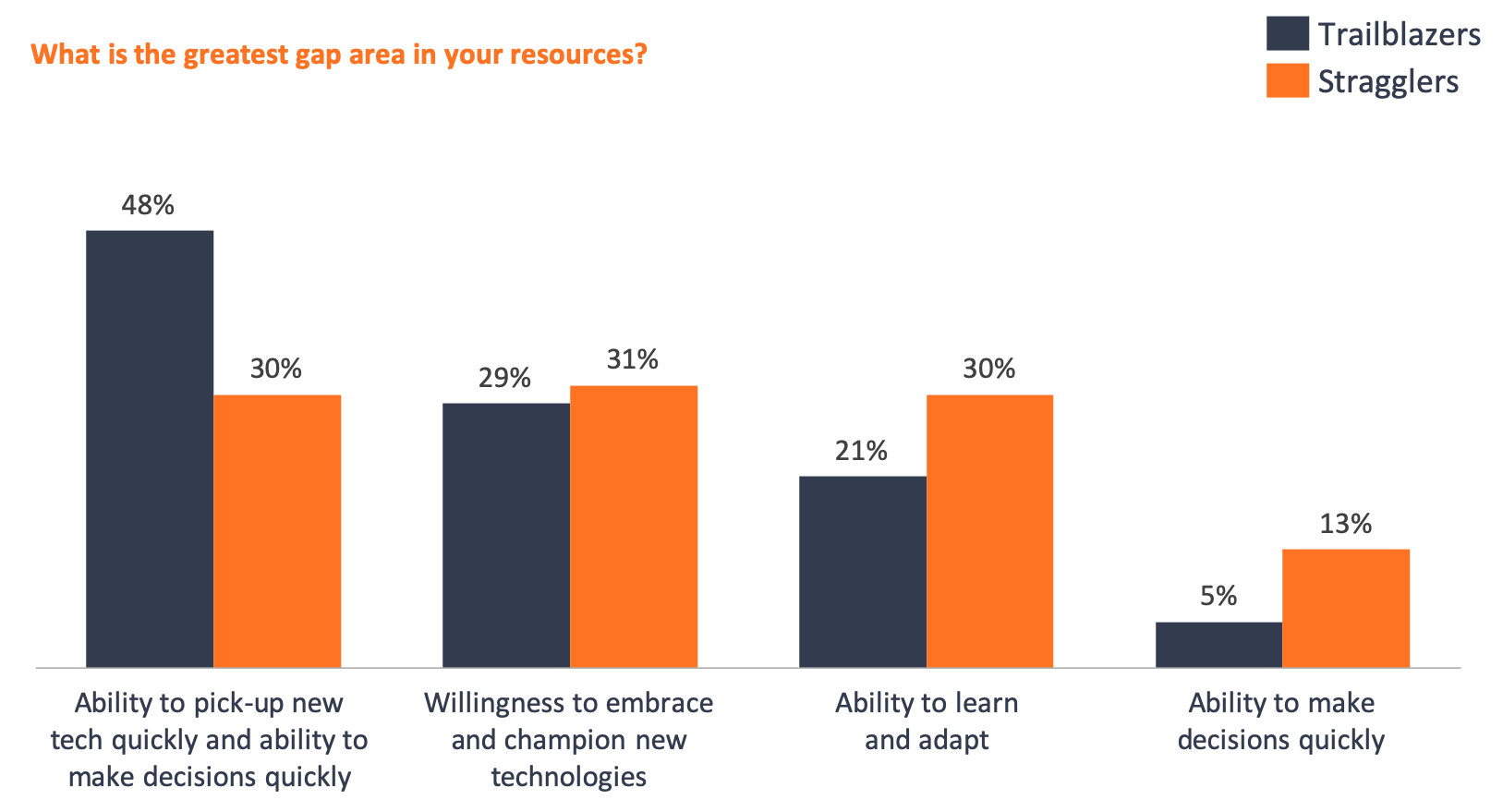
Digitally savvy organizations let us know that their hiring strategies have shifted from focusing on resumes, experience, and knowledge to prioritizing a willingness to learn, change, and share information. Technology is changing so rapidly that skill gaps are inevitable; businesses increasingly need “soft” skills such as a willingness to collaborate and think and work differently. The groups’ perceptions of the talent resource gaps differ: For the trailblazers, the greatest resource gap is the aptitude for new tech (“skill”). Stragglers indicate that a willingness to embrace and champion new tech (“will”) is at the top of their gaps, and they are more worried about their employees’ ability to learn and adapt than their trailblazer counterparts are (Exhibit 7).
Exhibit 7: Stragglers struggle more with “will” to change
Source: HFS Research, 2019, Trailblazers =63, Stragglers =48
#4. Align your talent with incentives that impact your customers
It’s become clear that developing and retaining talent is immensely important for company growth and transformation. Organizations need people not only with technical skills but also with a customer-centric mindset and willingness to learn and share ideas. Trailblazers are far more advanced than the stragglers at cultivating a talent strategy focused on client servicing, analytical skills, and strategic thinking. The trailblazers generally place greater importance on each of the skills and attributes that are part of a digital and transformation mindset, like the ability to champion and lead change efforts, and communicate to share insights. Trailblazers are also much more focused than the stragglers are on realigning employee incentives to these new sets of digital skills and mindsets.
#5. Carefully evaluate your partners and ensure they support your OneOffice journey
One of the biggest levers enterprises can pull on their journey to OneOffice is to carefully select and partner with service providers to fill gaps in talent and technology and help with some business processes. Many companies are looking at their outsourcing vendors and partnerships with a fresh lens. It is becoming clear that to compete, companies must shift away from low value, cost- and efficiency-focused vendor relationships and toward partnerships that will collaborate on digital journeys, automation efforts, customer experience improvements, and other key business initiatives.
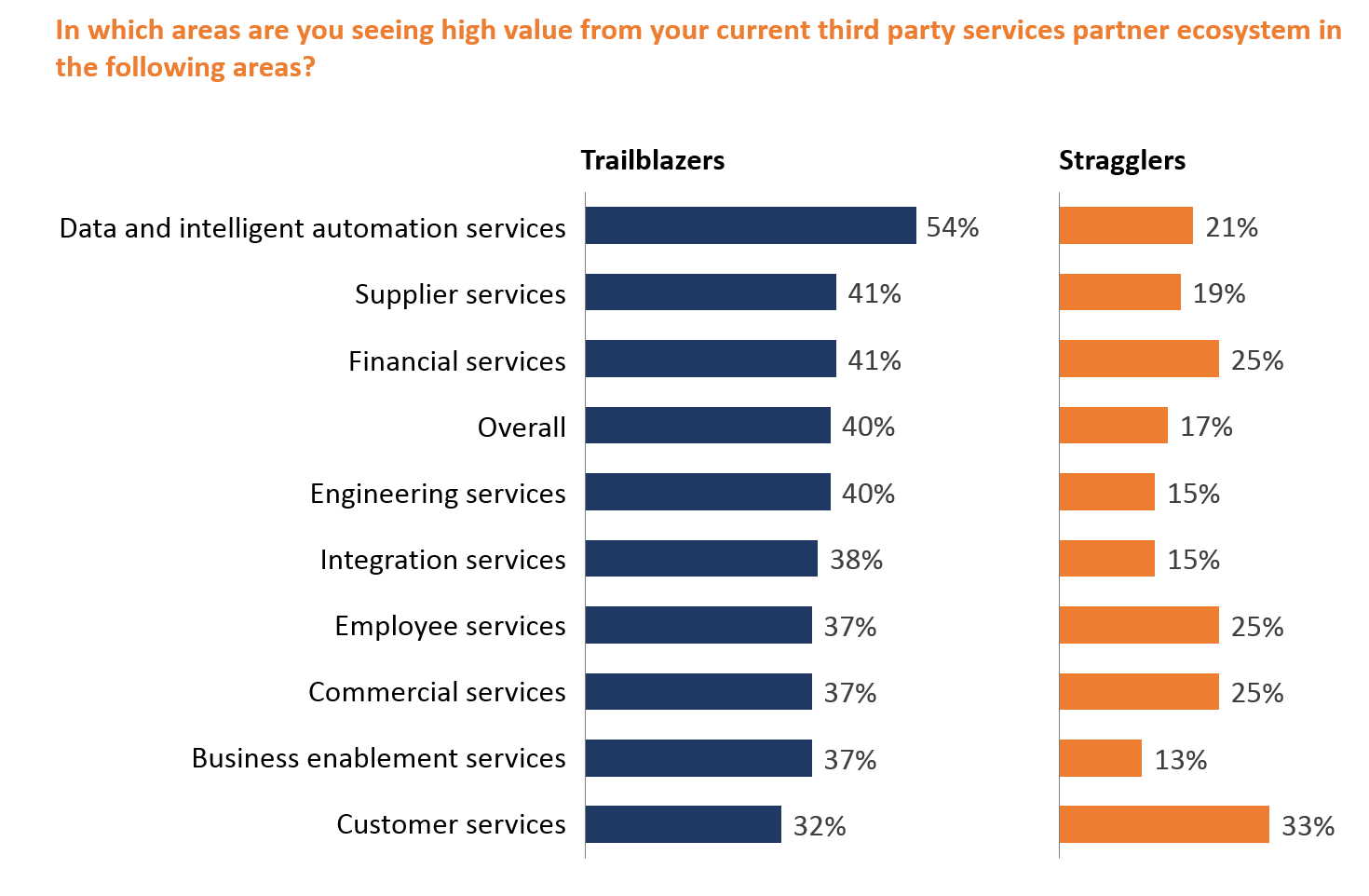
HFS Research studies have consistently shown that high-performing organizations tend to embrace innovative, collaborative, partner-focused relationships with third-party service providers. It wasn’t a huge surprise, then, that the trailblazers see bigger benefits from their partnerships in some areas than the stragglers do. The trailblazers’ third-party relationships are more valuable across the board than stragglers’ are, particularly those relating to analytics, operating model design, and business process outsourcing (Exhibit 8). As one trailblazer put service providers in the context of OneOffice, “We are making steady progress toward this (OneOffice) goal due to the strategic use of third parties.” It’s also noteworthy that the top three areas of value are differentiated whereas the bottom four with less value are more “commodity” type services.
Exhibit 8: Trailblazers reap greater value from third parties across the services spectrum
Source: HFS Research, 2019, Trailblazers =63, Stragglers =48
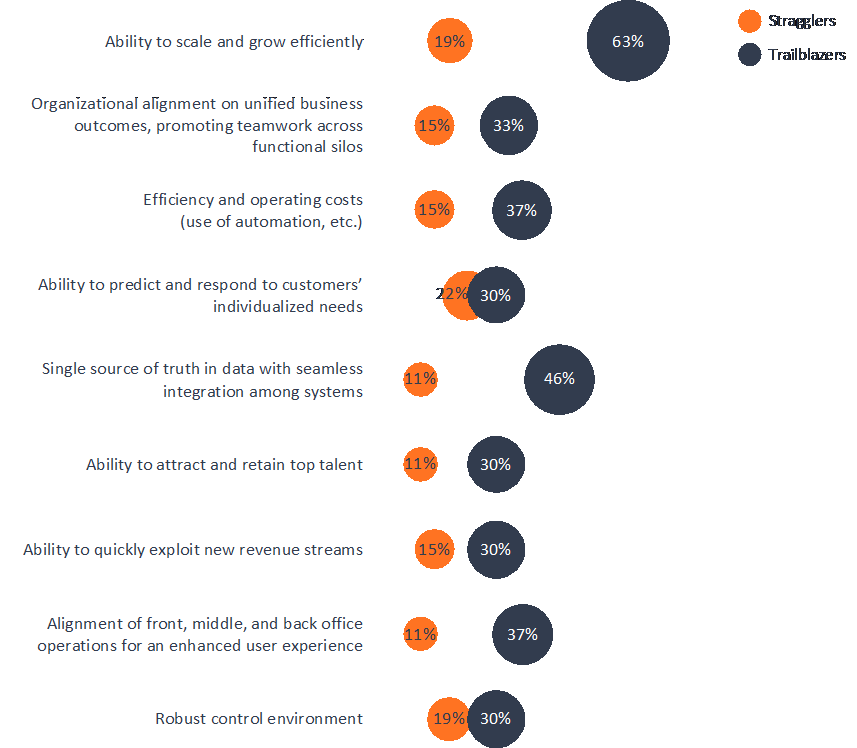
There is a direct correlation between achieving the OneOffice and effectiveness at key business initiatives. Trailblazers are generally more effective than any other group at meeting business objectives. Across the nine critical business characteristics we show in Exhibit 9, trailblazers self-identified as being much more effective at things like achieving the ability to scale and grow and operational efficiency. Each of these characteristics is a piece of what makes the OneOffice run, and the businesses that are driving effective operations across these elements are excelling toward the OneOffice. The smallest gap between the two sets is around the ability to predict and respond to customers’ individualized needs. Personalization is one of the areas most companies are struggling with finding the right balances between hyper-personalization, and security and privacy; it is one area which many of the other business objectives will support on the road to OneOffice experiences.
Exhibit 9: Trailblazers are more effective at key business initiatives
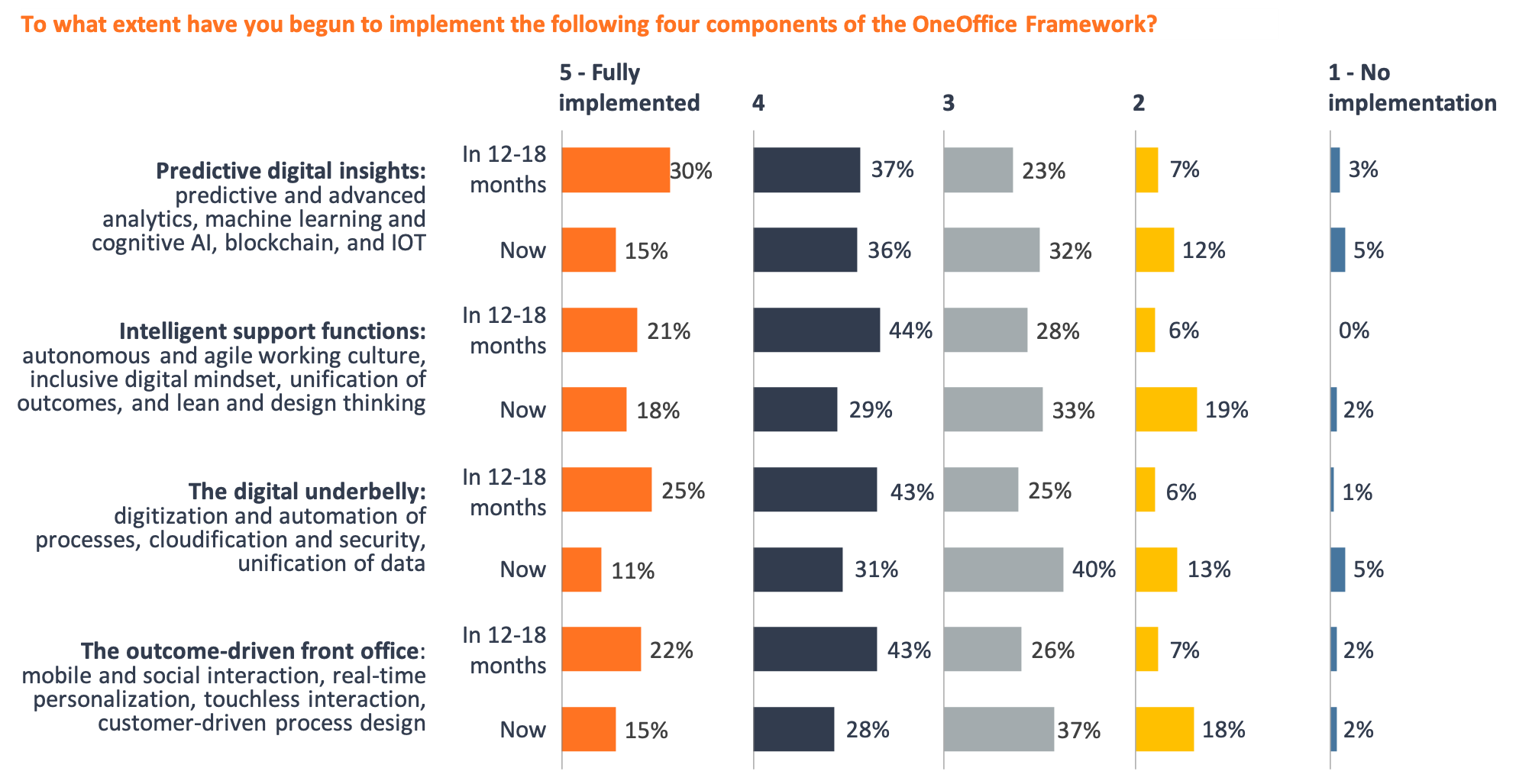
When asked about their timeframe for implementation of OneOffice, respondents had some aggressive predictions for where they hope to be in 12 to 18 months. For example, 30% expect to have predictive digital insights (including advanced analytics, machine learning, cognitive AI, blockchain, and IoT) fully implemented within the next 12 to 18 months while only 15% said they have fully implemented today (Exhibit 10). These results seem inflated to us as we’ve spoken with very few organizations that seem to have a fully baked digital insights function today. The majority of respondents admitted that they still grappling with the integration, digitization, and automation elements of the OneOffice, while a mere 7% claim to be fully functional OneOffice organizations (we think these claims, too, are exaggerated!).
To advance with these aggressive plans, companies in particular in the lower three quartiles will need to step up their focus and attention to these imperatives for talent, organizational structure, and partnership efforts.
Exhibit 10: Companies expect to accelerate their OneOffice plans significantly in the next 12-18 months
Source: HFS Research, 2019, Trailblazers =63, Stragglers =48
The OneOffice is the North Star for digitally savvy organizations in growth mode. Fewer than 10% of organizations believe they are nearly there—and HFS feels that even this is an inflated result. As we’ve shown, several components of the OneOffice need to come together before an organization realizes OneOffice maturity. These include breaking down the barriers between the front and back offices, and leaning on various change agents and value levers to align the enterprise to the digital front office. The trailblazers are embracing each of the OneOffice components and are well on the way toward implementing each. Companies wanting to transform must quickly put a focus on these strategic imperatives to become Digital OneOffice organization.
Study Demographics
Register now for immediate access of HFS' research, data and forward looking trends.
Get Started


If you don't have an account, Register here |
With the exception of our Horizons reports, most of our research is available for free on our website. Sign up for a free account and start realizing the power of insights now.
Our premium subscription gives enterprise clients access to our complete library of proprietary research, direct access to our industry analysts, and other benefits.
Contact us at [email protected] for more information on premium access.

