Point of View

Finance leaders, stop buying finance transformation like it’s 2020

This POV is for CFOs and finance transformation leaders rethinking how they buy technology as software, services, and AI converge into a single Services-as-Software™ market.

CFOs and finance transformation leaders have spent the last decade modernizing finance through ERP upgrades, specialist platforms, AI, and managed services. Most of these investments delivered value but buying them as separate initiatives is creating an integration problem as software, services, and AI converge. Finance leaders now need a new buying cycle that starts with the business capability, evaluates the operating model behind it, and establishes accountability for continuous improvement of the outcome.

Software is becoming more like services, services are becoming more like software, and AI-native firms are challenging both. As these boundaries blur, finance leaders need to stop asking, “Which platform should I buy next?” and start asking, “Am I buying transformation in a way that will still make sense five years from now?”

Your buying model is built for yesterday’s market

Finance transformation is still bought one initiative at a time. Each investment solves a specific problem, but few are designed as part of a single operating model.

Consider a global manufacturer trying to reduce days sales outstanding (DSO). Over three years, and under two different CFOs, it buys a collections platform, adds a second vendor’s AI collections agent because the platform’s own agent is not production-ready on its timeline, moves accounts receivable to a managed services provider, and hires a systems integrator to connect all of it to an S/4HANA migration that was already in flight.

Every one of those decisions is defensible on its own. None of them was a decision to buy a better collections capability. DSO now depends on five contracts with five different owners, and no single provider is accountable for moving it (see Exhibit 1).
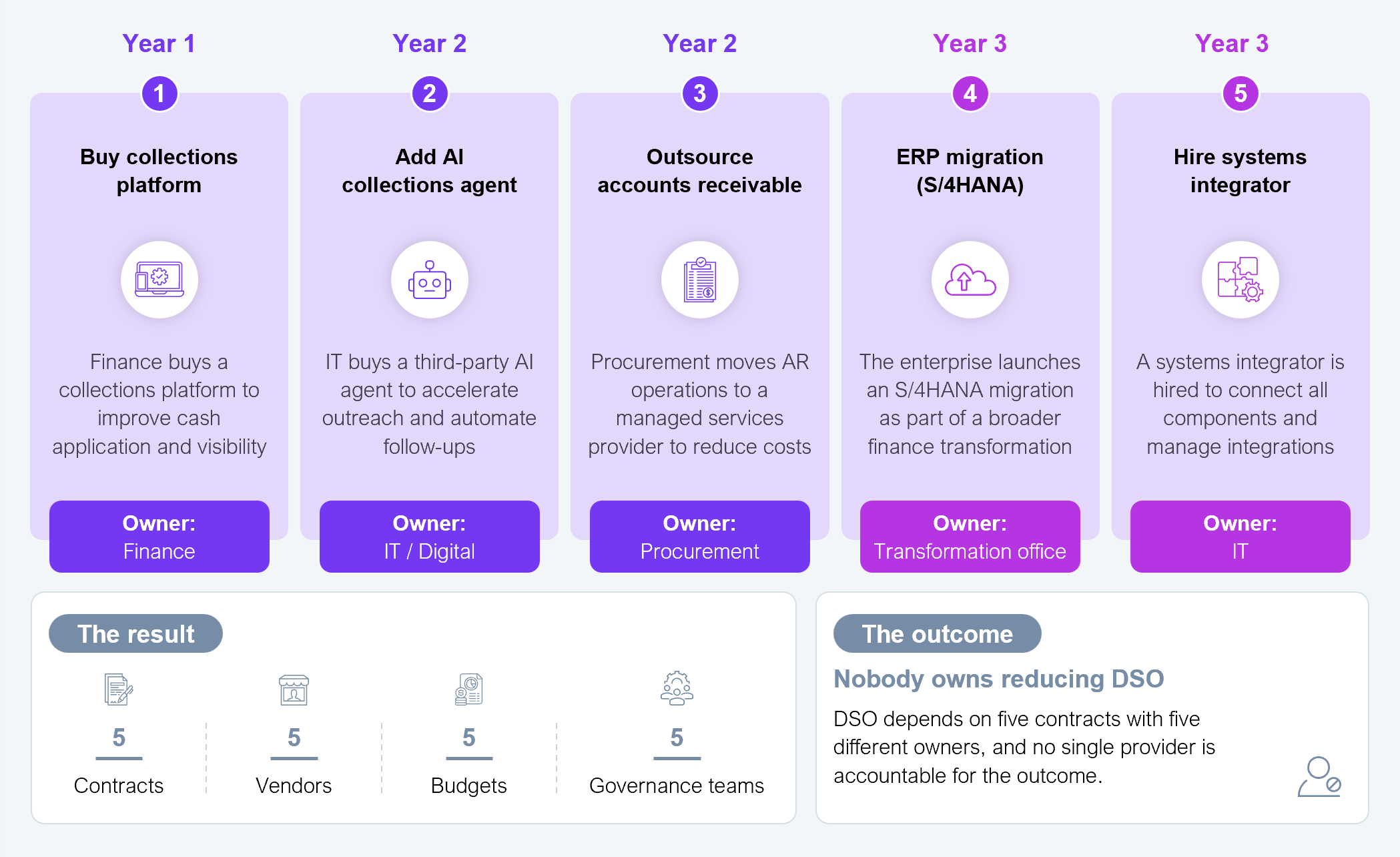
Exhibit 1: With piecemeal integration and no clear accountability, finance transformation can become five disconnected projects

Five-stage process diagram spanning year 1 to year 3, illustrating how a global manufacturer's finance transformation became five disconnected projects while trying to reduce days sales outstanding (DSO). Step 1, year 1: buy a collections platform, owned by finance. Step 2, year 2: add a third-party AI collections agent because the platform's own agent was not production-ready, owned by IT/digital. Step 3, year 2: outsource accounts receivable to a managed services provider to reduce costs, owned by procurement. Step 4, year 3: launch an S/4HANA ERP migration as part of a broader finance transformation, owned by the transformation office. Step 5, year 3: hire a systems integrator to connect all components and manage integrations, owned by IT. Below the sequence, "The result" shows five contracts, five vendors, five budgets, and five governance teams. "The outcome" states that nobody owns reducing DSO, because DSO depends on five contracts with five different owners and no single provider is accountable for the outcome. Source: HFS Research, 2026.

Source: HFS Research, 2026

Collectively, these investments create a landscape of disconnected platforms, overlapping vendors, and complex governance, in which every contract is an integration point the enterprise owns. Finance teams often spend as much time integrating previous transformation projects as they do improving business outcomes.

Software, services, and AI are converging into a single market, but your buying process still treats them as three

The problem isn’t the technology. It’s the buying model behind it. HFS calls the alternative Services-as-Software™. Instead of buying software, services, and AI as separate line items, the enterprise buys one integrated operating capability that is accountable for a finance outcome and improves continuously.

Software vendors are embedding AI agents, workflow expertise, and managed capabilities into their platforms. Service providers are codifying decades of operational knowledge into modular, software-like offerings. At the same time, AI-native firms are delivering finance capabilities through autonomous operating models that bypass both.

HFS Research estimates this convergence represents a $1.5 trillion market opportunity as software vendors, service providers, and AI-native firms converge on it (see Exhibit 2).
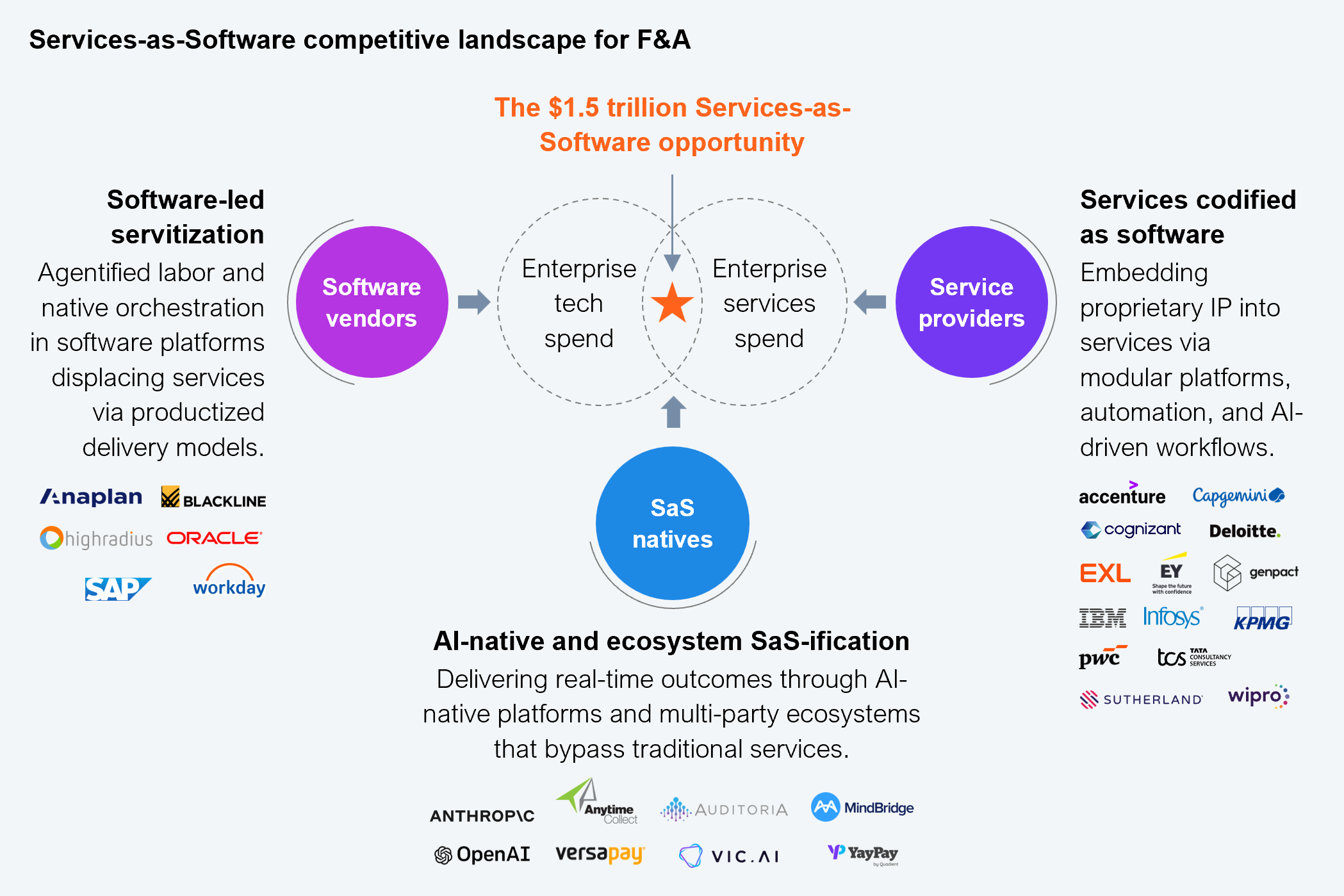
Exhibit 2: Services-as-Software reshapes how enterprises buy finance transformation

Diagram titled "Services-as-Software competitive landscape for F&A," showing three vendor types converging on a central concept, "The $1.5 trillion Services-as-Software opportunity," fed by enterprise tech spend and enterprise services spend. Software vendors, described as "software-led servitization" (agentified labor and native orchestration in software platforms displacing services via productized delivery models), are shown as Highradius, Blackline, Anaplan, Workday, SAP, and Oracle. Service providers, described as "services codified as software" (embedding proprietary IP into services via modular platforms, automation, and AI-driven workflows), are shown as Accenture, IBM, EXL, EY, Genpact, Infosys, KPMG, Capgemini, Cognizant, Deloitte, Wipro, TCS, Sutherland, PwC. A third group, "SaaS natives," described as "AI-native and ecosystem SaaS-ification" (delivering real-time outcomes through AI-native platforms and multi-party ecosystems that bypass traditional services), is shown as Anthropic, Anytime Collect, Auditoria, MindBridge, OpenAI, Versapay, VIC.AI, and YayPay. Source: HFS Research, 2026.

Source: HFS Research, 2026

For enterprise buyers, this fundamentally changes the competitive landscape. The three vendor types you once shortlisted separately are now bidding for the same finance work. The question is no longer who has the best product or the lowest-cost service. It’s who can deliver the strongest finance operating capability.

Your next finance transformation will only be as good as the questions you ask before buying it

Services-as-Software changes every stage of the buying process, not just what appears on the contract (see Exhibit 3).
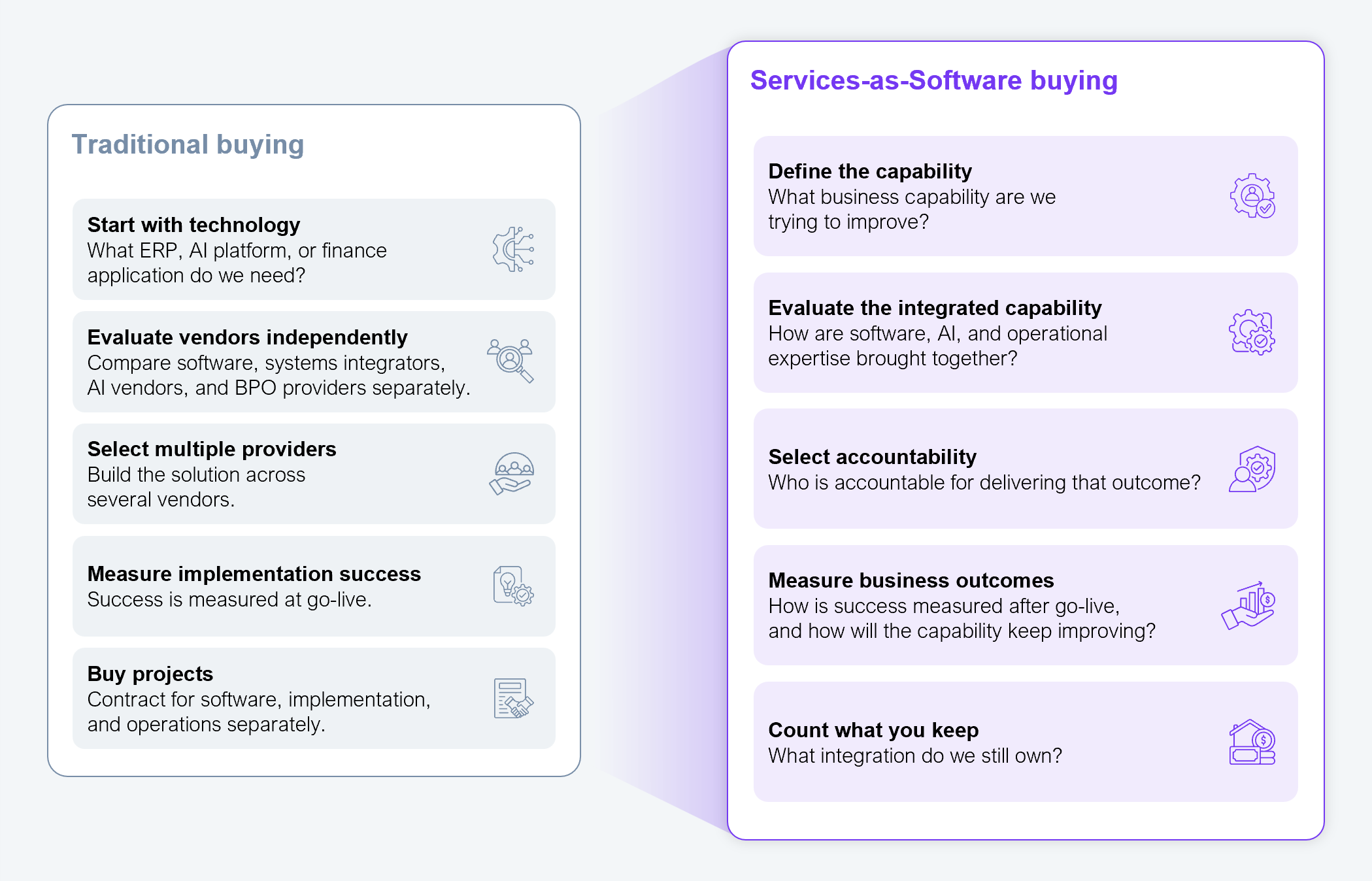
Exhibit 3: The new Services-as-Software buying cycle for finance transformation changes every stage of the buying process; here is what you should ask at each step

Comparison table with two columns, "Traditional buying" and "Services-as-Software buying," across five rows. Row 1: start with technology, asking what ERP, AI platform, or finance application is needed, versus define the business capability, asking what finance outcome the enterprise is trying to improve. Row 2: evaluate vendors independently, comparing software, systems integrators, AI vendors, and BPO providers separately, versus evaluate the integrated capability, asking how software, AI, and operational expertise are brought together. Row 3: select multiple providers, building the solution across several vendors, versus select accountability, asking who is accountable for delivering the outcome. Row 4: measure implementation success, with success measured at go-live, versus measure business outcomes, asking how success is measured after go-live and how the capability will keep improving. Row 5: buy projects, contracting for software, implementation, and operations separately, versus count what you keep, asking what integration the enterprise still owns. Source: HFS Research, 2026.

Source: HFS Research, 2026

Most finance transformation is still bought in the left column. Before making your next investment, ask five questions:

  1. Define the capability: What business capability are we trying to improve?
    Start with the outcome, not the technology. For example, instead of buying a collections platform, define the objective as reducing DSO.
  2. Evaluate the integrated capability: How are software, AI, and operational expertise brought together?
    Assess how they work together to deliver the capability, not how each performs in isolation.
  3. Select accountability: Who is accountable for delivering that outcome?
    If software, AI, and managed services come from different providers, who owns improving business performance after implementation?
  4. Measure business outcomes: How is success measured after go-live, and how will the capability keep improving?
    Understand how AI, workflows, and expertise will keep improving business performance after go-live.
  5. Count what you keep: What integration do we still own?
    The more vendors, contracts, and governance your organization retains, the more integration tax you continue to pay.

Finance leaders who continue buying disconnected projects will continue managing disconnected projects. Those who buy integrated capabilities will spend less time orchestrating vendors and more time improving finance performance. Apply these five questions to the next investment on your approval list, before the RFP is written.

The Bottom Line: The next transformation you purchase on the old model is one you’ll spend years integrating. Evaluate your next investment as an operating model, not another product, or keep paying the integration tax.

Sign in to view or download this research.

Login

Register

Insight. Inspiration. Impact.

Register now for immediate access of HFS' research, data and forward looking trends.

Get Started

Download Research

    Sign In

    Sign up for a free
    research account

    With the exception of our Horizons reports, most of our research is available for free on our website. Sign up for a free account and start realizing the power of insights now.

    By registering you agree to our privacy policy.

    I hereby consent that HFS Research can process my personal data.

    Digests/Newsletters: Overviews of the latest news, insight, and research by HFS.

    HFS Events: Exclusive invitations to HFS webinars, roundtables, and summits, bringing together key industry stakeholders focused on major innovations impacting business operations.

    Premium Access

    Our premium subscription gives enterprise clients access to our complete library of proprietary research, direct access to our industry analysts, and other benefits.

    Contact us at [email protected] for more information on premium access.

      Contact Ask HFS AI Support