
Oil and gas (or “energy,” as they’d prefer these days) executives are constrained by inconsistent data quality and an inability to fully utilize their best data. Along with industry-wide fear around sharing data and losing competitive advantage under margin pressures, these constraints weigh heavily on the shoulders of the industry’s leaders, who must take the first step to share their data with their partners. From there, you’ll build trust, open up your partners’ data for a combined set that can drive growth and business model reinvention around your customers’ and partners’ needs, and keep improving ever-critical operational practices and efficiency.
The oil and gas industry has multiple opportunities, but it is also grappling with competing priorities—all constrained by data woes
HFS’ ecosystem of providers and executives in its 2019 Energy Services Top 10 report are torn between new growth avenues, ushered in by the industry’s drive for its version of digital transformation and Industry 4.0, and cost improvements, which range from optimizing operating costs and boosting tight margins to maximizing returns on the industry’s capital-intensive projects. Growth and cost focus are certainly not mutually exclusive for the oil and gas industry, as emerging technologies offer both business model and operational gains:
The industry’s roadmap to success, however, remains unclear—and data is a critical constraint. Perhaps it’s best summed up by Deloitte’s damning assessment that the oil and gas industry sits at the bottom of its Digital Maturity Index (at 1.3 versus banking and telecom at 2.9 and 3.1 respectively). Deloitte estimates the oil and gas industry is missing out on $1.6 trillion in revenue. Accenture’s connected refinery work also nails down that analytics, including big data, is by far the leading priority within the industry. Meanwhile, HFS has covered the issues facing process industries and emphasized data quality, while we’ve also delved into the potential of synthetic data to make up for poor historical operating data.
With hundreds of sites globally, all operating according to specific demands, feedstocks, and localities—bringing together the oil and gas ecosystems’ data is critical
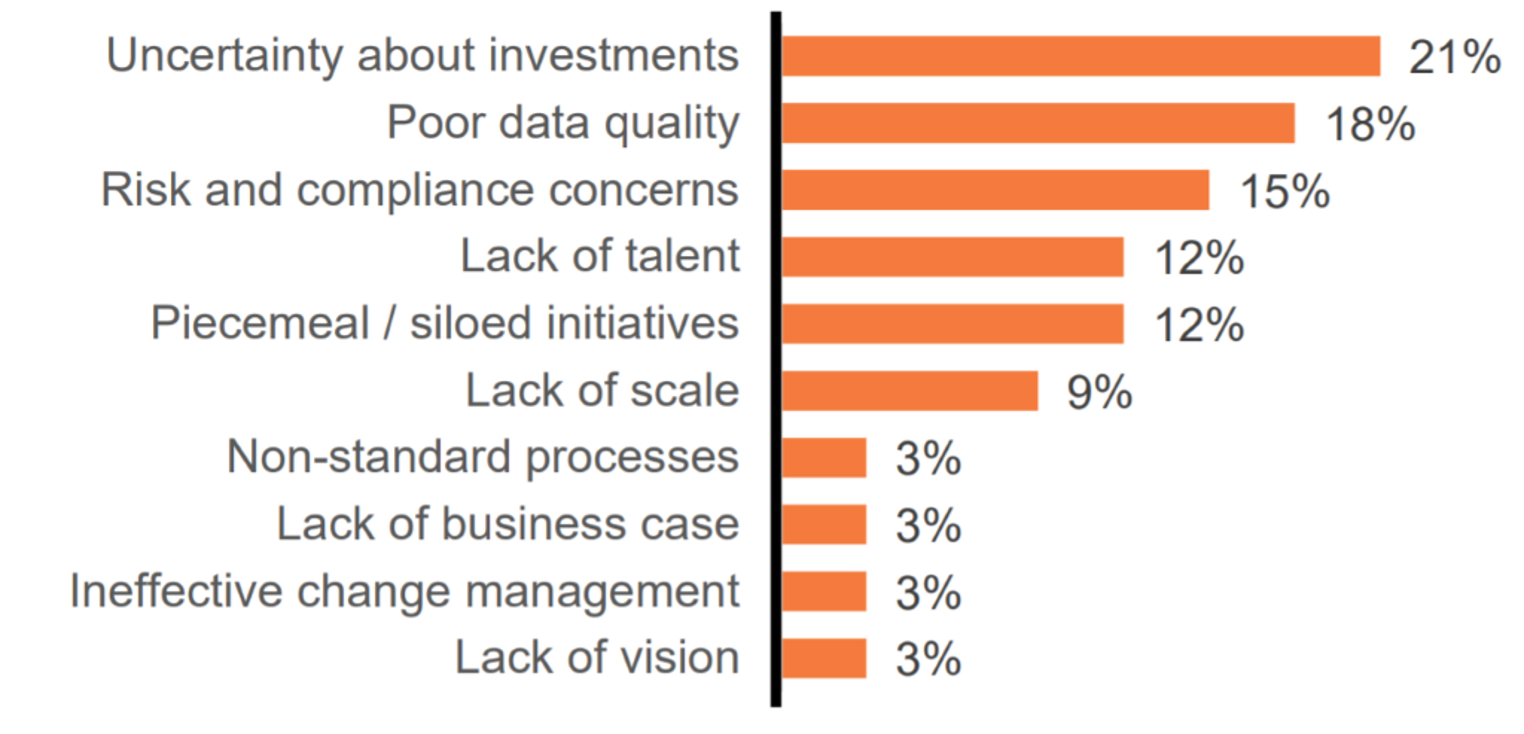
Making the most out of emerging technologies and the new platforms and business models changing the way the oil and gas industry operates comes at the mercy of firms and their partners’ abilities to master their data (insert your pick of a data lake, ocean, lagoon, or even monsoon, in some cases). HFS’ Business and IT Industry survey for 2019 found data quality to be a key inhibitor to oil and gas executives’ objectives (see Exhibit 1), along with continuing uncertainty about financial investments (which we delve into as they relate to industrial leaders’ AI/ML strategies), regulatory compliance, and talent concerns (covered in our look at industrial talent woes).
These days, data is cheap; but despite this, very little payed-for data influences executives’ decision-making processes (10% according to this set of executives). With an increasing need for agile decision making, raw data in an industry like oil and gas is often too complicated. Executives don’t have the technology and processes in place to leverage the data, whether they buy it or generate it, which can lead to recruiting expensive data scientists to make up for the lack of talent—further delaying progress.
Exhibit 1: Data quality and uncertainty weigh heaviest on the shoulders of oil and gas execs; emerging technology adoption pays the price.
Top inhibitors in achieving strategic objectives (rank 1 only)
Source: HFS Research, Business and IT Industry survey, 2019, 33 energy (oil and gas) leaders
Oil and gas firms won’t meet their goals if data remains stagnant and unused—leaders need to re-reconnect hesitant enterprises, providers, and partners along their value chains
Oil and gas executives want a touchless operation throughout their energy ecosystems, and half (50%) see their enterprises achieving this within 12 months in our State of Operations and Outsourcing 2019 survey. This timeline is a little ambitious given the industry-wide data woes that remain; they’re unlikely to be making the most out of “touchless,” even if they achieve it.
Margin is everything in the oil and gas industry, which means that data sharing, even with supply chain partners, comes with a risk. Partners with greater vertical coverage than you—especially oil and gas supermajors with massive existing data lakes—might consider leveraging smaller partners’ data and deciding they don’t need their smaller partner anymore.
The Bottom Line: With the oil and gas industry as a whole lagging when it comes to digital, it’s not do or die just yet—but proactive leaders will push for trust, data sharing, and collaboration in their ecosystems for everyone’s benefit.
Leading oil and gas companies must be the ones to take the first step and share their data for the benefit of their partners, establishing a baseline of trust before they can expect the same. But let’s not be naïve; contracts need to reflect the value of data coming from both sides of a partnership, and they must include necessary safeguards. So, after establishing trust and some data flow, work with partners to nail down exactly what data each party needs and how to cut through the vastness of industry-generated data to find it. Create data sets to capitalize on the technologies that the oil and gas industry is pouring money into, then create insights that decision makers can use in the board room, management meeting, or refinery floor.
Register now for immediate access of HFS' research, data and forward looking trends.
Get StartedIf you don't have an account, Register here |
With the exception of our Horizons reports, most of our research is available for free on our website. Sign up for a free account and start realizing the power of insights now.
Our premium subscription gives enterprise clients access to our complete library of proprietary research, direct access to our industry analysts, and other benefits.
Contact us at [email protected] for more information on premium access.

