This HFS Point of View is for CIOs, CFOs, and enterprise transformation leaders closing the four ownership gaps that separate AI access from AI advantage.
AI access is settled and no longer differentiates. According to HFS’s latest Pulse survey, 82% of enterprises have at least one large language model in production and run an average of 2.5 foundation models in parallel, yet enterprise leaders rate their progress against their AI ambitions at just 4.1 out of 10 (see Exhibit 1). For CIOs, CFOs, and transformation leaders, the problem is no longer technology, but four ownership gaps: nobody owns enterprise context, 94% of organizations have no active program for enterprise debt, tokens have no line item, and AI outcomes have no agreed metric. The advantage now belongs to those who close those gaps first and answer the question that exposes all four: when an agent spans five functions, who owns it?
To understand what separates the enterprises converting AI access into advantage, we brought together senior technology, finance, data, and transformation leaders at an HFS-ITC Infotech executive roundtable in New York last July, drawn from banking, insurance, payments, telecommunications, pharmaceuticals, consumer health, snacking and confectionery, specialty chemicals, mortgage servicing, and industrial manufacturing.
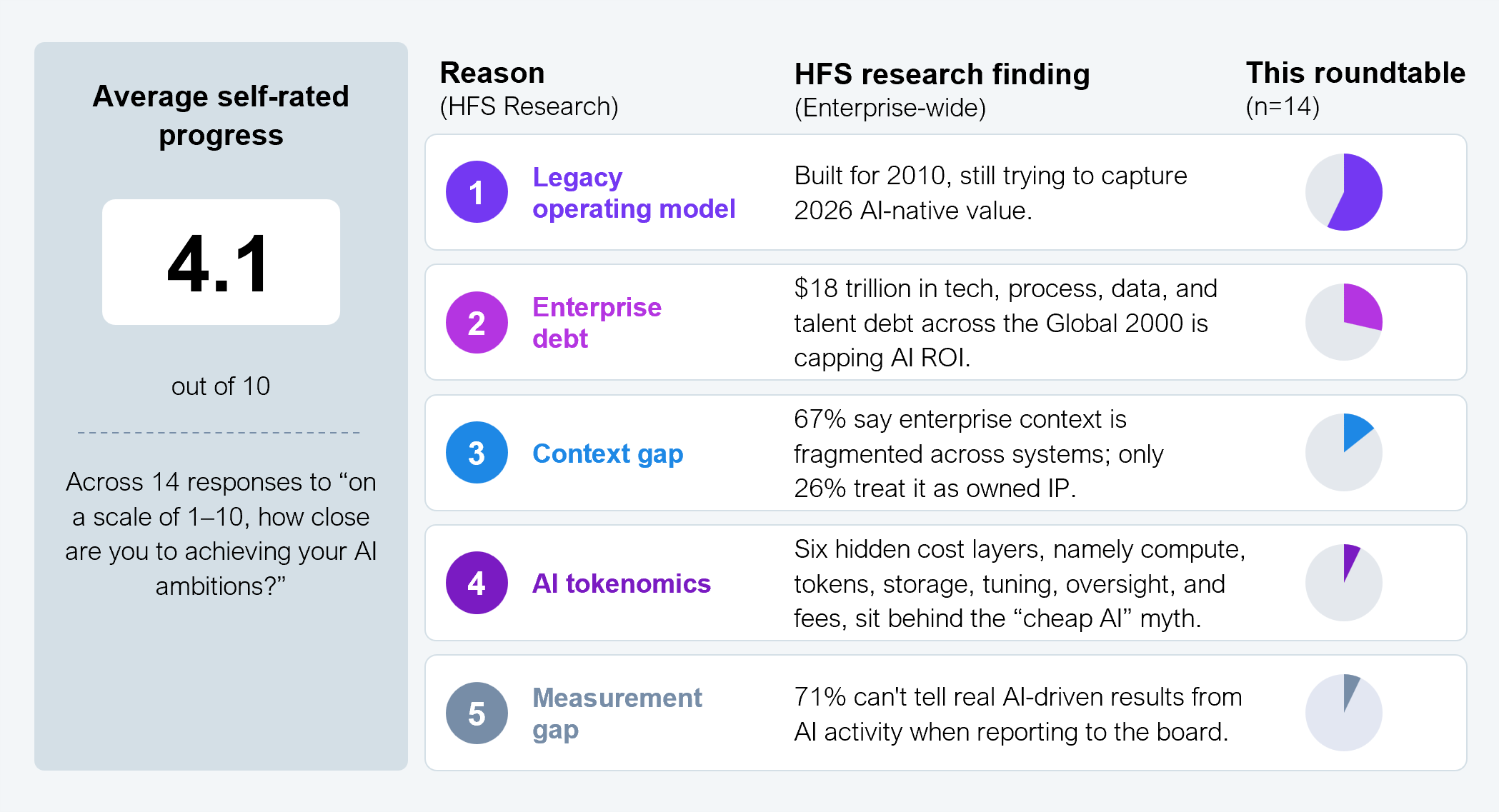
Exhibit 1: AI investment is universal; realized outcomes are not

Source: HFS Research, 2026
The first chapter of enterprise AI was a procurement exercise, and everyone passed it. Access to models is now as differentiating as access to electricity. The second chapter is a management exercise: who owns your context, who has a program for your debt, and who can tell the board what an invoice costs in tokens. Our data says most enterprises cannot answer any of the three, and that is a problem worth solving for.
– Saurabh Gupta, President, HFS Research
In benchmarking, how you define the baseline matters as much as the score itself. A group controller at a specialty chemicals company made an important point: when enterprises first start experimenting with AI, their ambitions are relatively modest. If the initial goal represents ten levels of maturity and the organization reaches level six, it may reasonably rate itself at 60%. But AI maturity has a way of expanding the horizon. As the organization approaches level eight, it discovers that there were never just ten levels as another twenty have effectively been unlocked. The original level six suddenly looks much closer to 20% against this new ambition.
Several delegates described experiencing this phenomenon: as their AI capabilities improved, their ambitions rose even faster, causing their self-assessment scores to fall. A declining score, therefore, does not necessarily indicate declining maturity. Counterintuitively, it can be evidence of progress.
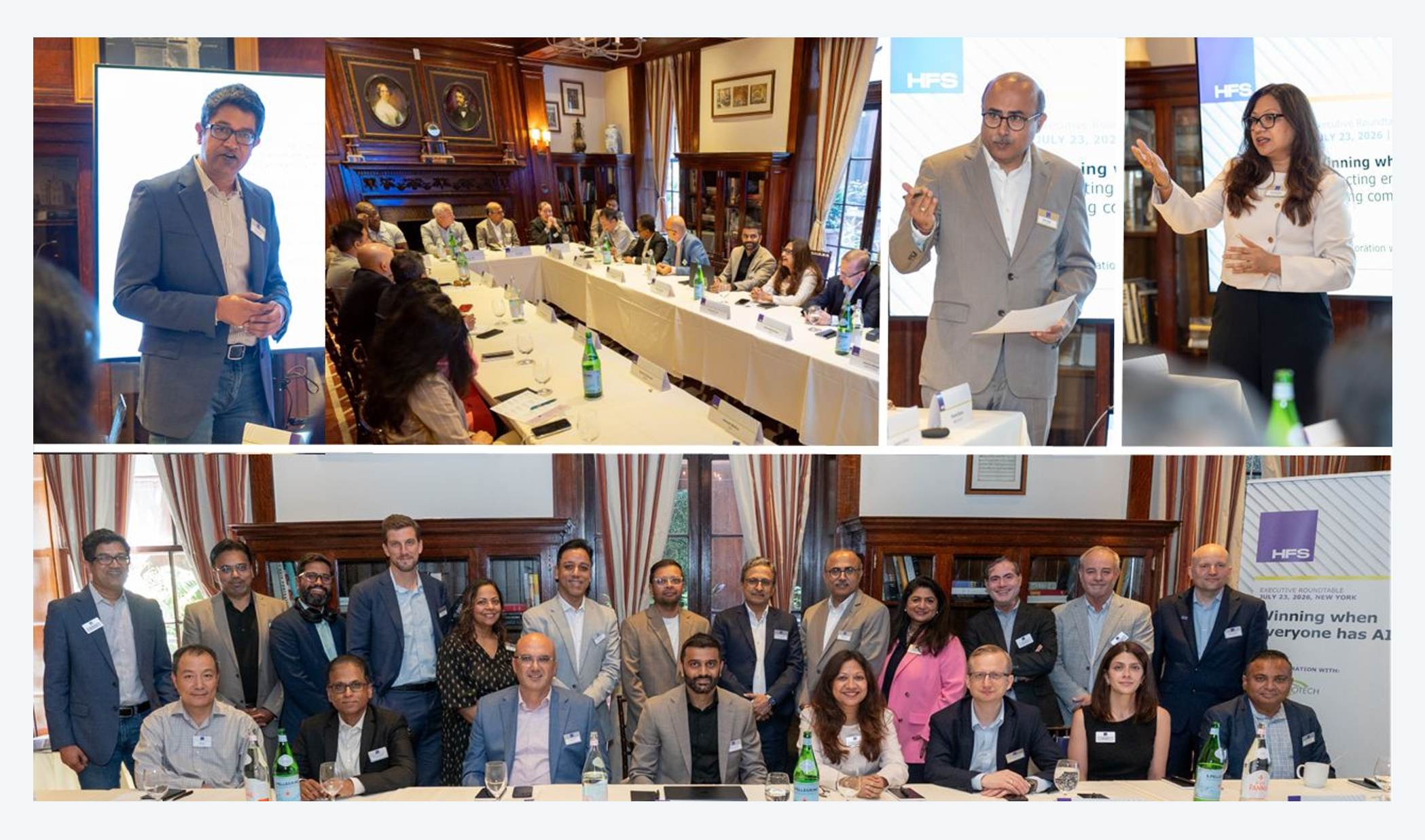
Exhibit 2: Senior Enterprise Leaders debating the AI advantage agenda at the HFS-ITC Infotech roundtable in New York

Source: HFS Research, 2026
When an AI agent spans five functions, who owns it?
ITC Infotech put that question to the room, and it exposed the structural problem: organizations are built around functions and silos, while agents are designed around processes. An agent automating order-to-cash can touch sales, finance, supply chain, service, and IT, but no function naturally owns the end-to-end process. Every answer the room attempted came back to the same four ownership gaps.
- Nobody owns enterprise context, the one asset a model vendor cannot sell you. HFS research finds 67% of enterprises saying context is fragmented across systems and 64% saying it lives in people’s heads, while only 26% treat context as owned IP and just 38% have a funded fix. Context is also dynamic and dependent on people. For instance, a telecommunications leader described a fee waiver policy that was reversed within 60 days, meaning that any agent trained on last quarter’s rule is wrong. Likewise, a consumer health company is piloting digital twins of departing experts. The exposure risk compounds the gap. Pricing logic, segmentation models, and operating know-how can differentiate an enterprise. Feed that into shared models, and you will have an industry baseline. Sovereign AI is the question ITC Infotech is now asked most often, but there are still no clear answers.
Every organization has a unique way of understanding its markets and customers. There is a certain operating framework and institutional knowledge with which they operate. The question is whether we are able to understand that context and bring it into the decisions we make around AI implementations.
– Dinesh Bajaj, President, ITC Infotech
- Nobody owns enterprise debt, so it remains a compensation problem wearing a technology costume. HFS puts unresolved tech, data, process, and talent debt across the Global 2000 at $18 trillion, and only 6% of enterprises report an active program to pay it down. A CIO argued that perhaps $14 trillion of that debt is not justifiable, but it persists because someone decided to keep the application for 10 years, when the real obligation is to retain the information. The only mechanism that demonstrably worked was pay: an annual audited debt number, a target to cut it by the rate of inflation, and a bonus tied to hitting it.
- Nobody owns token spend, creating a cost line that is becoming difficult to price for. HFS asked 15–20 CFOs how many tokens it takes to process an invoice, and nobody could answer. In fact, the cost hides inside compute. The average IT budget is nearly 3% of revenue and is flat to declining, while AI spend grows 15% to 20%, leaving the difference as unmanaged spend. This means that enterprises can end up spending more on an agentic solution than the offshore human it replaces. The mitigations are only partial: push token cost onto suppliers contractually and move mature high-volume use cases onto open weights on your own infrastructure. As the labs approach public markets, land-grab pricing gives way to margin proof.
- Nobody owns AI outcomes, so investment runs ahead of proof. Eighty-seven percent of enterprises invest in AI faster than they can prove value, and 72% lack a consistent way to measure it. The delegates in the room proposed a commercial gate: a former insurance chief data officer suggested getting every use case to define its expected outcome upfront along with a non-AI quantitative indicator that the outcome was achievable at all. Discovery has a hypothesis, a time box, and an expected result; tinkering has none of them. The same executive reported a team spending $2 million in a discovery sandbox, with the CFO learning about it only when the team asked for headcount.
The upside: Leaders are building revenue, experiences, and business models
Closing the gaps is defense. The delegates scoring 5 or better were playing offense, and their examples show what ownership buys.
- New revenue: A CIO of a mortgage subservicer built AI as a product rather than a productivity tool, creating a compliance capability that tracks the life of a loan end to end and proves every obligation was met on time. The result is an asset with standalone commercial value. In agentic commerce, a consumer health leader is supplying brand context to a retailer’s shopping agent so it can recommend a product to treat headaches, turning owned context into a demand channel.
- New customer experiences: A telecommunications leader is pivoting to pods built around the top 10 customer journeys, bringing together technology, business, and data people on a common data layer with a P&L attached to the journey. That is also the answer to the agent ownership question: the journey owns the agent.
- New business models: A 182-year-old industrial company reset its ambition from optimizing with AI to becoming AI-native, one domain at a time across nine domains, run with a startup mindset. Its self-score fell from 8 to 1 in the process, which is what a rising bar looks like. And none of these leaders built alone. Every cited example showed that co-producing with partners that are already further down the path beats hiring for the required skills.
A four-move approach for the next 12 to 18 months
Every move assigns an owner and a business metric, and none requires a new model or platform.
- Define the ambition first. State what AI is supposed to deliver for each division separately, then rate the progress against that. The baseline can be an upward-shifting target as you make progress.
- Create the three P&L items that do not exist. Context, tokens, and debt paydown each need an owner, a budget, and a business metric. Start with tokens because they are the easiest to instrument. An enterprise that cannot state the token cost of processing one invoice does not yet have an AI cost model.
- Gate every use case on a commercial and competitive assessment and time-box discovery. Define the expected outcome before the experiment, name the non-AI alternative and why it loses, and set an end date. Work without an end date is tinkering, which the leaders in the room identified as the highest uncontrolled cost in AI programs today.
- Answer the agent ownership question before deployment. Any agent that crosses functions gets a single named owner with a P&L, whether that is a customer journey, an end-to-end process, or a product. An agent with five stakeholders and no owner is an incident waiting to happen.
The Bottom Line: When every competitor has the same models, advantage comes from closing the four ownership gaps, namely context, debt, tokens, and outcomes.
ITC Infotech framed the day by observing that the first chapter of AI was about access to intelligence, and that chapter is now closed. The second is about who converts intelligence into advantage without giving the advantage away. The blockers are ordinary management machinery, not model capability, and the leaders that are already ahead are converting ownership into new revenue, experiences, and business models.
Every AI investment business case now needs to answer three questions: How does it build context the enterprise owns? Can you price what it consumes? And is there a single person accountable for the outcome it produces?